
Best Time to Hike John Muir Trail
The best time to hike the John Muir Trail is July to September, after most snow has melted. The modelled climate data backs this up: rainfall bottoms out at roughly 8 to 10 mm a month, the months are the warmest of the year, and days stay long. Permits are the real constraint, so plan around your start date.
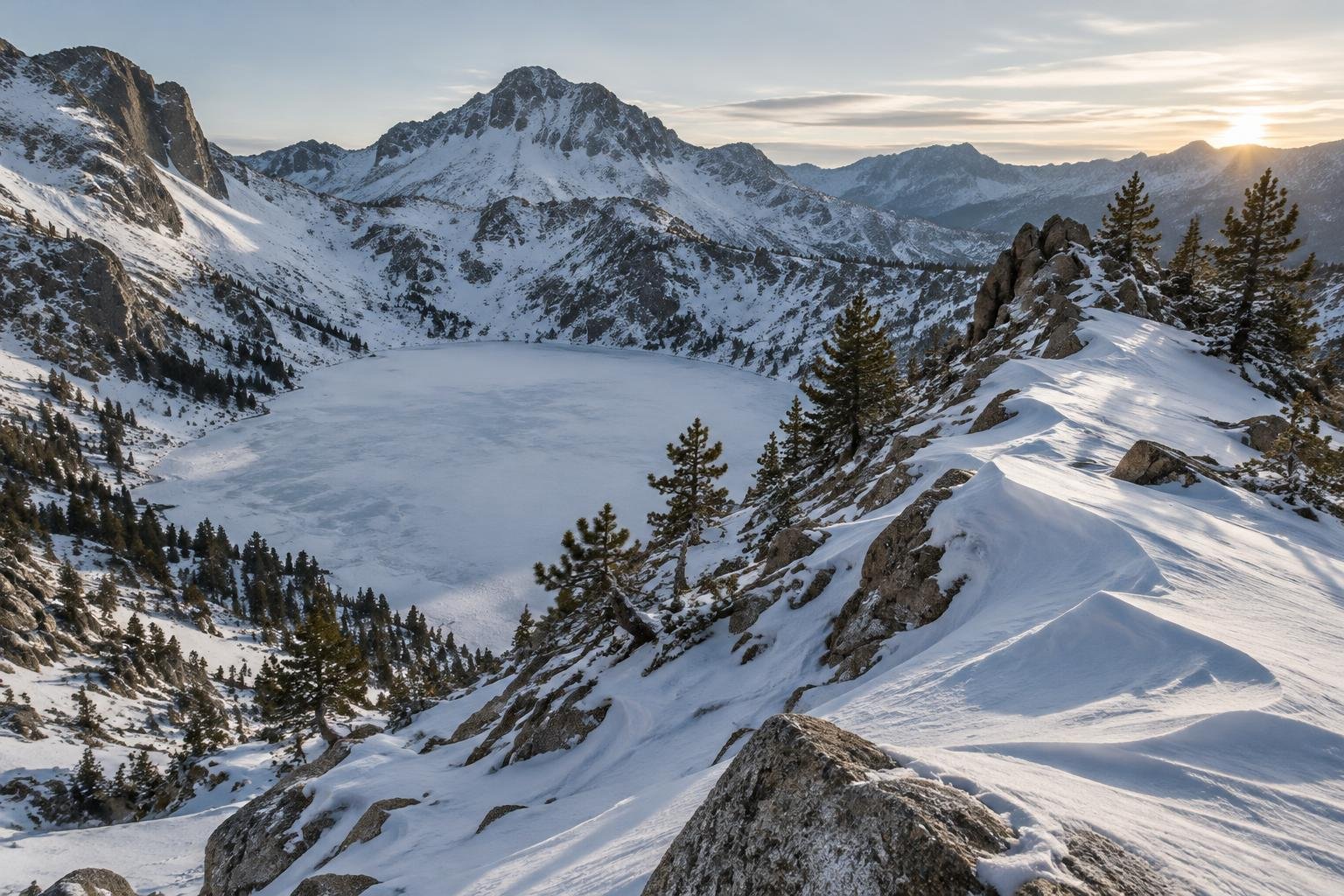
Month-by-month climate for John Muir Trail
| Month | Relative warmth | Rain | Daylight |
|---|---|---|---|
| Jan | Coldest | 110 mm | 9.7 h |
| Feb | Coldest | 81 mm | 10.6 h |
| Mar | Coldest | 93 mm | 11.7 h |
| Apr | Cool | 42 mm | 13 h |
| May | Mild | 24 mm | 14 h |
| Jun | Warm | 9 mm | 14.6 h |
| Jul | Warmest | 10 mm | 14.3 h |
| Aug | Warmest | 9 mm | 13.4 h |
| Sep | Warm | 8 mm | 12.2 h |
| Oct | Mild | 31 mm | 11 h |
| Nov | Cool | 49 mm | 10 h |
| Dec | Coldest | 105 mm | 9.4 h |
Modelled regional averages for 2010–2023 (rainfall) and calculated daylight hours; they describe the wider area, not a reading taken on the trail. “Relative warmth” compares each month with the warmest and coldest months of this place’s own year. It is not a temperature, and the high parts of a route are colder than the region around them.
Rainfall in this region is strongly seasonal. The wettest months on average are December (105 mm), January (110 mm) and March (93 mm), while June through September typically stay at just 8 to 10 mm a month, the driest stretch of the year. July and August are the relatively warmest months, with June and September close behind, and January through March are the coldest. Daylight swings from about 9.4 hours in December to 14.6 hours in June, so summer gives you much more time on trail.
John Muir Trail season by season
Winter and early spring · December to April
These are the wettest and coldest months in the data. December, January and March each average 93 to 110 mm of rain, and the months are coldest or cool relative to the rest of the year. Daylight is short, around 9.4 to 10.6 hours in midwinter, which leaves little margin on a long point-to-point route. The official season guidance of July to September, after most snow has melted, puts this period well outside the intended hiking window. If you are considering it, check conditions with the managing authority first.
Late spring · May to June
Rainfall drops sharply, from about 24 mm in May to just 9 mm in June, and the months shift from mild to warm. Daylight grows to roughly 14 to 14.6 hours, among the longest of the year. The numbers look inviting, but the official season guidance points to July as the start because snow melt is what opens the route, and the climate data alone cannot tell you the condition of the high ground. Confirm current conditions with the National Park Service or Forest Service before committing to an early start.
Peak summer · July to September
This is the recommended window, and the data fits it. July and August are the warmest months of the year, September stays warm, and rainfall averages only 8 to 10 mm a month. Daylight is generous, about 14.3 hours in July easing to 12.2 hours by September, giving plenty of time for long trail days. Expect this to be when the competitive permit lottery is most in demand, and remember bear-resistant canisters are required along most of the route throughout the season.
Autumn · October to November
Conditions turn quickly. October is mild with about 31 mm of rain and 11 hours of daylight, while November is cool, with rain rising to around 49 mm and daylight falling to about 10 hours. The drier, warmer pattern of summer is clearly behind you, and the official season guidance ends at September. A late itinerary leaves little buffer for slower days or changes of plan. Check with the managing authority about current conditions before considering any trip this late in the year.
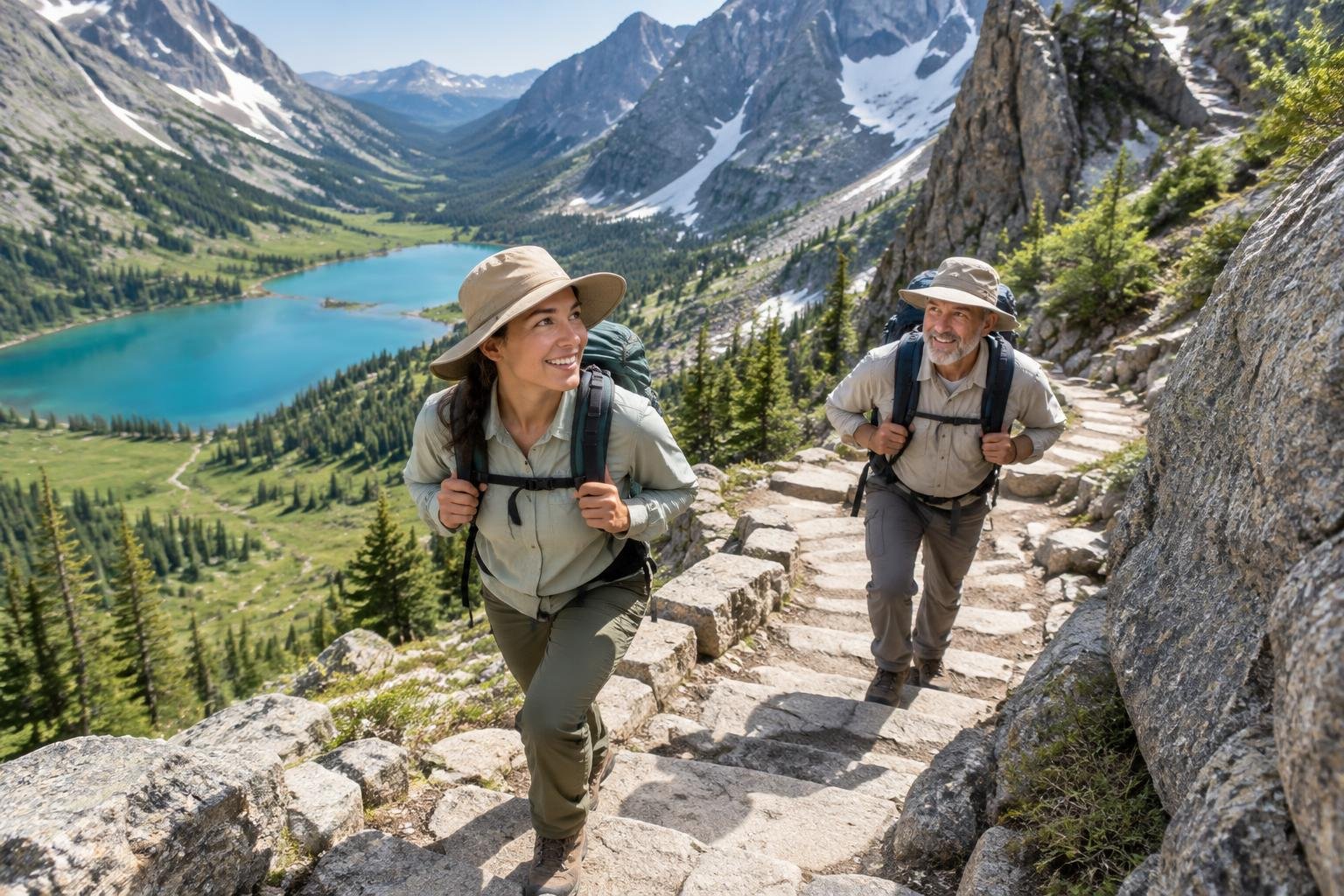
Official season guidance
U.S. National Park Service & Forest Service: July to September, after most snow has melted
A JMT wilderness permit is highly competitive and tied to your start trailhead and date, released via a rolling lottery. Bear-resistant canisters are required along most of the route.
Check current dates on nps.gov (JMT)What to pack for the season
Packing should follow the season you choose. Even in the warmest, driest months, bring layers for cooler mornings and evenings, plus rain cover in case of an unusual shower. Sun protection matters on long summer days. In shoulder months, daylight is shorter, so a headlamp becomes essential. Carry a bear-resistant canister, since the permit rules require one along most of the route.
For layering, rain cover and weather planning, see hiking in rain, heat and cold.
Timing mistakes to avoid
The biggest mistake is choosing dates from the climate numbers alone. Low rainfall in June looks appealing, but the official season guidance of July to September, after most snow has melted, is what governs when the route is practical. A second mistake is treating the permit as an afterthought: it is tied to your start trailhead and date and released through a rolling lottery, so your timing is partly decided by what you can secure. Also avoid planning a rigid schedule with no buffer for slower days.
Common questions
What is the best month to hike the John Muir Trail?
The official season guidance is July to September, after most snow has melted. In the modelled data, July and August are the warmest months and rainfall is among the lowest of the year, at roughly 9 to 10 mm. Any single month is a judgment call, so check current conditions with the managing authority before you go.
Is it too early to hike the John Muir Trail in June?
June is dry on average, at about 9 mm of rain, and warm, with around 14.6 hours of daylight. However, the official season guidance starts in July because the route depends on snow having melted. The climate numbers cannot show trail conditions, so confirm with the National Park Service or Forest Service before planning an early start.
How much daylight will I have on the trail?
Daylight is longest in June at about 14.6 hours and shortest in December at about 9.4 hours. In the recommended July to September window it runs from roughly 14.3 hours in July to 12.2 hours in September. These are calculated values, so build in buffer time for slower days.
Does the permit affect when I can hike?
Yes. A JMT wilderness permit is highly competitive and tied to your start trailhead and date, released via a rolling lottery. That means your real window depends on what you can secure, so have backup dates within July to September. Always check the managing authority for the latest permit rules.
Sources
- U.S. National Park Service & Forest Service — nps.gov (JMT): official season and permit guidance.
- NASA POWER (Prediction Of Worldwide Energy Resources): monthly temperature and rainfall averages, 2010–2023, from MERRA-2 reanalysis. Daylight hours are calculated from latitude.
Conditions, closures and permit rules change without notice — confirm current information with the managing authority before you go. See our editorial policy and affiliate disclosure.