
How to Train for John Muir Trail
To train for the John Muir Trail, build an aerobic base with steady walking, add a weekly hill or stair session, then walk with a loaded pack and grow the weight in small steps. Add leg and core strength twice a week, rehearse with back-to-back loaded days a couple of weeks out, and taper in the last one to two weeks. Because it is a multi-week thru-hike, allow roughly 8 to 12 weeks.
General fitness guidance, not medical or personal training advice. If you have a health concern, an injury, or you're returning to exercise after a long break, check with a doctor first.
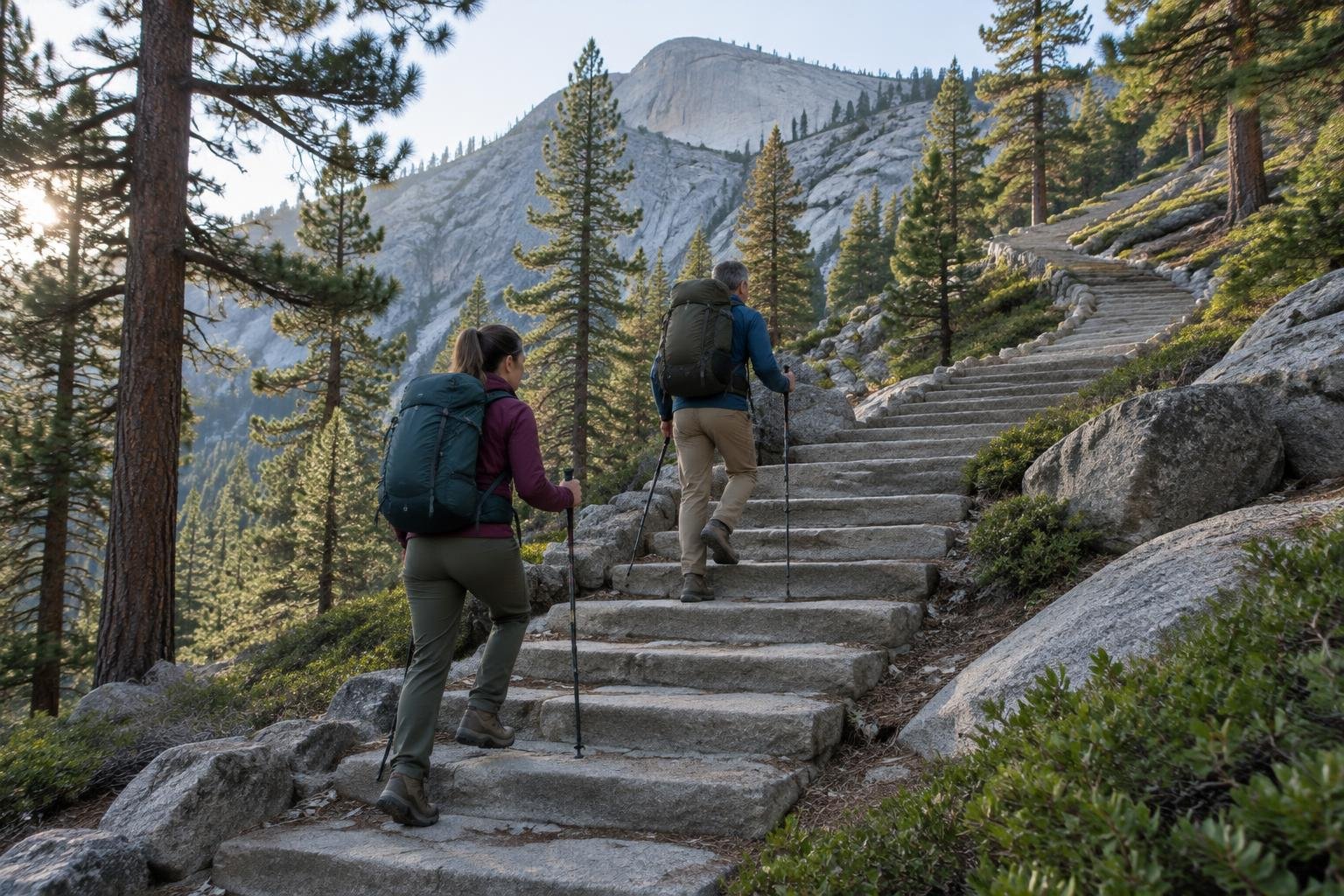
What the John Muir Trail asks of your body
The JMT is 211 miles point-to-point, with about 47,000 feet of cumulative gain over the full thru-hike, and it is rated very strenuous. The route overview says the difficulty is volume, not technicality: the tread is well-graded decomposed granite with sustainable switchbacks. The shape repeats for weeks, a climb up a granite staircase to a rocky notch, then a long descent into the next basin. Most hikers take roughly three weeks, so your body needs to handle repeated climbs and descents with a pack, day after day, rather than one big effort. No daily mileage target is published here, so plan from your own pace.
Start with a weekly base
The CDC's adult guidance is 150 minutes of moderate-intensity activity a week, or 75 minutes of vigorous activity, or an equivalent mix, and it can be split across the week. Treat that as the floor you should already be meeting before you begin a trek-specific plan. For a thru-hike, the base-building weeks are where you make it a habit: regular brisk walking, done in sessions that fit your schedule, so that your body is used to time on your feet before the pack and hills arrive.
The training plan, phase by phase
Aerobic base · Weeks 1 to 4
Build your weekly base with walking, working toward the CDC's 150 minutes of moderate activity or 75 of vigorous, or a mix of the two. Split it across the week if that suits you. Keep the effort comfortable and the routine steady. The goal here is consistency, not heroics: a body that is used to regular time on its feet before you add hills and weight.
Hills and stairs · Weeks 5 to 8
Keep the base going and add a weekly hill or stair session. The JMT is a long series of climbs up switchbacking staircases, so sustained uphill is the skill to practice. Go at a pace you could hold for a long time rather than sprinting. If you have no hills nearby, stairs or an incline are the workable substitute. Add slow step-downs too, since descents are a big part of every pass day.
Loaded pack walks · Weeks 7 to 11
Begin walking with a loaded pack, starting light. Many people start around 10 pounds, then add weight in small steps. A commonly quoted ceiling for a loaded pack is about 20% of body weight. Make these walks your longest sessions of the week, ideally on hills. Wear the boots or shoes and the pack you plan to use, so you find rubbing straps and sore spots before the trail does.
Rehearsal and taper · Weeks 10 to 12
A couple of weeks out, do two loaded walks on consecutive days to see how your legs feel on the second morning. That is the closest practice for a trail where you climb day after day. Then taper over the last one to two weeks: shorter, easier sessions so you arrive rested rather than worn down. Use the taper to finish packing and sort out your gear.
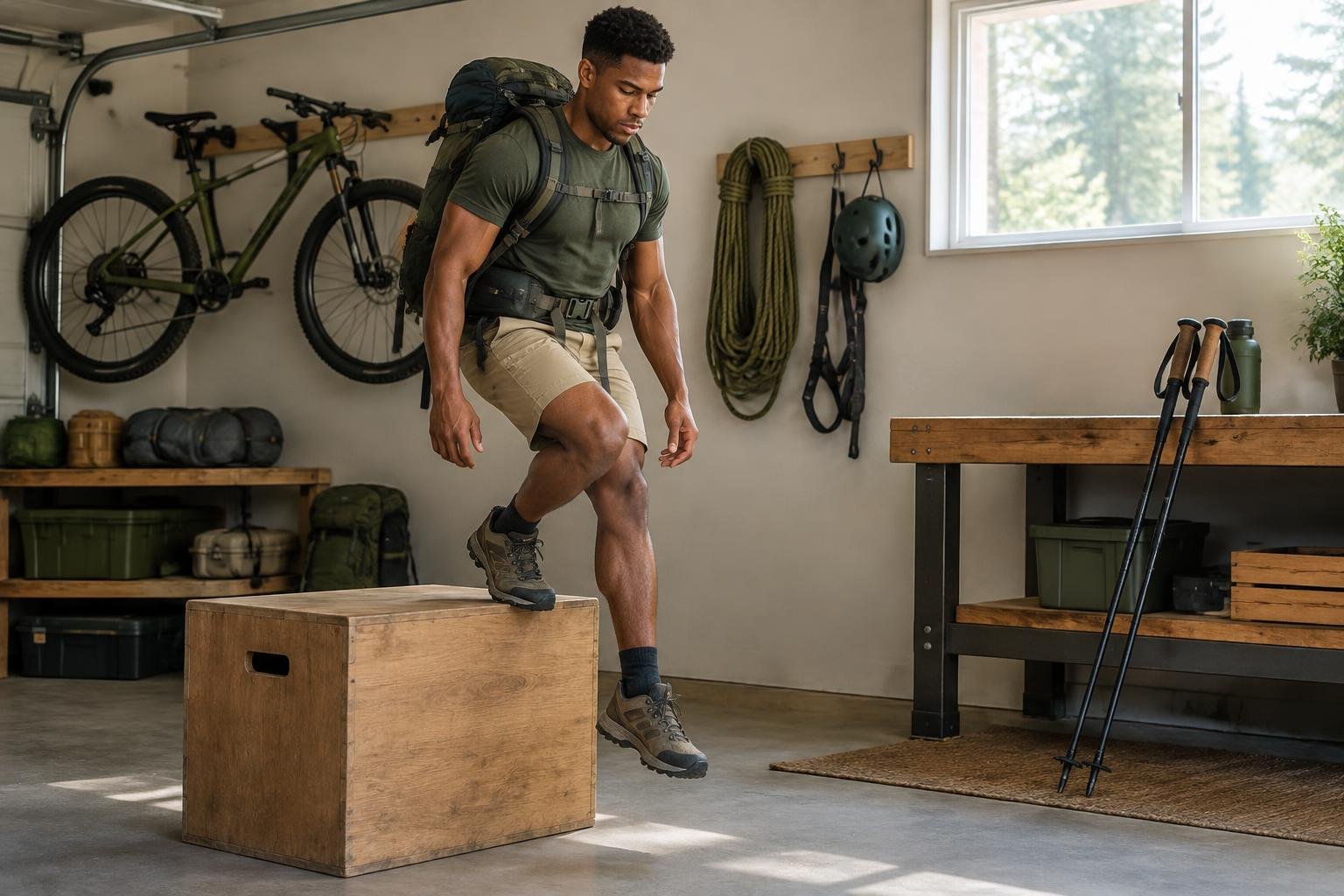
Strength work that helps on the trail
Aim for muscle-strengthening on at least 2 days a week, working all major muscle groups, which is the CDC's guidance. For a trail like this, put your attention on legs, hips and core, since they carry the pack up every climb and brake you on every descent. Add slow step-downs, because stairs replicate downhill poorly. Downhill loads the quads and causes delayed soreness, so controlled lowering practice is worth including well before you start the trail.
Pack walks and back-to-back days
Start with a light pack, many people begin around 10 pounds, and add weight in small steps rather than jumping up. A commonly quoted ceiling is about 20% of body weight. Because the JMT is a thru-hike where you carry food and gear for weeks, the pack matters more than on a day trip. Two weeks out, rehearse with loaded walks on back-to-back days. That mirrors the repeating shape of the trail: one big day, then another the next morning.
Terrain and descents
The JMT's terrain demand is the repeating pass pattern: a climb from a basin up switchbacking granite to a rocky notch, then a long descent to the next basin. Plan for descents as well as ascents. Downhill loads the quads and causes delayed soreness, and stairs replicate it poorly, so train with slow step-downs and hill descents under load. The tread is well-graded, so the challenge is volume: many long climbs and descents in a row, carrying a full pack, over about three weeks.
Training mistakes to avoid
The most common mistake is never walking with the loaded pack, so the first time your shoulders and hips carry it is on the trail. Another is training only for climbing and ignoring downhill, which loads the quads and brings delayed soreness. Starting too late is a third: a multi-day trip with a full pack suits roughly 8 to 12 weeks of preparation. Skipping the back-to-back rehearsal and the taper are the other easy ones to miss.
Common questions
How long should I train for the John Muir Trail?
For a multi-day trip with a full pack, allow roughly 8 to 12 weeks. Spend about the first 4 to 8 building an aerobic base, then add a weekly hill or stair session and loaded pack walks. Finish with a taper in the last one to two weeks. Everyone starts from a different level, so adjust to yours.
Do I need to hike with my pack in training?
Yes. Start light, many people begin around 10 pounds, and add weight in small steps. A commonly quoted ceiling is about 20% of body weight. A couple of weeks before the trip, do two loaded walks on consecutive days to see how your body handles back-to-back effort.
What strength work helps most?
The CDC recommends muscle-strengthening on at least 2 days a week, working all major muscle groups. For a trail with this much climbing, focus on legs, hips and core, and include slow step-downs to prepare for descents, since stairs replicate downhill poorly.
Is the JMT hard because of technical terrain?
Not according to the route overview: the tread is well-graded decomposed granite with sustainable switchbacks. The difficulty is volume, with about 47,000 feet of cumulative gain across 211 miles. Train for sustained climbing and descending with a pack. If you have health concerns, ask a doctor before starting a plan.
Sources
- Centers for Disease Control and Prevention — Physical Activity Guidelines for Adults: weekly aerobic and muscle-strengthening targets.
- U.S. National Park Service & Forest Service — nps.gov (JMT): official route information.
- Training and fitness for hiking (this site): the general training progression this plan builds on.
See our editorial policy and affiliate disclosure.