
How to Train for West Coast Trail
To train for the West Coast Trail, build an aerobic base with regular walking, add weekly hill or stair sessions, then spend your last weeks on loaded pack walks over uneven, slippery ground. Add strength work for legs, hips and core, and ease off in the final week or two. The trail is point-to-point and tests balance and stamina day after day, so plan roughly 8 to 12 weeks.
General fitness guidance, not medical or personal training advice. If you have a health concern, an injury, or you're returning to exercise after a long break, check with a doctor first.

What the West Coast Trail asks of your body
The West Coast Trail covers 75 km (46.6 mi) point-to-point and is rated difficult and very strenuous. The overview describes it as a sequence of obstacles: root-laced forest floor, deep mud, wet boardwalk, repeated ladder flights, cable-car river crossings, and beach walking on soft sand, slick shelf rock and cobble. Elevation gain is not published here, so check the official source. Expect long days that ask for steady stamina, balance, and strong legs for climbing ladders and stepping down with a pack.
Start with a weekly base
The CDC's adult guidance is 150 minutes of moderate-intensity activity a week, or 75 minutes of vigorous activity, or an equivalent mix. It does not all have to happen at once, so you can split it across the week. For a trip like this, treat that as your starting floor: brisk walking, easy hiking or similar work that you can sustain, so your body is already used to regular effort before the trail-specific training begins. Check with a doctor if you have any health concerns.
The training plan, phase by phase
Aerobic base · Weeks 1 to 4
Build the habit and the engine. Walk several times a week at a comfortable pace, aiming to reach the CDC weekly baseline, and let one outing run longer than the rest. Keep it easy enough to repeat. The goal is not speed but a body that tolerates regular time on its feet, which is what a week on this trail demands.
Hills and stairs · Weeks 5 to 6
Add one weekly hill or stair session on top of your base walking. The ladders and climbs on this route reward strong legs and a steady breathing rhythm. Climb at a pace you could keep up for a while, then walk back down slowly and deliberately. Keep your other walks going so the new work builds on the base rather than replacing it.
Loaded pack walks · Weeks 7 to 10
Start carrying a pack, light at first. Many people begin around 10 pounds and add weight in small steps, with about 20% of body weight a commonly quoted ceiling. Choose uneven, muddy or slippery ground where you can, since that is what the trail serves up. A couple of weeks out, rehearse with two loaded walks on consecutive days.
Taper · Weeks 11 to 12
In the last one to two weeks, cut back the volume so you arrive rested rather than tired. Keep a few short, easy walks to stay loose and finish checking your gear and pack fit. Use the time to sort tide tables and logistics instead of squeezing in another hard session. Fresh legs matter more now than any extra fitness.
Strength work that helps on the trail
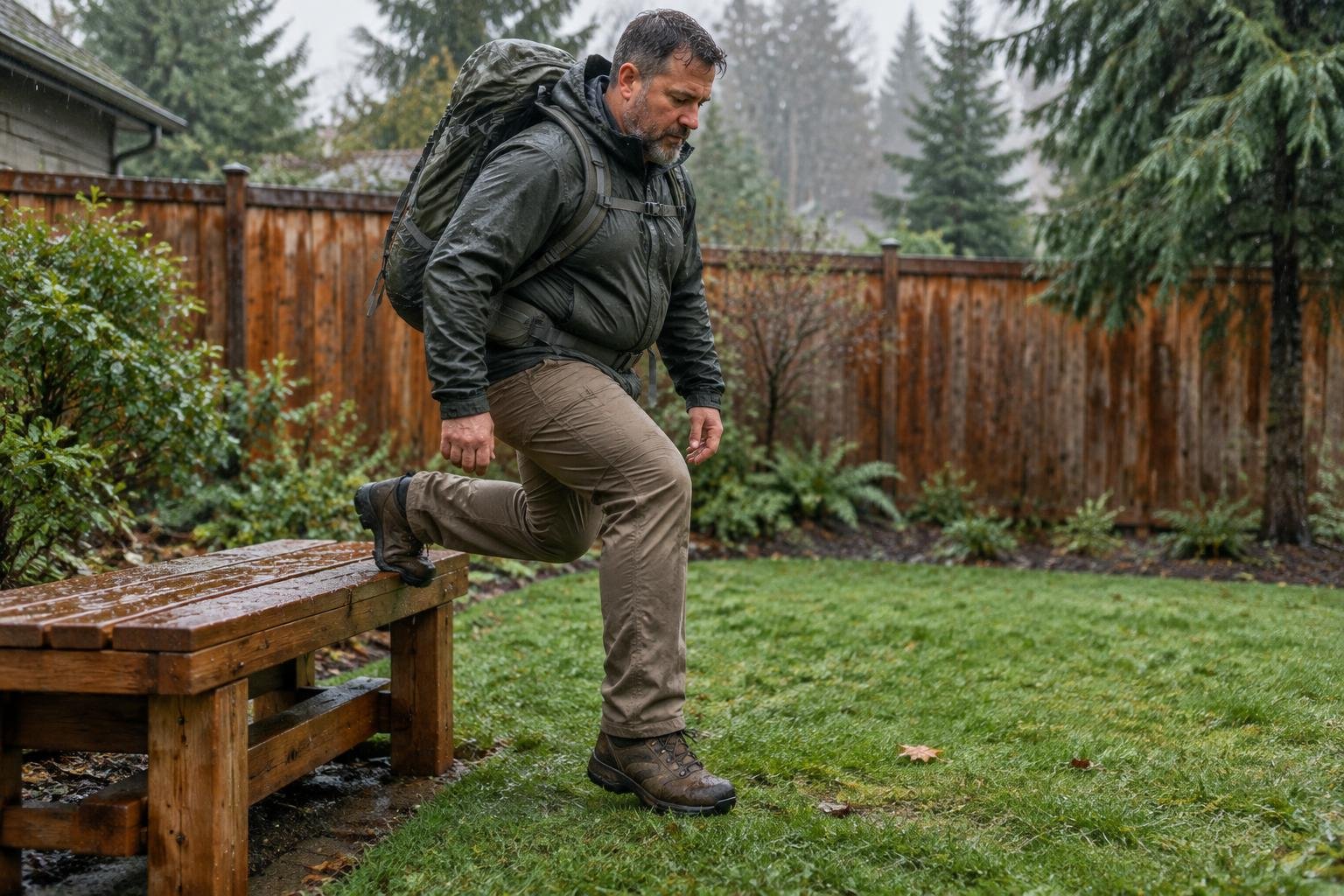
Aim for muscle-strengthening work on at least 2 days each week, covering all major muscle groups, as the CDC advises. For this trail, put the emphasis on legs, hips and core, which carry you up ladders, over roots and across unstable beach and shelf rock. Add slow step-downs to your routine too. Stairs replicate downhill poorly, and descents load the quads and cause delayed soreness, which this route will ask for repeatedly.
Pack walks and back-to-back days
Loaded walks are where the plan becomes specific to your trip. Start with a light pack, around 10 pounds for many people, and add weight in small steps, keeping below the commonly quoted ceiling of about 20% of body weight. The West Coast Trail is usually walked over roughly a week, one stage a day, so a couple of weeks before you go, do two loaded walks on consecutive days to learn how your legs, feet and shoulders feel on day two.
Terrain and descents
Altitude is not the concern here; terrain is. The overview describes mud holes, boardwalk that turns glassy when wet, ladders bolted to cliff and gully walls, cobble, soft sand and slick shelf rock. Descents are part of the work, and downhill loads the quads and causes delayed soreness, so practice slow step-downs and controlled downhill walking with a loaded pack. The southern end is generally reckoned the muddiest and most ladder-heavy, so legs that can handle repeated climbing and lowering help early on.
Training mistakes to avoid
The common training errors are starting too late, never walking with a loaded pack, and treating stairs as enough preparation for descents. Another is training only on smooth, flat paths when the trail is mud, roots, ladders and shifting beach. Skipping strength work, adding pack weight too fast, and cramming hard sessions in the final week instead of tapering can all leave you tired or sore before the trip begins.
Common questions
How long should I train for the West Coast Trail?
For a multi-day trip with a full pack, allow roughly 8 to 12 weeks. That gives time for an aerobic base of about 4 to 8 weeks, then hill work and loaded pack walks, with a short taper at the end. General guidance only; check with a doctor if you have health concerns.
Do I need to train differently for the ladders and mud?
Yes, in emphasis. Add weekly hill or stair work and strength training for legs, hips and core, then practice on uneven, slippery ground with a loaded pack when you can. The route is described as a series of obstacles, so balance and control matter alongside raw stamina.
How heavy should my pack be when I train?
Start light, with many people beginning around 10 pounds, and add weight in small steps. A commonly quoted ceiling for a loaded pack is about 20% of body weight. Build up gradually rather than jumping to full weight, and rehearse with two loaded walks on consecutive days.
Should I rest before the hike?
Yes. Taper in the last one to two weeks by reducing volume and keeping only short, easy walks. The aim is to start the trail rested. Use the time to check gear, pack fit and the tide tables rather than adding extra hard training.
Sources
- Centers for Disease Control and Prevention — Physical Activity Guidelines for Adults: weekly aerobic and muscle-strengthening targets.
- Parks Canada — parks.canada.ca: official route information.
- Training and fitness for hiking (this site): the general training progression this plan builds on.
See our editorial policy and affiliate disclosure.