
Affiliate disclosure: this page contains affiliate links. Purchases made through them may earn us a commission at no extra cost to you. See our affiliate disclosure.
In plain English
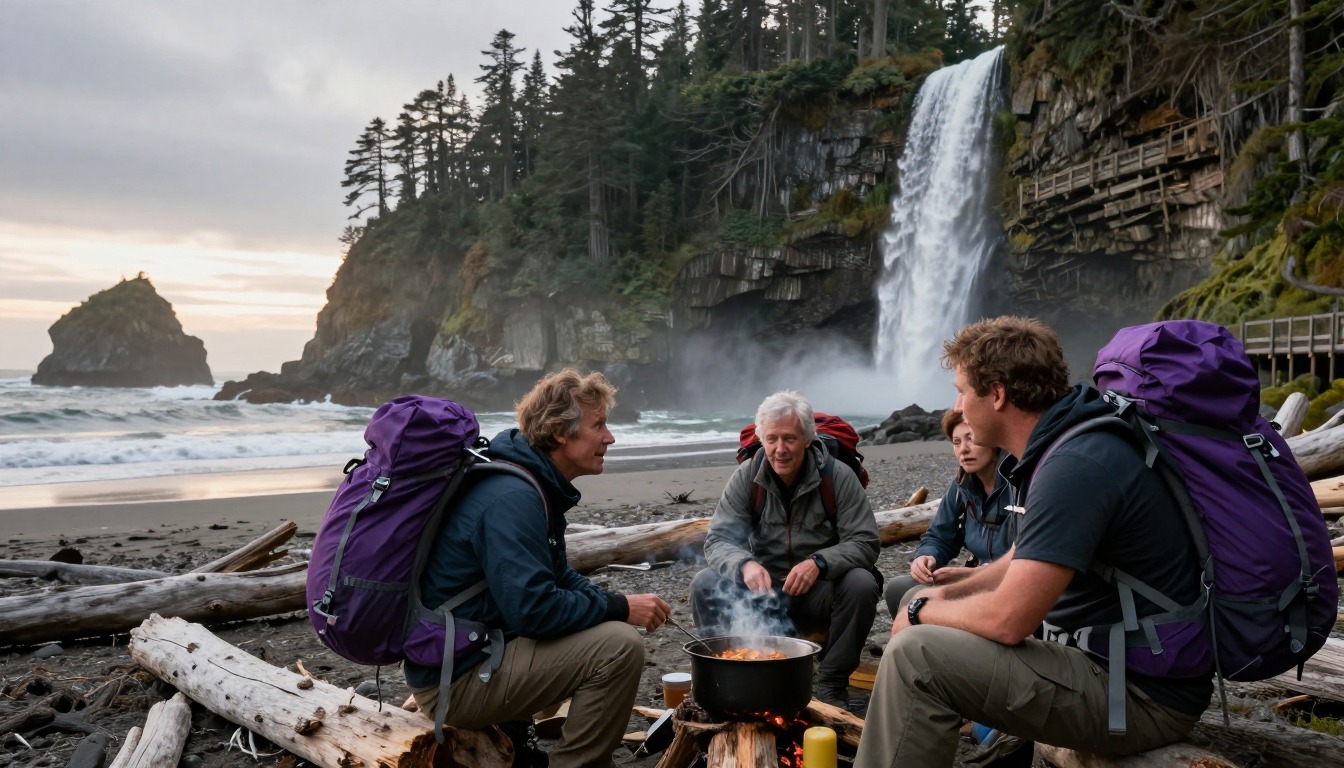
The West Coast Trail follows the rugged Pacific shore of Vancouver Island. Most people take about a week, carrying everything on their backs and sleeping at beach or forest campsites.
Parks Canada runs the trail and opens it from May 1 to September 30. You need a reservation to hike it.1 Book early and check the official page for the latest rules.
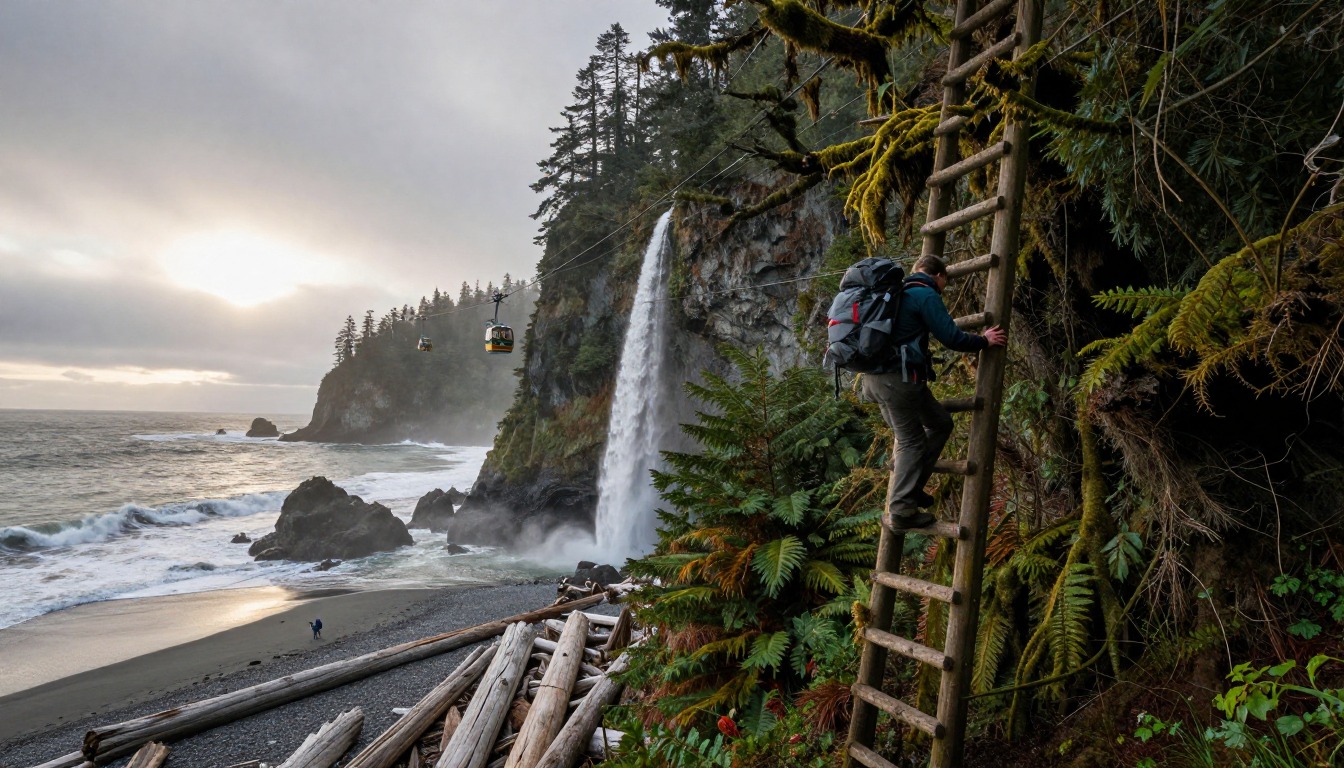
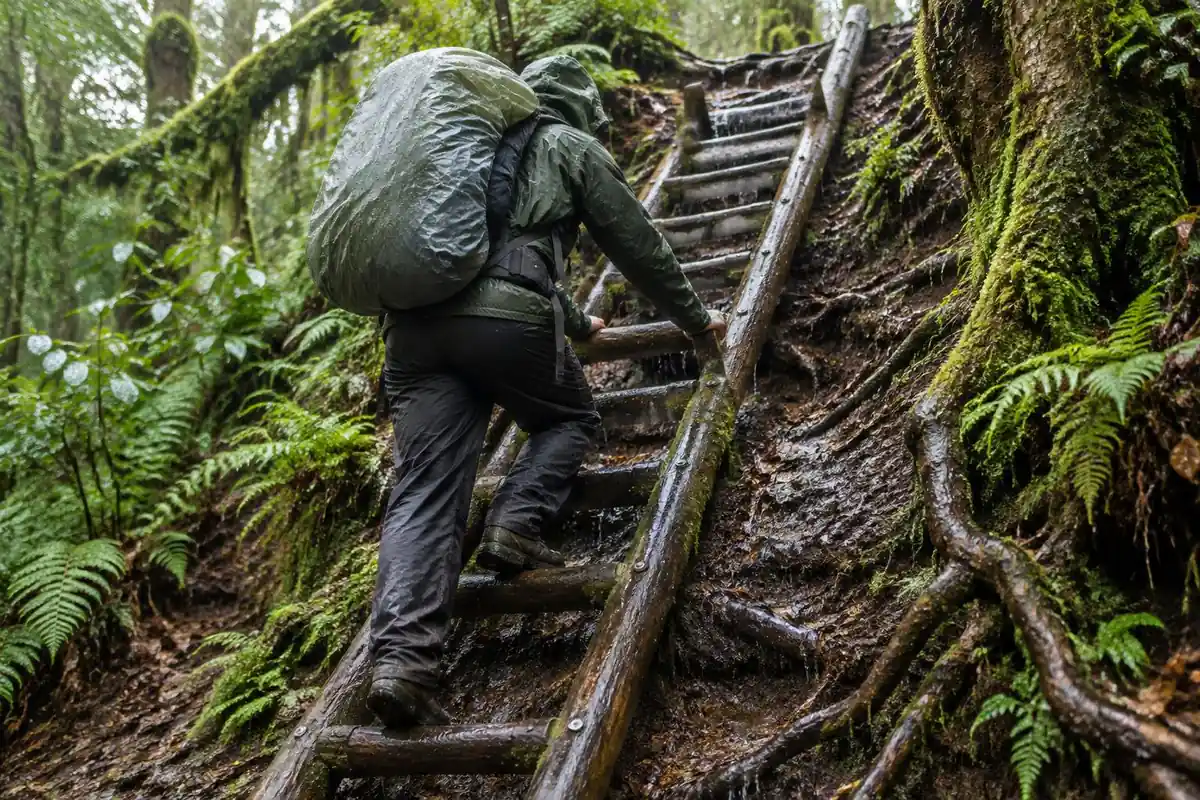
The trail is hard in a hands-on way. You climb long wooden ladders, ride small cable cars over rivers, walk through deep mud and cross slippery rock on the beach at low tide. Rain is common. Your pack needs to stay dry inside, sit snugly on your back and not be heavier than it has to be. Think of it like carrying a suitcase up a fire escape in the rain: the lighter and more balanced the load, the safer every step feels.
What the hike is like
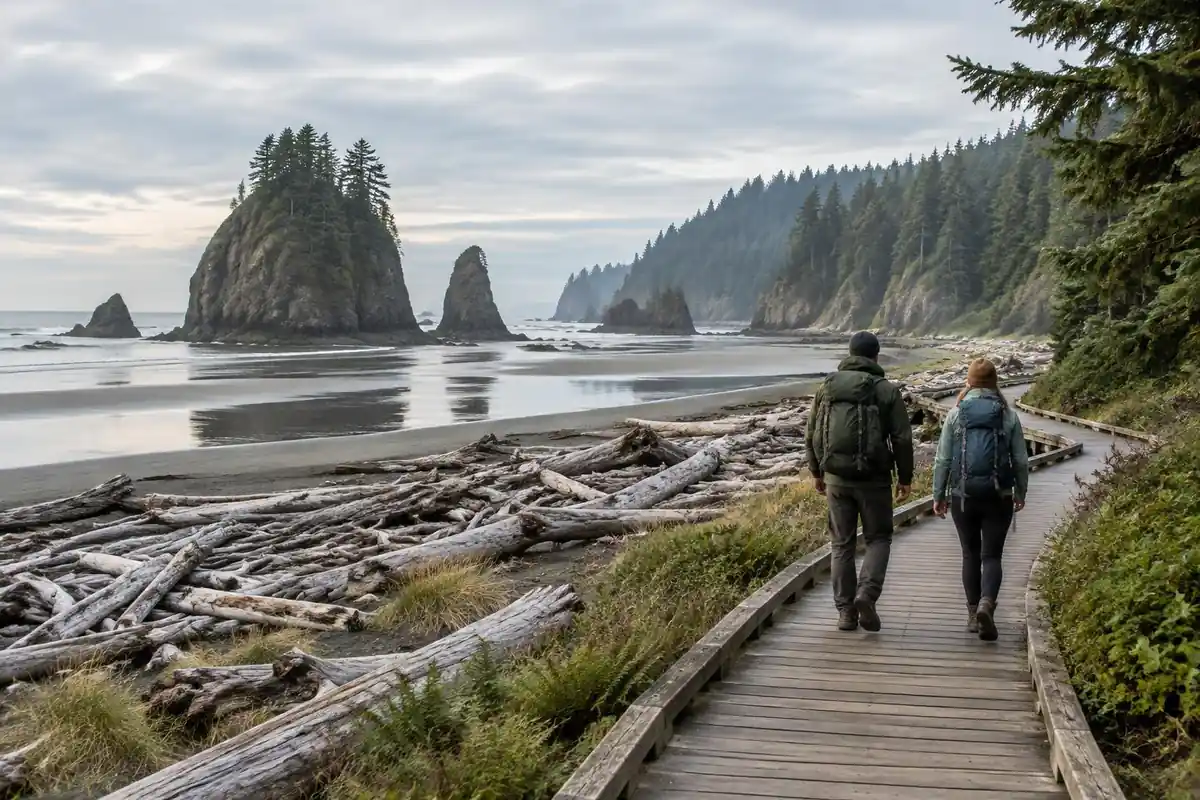
The West Coast Trail is less a path than a sequence of obstacles strung along a coastline. Inland sections are root-laced rainforest floor, deep mud holes, and long runs of aging boardwalk that get glassy when wet, broken up by wooden ladder systems bolted to cliff and gully walls — often several flights at a time, straight up and straight back down. Rivers are crossed by hand-hauled cable cars slung high above the water, by small boat crossings run seasonally along the route, and elsewhere by whatever log or bridge exists. Where the trail drops to the beach, walking turns to soft sand, slick shelf rock, and cobble, passable only when the tide allows, with surge channels and headlands forcing you back inland. The stretch nearer the southern trailhead is generally reckoned the muddiest and most ladder-heavy.
How to plan the itinerary
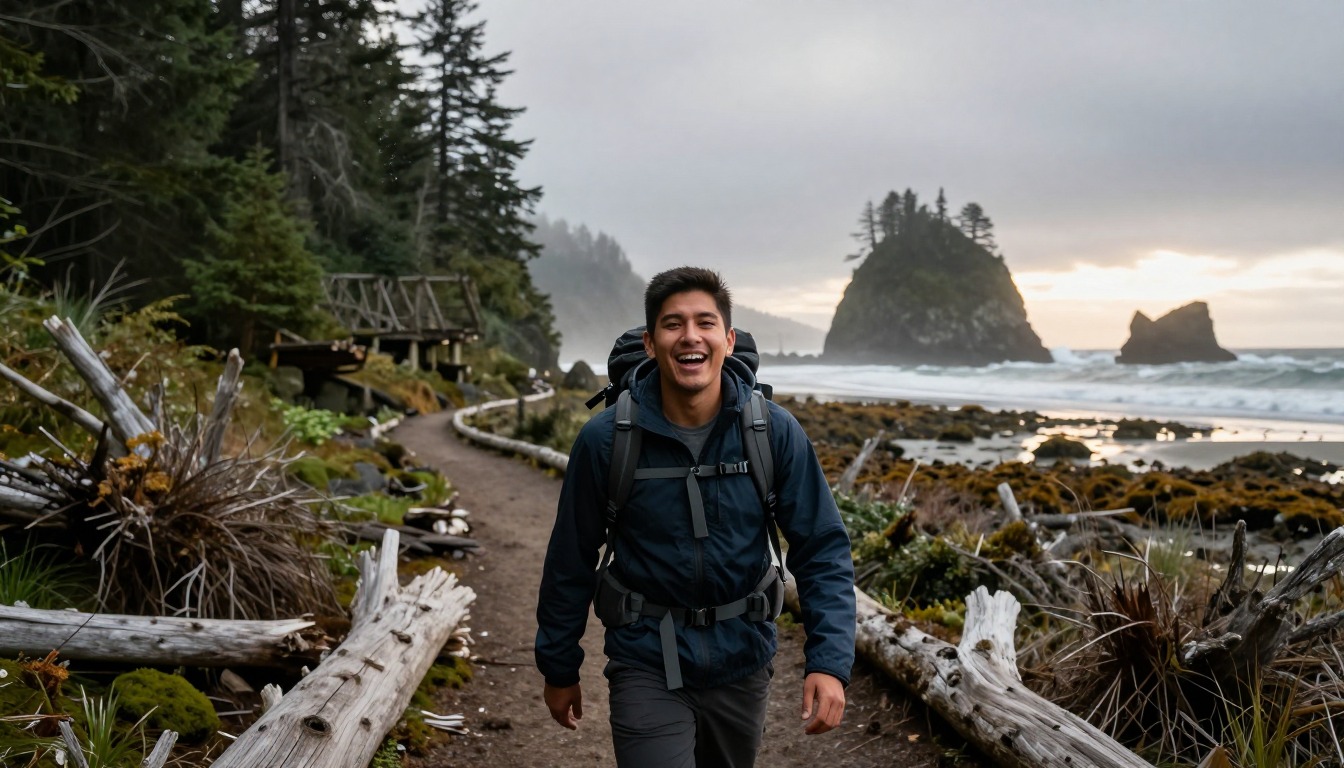
Most hikers walk the whole thing point to point over roughly a week, sleeping at the designated beach and forest camps and covering a stage a day — though the tide tables, not the map, determine what each day actually looks like. Direction is a genuine choice: many start at the harder southern end to get the ladders and mud done while legs are fresh, while others prefer to ease in from the north. A mid-route access point lets some hikers do half the trail rather than all of it. Build at least one spare day into your plans for weather, a tide window you can't use, or a slower day than expected, and allow time at the start for trailhead logistics before you actually begin walking.
Plan this trip in 5 steps
-
Pick the right pack
Match a pack to your trip, fit and priorities.
-
Plan food & water
Calories, food weight and water for your days on trail.
Trail-specific tips
Plan every day around the tide tables and write the key windows somewhere you can read them in the rain — missing one costs hours, not minutes. Pack weight is the single biggest factor in how the ladders feel, so be ruthless before you start. Climb ladders facing in, one hiker per flight, and don't rush wet rungs. Keep one complete set of sleeping clothes permanently dry in a sealed bag. Waterproof footwear helps less than you'd hope; most people accept wet feet and manage them nightly. See /trail-smarts/ for food storage and wildlife practice.
Permits & rules
The West Coast Trail requires a Parks Canada overnight reservation and permit (plus trail-use and ferry fees), and involves fees, quotas and an orientation — check Parks Canada for the current rules. It is a serious, tide-dependent wilderness route — read the tide tables and closures, and check Parks Canada’s current wolf notice (closures and a ban on dogs).
Gear suited to this hike
Matched to the terrain and conditions here. Real products — check current price on Amazon.


Season and reservations
Parks Canada's page lists the West Coast Trail unit as open May 1 to September 30 and handles bookings for the trail through its reservation system, alongside campsites and the Broken Group Islands.1 The official home page does not spell out every trail rule, so read the linked trail-conditions and safety pages before you go. A reservation fee applies; check the official page for current details.
Because days are set by tides and weather, the page's advice to build in a spare day is also a pack decision: it means carrying at least one extra day of food. That food adds weight you feel on every ladder, so plan meals carefully rather than simply adding bulk.
Keeping the load dry and your feet healthy
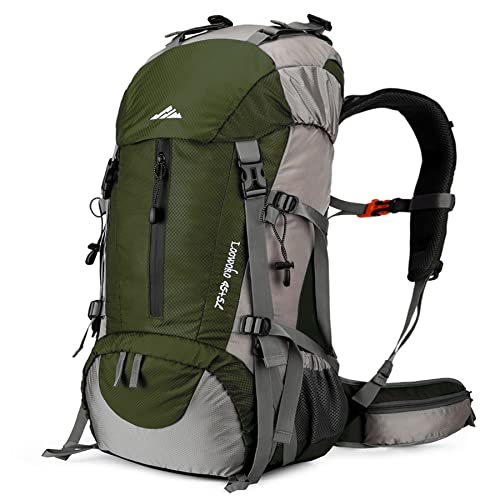
REI notes that most pack fabrics have a waterproof interior coating but still let water seep through seams and zippers, and that waterproof stuff sacks inside the pack can work better than a rain cover in wind.3 On a trail where you squeeze past brush and climb ladders, a cover also snags and flaps. Dry bags for the sleeping bag and camp clothes are the core of a wet-coast system.
Feet are the other priority. NIOSH says trench foot, also called immersion foot, can occur at temperatures as high as 60°F if feet stay wet, and that wet feet lose heat 25 times faster than dry feet.2 Whichever footwear you choose, dry socks for camp and time with bare feet each evening are worth their small weight. CDC adds that in cool conditions the priority is staying dry by layering and changing out of damp clothing quickly.5
How heavy, and where to put it
There is no official pack-weight limit for the trail, and published guidance varies widely. For context, a study of Appalachian Trail long-distance hikers found men averaged 19.6 kg and women 17.3 kg.6 The hiking community's 20% of body weight target is a rule of thumb rather than a research finding, and researchers note that foot pressure rises clearly once a pack passes about 10% of body weight.7
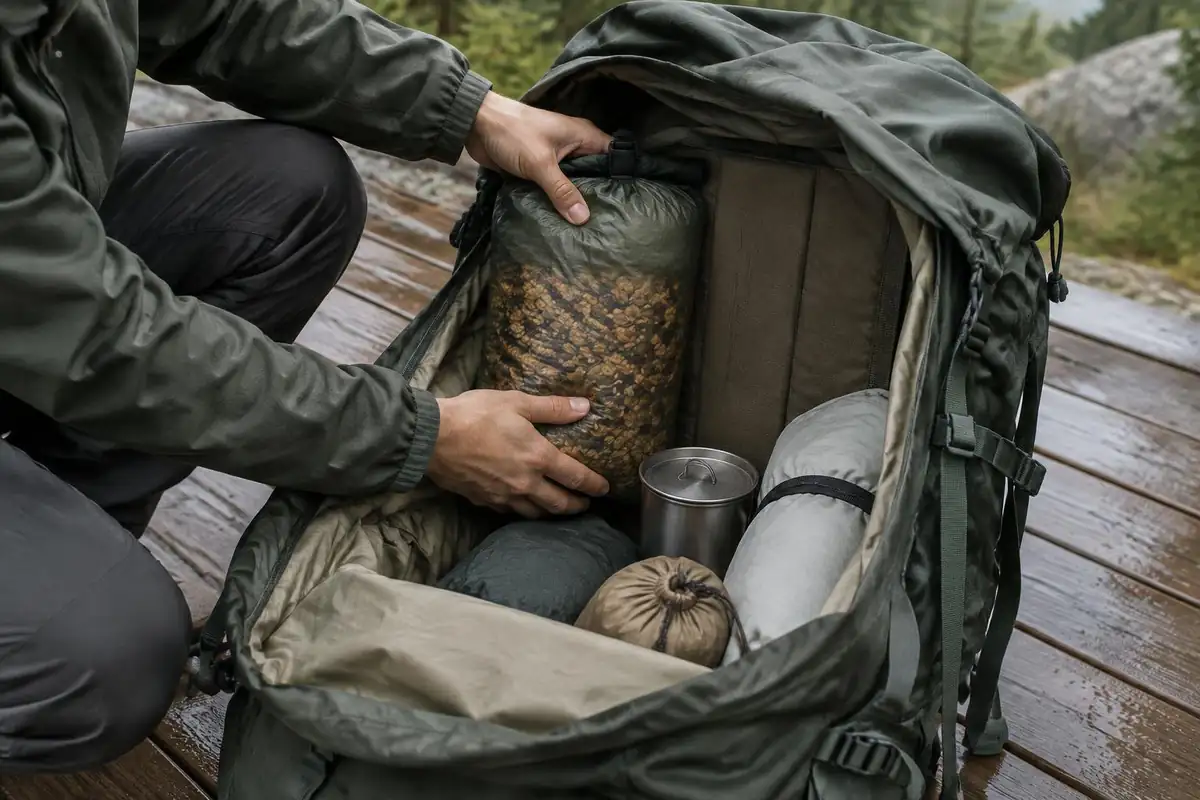
Where the weight sits matters on ladders and slick rock. Knapik's load-carriage review notes that low or mid-back placement may suit uneven terrain, while high placement may be best on even ground, and that hip belts reduce shoulder pressure.4 Keep dense food and water close to your spine, cinch compression straps so nothing sways, and carry nothing hanging off the outside that can catch on rungs.
Help can be slow on a remote coast. NPS notes that search and rescue can take hours or days depending on weather and resources,8 so a well-stocked first-aid kit and a way to call for help belong in the pack.
Common questions
How many days should I allow for the West Coast Trail?
Most hikers take about a week for the full route and are glad of it. Faster parties compress it, but tides and weather can stall anyone regardless of fitness. Planning a schedule with no slack is the classic mistake here — a spare day converts a stressful trip into a comfortable one, and it costs you nothing if you don't use it.
Which direction should I walk it?
Both work. Starting from the southern end front-loads the ladders, mud, and steepest ground while you're fresh but your pack is heaviest. Starting from the north gives an easier introduction and saves the hardest going for the end. Transport logistics at each trailhead often decide it in practice, since you'll need a ride at whichever end you finish.
How bad are the ladders?
They're the defining feature of the trail and they're relentless rather than technically difficult. Expect long flights, slippery rungs, and awkward transitions at the top and bottom, all with a full pack on. Hikers uncomfortable with heights generally cope, but the cumulative fatigue in arms and legs surprises people more than the exposure does.
Boots or trail runners for this trail?
Opinion genuinely splits. Sturdy boots with gaiters give better support on ladders, mud, and cobble, and keep grit out. Lighter trail runners drain faster and dry overnight, which suits hikers who accept permanently wet feet. Whichever you choose, aggressive tread matters most — the mud, wet boardwalk, and shelf rock all punish worn soles.
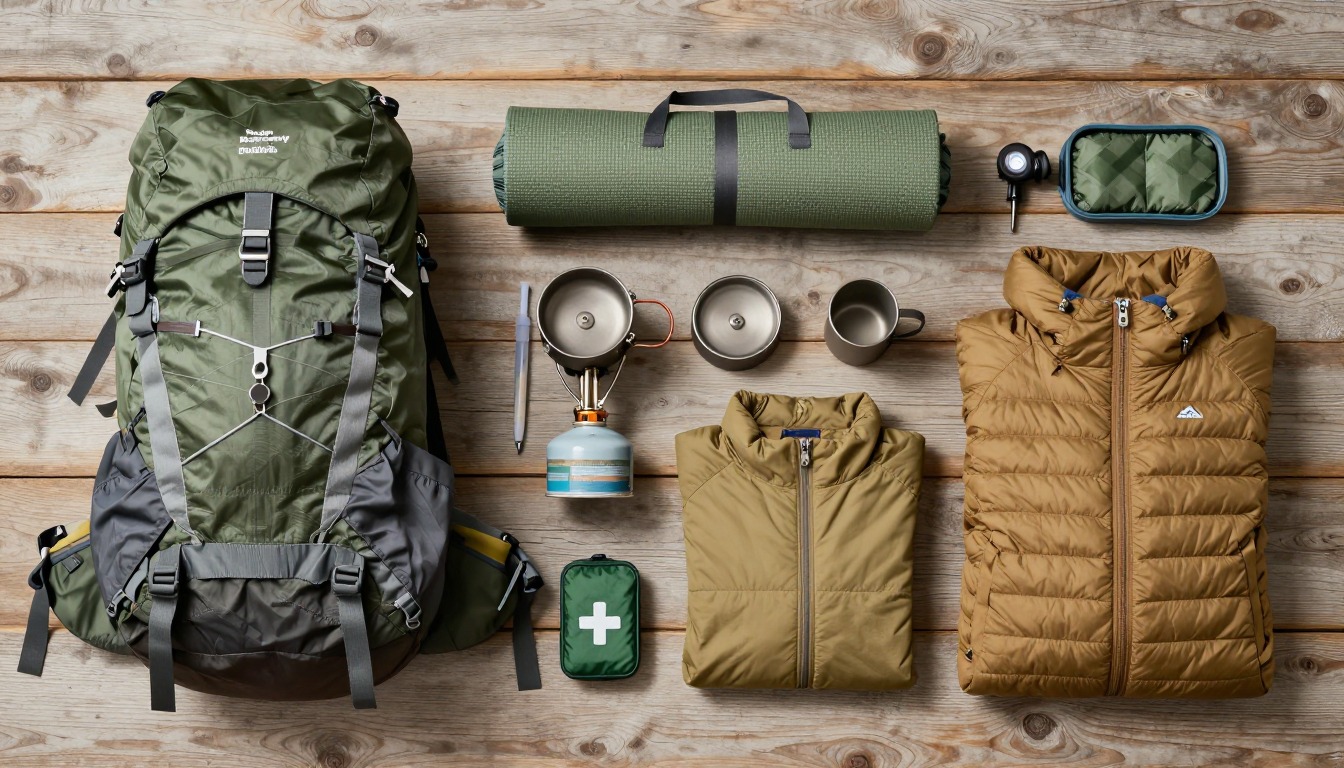
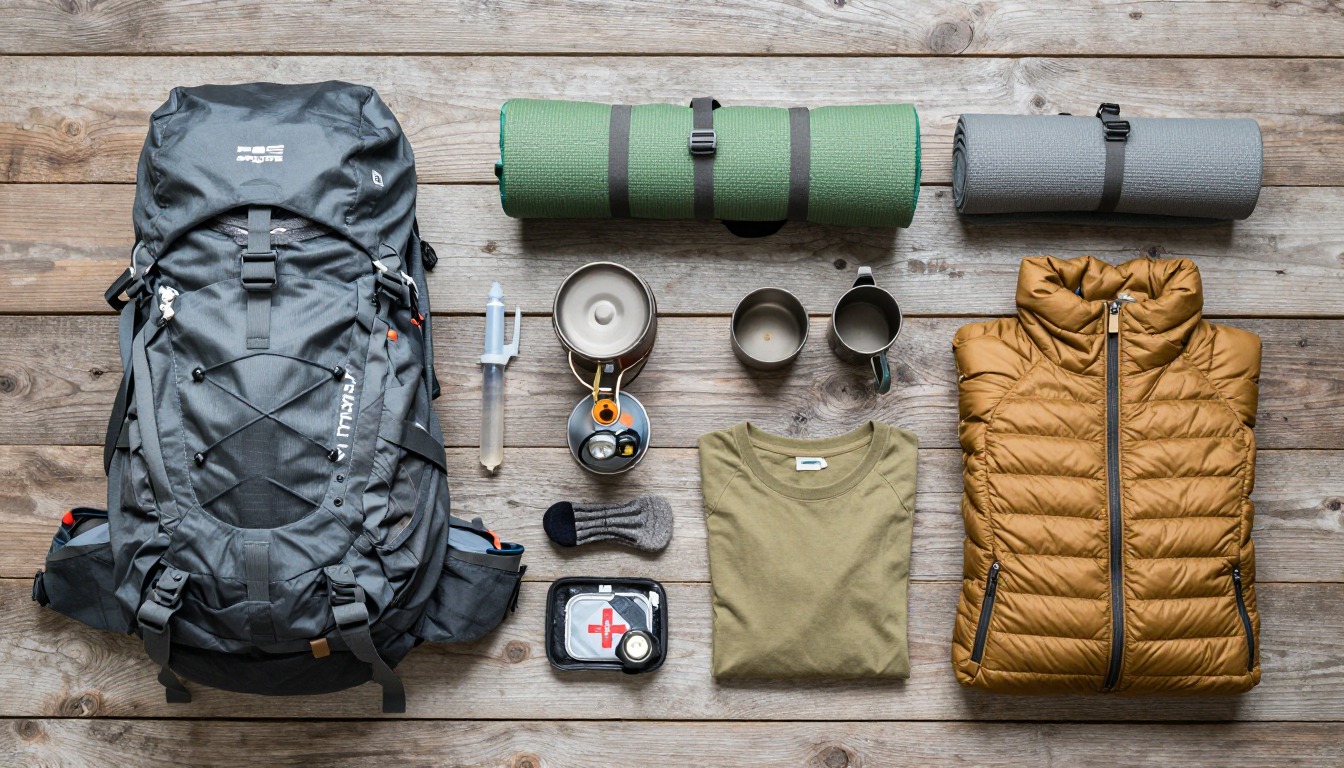
Complete gearsets for this trip
Full curated kits built for exactly this kind of hike.
Trail conditions, permits and access rules change without notice — always confirm current information on the official source above before you go. Some facts on this page are still pending owner verification and are marked accordingly. Product links and the accommodation map are affiliate links: we may earn a commission at no extra cost to you; product prices and availability are shown on Amazon, and accommodation prices on the booking site. See our affiliate disclosure.