
Affiliate disclosure: this page contains affiliate links. Purchases made through them may earn us a commission at no extra cost to you. See our affiliate disclosure.
In plain English
The West Coast Trail has no lodges or huts. If you hike it overnight, you sleep at marked camps along the coast, and Parks Canada handles the booking for those. It is like a cross-country road trip where the only motels are the ones you book months ahead: you cannot decide on the day.
The hiking season is fixed. Parks Canada lists the trail as open from May 1 to September 30. Outside those dates you cannot plan on it, and inside them the popular days fill first. Also check the park's bulletins. Parks Canada has posted notices about wolves in the area, including closures and dog rules.
Because the trail is long, remote and tied to the tides, your lodging choices include the night before and after too. Small towns at each end are where you sleep before and after the hike. Confirm bookings, rules and closures with Parks Canada before you go.
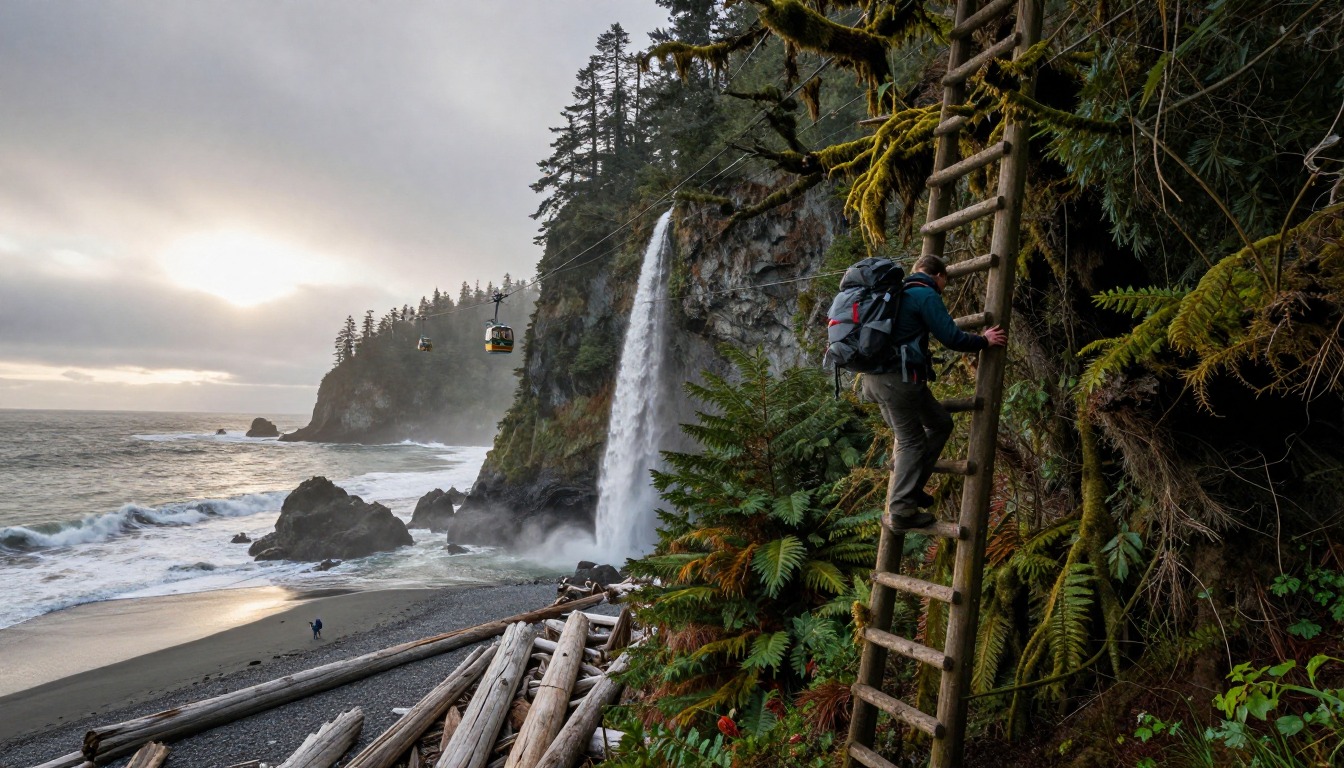
The West Coast Trail is a rugged 75 km coastal backpack through Pacific Rim National Park Reserve on Vancouver Island, British Columbia — a route of ladders, cable-car river crossings, boardwalks, muddy forest, and tide-dependent beach walking. There's no lodging on the trail itself: overnight hikers sleep at designated beach and forest tent camps managed by Parks Canada, and where you'll spend each night is largely decided before you ever reach the trailhead, once your permit and campsite plan are set.
Why hike here
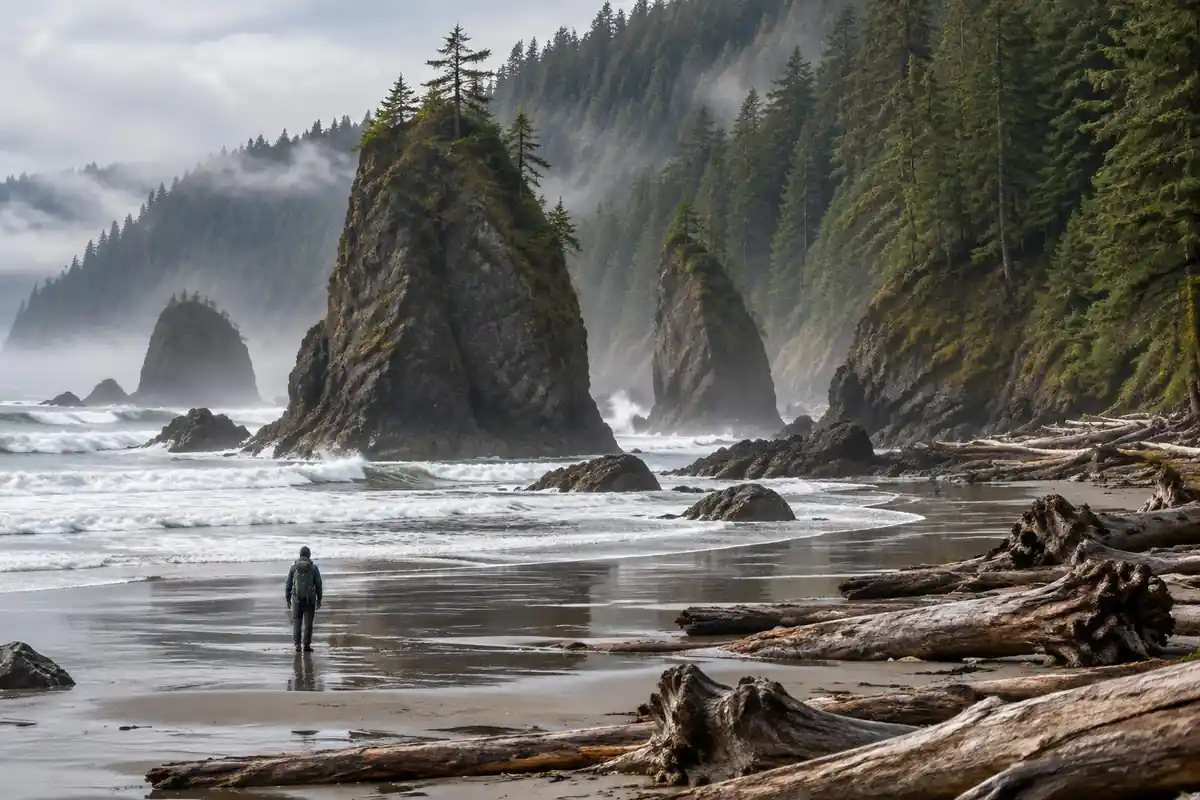
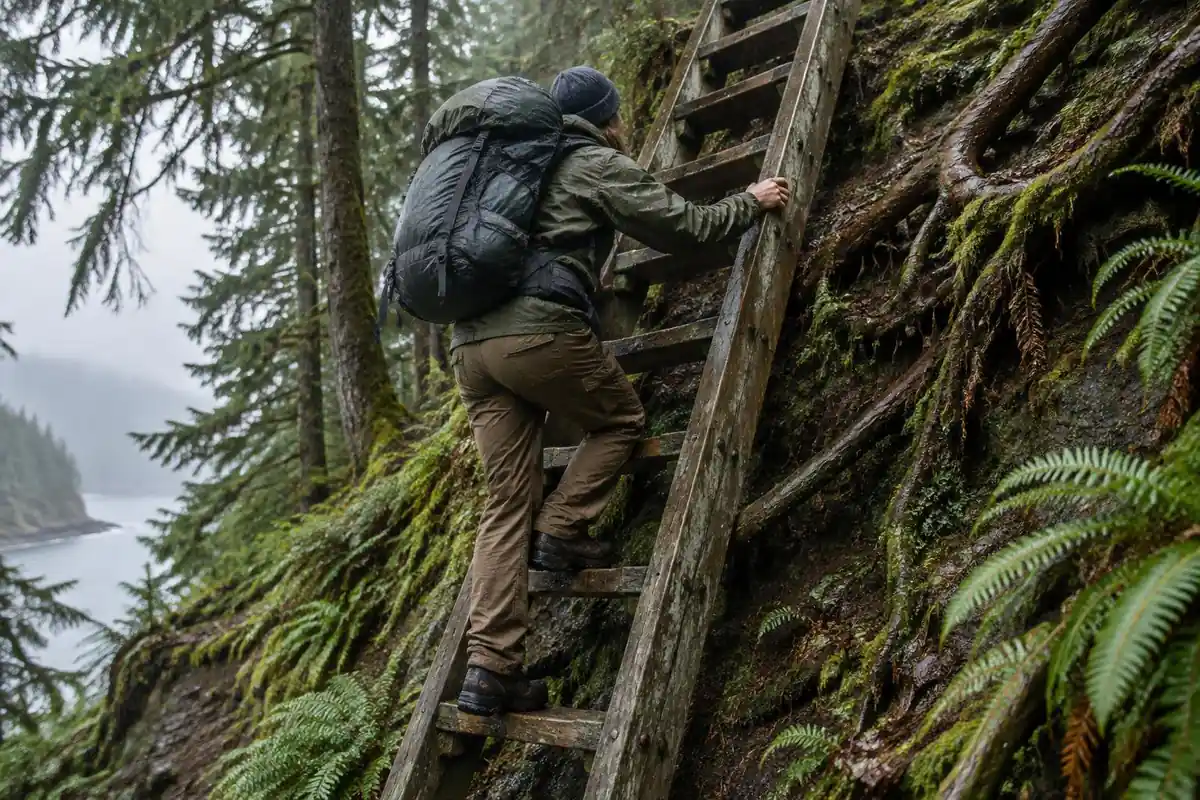
This is a trail that keeps changing under your feet. One stretch is soft, root-laced rainforest floor; the next is a slick boardwalk bridging a bog; then you're climbing a wooden ladder bolted to a cliff face, or crossing a river by cable car strung high above the water. Long sections only work at low tide, so the ocean itself sets your daily schedule — check the tables, walk when the water lets you, and wait when it doesn't. The coastline is the reward for all of it: long empty beaches backed by dense old-growth forest, sea stacks offshore, and days where the Pacific is the only sound. It's slow, physical, and occasionally awkward, and that's exactly why it earns its reputation as one of the more demanding coastal hikes in North America.
Getting there
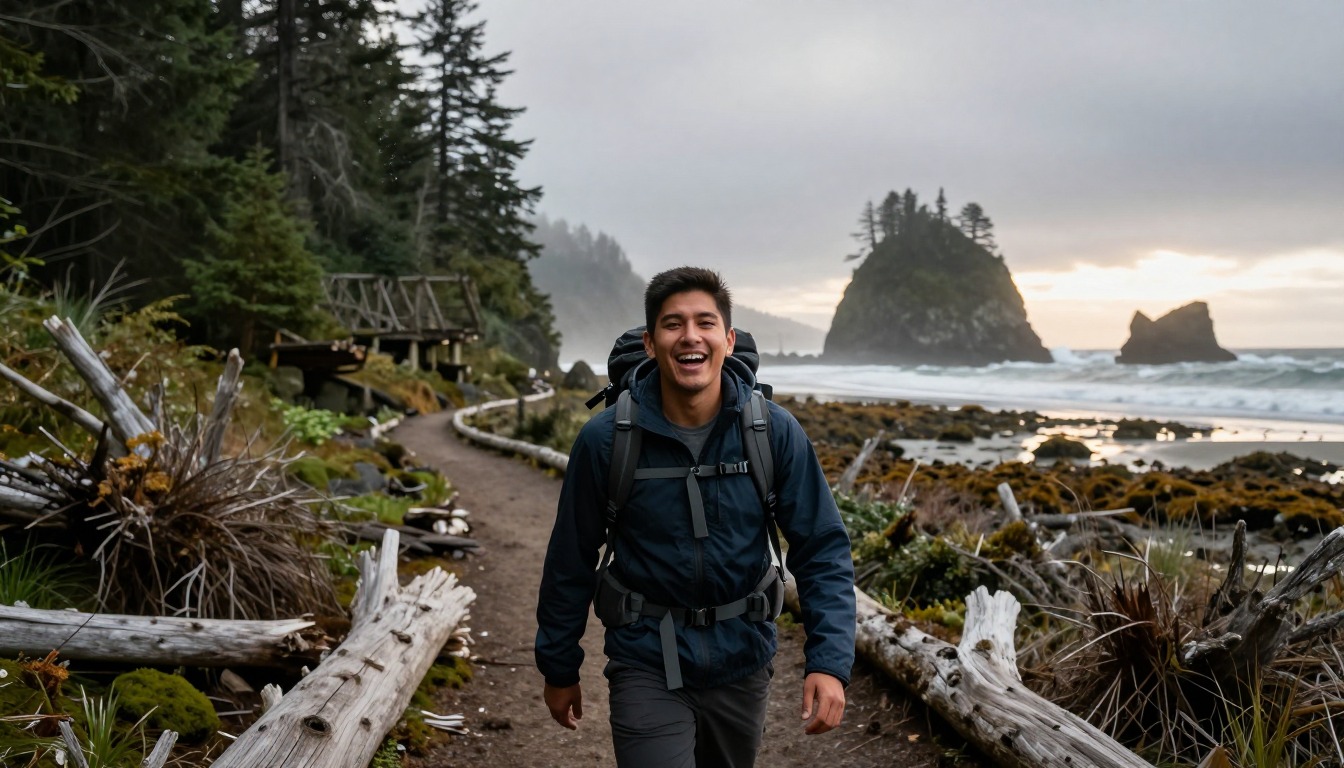
Getting to the West Coast Trail starts with reaching Vancouver Island, usually by ferry from the Vancouver area or a short flight into a regional airport, followed by a road transfer. The trail runs between two trailhead communities, Port Renfrew and Bamfield, so most hikers arrange transportation to one end and a pickup at the other, with Nitinaht offering a mid-trail access point for hikers joining or leaving partway along the route. Both Port Renfrew and Bamfield are small and remote, so book rooms or vehicle storage well ahead, and confirm your return transport before you start hiking, not after.
Where to stay
The realistic options, closest-to-the-trail first. Book through the official links — we don't list prices or availability because they change all the time.
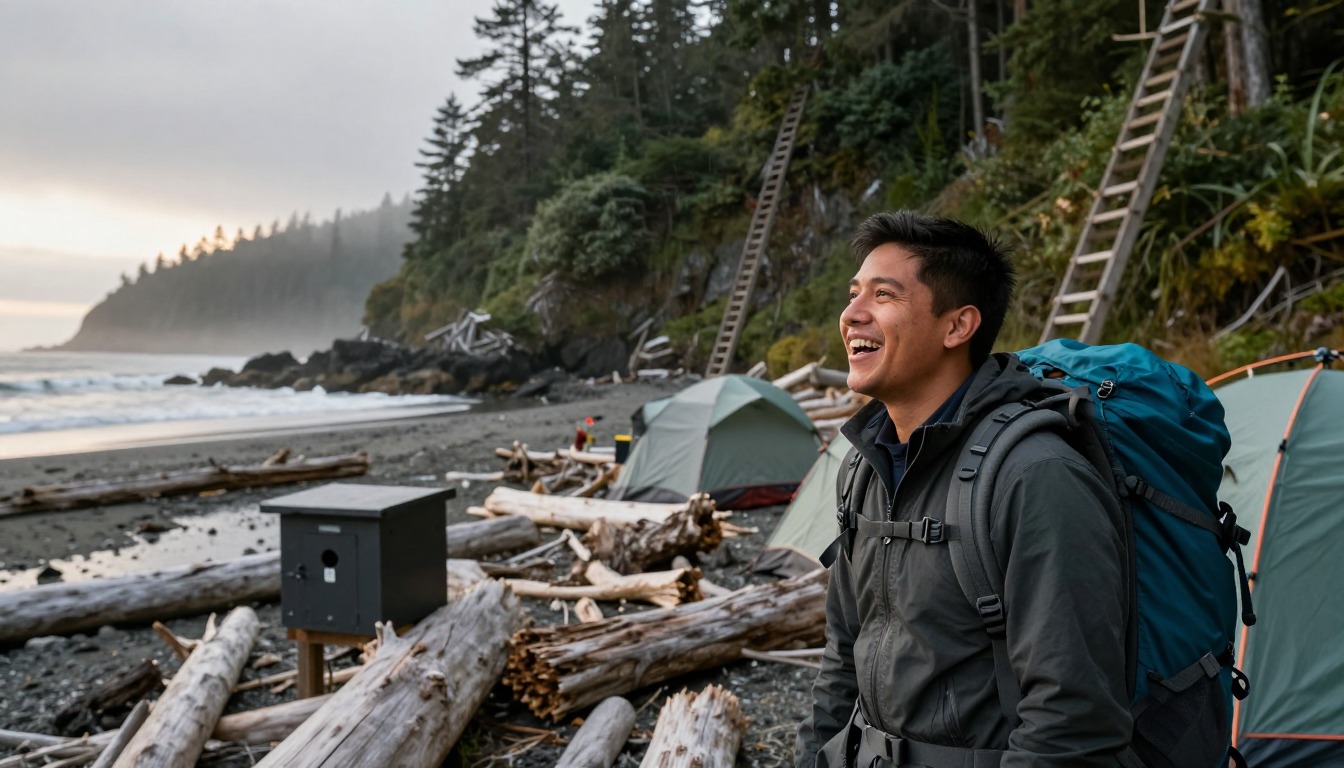
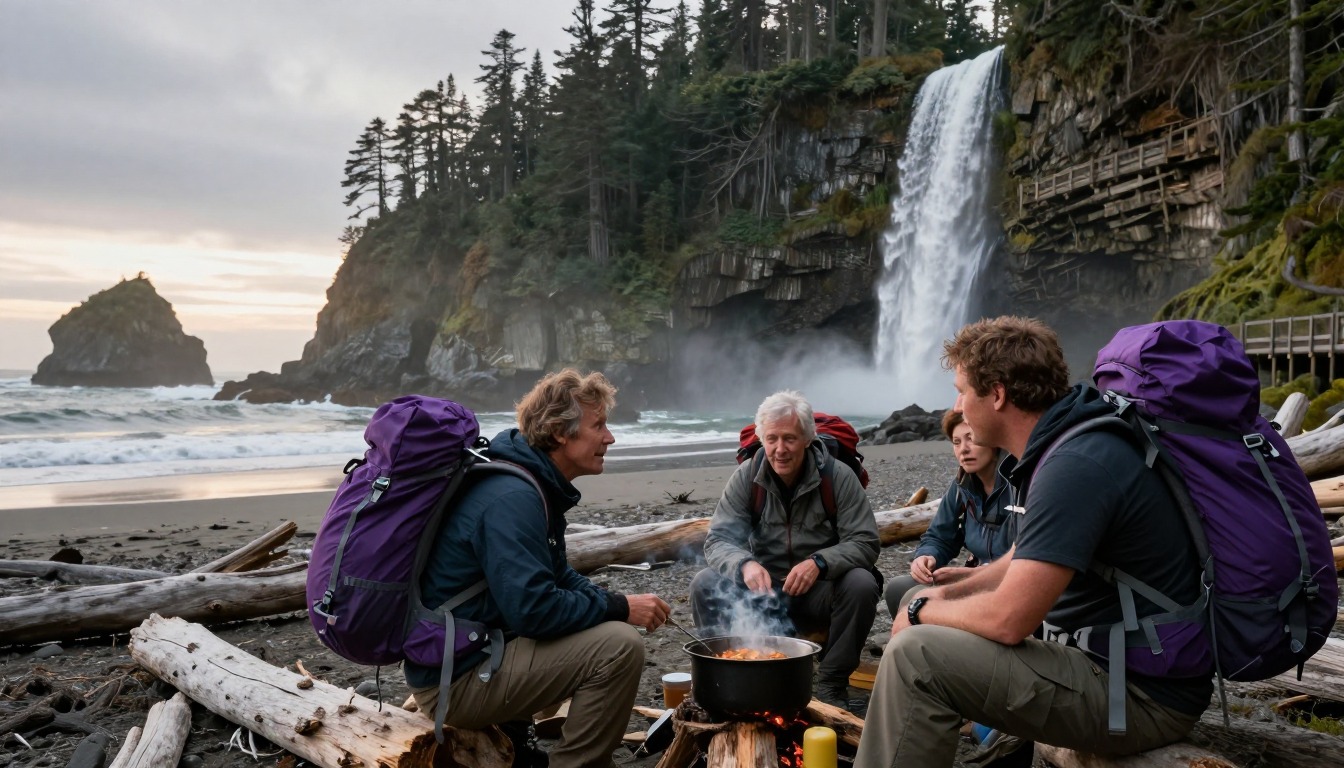
For example: Designated tent sites along the coast, spaced for a multi-day thru-hike
Every hiker — the trail is a wilderness backpack with no lodges.
An overnight-use permit and reservation are required; quotas fill early.
Parks Canada reservation & permitFor example: Rooms and rentals at the trailhead communities (and Nitinaht for the middle access)
Hikers the night before and after — plus ferry/road logistics.
Base here to catch the trailhead orientation and ferry crossings.
Nearby-town lodging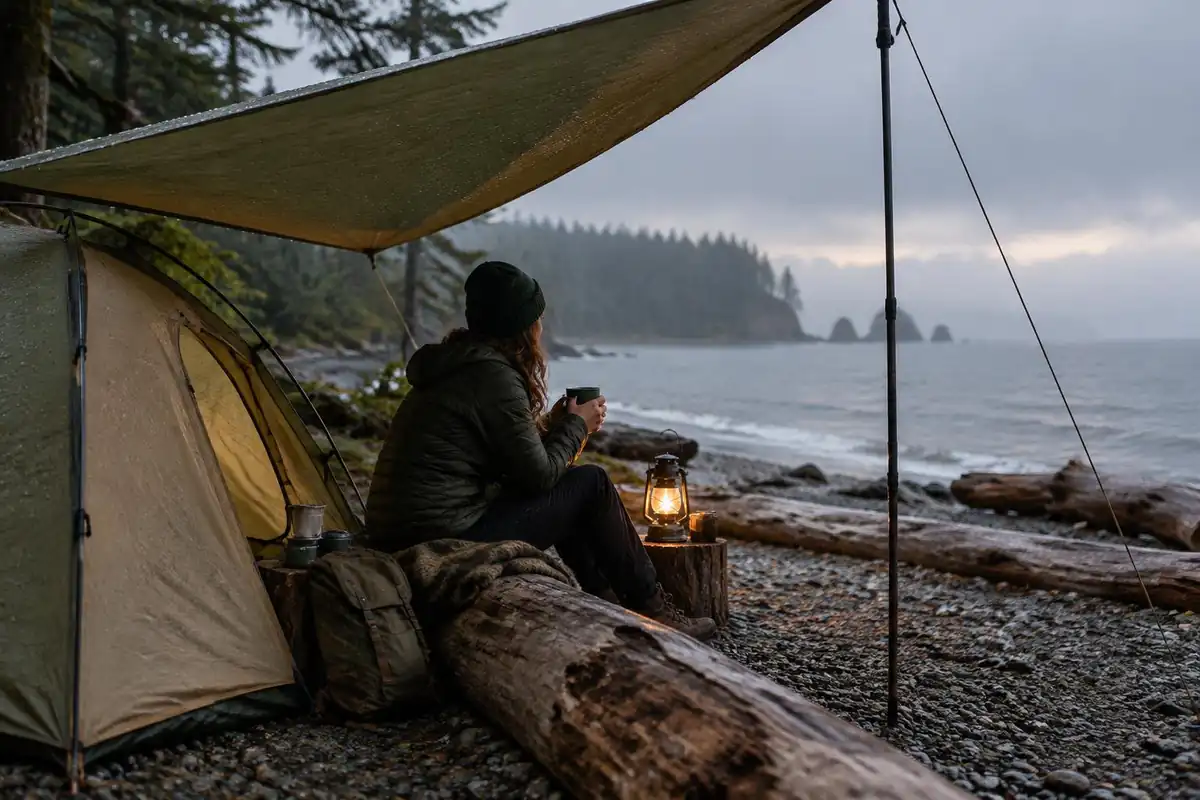
Permits & rules
The West Coast Trail requires a Parks Canada overnight reservation and permit (plus trail-use and ferry fees), and involves fees, quotas and an orientation — check Parks Canada for the current rules. It is a serious, tide-dependent wilderness route — read the tide tables and closures, and check Parks Canada’s current wolf notice (closures and a ban on dogs).
Gear you'll want for this trip
Matched to the terrain and conditions here. Real products — check current price on Amazon.


How the reservation system defines your itinerary
Parks Canada's Pacific Rim page lists back-country camping on the West Coast Trail and in the Broken Group Islands, and a reservations service that covers campsites, the West Coast Trail and the Broken Group Islands.1 Since you sleep only in designated camps, the reservation determines how far you can travel each day, not the other way around. Choosing a start date is choosing your whole schedule.
The page also lists the trail's operating dates as May 1 to September 30.1 That window is short, so start dates in the middle of summer are the ones that go first. Orientation, fee and quota details belong to Parks Canada's booking process, so read them there rather than relying on a summary.
Packing for a trail with no lodging
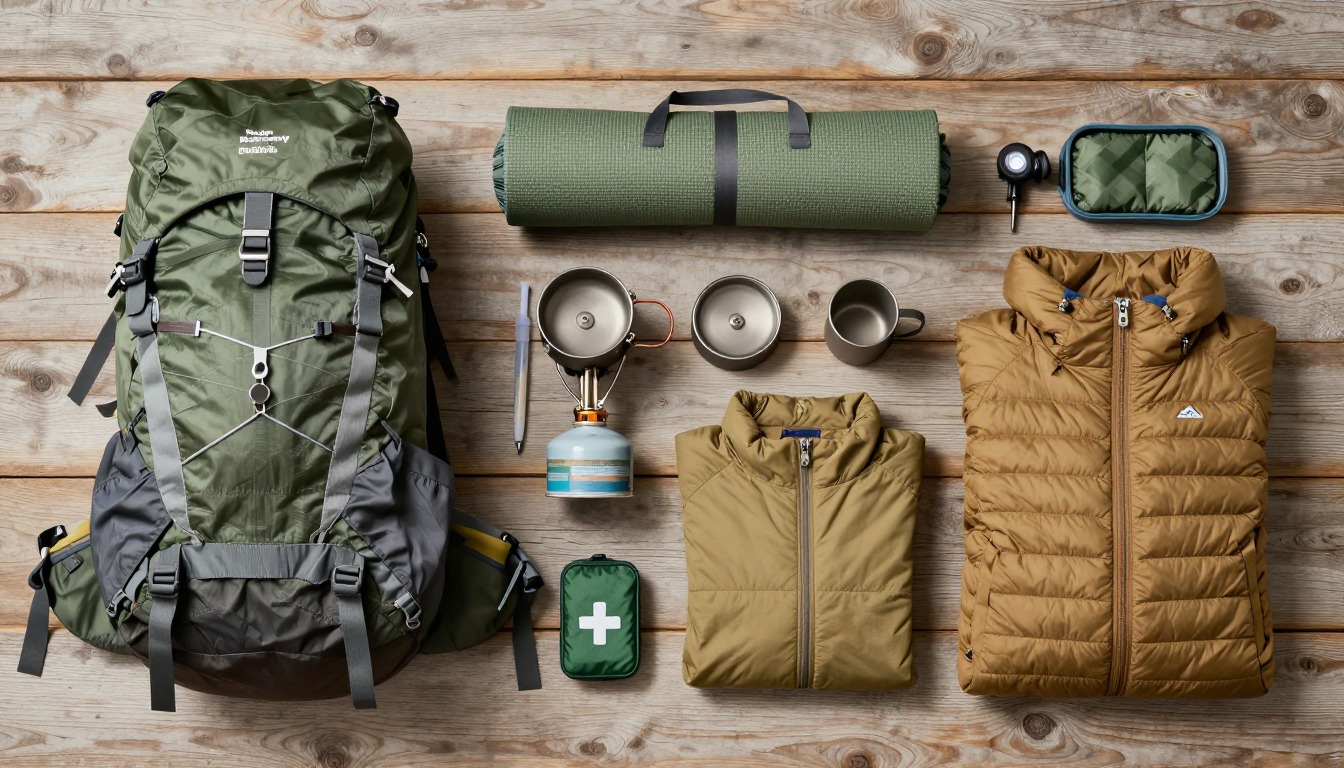
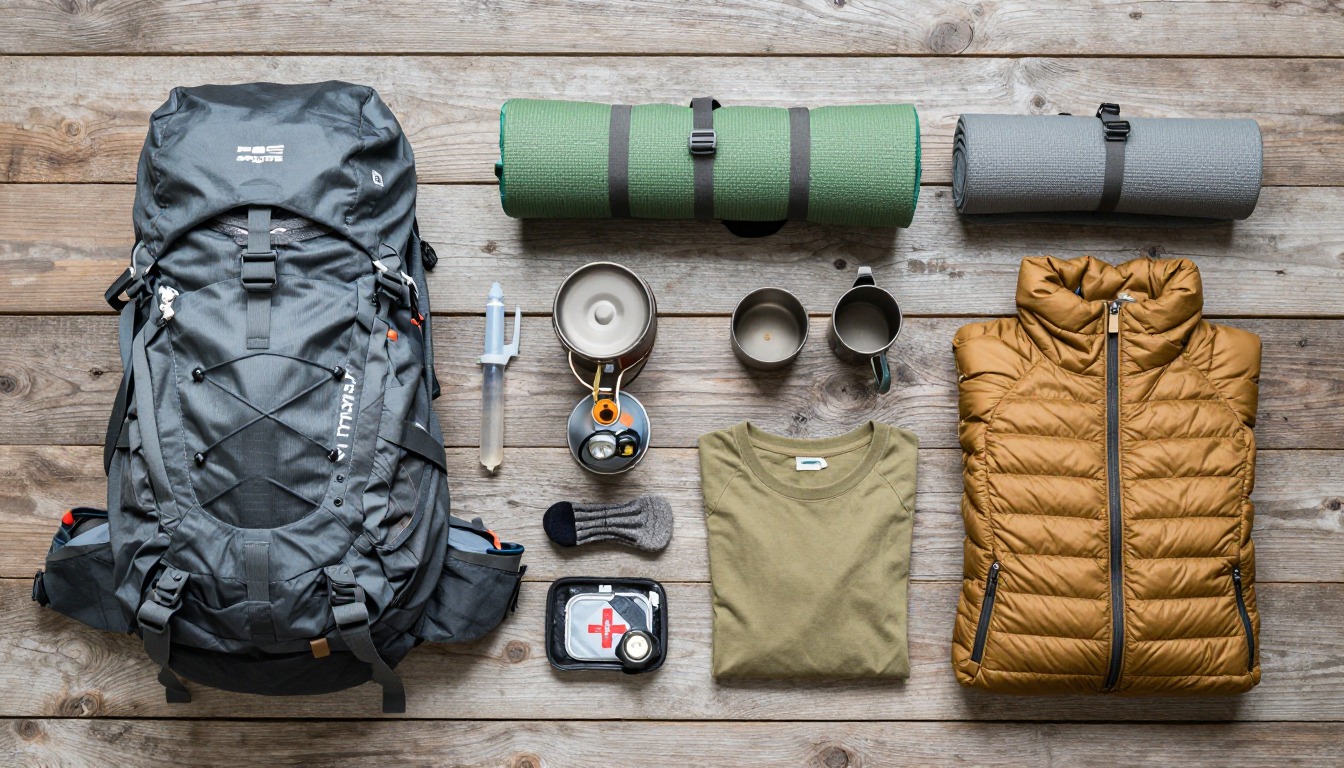
With no lodges, a multi-night trip on this coast is a full backpacking trip. Washington Trails Association describes 50 to 70 liter packs as suited to trips of three to seven nights.3 That is a general band, not a rule for this trail. It does show that the shelter, sleeping system, stove and multi-day food will fill a pack, so weight and waterproofing matter.
Food storage is part of camp planning. The National Park Service says bears treat any scented item, including toiletries and trash, as food, and that storage rules vary by park.4 Ask Parks Canada what storage is required at these camps, and keep scented items out of the tent.
Wet, tides and the time it takes to get help
The trail is wet and tide-dependent, so you should plan for being cold and damp. The CDC says hypothermia can develop even in air above 40°F when a person gets chilled by rain, sweat or cold water.5 Keep one dry set of clothing for sleeping and do not wear it on the trail.
On a remote coast, rescue takes time. The National Park Service says search and rescue can take hours or days depending on weather and resources, and that a whistle helps rescuers find you and saves energy compared with yelling.2 It also advises leaving a trip plan with a trusted person who is not on the trip.6 Give them your camp reservation dates, since those fix where you should be each night.
Parks Canada's page currently carries a wolf notice with closures, dog prohibitions and a warning, so check the latest bulletins.1
Common questions
Do I need a permit to hike the West Coast Trail?
Yes. The West Coast Trail requires a Parks Canada overnight reservation and permit, and spots fill early, so reserve well in advance. Fees, daily quotas and orientation requirements are set out in Parks Canada's booking process, so read them there rather than relying on a summary. Parks Canada has also posted a wolf notice for the park with closures and dog prohibitions, so check the current bulletins before you choose dates.
Where do hikers sleep along the trail?
There's no lodging on the West Coast Trail itself — no lodges, huts, or cabins anywhere along the route. Overnight hikers camp at designated beach and forest tent sites spaced along the 75 km trail, covered by the same Parks Canada permit. Before or after the hike, the trailhead communities of Port Renfrew and Bamfield have rooms and gear rentals available.
When is the best time to hike, and what's the biggest hazard?
The trail is open May through September and closed the rest of the year. Tide-dependent beach sections are the trail's defining hazard: some stretches become impassable at high water, so hikers need to read tide tables carefully and time each day's walking around them, rather than around personal preference or schedule.
Complete gearsets for this trip
Full curated kits built for exactly this kind of hike — what to bring, why, and links to similar gear.
Lodging details are compiled from official parks, refuge associations and reservation systems and can change without notice. We publish no prices, availability or ratings — always confirm current information on the official site before booking or setting out. Product links and the accommodation map are affiliate links: we may earn a commission at no extra cost to you; product prices and availability are shown on Amazon, and accommodation prices on the booking site. See our affiliate disclosure.