
Best Time to Hike West Highland Way
The best time to hike West Highland Way is April to October, the window given in the official season guidance. Within it, long daylight and relatively warm months favor late spring through summer, while September and October trade lighter crowds for shorter days and heavier rain.
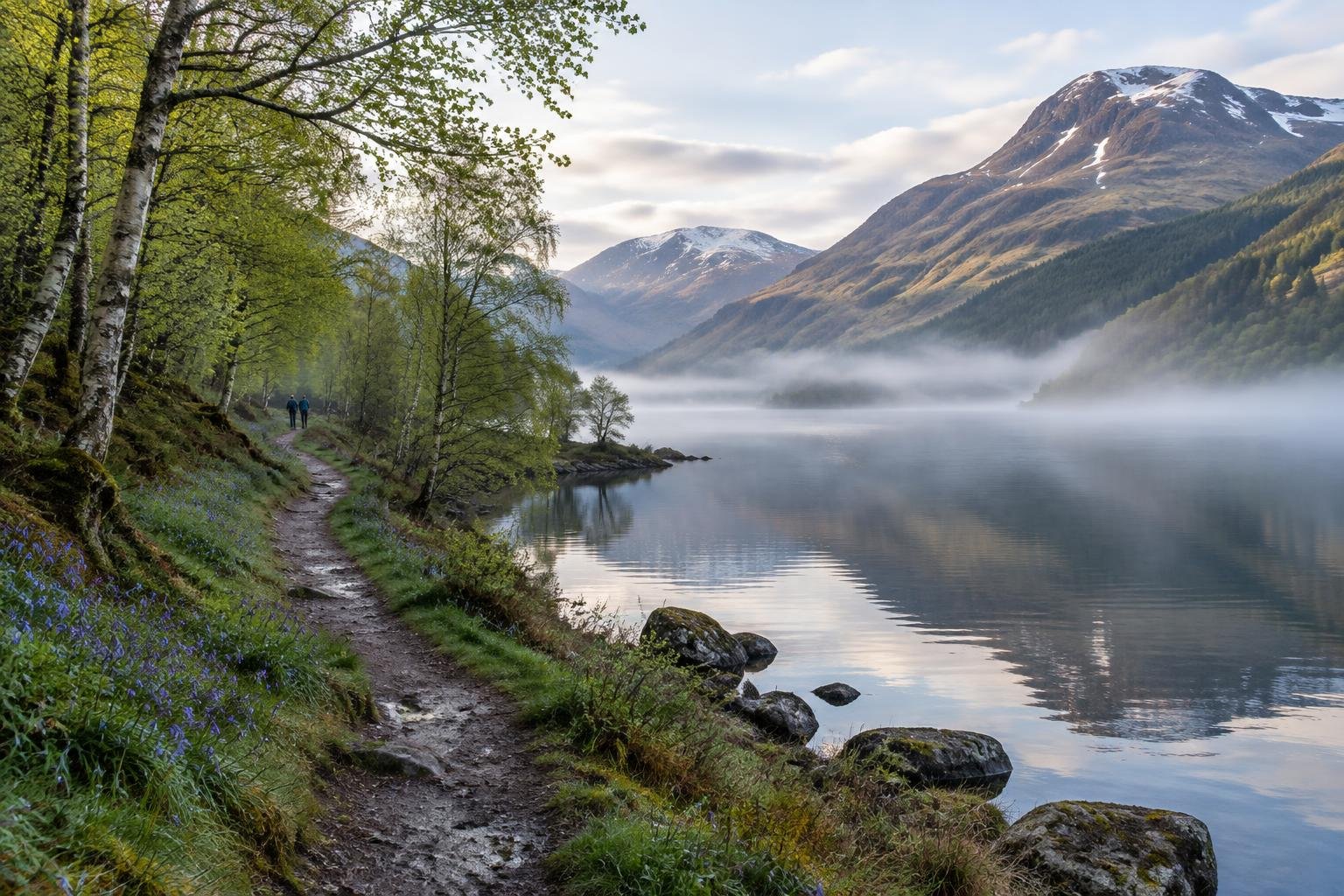
Month-by-month climate for West Highland Way
| Month | Relative warmth | Rain | Daylight |
|---|---|---|---|
| Jan | Coldest | 170 mm | 7.2 h |
| Feb | Coldest | 154 mm | 9.2 h |
| Mar | Coldest | 124 mm | 11.4 h |
| Apr | Cool | 85 mm | 13.9 h |
| May | Mild | 113 mm | 16.1 h |
| Jun | Warmest | 111 mm | 17.4 h |
| Jul | Warmest | 146 mm | 16.9 h |
| Aug | Warmest | 149 mm | 14.9 h |
| Sep | Warm | 140 mm | 12.4 h |
| Oct | Mild | 184 mm | 10 h |
| Nov | Cool | 165 mm | 7.8 h |
| Dec | Coldest | 198 mm | 6.6 h |
Modelled regional averages for 2010–2023 (rainfall) and calculated daylight hours; they describe the wider area, not a reading taken on the trail. “Relative warmth” compares each month with the warmest and coldest months of this place’s own year. It is not a temperature, and the high parts of a route are colder than the region around them.
The modelled averages show a wet place in every month, with rainfall typically between about 85 mm in April and 198 mm in December. April is the driest month shown, while October and December are the wettest. Daylight swings widely, from roughly 6.6 hours in December to about 17.4 hours in June. Relative to this region's own year, June, July and August are the warmest months, January through March and December are the coldest, and the shoulder months sit in between. These are regional averages, not trail measurements.
West Highland Way season by season
Spring · April to May
April opens the official season and is the driest month in the modelled data at about 85 mm, with daylight stretching to nearly 14 hours. Warmth runs cool in April and mild by May, so conditions are typically changeable, and rainfall climbs to about 113 mm in May. Long evenings make for flexible walking days, though you should still plan for wet spells and confirm current conditions with the managing authority before you go.
Summer · June to August
June through August are the warmest months of this place's year, and daylight peaks at about 17.4 hours in June, giving the most generous walking days. Rainfall typically sits around 111 to 149 mm a month, so being warmer does not mean being dry. Longer light helps with pacing and unexpected delays, while the managing authority's guidance and any seasonal camping restrictions along parts of Loch Lomond still apply.
Early autumn · September to October
September stays relatively warm, then October turns mild as rainfall rises to about 184 mm, one of the wettest months in the data. Daylight falls from about 12.4 hours in September to about 10 hours in October, so days shorten noticeably within the official season. This window can suit walkers who prefer quieter conditions, but it asks for more planning around light, wet weather, and finishing each day with margin.
Winter and early spring · November to March
These months fall outside the official season guidance and include the coldest months of the year relative to this place, with December also the wettest at about 198 mm. Daylight drops to roughly 6.6 to 7.8 hours in the darkest months, which compresses walking time considerably. The averages do not describe trail conditions, so anyone considering this period should check with the managing authority and local authorities first.
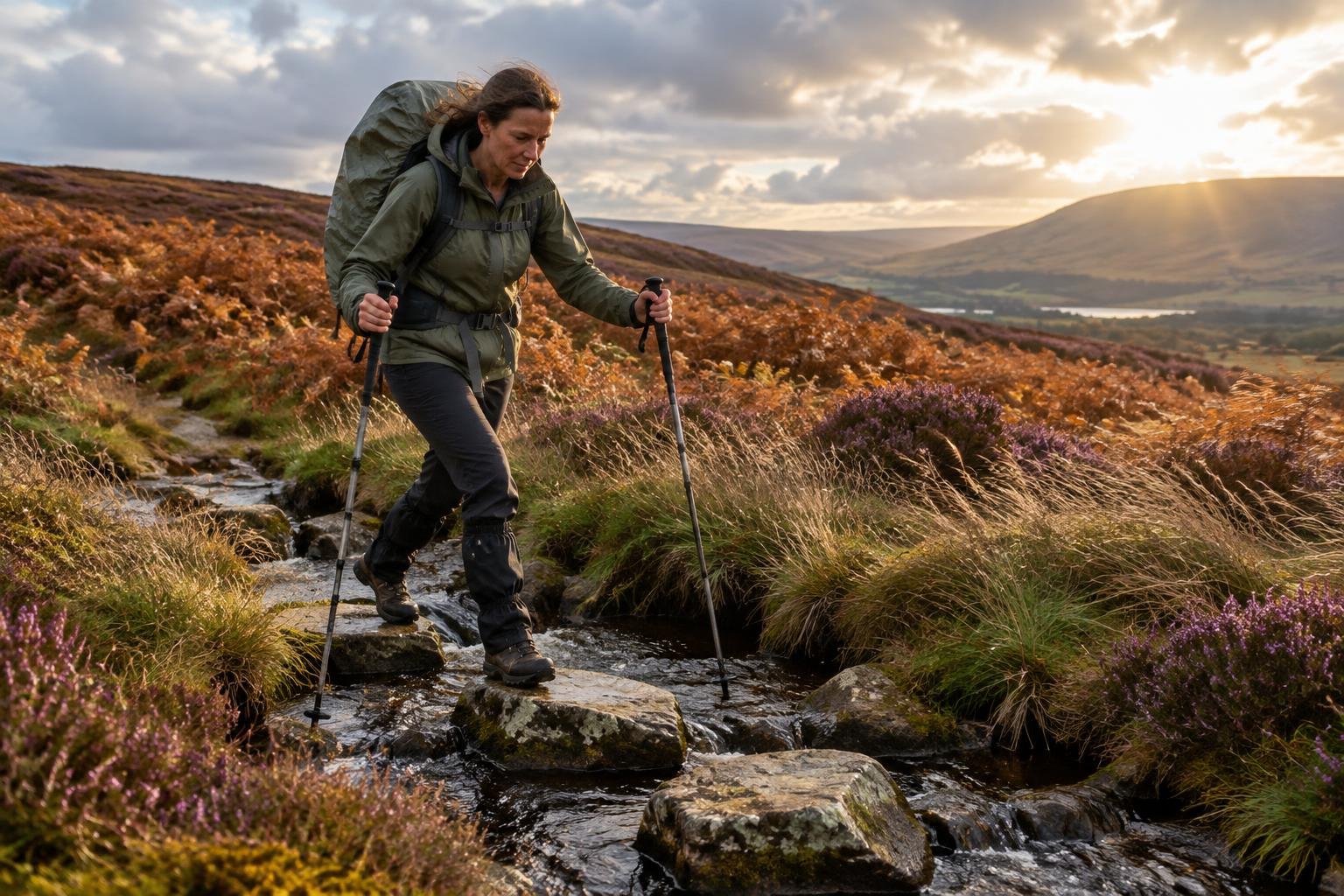
Official season guidance
West Highland Way / local authorities: April to October
No permit is required to walk. Wild camping is generally allowed under Scottish access rights, but seasonal byelaws restrict it along parts of Loch Lomond — use managed campsites there.
Check current dates on westhighlandway.orgWhat to pack for the season
Packing follows the season and the rain. In every month, reliable waterproof layers and a way to keep your gear dry matter, since rainfall is typically heavy year-round. Add sun protection for the long summer days, extra insulating layers toward the cool shoulder months, and a headlamp whenever daylight gets short in autumn.
For layering, rain cover and weather planning, see hiking in rain, heat and cold.
Timing mistakes to avoid
The main mistake is treating a single month as a guarantee. Every month here is wet in the modelled averages, so picking June or July for warmth does not remove the need for rain cover. Another is ignoring the official season guidance and walking outside April to October without checking with the managing authority. Finally, don't overlook the shrinking daylight in October, and remember that camping rules near Loch Lomond can restrict where you stay.
Common questions
When is the best time to hike the West Highland Way?
The official season guidance gives April to October. Within that, the warmest months relative to the year are June to August, with the longest daylight, while April is the driest month in the modelled averages. Choose based on whether you value warmth, light, or quieter conditions.
Which month is driest on the West Highland Way?
In the modelled regional averages, April is the driest month at about 85 mm of rain, followed by May at about 113 mm. These are averages for the region, not trail measurements, so conditions on any given day can differ and you should still carry rain protection.
How much daylight can I expect for walking?
Daylight varies greatly through the year, from about 6.6 hours in December to about 17.4 hours in June. During the official April to October season it ranges from roughly 10 hours in October to well over 16 hours in late spring and summer, which affects how you plan each day.
Is it worth walking the route outside April to October?
The official season guidance is April to October, and the months outside it include the coldest and wettest part of the year with very short daylight. Conditions change, and the data here are regional averages, so check with the managing authority and local authorities before planning a walk outside the season.
Sources
- West Highland Way / local authorities — westhighlandway.org: official season and permit guidance.
- NASA POWER (Prediction Of Worldwide Energy Resources): monthly temperature and rainfall averages, 2010–2023, from MERRA-2 reanalysis. Daylight hours are calculated from latitude.
Conditions, closures and permit rules change without notice — confirm current information with the managing authority before you go. See our editorial policy and affiliate disclosure.