
Best Time to Hike Snowdon / Yr Wyddfa
The best time to hike Snowdon is April to October, which is the window the Eryri National Park Authority gives. Within it, late spring through early summer pairs the longest daylight with lower rainfall, while winter conditions call for real mountaineering skills.
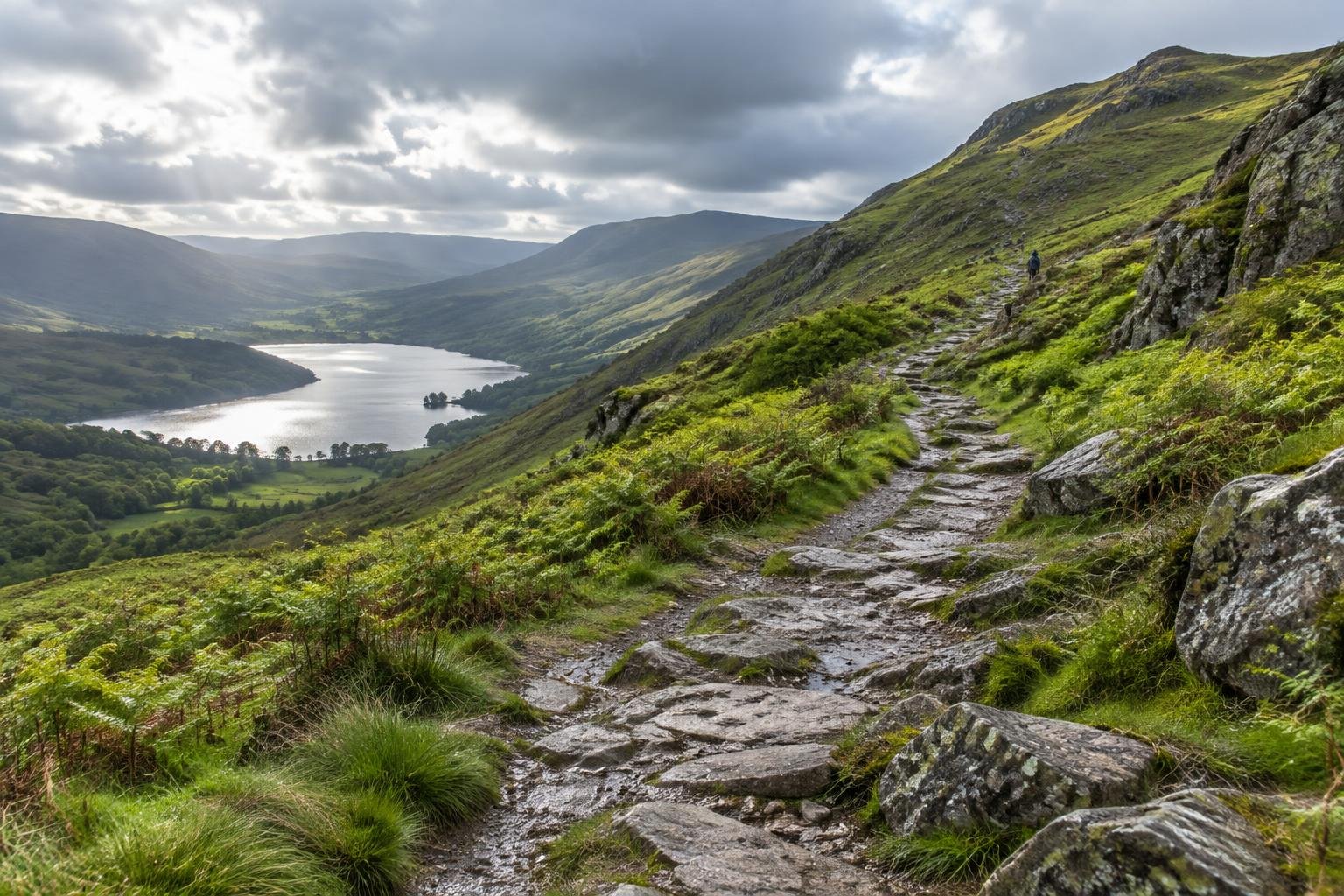
Month-by-month climate for Snowdon / Yr Wyddfa
| Month | Relative warmth | Rain | Daylight |
|---|---|---|---|
| Jan | Coldest | 127 mm | 7.8 h |
| Feb | Coldest | 116 mm | 9.6 h |
| Mar | Coldest | 99 mm | 11.5 h |
| Apr | Cool | 61 mm | 13.7 h |
| May | Mild | 71 mm | 15.6 h |
| Jun | Warmest | 83 mm | 16.7 h |
| Jul | Warmest | 92 mm | 16.2 h |
| Aug | Warmest | 107 mm | 14.5 h |
| Sep | Warmest | 114 mm | 12.4 h |
| Oct | Mild | 140 mm | 10.3 h |
| Nov | Cool | 136 mm | 8.3 h |
| Dec | Coldest | 167 mm | 7.3 h |
Modelled regional averages for 2010–2023 (rainfall) and calculated daylight hours; they describe the wider area, not a reading taken on the trail. “Relative warmth” compares each month with the warmest and coldest months of this place’s own year. It is not a temperature, and the high parts of a route are colder than the region around them.
The monthly figures show a clear wet and dry pattern. April is the driest month at about 61 mm, then May at 71 mm, while October (140 mm) and December (167 mm) are the wettest. Daylight swings from roughly 7.3 hours in December to 16.7 hours in June, a big difference for planning a summit day. Relative warmth peaks from June through September and is coldest from December to March. These are modelled regional averages, not readings taken on the mountain.
Snowdon / Yr Wyddfa season by season
Spring · April to May
Spring opens the official season. April and May are the two driest months in the data, at about 61 mm and 71 mm, and daylight stretches from around 13.7 to 15.6 hours. The warmth labels run from cool to mild, so conditions on the summit can feel far colder than at the car park. Weather on the mountain changes fast, so confirm current guidance with the Eryri National Park Authority before setting out.
Summer · June to August
June to August are among the warmest months of the year and have the longest days, with about 16.7 hours of daylight in June and 14.5 hours in August. Rain rises through the season, from roughly 83 mm in June to 107 mm in August, so showers remain likely. This is the most popular period, and the main paths can be busy. Long daylight gives flexibility on start times, though weather can still change quickly.
Early autumn · September to October
September is still warmest by the modelled labels, but rain climbs to about 114 mm, and by October it reaches around 140 mm with warmth easing to mild. Daylight shortens from about 12.4 hours in September to 10.3 in October, so a slower pace matters more. October closes the official season, and the managing authority advises checking conditions before you go as the weather turns.
Winter · November to March
November to March fall outside the recommended April to October window. Warmth runs from cool to coldest across these months, daylight drops to about 7.3 hours in December, and rainfall is high, around 167 mm in December. The official guidance states that winter needs mountaineering skills, so this is not the time for a casual walk. Check with the managing authority and assess your own experience honestly.
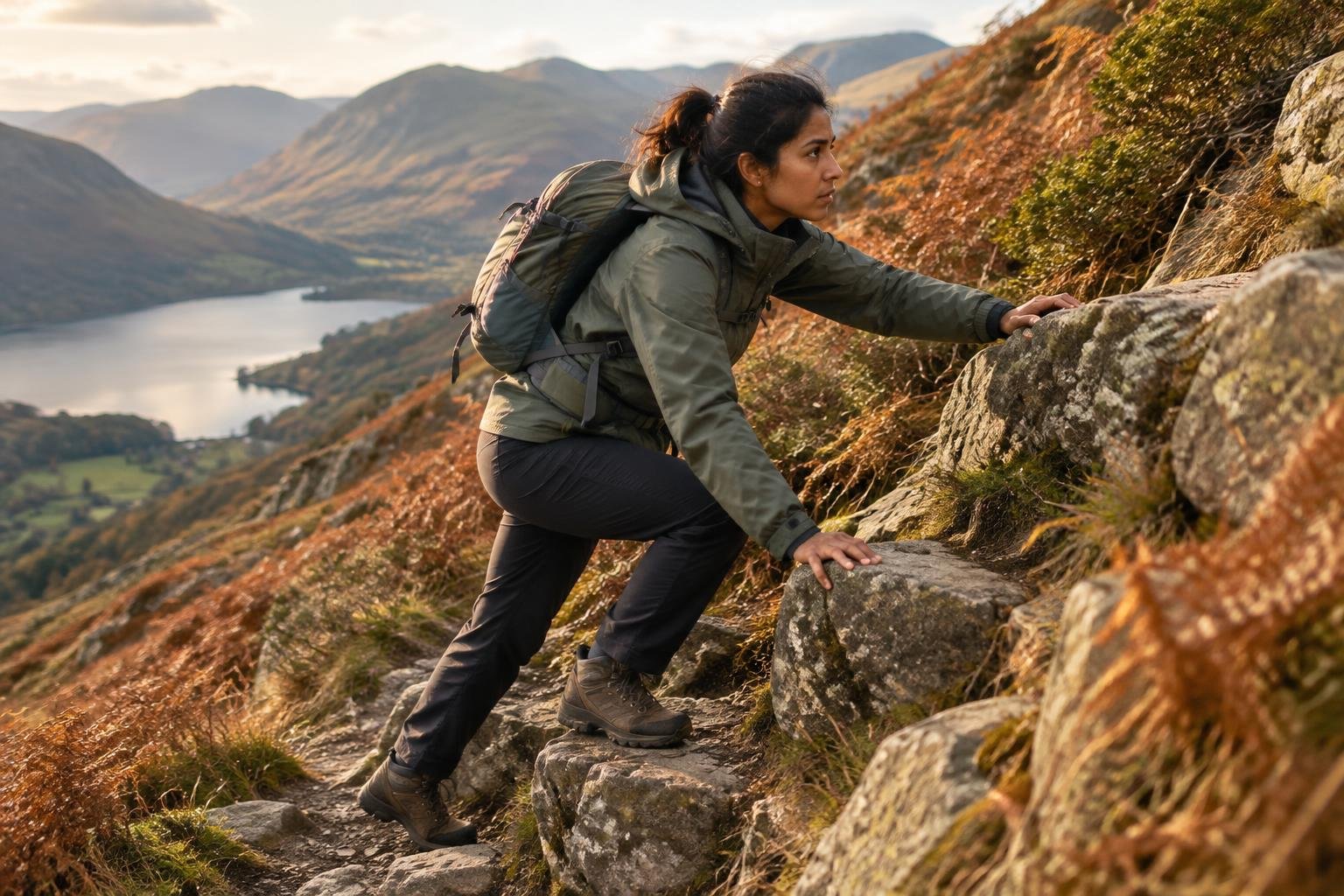
Official season guidance
Eryri National Park Authority: April to October; winter needs mountaineering skills
No permit is required. The park’s main paths to the summit include Llanberis, Pyg, Miners’, Watkin and Rhyd Ddu, among others; Crib Goch is not an official path and is an exposed knife-edge scramble for experienced hikers only. Weather changes fast.
Check current dates on eryri.gov.wales (Eryri National Park Authority)What to pack for the season
Season should drive your pack. In the April to October window, carry layers you can add or remove, a waterproof shell, and sun protection, since conditions shift quickly on the mountain. Shorter autumn days make a headlamp a sensible backup. If you go outside the official window, winter mountaineering skills and equipment are needed.
For layering, rain cover and weather planning, see hiking in rain, heat and cold.
Timing mistakes to avoid
A common mistake is choosing the date by calendar month alone and ignoring how fast the weather changes on the summit. Another is treating the long daylight of June as a reason to start late. Some walkers also drift into the winter months without the mountaineering skills the official guidance calls for. Crib Goch is not an official path and is an exposed scramble, so timing it casually is a poor idea. Check conditions with the managing authority.
Common questions
What is the best month to hike Snowdon?
The official season runs April to October. Within it, late spring and early summer combine long daylight with lower modelled rainfall, with April and May the driest months. The warmest months by the data are June to September. Weather changes fast, so always check current conditions with the Eryri National Park Authority.
Can I hike Snowdon in winter?
The official guidance says winter needs mountaineering skills, so it is not suitable as a casual walk. From November to March the modelled data shows cool to coldest relative warmth, high rainfall, and as little as about 7.3 hours of daylight in December. Confirm conditions with the managing authority before any winter attempt.
Which months are wettest on Snowdon?
The modelled regional averages show December as the wettest month at about 167 mm, followed by October at 140 mm and November at 136 mm. April is the driest at around 61 mm. These are regional averages rather than readings from the summit, so expect real conditions to vary.
How much daylight will I have for a Snowdon hike?
Daylight ranges from about 7.3 hours in December to 16.7 hours in June. In the April to October season, it runs from about 10.3 hours in October up to the long June days. Plan your start time around the shortest day you will be out, especially in autumn.
Sources
- Eryri National Park Authority — eryri.gov.wales (Eryri National Park Authority): official season and permit guidance.
- NASA POWER (Prediction Of Worldwide Energy Resources): monthly temperature and rainfall averages, 2010–2023, from MERRA-2 reanalysis. Daylight hours are calculated from latitude.
Conditions, closures and permit rules change without notice — confirm current information with the managing authority before you go. See our editorial policy and affiliate disclosure.