
Best Time to Hike Mount Teide
The best time to hike Mount Teide is year-round, according to the official season guidance, though the summit is cold and winter brings snow. Late spring through early autumn is typically driest with the longest daylight, while winter demands more preparation. The summit permit matters in every season.
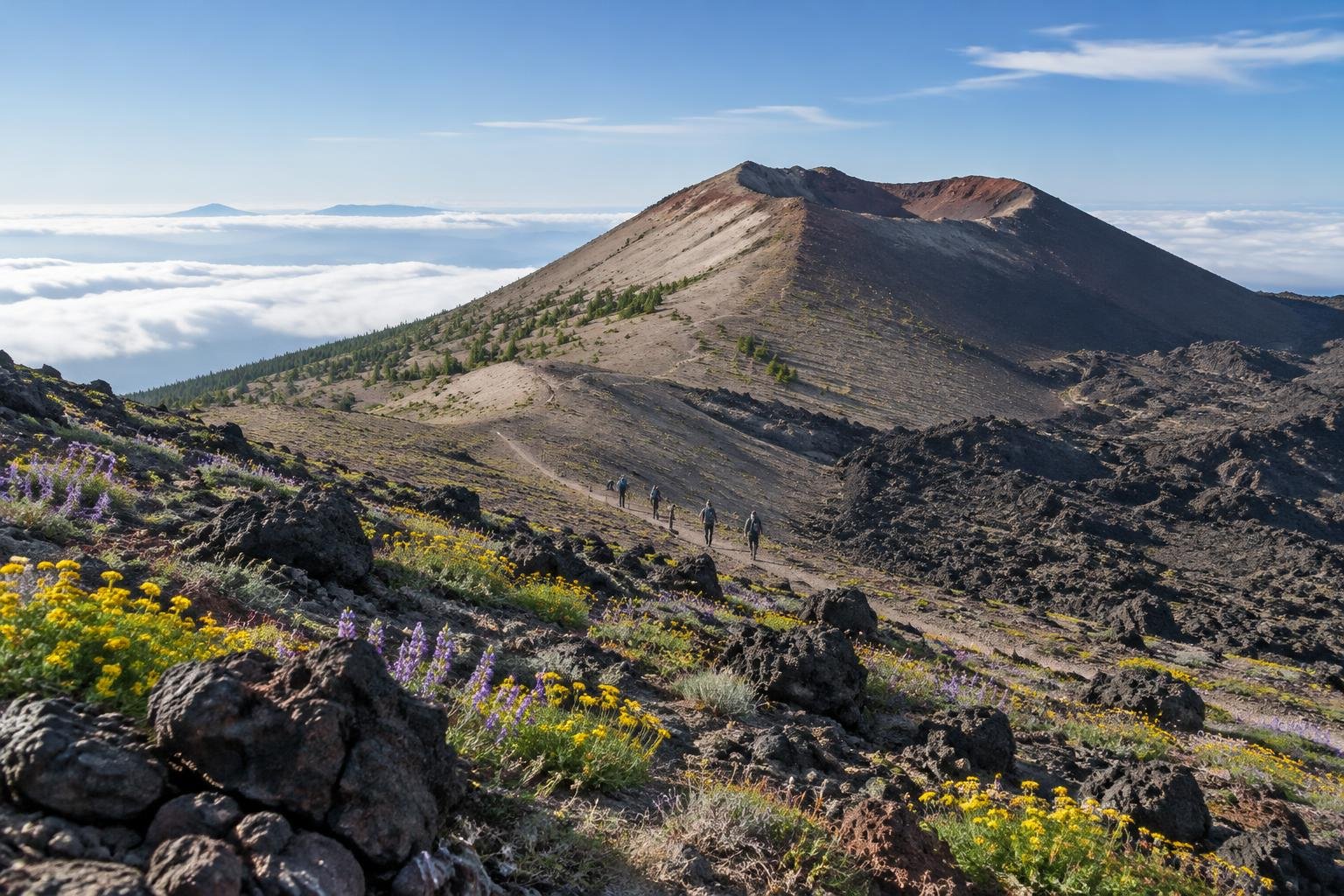
Month-by-month climate for Mount Teide
| Month | Rain | Daylight |
|---|---|---|
| Jan | 17 mm | 10.4 h |
| Feb | 20 mm | 11 h |
| Mar | 16 mm | 11.8 h |
| Apr | 10 mm | 12.7 h |
| May | 5 mm | 13.4 h |
| Jun | 3 mm | 13.8 h |
| Jul | 1 mm | 13.6 h |
| Aug | 3 mm | 13 h |
| Sep | 9 mm | 12.2 h |
| Oct | 22 mm | 11.3 h |
| Nov | 31 mm | 10.6 h |
| Dec | 28 mm | 10.2 h |
Modelled regional averages for 2010–2023 (rainfall) and calculated daylight hours; they describe the wider area, not a reading taken on the trail. Temperature changes little from month to month here, so we don’t chart it. Altitude, not season, drives how cold it feels on the route, so check the managing authority’s guidance for the section you plan to walk.
The modelled regional averages show a clear dry-wet pattern. July is typically driest at about 1 mm, with June and August around 3 mm, while November is wettest at roughly 31 mm, followed by December at 28 mm and October at 22 mm. Daylight swings from about 10.2 hours in December to 13.8 hours in June, so summer gives you roughly three and a half extra hours. Temperature barely changes by month in this data; altitude, not season, drives how cold the summit feels, so check the managing authority's guidance before you go.
Mount Teide season by season
Late spring · April to May
Spring typically brings a drying trend, with rainfall easing from about 10 mm in April to around 5 mm in May, and daylight stretching from roughly 12.7 to 13.4 hours. That gives a comfortable margin for an unhurried climb and a daylight cushion for the descent. The official season guidance still describes the summit as cold, so treat the upper mountain as a cold environment whatever the lower slopes feel like. Book the free summit permit in advance, since the daily allowance is limited.
Summer · June to August
Summer is typically the driest stretch, with July averaging about 1 mm and June and August around 3 mm, plus the longest days at up to roughly 13.8 hours. That makes it a strong window for planning an early start and a long, flexible day on the mountain. Even so, the official season guidance says the summit is cold, and the permit rules still apply: standing on the summit cone needs the free advance booking. Staying at the Altavista Refuge lets you summit in the early window instead.
Early autumn · September to October
September typically still sits on the drier side at about 9 mm, but October rises to roughly 22 mm as the wetter half of the year begins. Daylight shortens from about 12.2 hours to 11.3 hours across these two months, so the margin for slow progress narrows. September is generally the easier of the pair for planning, while October asks for more attention to changing conditions. Confirm current conditions and summit-access rules with the managing authority before committing to a date.
Winter · November to March
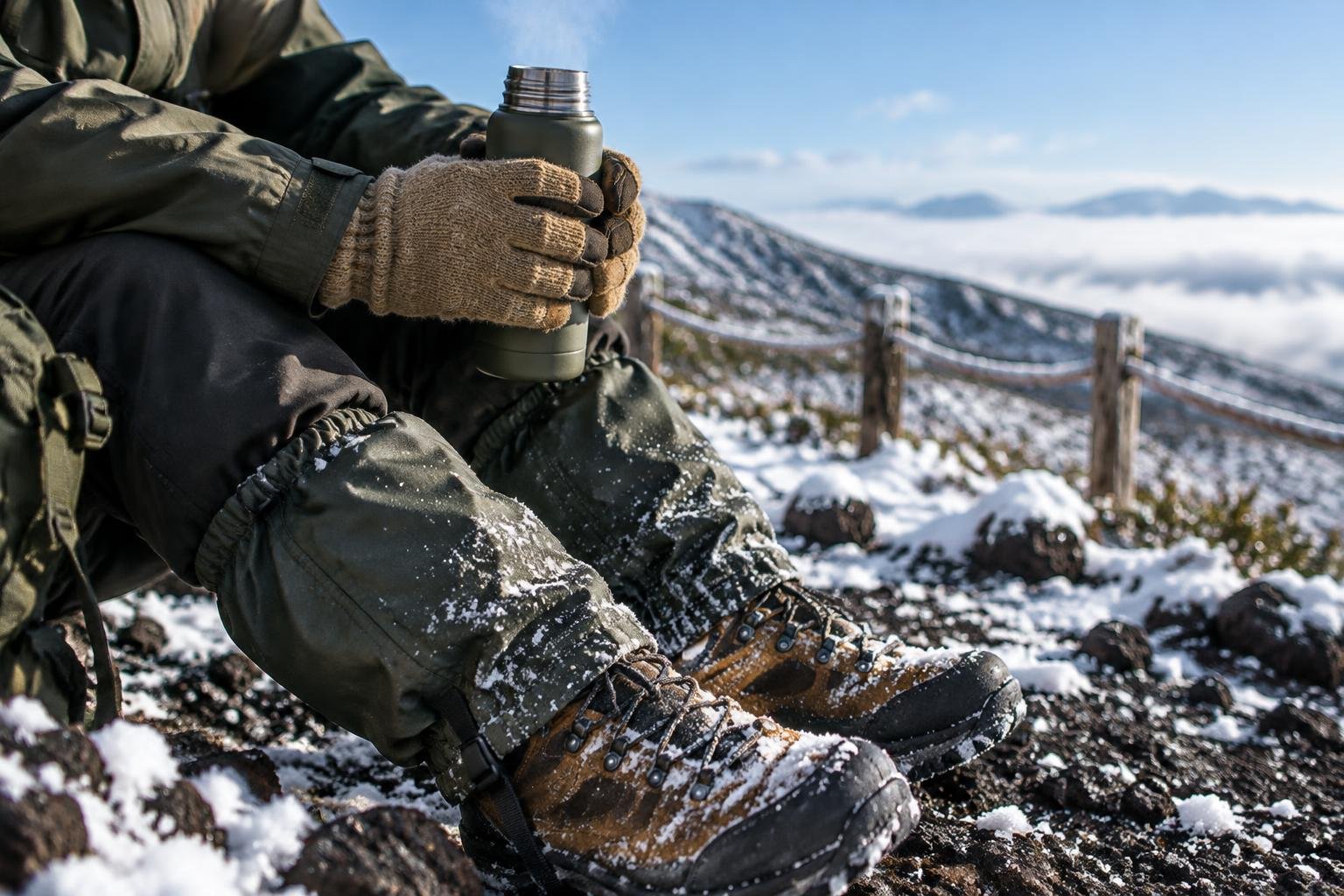
Winter carries the wettest months in the data, with November around 31 mm and December near 28 mm, easing to about 16 to 20 mm in February and March. Daylight is at its shortest, about 10.2 hours in December, so headlamp-free timing is tighter. The official season guidance specifically notes winter snow on the summit, which changes what a climb involves compared with the warm coast below. Winter is possible since the route is year-round, but verify conditions and access with the managing authority first.
Official season guidance
Spanish National Parks Network (MITECO): Year-round; the summit is cold, with winter snow
Standing on the very summit cone requires a free, limited daily permit booked in advance (staying at the Altavista Refuge lets you summit in the early window instead). A cable car reaches near the top. The peak is high and genuinely cold — carry warm layers even from a hot coast.
Check current dates on miteco.gob.es (Teide visitor rules and recommendations)What to pack for the season
Packing should follow the summit rather than the coast. The official guidance stresses carrying warm layers even from a hot shoreline, so bring insulating layers, a windproof shell and gloves in every season. In wetter months add reliable rain cover, in summer add sun protection, and in winter carry a headlamp because daylight drops to about ten hours.
For layering, rain cover and weather planning, see hiking in rain, heat and cold.
Timing mistakes to avoid
The biggest timing mistake is judging the climb by the weather at the coast, when the official guidance says the summit is cold in every season and snowy in winter. Another is leaving the summit permit until the last minute: the free daily allowance is limited and must be booked in advance. Choosing a date without allowing for shorter winter daylight also compresses your descent, and relying on a single month's averages ignores how conditions change, so confirm with the managing authority.
Common questions
Can you hike Mount Teide in winter?
The official season guidance describes the route as year-round, but notes the summit is cold with winter snow. Winter is also the wettest part of the modelled year with the shortest days. Check current conditions and access with the managing authority before choosing a winter date.
Which months are driest for climbing Mount Teide?
In the modelled regional averages, summer is typically driest, with July around 1 mm and June and August about 3 mm. May is also low at roughly 5 mm. These are regional averages, not measurements at the summit, so treat them as a general pattern.
Does the season change the summit permit?
The rules provided describe a free, limited daily permit that must be booked in advance for standing on the summit cone, with no season distinction mentioned. Staying at the Altavista Refuge lets you summit in the early window instead. Confirm current arrangements with the managing authority.
How much daylight will I have on Mount Teide?
Daylight ranges from about 10.2 hours in December to roughly 13.8 hours in June. That's about three and a half hours more in midsummer, which helps with pacing and the descent. In shorter winter days, plan an early start and carry a headlamp.
Sources
- Spanish National Parks Network (MITECO) — miteco.gob.es (Teide visitor rules and recommendations): official season and permit guidance.
- NASA POWER (Prediction Of Worldwide Energy Resources): monthly temperature and rainfall averages, 2010–2023, from MERRA-2 reanalysis. Daylight hours are calculated from latitude.
Conditions, closures and permit rules change without notice — confirm current information with the managing authority before you go. See our editorial policy and affiliate disclosure.