
Best Time to Hike Madeira — Pico do Arieiro to Pico Ruivo
The best time to hike Madeira's Pico do Arieiro to Pico Ruivo ridge is spring to fall, the official season guidance for this route. Within that, June through September pairs the driest, warmest months with the longest daylight. Expect the high ridge to stay cold and cloudy, so start early.
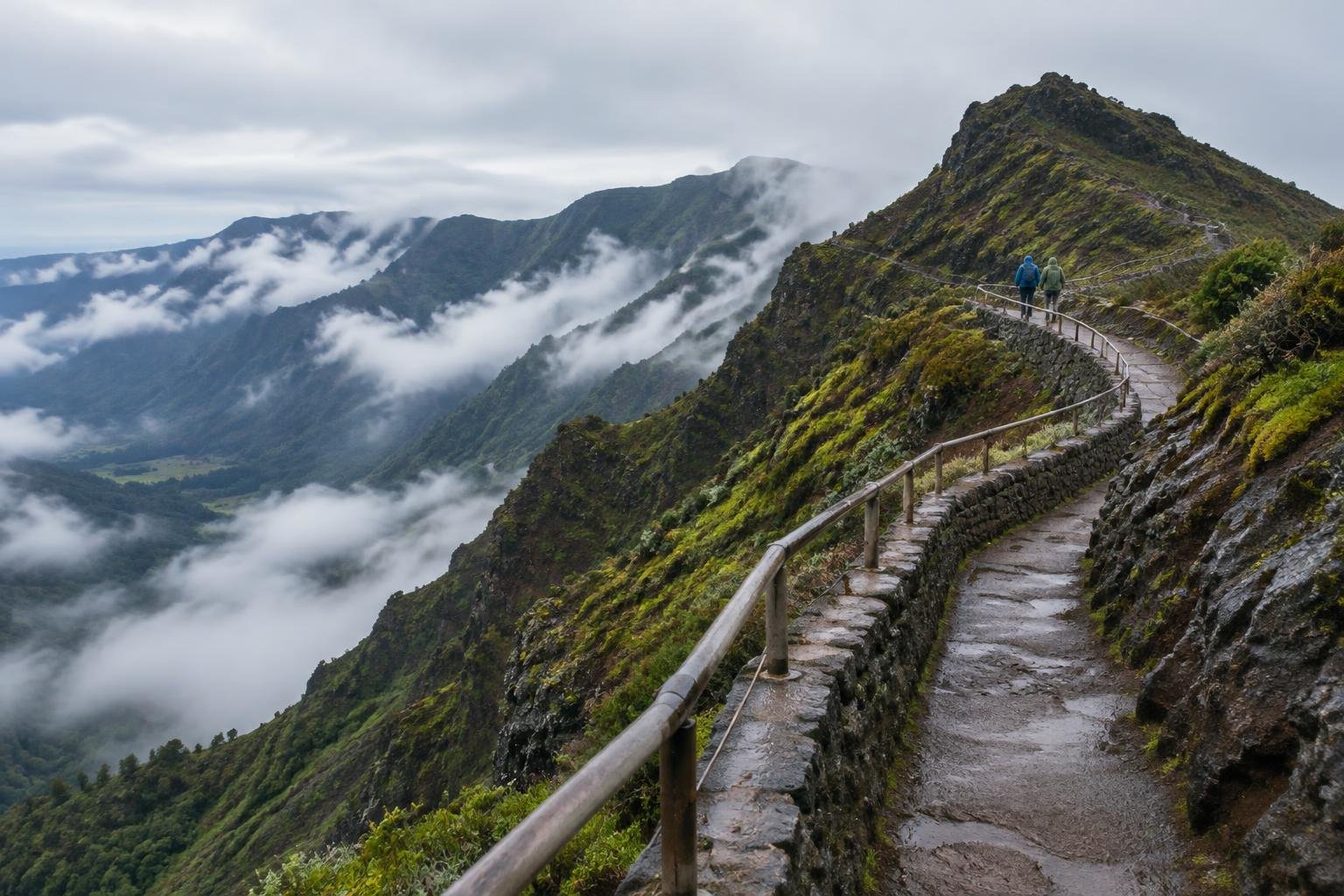
Month-by-month climate for Madeira — Pico do Arieiro to Pico Ruivo
| Month | Relative warmth | Rain | Daylight |
|---|---|---|---|
| Jan | Coldest | 30 mm | 10.1 h |
| Feb | Coldest | 31 mm | 10.8 h |
| Mar | Coldest | 29 mm | 11.8 h |
| Apr | Coldest | 23 mm | 12.8 h |
| May | Cool | 17 mm | 13.7 h |
| Jun | Warm | 8 mm | 14.1 h |
| Jul | Warmest | 5 mm | 14 h |
| Aug | Warmest | 8 mm | 13.2 h |
| Sep | Warmest | 17 mm | 12.2 h |
| Oct | Warmest | 41 mm | 11.2 h |
| Nov | Mild | 41 mm | 10.3 h |
| Dec | Cool | 45 mm | 9.9 h |
Modelled regional averages for 2010–2023 (rainfall) and calculated daylight hours; they describe the wider area, not a reading taken on the trail. “Relative warmth” compares each month with the warmest and coldest months of this place’s own year. It is not a temperature, and the high parts of a route are colder than the region around them.
Rainfall here is lowest in summer: July averages about 5 mm, June and August about 8 mm, rising to 41 mm in October and November and 45 mm in December, the wettest month. Daylight swings from roughly 9.9 hours in December to 14.1 hours in June. In relative terms, July through October are the warmest months of this place's year, while January through April are the coldest. These are modelled regional averages, not trail measurements, so the exposed ridge can still feel colder and cloudier than the figures suggest.
Madeira — Pico do Arieiro to Pico Ruivo season by season
Late winter to early spring · January to April
These are the coldest months of the year here, with modelled rainfall of roughly 23 to 31 mm a month and daylight between about 10 and 13 hours. The official season guidance points to spring rather than winter, and the route closes in bad weather. Short days leave less margin on a ridge with stairs, tunnels and steep drops. If you hike in April, treat it as the start of the season, check conditions with the managing authority, and plan an early start.
Late spring · May to early June
May is cool rather than cold, and average rainfall falls to about 17 mm, with daylight reaching nearly 14 hours. This is the beginning of the drier stretch inside the spring-to-fall window. The ridge is still often cold and cloudy, so the extra daylight is the main gain, giving you slack for the tunnels and stairs. Conditions on the high ridge can differ sharply from the coast, so confirm current guidance with the Madeira regional authorities before you go.
Summer · June to August
Summer is the driest and brightest stretch, with modelled rainfall of about 5 to 8 mm a month and daylight above 13 hours. July and August are among the warmest months of this place's year. Even so, the official season guidance describes the ridge as often cold and cloudy, so summer improves your odds rather than guaranteeing views. An early start remains the best way to reach the high sections above the clouds.
Early fall to winter · September to December
September is still among the warmest months, with about 17 mm of rain and roughly 12 hours of daylight. October and November bring about 41 mm each, and December is the wettest month at about 45 mm with under 10 hours of light. Fall fits the spring-to-fall season guidance, but wetter weather raises the odds of closures on the exposed ridge. Check current conditions with the managing authority, and carry a headlamp for the tunnels, especially as days shorten.
Official season guidance
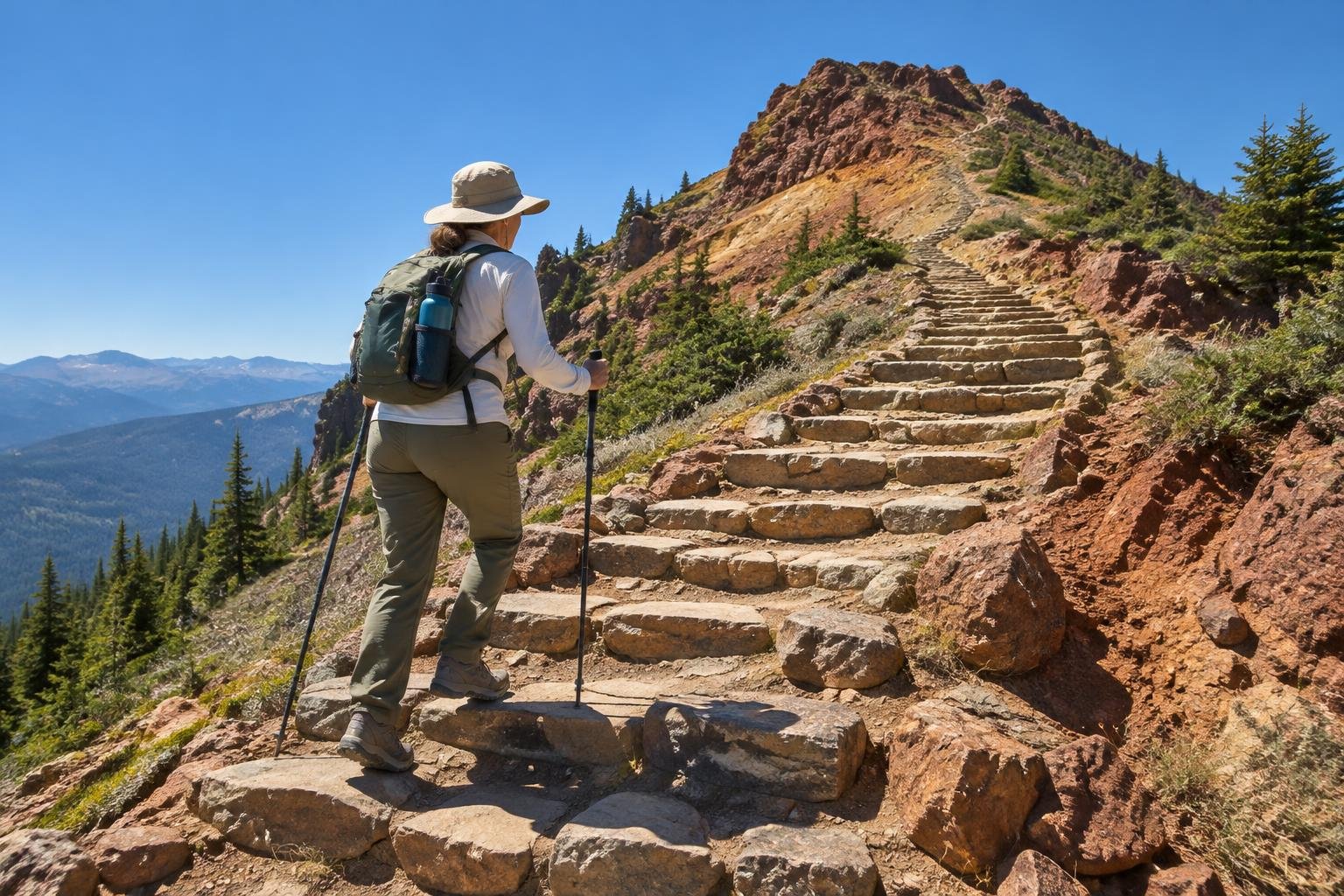
Madeira regional authorities: Spring to fall; the ridge is often cold and cloudy
No permit is needed, but the PR1 ridge between Pico do Arieiro and Pico Ruivo is exposed, with stairs, tunnels (bring a headlamp) and steep drops, and it closes in bad weather. The high ridge is far colder and cloudier than the coast — start early for clear views above the clouds.
Check current dates on ifcn.madeira.gov.pt (IFCN, Madeira Nature Conservation Institute, Portuguese)What to pack for the season
Pack for cold, cloudy conditions even in the driest months: warm layers, a wind- and rain-resistant shell, and sun protection for the exposed ridge. A headlamp is required for the tunnels, and it also covers the shorter days of fall and spring. Carry enough water and food for a long day on steep, exposed ground.
For layering, rain cover and weather planning, see hiking in rain, heat and cold.
Timing mistakes to avoid
The biggest mistake is judging the ridge by coastal weather. The official guidance says the high ridge is far colder and cloudier than the coast, so a bright morning below tells you little. Another is starting late: the guidance recommends an early start for clear views above the clouds. Do not rely on a single month's average either, since the route closes in bad weather. Also skip the headlamp at your peril, because the tunnels need one. Confirm conditions with the Madeira regional authorities before you set out.
Common questions
What is the driest month to hike this ridge?
Modelled rainfall is lowest in July, at about 5 mm on average, with June and August close behind at about 8 mm. These figures are regional averages rather than trail measurements, and the high ridge can still be cloudy and cold, so check conditions with the managing authority.
Can I hike Pico do Arieiro to Pico Ruivo in winter?
The official season guidance points to spring through fall, and the route closes in bad weather. December is the wettest month at about 45 mm with under 10 hours of daylight. Winter leaves little margin on an exposed ridge, so confirm current conditions with the managing authority first.
How much daylight will I have?
Daylight ranges from about 9.9 hours in December to about 14.1 hours in June. Spring and early fall fall in between, at roughly 12 to 14 hours. Because the route includes tunnels, carry a headlamp whatever the season, and start early to keep a comfortable buffer.
Do I need a permit, and does the season affect that?
The official guidance says no permit is needed, but the PR1 ridge closes in bad weather. That makes timing and current conditions matter more than paperwork. Check with the Madeira regional authorities before your hike, particularly in the wetter months of October through December.
Sources
- Madeira regional authorities — ifcn.madeira.gov.pt (IFCN, Madeira Nature Conservation Institute, Portuguese): official season and permit guidance.
- NASA POWER (Prediction Of Worldwide Energy Resources): monthly temperature and rainfall averages, 2010–2023, from MERRA-2 reanalysis. Daylight hours are calculated from latitude.
Conditions, closures and permit rules change without notice — confirm current information with the managing authority before you go. See our editorial policy and affiliate disclosure.