
Mount Teide vs Madeira Pico do Arieiro: Which Should You Hike?
Choose Mount Teide if you want a high-altitude volcanic summit and are ready for a very strenuous climb, a booked summit permit and cold air at the top. Choose Madeira Pico do Arieiro if you want a shorter, built ridge route between two peaks, with stairs, tunnels and exposure but no permit required.
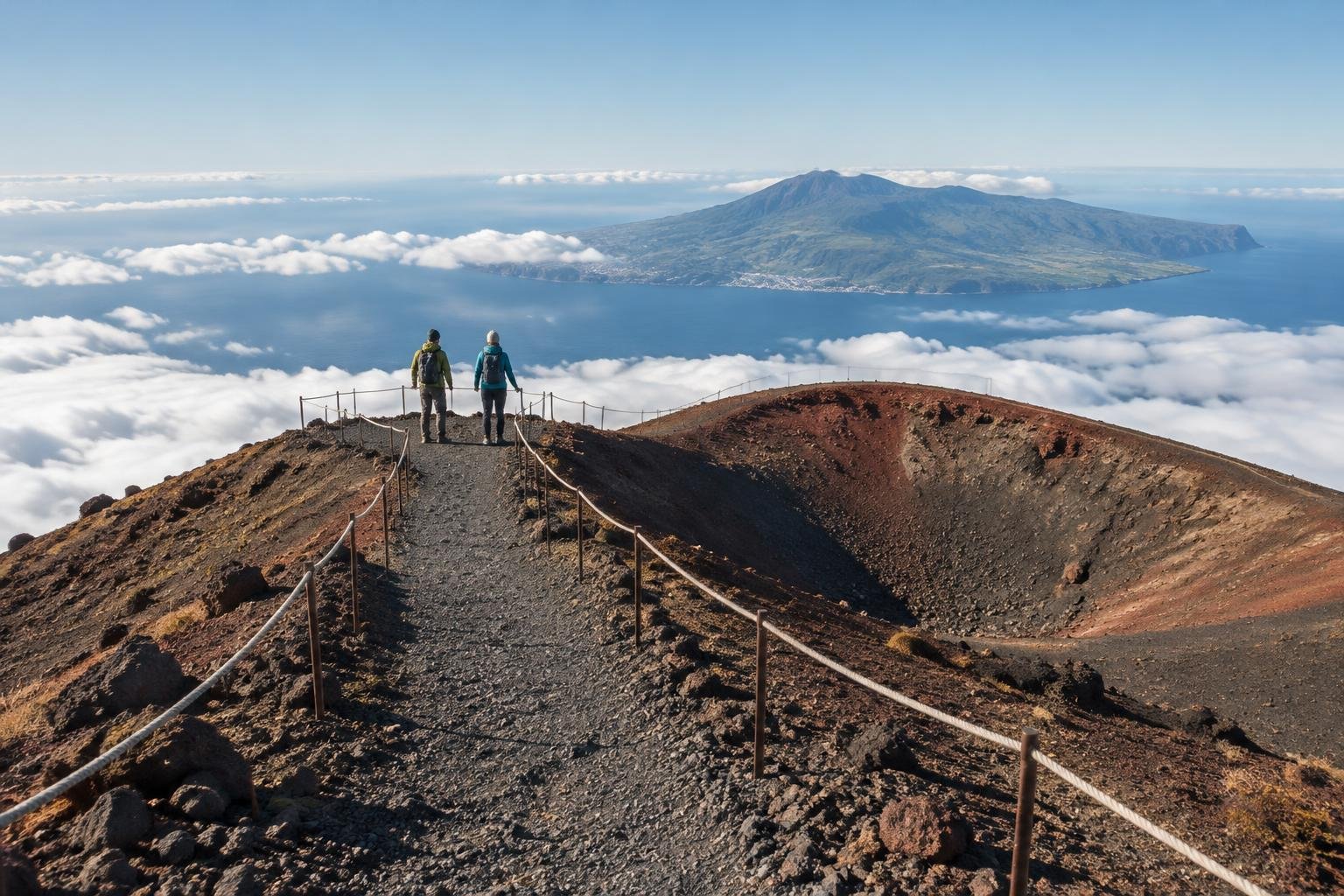
Mount Teide and Madeira Pico do Arieiro at a glance
Mount Teide is the Spanish National Parks Network's volcanic summit on Tenerife, reached on foot from the Montana Blanca trailhead or partly by cable car. Pico do Arieiro to Pico Ruivo is Madeira's PR1 ridge route linking the island's two highest peaks. People compare them as two famous island-summit days that feel nothing alike.
| Mount Teide | Madeira Pico do Arieiro | |
|---|---|---|
| Place | Canary Islands · Tenerife, Spain | Madeira · Portugal |
| Distance | ~8.9 km one-way from the Montana Blanca trailhead to the true summit (8.2 km on trail PNT-07 Montana Blanca-La Rambleta, plus 0.69 km on trail PNT-10 Telesforo Bravo to the summit); many hikers descend by cable car rather than walking back down | 6.1 km one-way (PR1 - Vereda do Areeiro, Pico do Arieiro to Pico Ruivo) |
| Elevation gain | ~1,350-1,400 m (derived from published trailhead elevation ~2,350 m to the 3,715 m summit; a third-party figure independently cites 1,347 m to La Rambleta alone) | Official source gives only an altitude range (max 1,857 m / min 1,491 m, ~366 m); as a ridge trail with repeated staircases, tunnels, and up-and-down sections, true cumulative gain is very likely higher than this simple range - not independently confirmed, so treat the ~366 m figure as a floor rather than the full cumulative total |
| Difficulty | Very strenuous / 'highly challenging' (official wording, citing elevation gain, altitude, and gradients up to 60% on the final Telesforo Bravo stretch) | Moderate (official rating); several independent hiking guides describe it as more strenuous/difficult in practice due to exposure, staircases, and tunnels |
| Route type | point-to-point (commonly paired with a cable-car descent; out-and-back if walked both ways) | point-to-point (linear trail; often hiked one-way with a taxi/shuttle return, or out-and-back making it ~12.2 km total) |
| Official season | Year-round; the summit is cold, with winter snow | Spring to fall; the ridge is often cold and cloudy |
| Managed by | Spanish National Parks Network (MITECO) | Madeira regional authorities |
Effort and difficulty
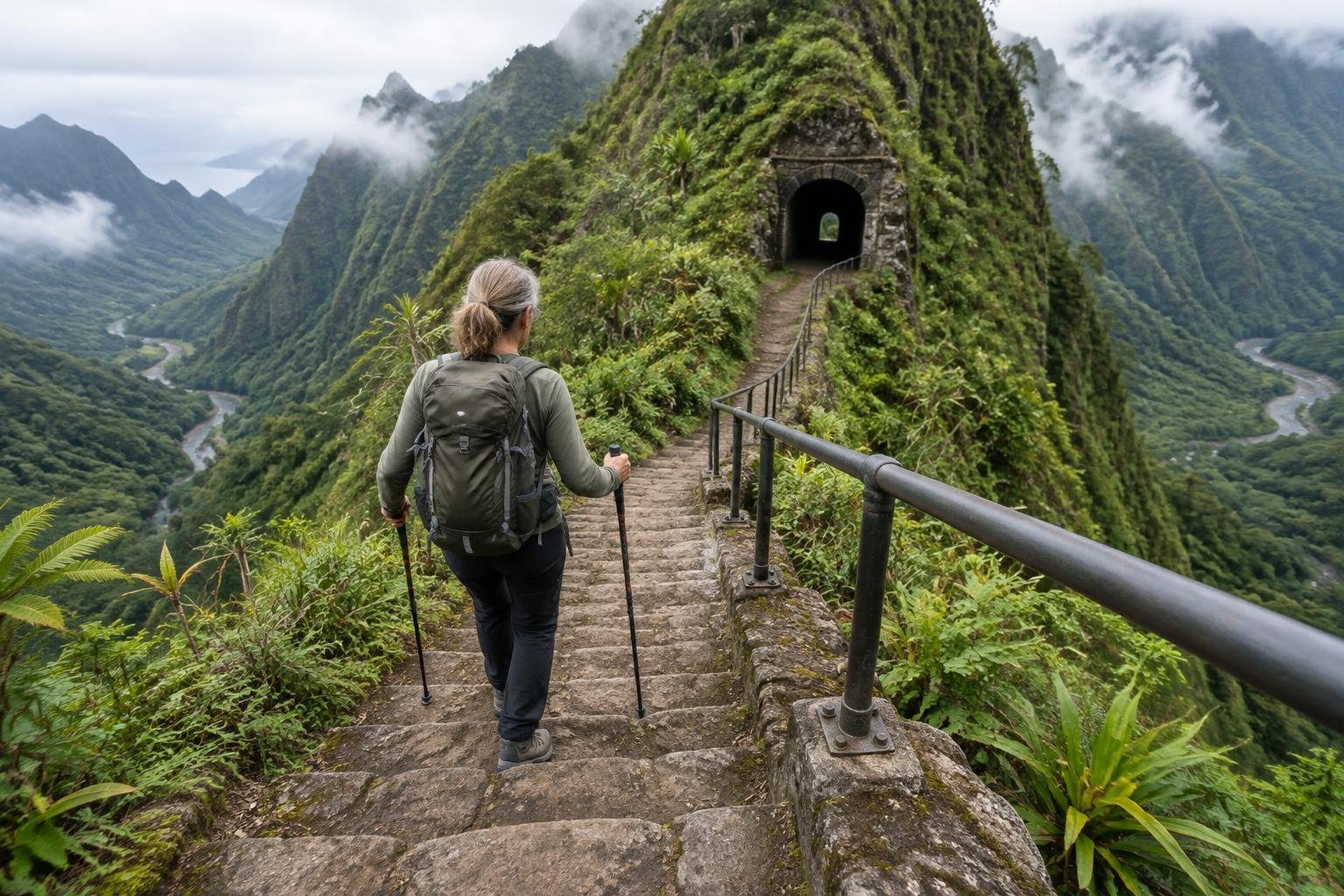
Teide is the bigger commitment. The walk to the true summit is about 8.9 km one-way, with roughly 1,350-1,400 m of climbing from a trailhead near 2,350 m to 3,715 m. Officials call it very strenuous, with gradients up to 60% on the final stretch. PR1 is 6.1 km one-way and officially rated moderate, with a published altitude range of about 366 m that is only a floor for the true gain. Guides describe it as harder in practice because of exposure, staircases and tunnels. Walked out and back, it is about 12.2 km total.
Season, permits and booking
Mount Teide is listed as year-round, though the summit is cold and sees winter snow. Standing on the summit cone requires a free, limited daily permit booked in advance, and staying at the Altavista Refuge lets you summit in the early window instead. Pico do Arieiro to Pico Ruivo is best from spring to fall, needs no permit, and closes in bad weather. The ridge is often cold and cloudy. Confirm current rules with each managing authority before you go.
Which one is right for you?
Choose Mount Teide if…
Pick Teide if you are fit, comfortable at altitude, and want a true high-mountain objective. It suits hikers who will plan around a summit permit and the cable car's return time, or who want the overnight version with a stay at the Altavista Refuge. Be ready for no shade, no water on the mountain, loose cinder underfoot and real cold at the top.
How to hike Mount TeideChoose Madeira Pico do Arieiro if…
Pick Pico do Arieiro to Pico Ruivo if you want a single-day ridge walk with dramatic drops and no permit to arrange. It suits hikers who are steady on stairs and narrow ledges and happy to carry a headlamp for the tunnels. Plan a driver for a one-way traverse, or start from the far side and walk up to Pico Ruivo alone for a gentler option.
How to hike Madeira — Pico do Arieiro to Pico RuivoWhat the two have in common
Both are volcanic island routes that climb to the high peaks of their islands. Both are point-to-point by design, with a return that needs planning: cable car or an overnight stay on Teide, a driver on PR1. Both run far colder than the coast, and both reward an early start, whether to beat the cable car crowds or to reach the ridge before cloud builds.
How your choice changes what you pack
The choice changes your load more than your list of basics. Teide calls for warm layers, plenty of water since none is available on the mountain, sun protection and, if you stay at the refuge, overnight needs. PR1 calls for a headlamp, a wind and rain layer for cold, cloudy ridge conditions, and sturdy footwear for steps and exposed ledges.
Common questions
Which is harder, Mount Teide or Pico do Arieiro?
Teide is the harder day on paper. Officials call it very strenuous, with roughly 1,350-1,400 m of climbing and gradients up to 60% near the top. PR1 is officially rated moderate, though guides report it feels tougher because of exposure, staircases and tunnels.
Which needs a permit?
Standing on Teide's summit cone requires a free, limited daily permit booked in advance. PR1 needs no permit, but the ridge closes in bad weather. Check each managing authority for current rules before planning your day.
Which is better for a first-time summit hiker?
Neither is a beginner route. PR1 is shorter and officially moderate, but its exposure, stairs and tunnels demand confidence. Teide's altitude, cold and steep final stretch make it the bigger step up for newer hikers.
Which one is easier to do without walking back?
Both are point-to-point. On Teide, many hikers descend by cable car rather than walking down. On PR1, hikers often arrange a driver to collect them from the far trailhead, which avoids the climb back over the ridge.
Sources
- Spanish National Parks Network (MITECO) — miteco.gob.es (Teide visitor rules and recommendations): official information for Mount Teide.
- Madeira regional authorities — ifcn.madeira.gov.pt (IFCN, Madeira Nature Conservation Institute, Portuguese): official information for Madeira Pico do Arieiro.
Conditions, permits and access rules change without notice — confirm current information with each managing authority before you go. See our editorial policy.