
Best Time to Hike The Lycian Way
The best time to hike The Lycian Way is spring and fall, according to the official season guidance. Summer is very hot, so those shoulder seasons are the sensible windows, when rainfall has eased and the days still give you generous daylight for walking.
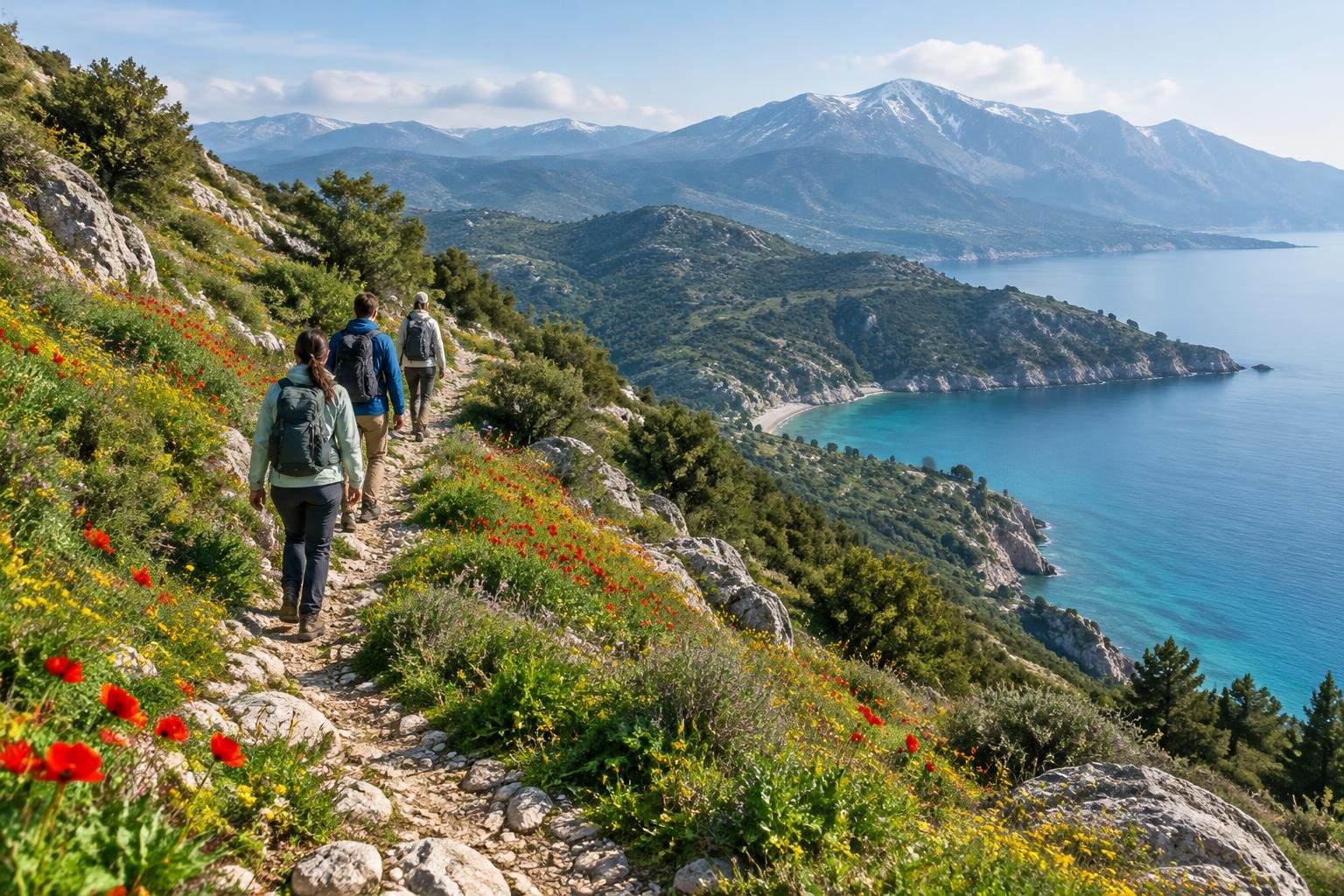
Month-by-month climate for The Lycian Way
| Month | Relative warmth | Rain | Daylight |
|---|---|---|---|
| Jan | Coldest | 208 mm | 9.8 h |
| Feb | Coldest | 116 mm | 10.7 h |
| Mar | Coldest | 71 mm | 11.7 h |
| Apr | Cool | 38 mm | 12.9 h |
| May | Mild | 28 mm | 13.9 h |
| Jun | Warmest | 13 mm | 14.5 h |
| Jul | Warmest | 4 mm | 14.3 h |
| Aug | Warmest | 4 mm | 13.4 h |
| Sep | Warmest | 18 mm | 12.2 h |
| Oct | Warm | 62 mm | 11 h |
| Nov | Cool | 84 mm | 10 h |
| Dec | Coldest | 179 mm | 9.5 h |
Modelled regional averages for 2010–2023 (rainfall) and calculated daylight hours; they describe the wider area, not a reading taken on the trail. “Relative warmth” compares each month with the warmest and coldest months of this place’s own year. It is not a temperature, and the high parts of a route are colder than the region around them.
On this stretch of the Turquoise Coast the rainfall swing is large. January is the wettest month at about 208 mm, followed by December at 179 mm and February at 116 mm, while July and August are the driest at roughly 4 mm each. Daylight runs from about 9.5 hours in December to 14.5 hours in June. Relative to this place's own year, June through September are the warmest months and January through March the coldest. Treat these as modelled regional averages, not trail readings.
The Lycian Way season by season
Early spring · March to April
March and April sit at the cool end of this place's year, with rainfall easing from about 71 mm in March to roughly 38 mm in April. Daylight grows from around 11.7 to 12.9 hours, so the days lengthen quickly. The official season guidance names spring as a good time to walk, and the milder warmth suits sustained effort on a rugged coastal route. Showers are still possible, so expect some variability.
Late spring · May to early June
May is mild and the driest of the spring months, with roughly 28 mm of rain and about 13.9 hours of daylight. Into June the rain drops to around 13 mm and daylight peaks near 14.5 hours, but June also counts among the warmest months of the year here. Because the official season guidance warns that summer is very hot, treat this as the tail end of the comfortable window and plan to start early.
Summer · Mid-June to August
June, July and August are the warmest months of this place's year and by far the driest, with July and August at roughly 4 mm of rain each. Dry weather sounds appealing, but the official season guidance states plainly that summer is very hot, and the permits and rules text calls heat the real hazard. If you walk in this window, start very early, rest through the midday hours and carry plenty of water. Most hikers will find spring or fall far more comfortable.
Fall and winter · September to February
September is still among the warmest months with about 18 mm of rain, easing to warm in October as rainfall climbs to roughly 62 mm. November is cool at around 84 mm, and December through February are the coldest and wettest months, with 179, 208 and 116 mm respectively. Daylight falls to about 9.5 hours in December. The official season guidance points to fall as a good window, with early fall the better choice before the rains build.
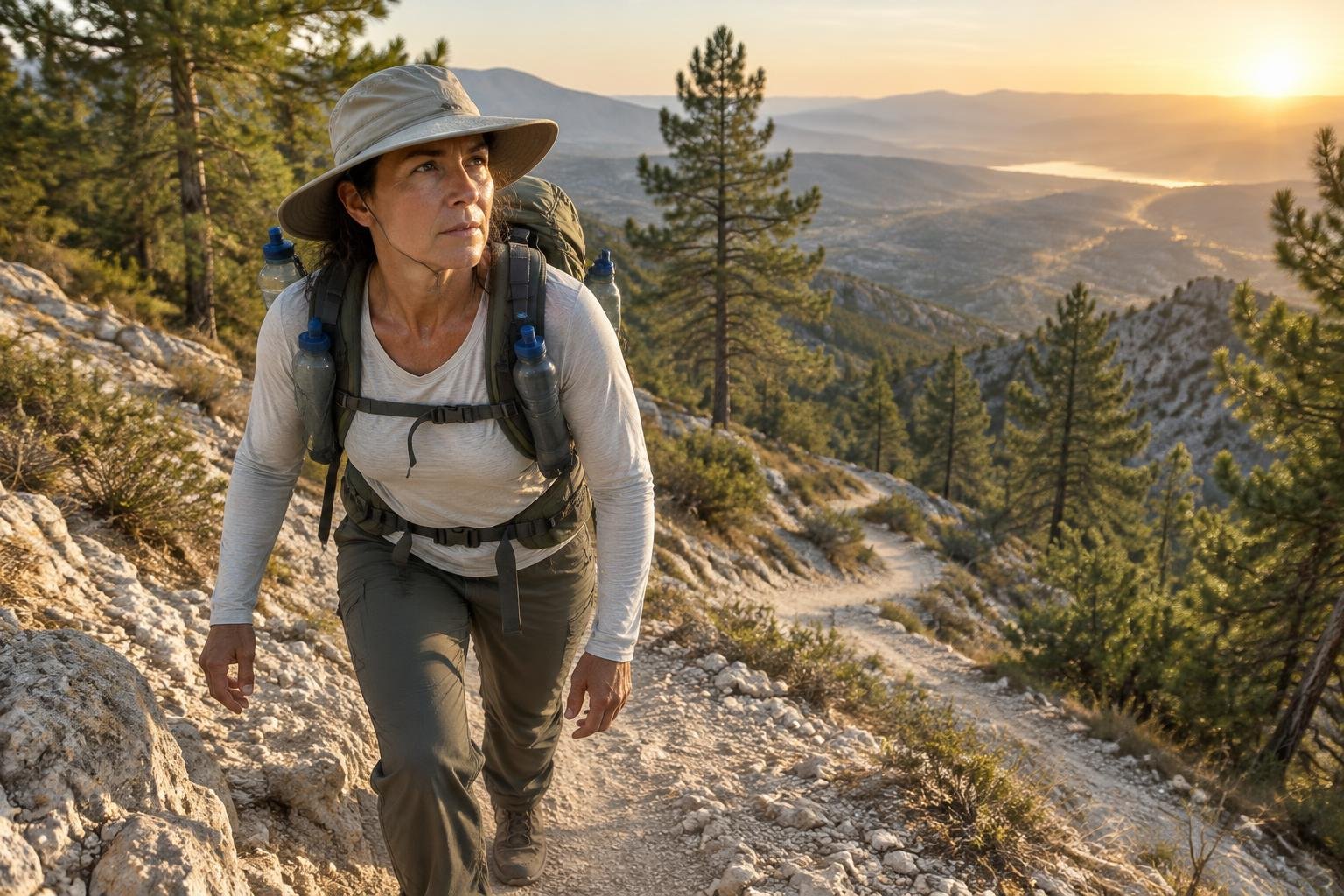
Official season guidance
Culture Routes Society & regional authorities: Spring and fall; summer is very hot
No permit is needed to walk. It’s a rugged, well-waymarked coastal trail (waymarked in the French GR style), mixing beach towns, mountain villages and ancient Lycian ruins. Summer heat is the real hazard — walk in spring or fall, start early, and carry plenty of water.
Check current dates on cultureroutesinturkey.com (Culture Routes Society, nonprofit route founder)What to pack for the season
Packing follows the season you choose. In spring and fall, bring layers for cool mornings and warmer afternoons, plus rain protection since showers become more likely toward the wetter months. In any season, sun cover and generous water capacity matter on exposed coastal sections. Shorter fall days mean a headlamp is worth carrying, and daylight planning matters most outside summer.
For layering, rain cover and weather planning, see hiking in rain, heat and cold.
Timing mistakes to avoid
The biggest mistake is choosing summer because it is the driest period. The official season guidance and the permits and rules text both flag summer heat as the real hazard on this route. Another is relying on one month's figure instead of the whole pattern: rainfall changes steeply from October into winter. Finally, do not assume short winter days leave time for long stages. Confirm current conditions with the managing authority before committing to dates.
Common questions
When is the best time to hike The Lycian Way?
The official season guidance recommends spring and fall. Those windows avoid the very hot summer, and the modelled rainfall is lower than in winter. Within them, April to May and September to early October are the stretches where the numbers look most balanced.
Is summer a bad time to hike The Lycian Way?
The official season guidance says summer is very hot, and the permits and rules text calls summer heat the real hazard. Rain is minimal in July and August, but warmth is highest. If you go anyway, start early, carry plenty of water and rest through the hottest hours.
When is it wettest on The Lycian Way?
Modelled averages show winter as the wettest period, with January around 208 mm, December about 179 mm and February roughly 116 mm. November also sees around 84 mm. These are regional averages rather than readings taken at the trail, so conditions will vary.
How much daylight can I expect when hiking The Lycian Way?
Calculated daylight runs from about 9.5 hours in December to roughly 14.5 hours in June. Spring and early fall offer around 11 to 14 hours, which gives reasonable time on the trail. Plan stages around the shorter days if you walk late in the season.
Sources
- Culture Routes Society & regional authorities — cultureroutesinturkey.com (Culture Routes Society, nonprofit route founder): official season and permit guidance.
- NASA POWER (Prediction Of Worldwide Energy Resources): monthly temperature and rainfall averages, 2010–2023, from MERRA-2 reanalysis. Daylight hours are calculated from latitude.
Conditions, closures and permit rules change without notice — confirm current information with the managing authority before you go. See our editorial policy and affiliate disclosure.