
Best Time to Hike Peaks of the Balkans — Valbona to Theth
The best time to hike Peaks of the Balkans — Valbona to Theth is June to September, the window named in the official season guidance. Rain is lowest in July and August, days are long, and the months are the warmest of the year here. Confirm local conditions before you go.
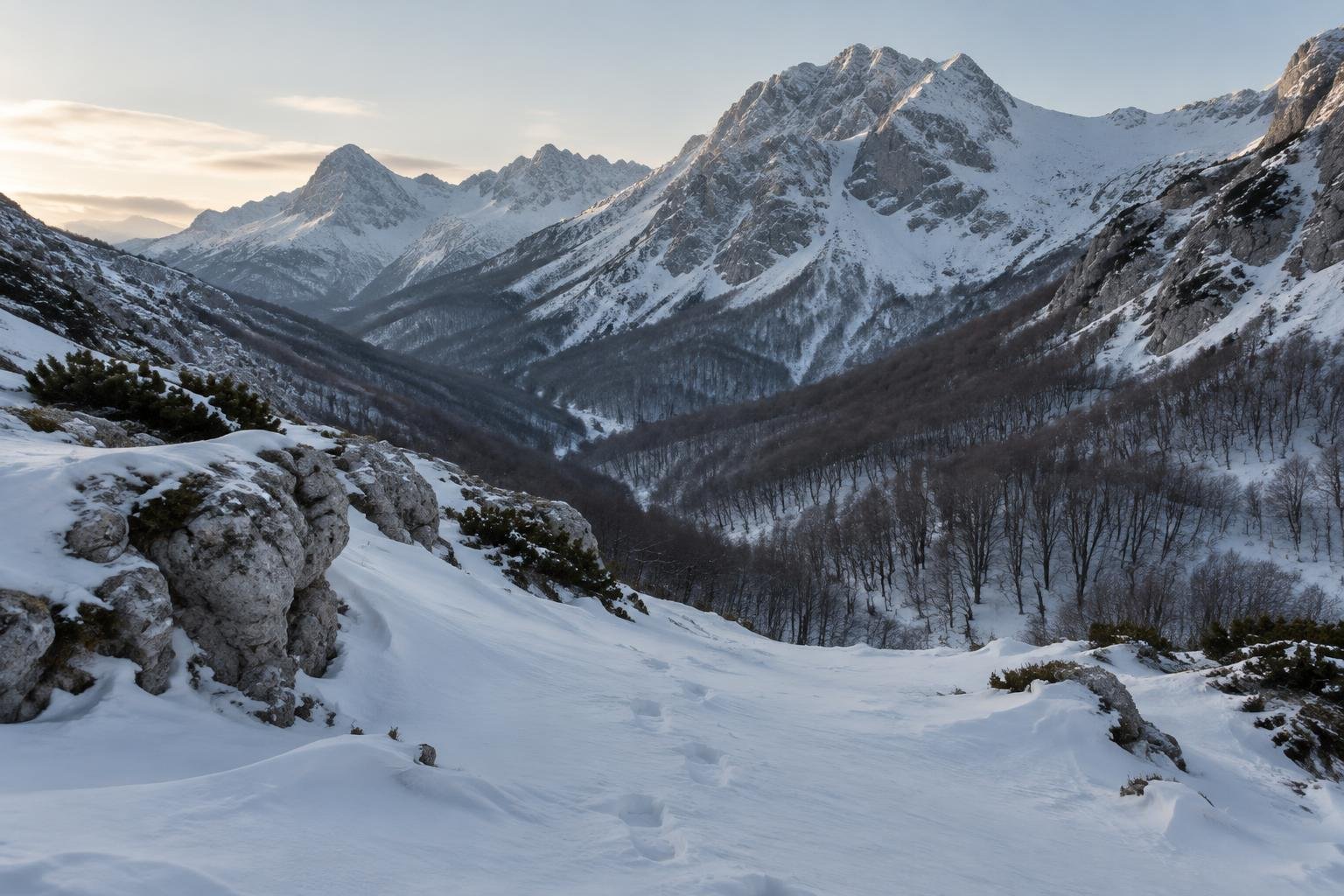
Month-by-month climate for Peaks of the Balkans — Valbona to Theth
| Month | Relative warmth | Rain | Daylight |
|---|---|---|---|
| Jan | Coldest | 129 mm | 9.2 h |
| Feb | Coldest | 113 mm | 10.3 h |
| Mar | Cool | 103 mm | 11.7 h |
| Apr | Mild | 95 mm | 13.2 h |
| May | Warm | 99 mm | 14.4 h |
| Jun | Warmest | 71 mm | 15.1 h |
| Jul | Warmest | 48 mm | 14.8 h |
| Aug | Warmest | 42 mm | 13.7 h |
| Sep | Warm | 85 mm | 12.3 h |
| Oct | Mild | 102 mm | 10.8 h |
| Nov | Mild | 159 mm | 9.5 h |
| Dec | Coldest | 128 mm | 8.9 h |
Modelled regional averages for 2010–2023 (rainfall) and calculated daylight hours; they describe the wider area, not a reading taken on the trail. “Relative warmth” compares each month with the warmest and coldest months of this place’s own year. It is not a temperature, and the high parts of a route are colder than the region around them.
The modelled regional averages show a clear dry spell in summer: August is the driest month at about 42 mm and July follows at about 48 mm, while November is the wettest at about 159 mm and January and December also run above 125 mm. Daylight swings from roughly 8.9 hours in December to about 15.1 hours in June. June, July and August are the warmest months of this place's own year, while December, January and February are the coldest. These are typical regional figures, not readings taken on the trail itself.
Peaks of the Balkans — Valbona to Theth season by season
Winter and early spring · December to March
These are the coldest months of this place's own year, with the shortest days, about 8.9 to 11.7 hours of light. Rainfall is also high, with roughly 103 to 129 mm a month on average. That combination makes this a poor time for a remote village-to-village mountain route, and it falls well outside the official June to September window. Short daylight leaves little margin for slow progress, so anyone considering the area in these months should check with the managing authorities for current conditions first.
Late spring · April to May
Spring brings mild to warm conditions by this place's own standards and daylight stretching from about 13.2 to 14.4 hours, which sounds appealing. Rainfall, however, is still typically around 95 to 99 mm a month, and both months sit before the official June to September window. Treat this as a shoulder period at best: the numbers suggest wet weather remains common, and conditions on higher ground can lag behind the valleys. Check with the managing authorities before planning a trip in these months.
Summer · June to August
This is the heart of the recommended season. June to August are the warmest months of the year here, daylight runs from about 13.7 to 15.1 hours, and rainfall drops to roughly 71 mm in June, 48 mm in July and 42 mm in August on average. Long days leave generous time for a full mountain stage, and drier averages mean fewer wet-weather surprises, though mountain weather can still turn. This is the period the official season guidance points to, and it is the sensible default for most hikers.
Early autumn and late autumn · September to November
September still falls inside the official window, with warm conditions, about 12.3 hours of daylight and typical rainfall near 85 mm, noticeably wetter than August. October and November are outside the window: they stay mild by this place's own standards, but daylight shrinks to about 10.8 and then 9.5 hours, and November is the wettest month of the year at roughly 159 mm. Early September can work well; after that, the numbers point toward wetter, shorter days, so confirm conditions with the managing authorities.
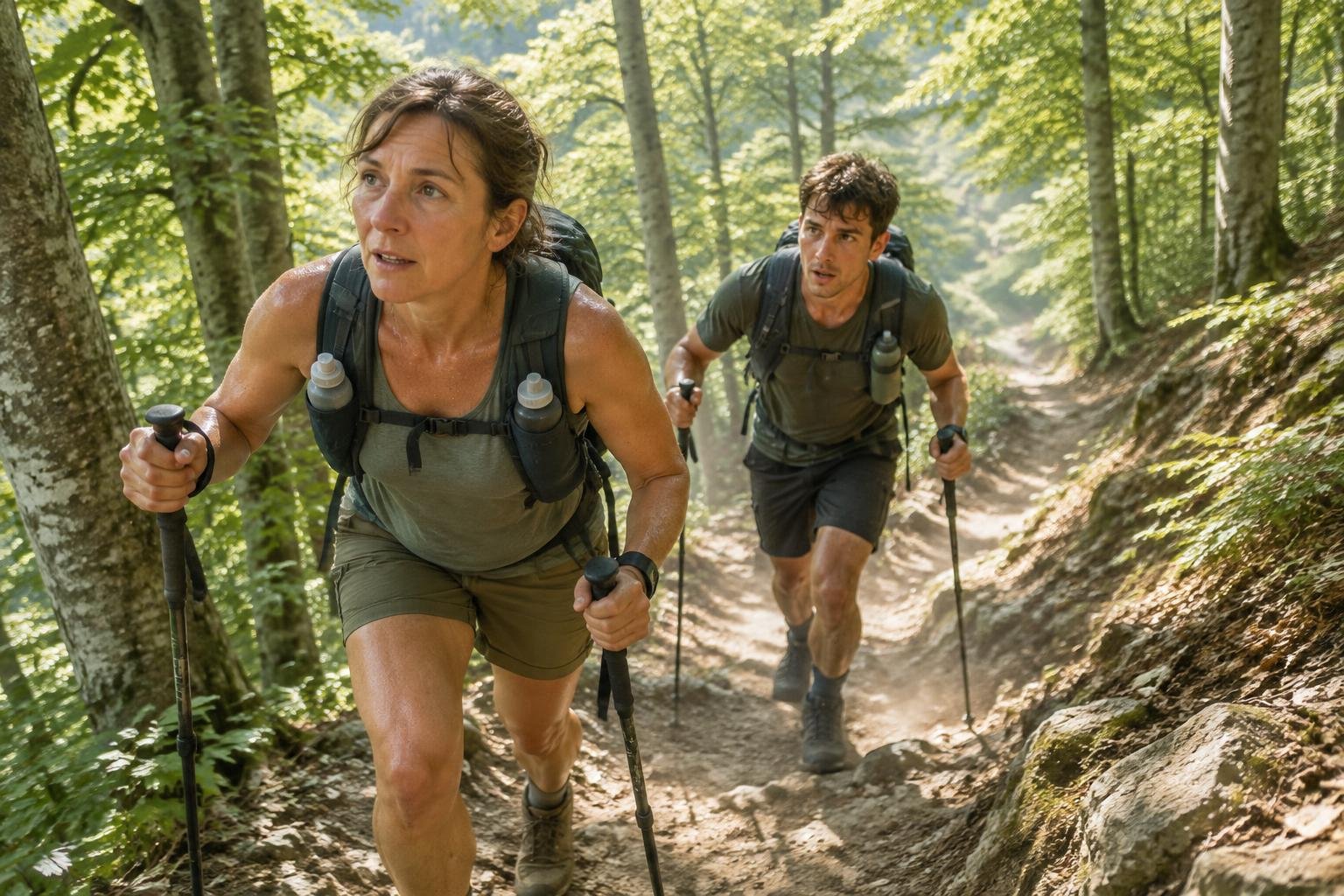
Official season guidance
Cross-border regional authorities: June to September
The full loop crosses between Albania, Kosovo and Montenegro, so check the border-crossing and permit requirements for each country before you go (a local operator can help); the popular Valbona–Theth day stage stays within Albania. It’s remote mountain country — carry layers and don’t rely on cell coverage.
Check current dates on akzm.gov.al (Albania National Agency of Protected Areas)What to pack for the season
Packing should follow the season you choose. Even in the dry summer window, carry layers and reliable rain cover, since the permits guidance notes this is remote mountain country. In shoulder months add extra warmth and plan around shorter days with a headlamp. Sun protection matters in the long summer days, and spare layers matter whenever rainfall averages climb.
For layering, rain cover and weather planning, see hiking in rain, heat and cold.
Timing mistakes to avoid
The biggest mistake is treating one month as a guarantee. Averages are modelled regional figures, not trail forecasts, so a dry-looking month can still bring rain. Another is ignoring the official June to September guidance and heading out in the wetter, shorter-day months. Hikers planning the full cross-border loop also sometimes forget that border-crossing and permit requirements apply in each country, so timing should include checking those rules, ideally with a local operator.
Common questions
What is the best month to hike Valbona to Theth?
July and August stand out in the data. They are among the warmest months of the year here, with the lowest modelled rainfall, about 48 mm and 42 mm on average, and long daylight of roughly 13.7 to 14.8 hours. Both sit within the official June to September window. Conditions still vary, so confirm locally before you go.
Is it possible to hike here outside June to September?
The official season guidance names June to September, and the numbers explain why: outside it, days get shorter and modelled rainfall rises, especially in November at about 159 mm. Shoulder months may be possible for some hikers, but you should check current conditions with the managing authorities rather than rely on averages.
How much daylight can I expect on this trek?
Daylight varies a lot across the year. It peaks at about 15.1 hours in June and falls to around 8.9 hours in December. In the recommended June to September window you typically have roughly 12.3 to 15.1 hours, which gives plenty of margin for a long mountain stage with breaks.
Does the best time change if I hike the full cross-border loop?
The season guidance of June to September applies to the route generally, but the full loop crosses between Albania, Kosovo and Montenegro. Border-crossing and permit requirements apply in each country, so check them before choosing dates. A local operator can help, and the popular Valbona to Theth stage stays within Albania.
Sources
- Cross-border regional authorities — akzm.gov.al (Albania National Agency of Protected Areas): official season and permit guidance.
- NASA POWER (Prediction Of Worldwide Energy Resources): monthly temperature and rainfall averages, 2010–2023, from MERRA-2 reanalysis. Daylight hours are calculated from latitude.
Conditions, closures and permit rules change without notice — confirm current information with the managing authority before you go. See our editorial policy and affiliate disclosure.