
Best Time to Hike Mount Triglav & Lake Bled
The best time to hike Mount Triglav & Lake Bled is July to September, according to the official season guidance. That is when the climb is typically at its most workable, with the warmest months of the year, long daylight and the mountain huts running. Check with Triglav National Park before you go.
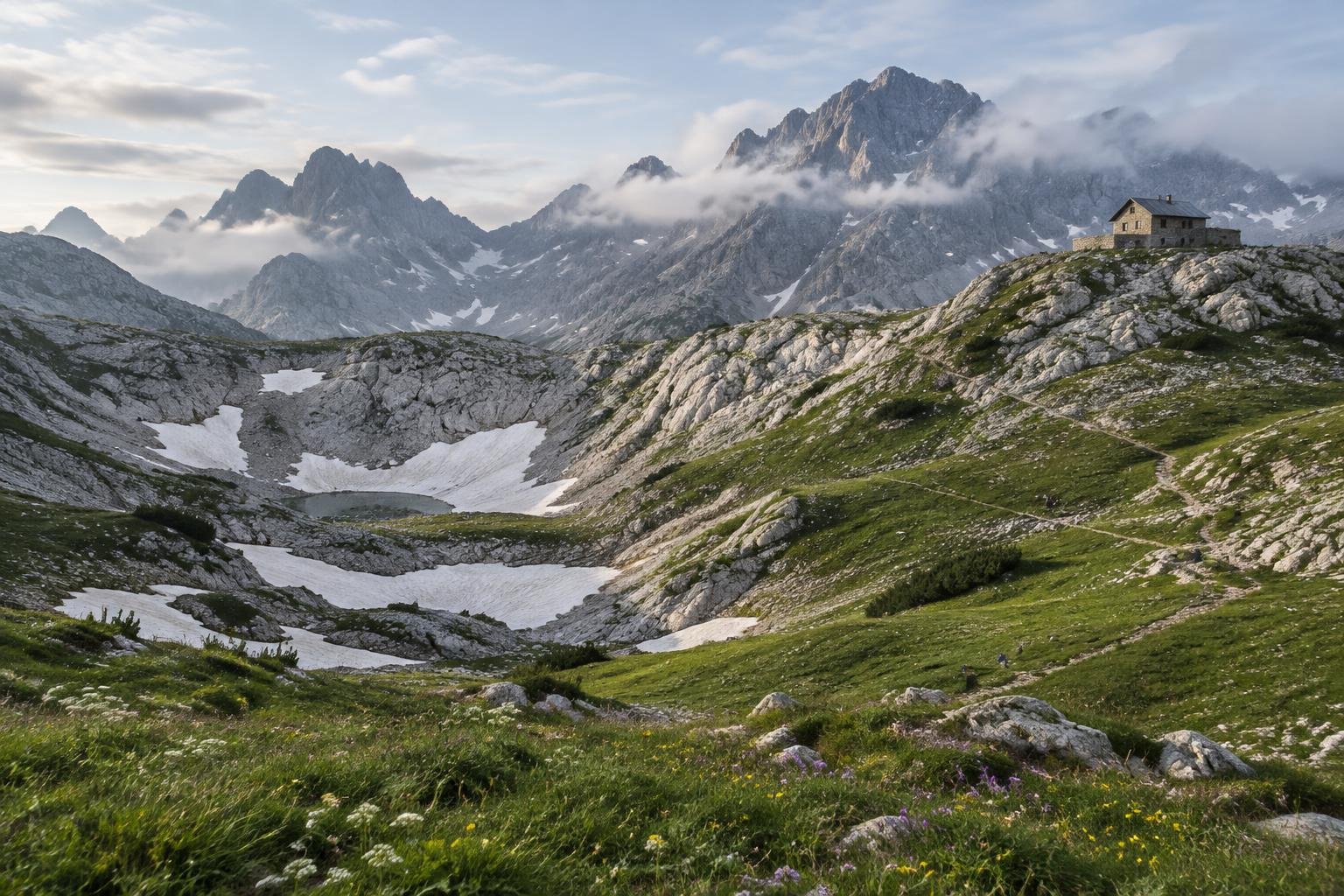
Month-by-month climate for Mount Triglav & Lake Bled
| Month | Relative warmth | Rain | Daylight |
|---|---|---|---|
| Jan | Coldest | 70 mm | 8.8 h |
| Feb | Coldest | 78 mm | 10.1 h |
| Mar | Cool | 68 mm | 11.6 h |
| Apr | Mild | 81 mm | 13.3 h |
| May | Warm | 139 mm | 14.8 h |
| Jun | Warmest | 122 mm | 15.6 h |
| Jul | Warmest | 143 mm | 15.3 h |
| Aug | Warmest | 146 mm | 14 h |
| Sep | Warm | 151 mm | 12.3 h |
| Oct | Mild | 133 mm | 10.6 h |
| Nov | Cool | 145 mm | 9.2 h |
| Dec | Coldest | 99 mm | 8.4 h |
Modelled regional averages for 2010–2023 (rainfall) and calculated daylight hours; they describe the wider area, not a reading taken on the trail. “Relative warmth” compares each month with the warmest and coldest months of this place’s own year. It is not a temperature, and the high parts of a route are colder than the region around them.
The modelled averages show a fairly wet year across the Julian Alps. Rainfall typically runs from about 68 mm in March to 151 mm in September, with the heaviest months in late summer and autumn, so July to September is not the driest stretch. Daylight swings from about 8.4 hours in December to 15.6 hours in June. By this region's own yearly pattern, June to August are the warmest months, May and September are warm, and December to February are the coldest.
Mount Triglav & Lake Bled season by season
Early summer · May to June
May and June bring warm conditions by this place's own standards and the longest daylight of the year, reaching about 15.6 hours in June. Rainfall is typically on the higher side, around 139 mm in May and 122 mm in June. This is earlier than the official July to September season, so it is wise to check with Triglav National Park about conditions on the summit ridges and hut availability before planning a climb.
High summer · July to August
July and August sit inside the official July to September season and are the warmest months of the year in the data. Daylight stays generous at roughly 14 to 15 hours, which suits a two-day hut-based climb with room for an early start. Rain is still typical, at around 143 mm and 146 mm on average, so plan for showers and settled-weather windows. Book the huts ahead, since they are the only high shelter.
Early autumn · September to October
September is the last month of the official season. It is still warm by this place's own year, with about 12.3 hours of daylight, but it is also the wettest month in the data at around 151 mm. By October conditions turn mild, rainfall is typically about 133 mm and daylight falls to roughly 10.6 hours, which shortens the margin on a long climb. Confirm hut and route status with the managing authority.
Late autumn to spring · November to April
From November through April the data show the coldest and cool months of the year, with daylight as short as about 8.4 hours in December. Rainfall ranges from roughly 68 mm in March to 145 mm in November. These months fall outside the official July to September season, and the summit ridges include protected via-ferrata sections, so check with Triglav National Park about conditions and hut availability rather than assuming access.
Official season guidance
Triglav National Park: July to September
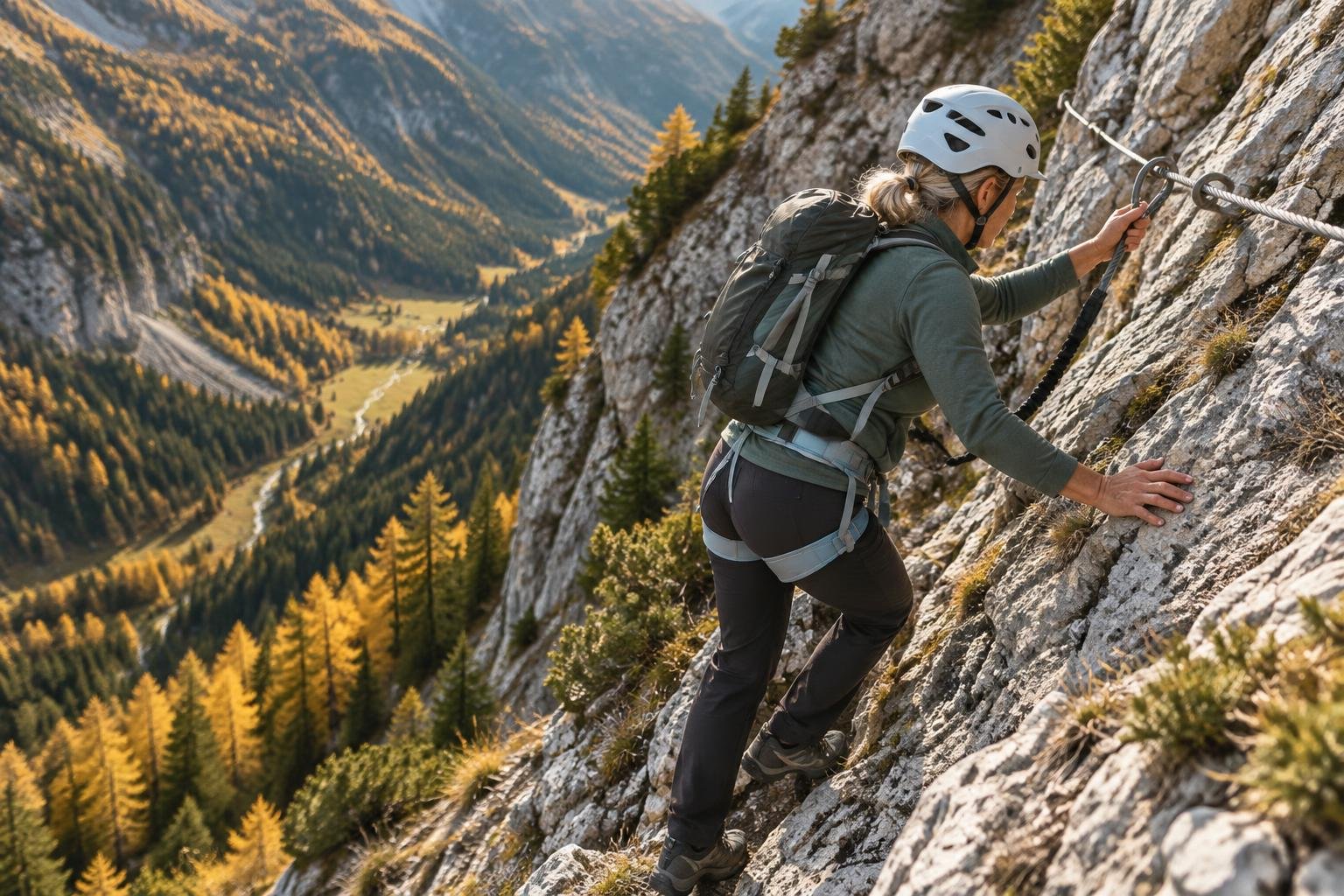
No permit is needed, but Triglav’s summit ridges are protected via-ferrata sections — you need a helmet, harness and via-ferrata set (or a guide), a head for heights, and settled weather. Book the mountain huts ahead, as they are the only high shelter.
Check current dates on Slovenian Tourist BoardWhat to pack for the season
Pack for a mountain day in a wet region: layers you can add or shed, reliable rain cover, and sun protection for the exposed ridges. Long summer daylight helps, but carry a headlamp for early starts. The via-ferrata sections also call for a helmet, harness and via-ferrata set, or a guide.
For layering, rain cover and weather planning, see hiking in rain, heat and cold.
Timing mistakes to avoid
The biggest mistake is treating the July to September window as a guarantee of good weather. Every month in the data carries meaningful rain, and September is the wettest, so a fixed date can still mean poor conditions on the exposed ridges. Another is leaving hut bookings late, since the huts are the only high shelter. Finally, do not ignore the settled-weather requirement: be ready to shift your climb day.
Common questions
What is the best month to hike Mount Triglav?
The official season guidance is July to September. July and August are the warmest months in the data and have long daylight of roughly 14 to 15 hours. Rain is typical throughout, so choose a settled-weather day and confirm conditions with Triglav National Park.
Is September a good time to climb Triglav?
September is the last month of the official season and is still warm by this place's own year. It is also the wettest month in the modelled data at about 151 mm, and daylight is down to around 12.3 hours. Pick a clear forecast and plan a start that leaves a comfortable margin.
Can I hike Triglav outside July to September?
The official season guidance covers July to September. Outside it, the data show cooler months and shorter daylight, down to about 8.4 hours in December. Because the summit ridges include protected via-ferrata sections, check with Triglav National Park about conditions and hut availability before planning.
Does it rain a lot on the Triglav climb?
The modelled regional averages show rain in every month, from about 68 mm in March to 151 mm in September. These are regional averages, not trail measurements, so conditions on the ridges can differ. Pack rain cover and watch the forecast closely for a settled-weather window.
Sources
- Triglav National Park — Slovenian Tourist Board: official season and permit guidance.
- NASA POWER (Prediction Of Worldwide Energy Resources): monthly temperature and rainfall averages, 2010–2023, from MERRA-2 reanalysis. Daylight hours are calculated from latitude.
Conditions, closures and permit rules change without notice — confirm current information with the managing authority before you go. See our editorial policy and affiliate disclosure.