
Best Time to Hike PCT — High Sierra & Forester Pass
The best time to hike the PCT through the High Sierra and over Forester Pass is July to September, with later dates in heavy snow years. Those months pair the warmest stretch of the year with very little rain and long daylight. Check conditions with the managing authority before you commit.
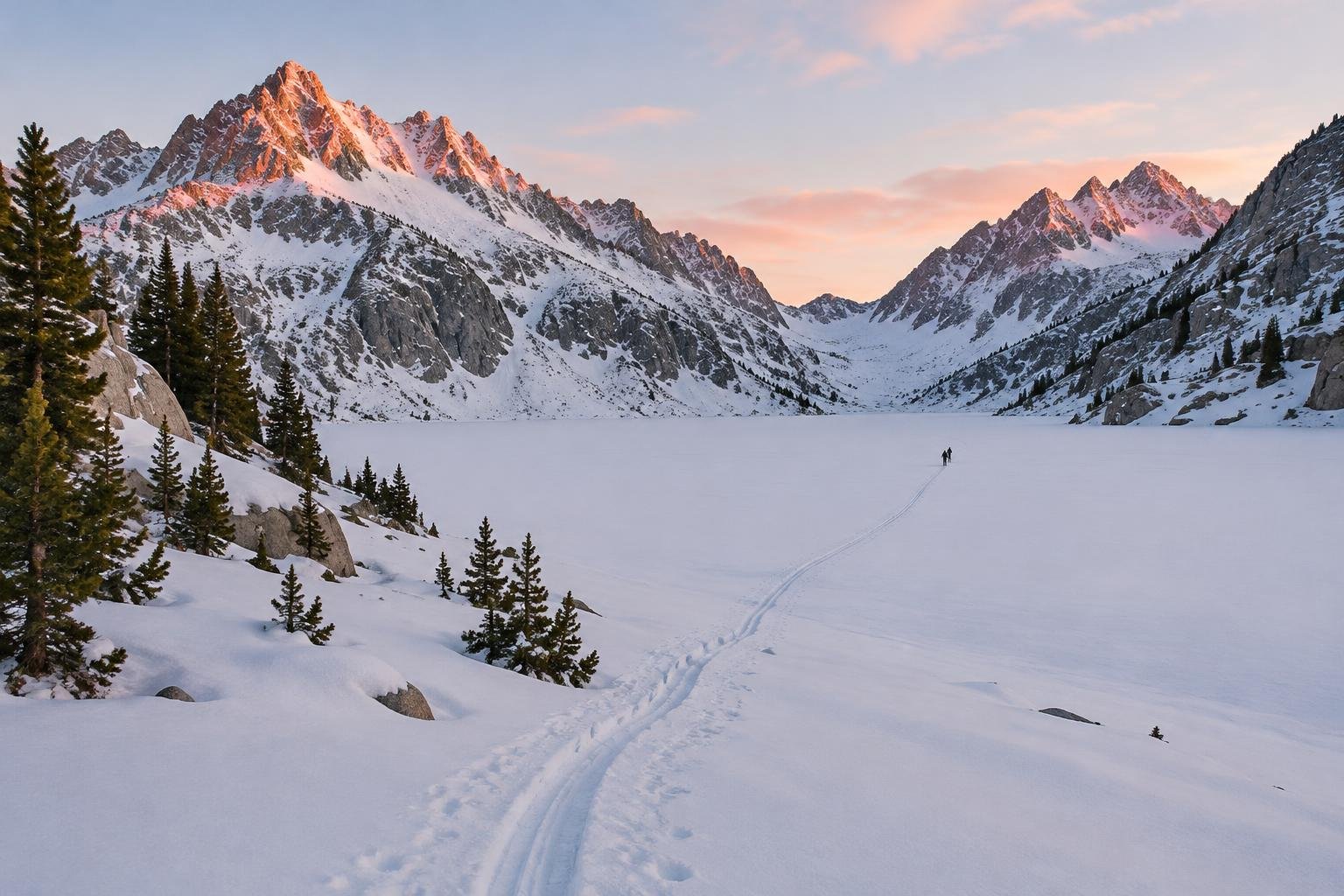
Month-by-month climate for PCT — High Sierra & Forester Pass
| Month | Relative warmth | Rain | Daylight |
|---|---|---|---|
| Jan | Coldest | 87 mm | 9.8 h |
| Feb | Coldest | 57 mm | 10.6 h |
| Mar | Coldest | 74 mm | 11.7 h |
| Apr | Cool | 30 mm | 12.9 h |
| May | Mild | 14 mm | 14 h |
| Jun | Warm | 4 mm | 14.5 h |
| Jul | Warmest | 7 mm | 14.3 h |
| Aug | Warmest | 9 mm | 13.4 h |
| Sep | Warm | 4 mm | 12.2 h |
| Oct | Mild | 17 mm | 11 h |
| Nov | Cool | 36 mm | 10 h |
| Dec | Coldest | 86 mm | 9.5 h |
Modelled regional averages for 2010–2023 (rainfall) and calculated daylight hours; they describe the wider area, not a reading taken on the trail. “Relative warmth” compares each month with the warmest and coldest months of this place’s own year. It is not a temperature, and the high parts of a route are colder than the region around them.
The modelled averages show a clear wet and dry split. December, January and March are the wettest months at roughly 74 to 87 mm each, while June through September stays at only 4 to 9 mm. Daylight swings from about 9.5 hours in December to 14.5 hours in June. July and August are the relatively warmest months of this place's year, with June and September warm, and December through March the coldest. These are regional averages, not trail measurements, so treat them as a guide to the pattern rather than a forecast for the pass.
PCT — High Sierra & Forester Pass season by season
Winter and early spring · December to April
This is the wettest and coldest part of the year in the modelled data, with January at about 87 mm and December at about 86 mm, and daylight as short as roughly 9.5 hours. Rain in the regional figures typically means heavy precipitation at higher elevations, and the official season guidance points to summer for a reason. Short days leave little margin for a long, remote stretch, and conditions change quickly. Confirm what is open and passable with the managing authority.
Late spring · May to June
Rainfall drops sharply, from about 14 mm in May to about 4 mm in June, and daylight stretches to roughly 14 to 14.5 hours. Warmth moves from mild to warm. The official guidance notes that snow can linger into summer, so these months can still carry snow conditions on the high ground even as the averages look friendly. Carrying an ice axe when needed is part of the official advice, and checking current conditions matters most in this window.
Peak summer · July to August
These are the relatively warmest months of the year and fall squarely inside the official July to September window. Rainfall is minimal at about 7 to 9 mm, and daylight is generous at roughly 13.4 to 14.3 hours, which gives longer days for a high, exposed route with no lodges. In heavy snow years the season can shift later, so even in midsummer it is worth confirming conditions with the managing authority before you go.
Early autumn and late autumn · September to November
September stays warm and very dry at about 4 mm, and it is still inside the official window, with daylight easing to about 12.2 hours. By October and November rainfall rises to about 17 mm and 36 mm, warmth slips from mild to cool, and daylight falls to roughly 10 to 11 hours. Treat late September as the practical end of the comfortable season and plan shorter margins afterward, checking conditions with the managing authority.
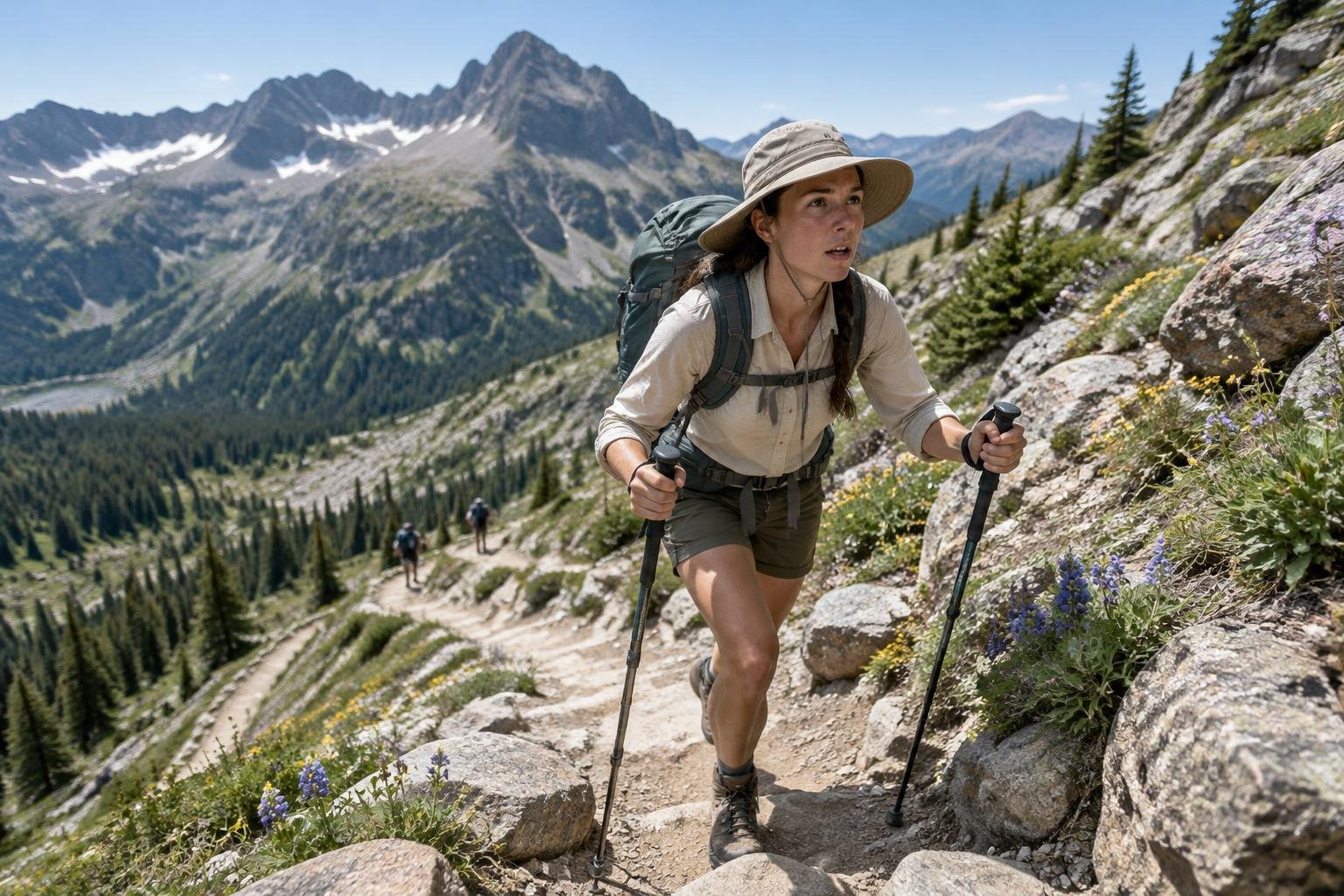
Official season guidance
U.S. National Park Service & Forest Service: July to September (later in heavy snow years)
This is remote, very high wilderness with no lodges — a wilderness permit is required (NPS runs a reservation quota season and free self-issue permits outside it; hikers of 500+ miles use a PCTA long-distance permit), and bear-resistant canisters are required in most of the park. Snow can linger into summer, so check conditions and carry an ice axe when needed.
Check current dates on nps.gov/seki (Sequoia & Kings Canyon wilderness permits)What to pack for the season
Packing should follow the season you choose. Bring layers that work across a wide range of warmth, since the high country feels colder than the regional averages suggest, plus rain cover for the wetter shoulder months. Sun protection matters in the long summer days, and a headlamp is useful as daylight shortens toward autumn. Carry an ice axe when snow lingers, and a bear-resistant canister as required.
For layering, rain cover and weather planning, see hiking in rain, heat and cold.
Timing mistakes to avoid
The most common timing mistake on a high, remote route like this is relying on a single month instead of the season as a whole. Low rainfall in June can hide the fact that snow may linger into summer, so ignoring the official July to September guidance is risky. Another is forgetting that permits and quotas follow their own season, and that bear canister rules apply in most of the park. Always confirm conditions and permit requirements with the managing authority.
Common questions
What month is best for the PCT over Forester Pass?
The official season guidance gives July to September, with later dates in heavy snow years. July and August are the relatively warmest months and have very little modelled rain. Because snow can linger into summer, check current conditions with the managing authority before you set your dates.
Can snow still be a problem in summer?
Yes. The official guidance says snow can linger into summer, so conditions should be checked and an ice axe carried when needed. The regional rainfall averages are low in June to September, but they do not show how much snow remains on the high ground, so rely on current information from the managing authority.
How much daylight can I expect?
Daylight is longest in June at about 14.5 hours and shortest in December at about 9.5 hours. In the July to September window it runs from roughly 14.3 hours in July down to about 12.2 hours in September, so plan your daily distances with the shrinking light in mind as autumn approaches.
Does timing affect permits and rules?
It can. The official guidance describes a wilderness permit requirement, with a reservation quota season and free self-issue permits outside it, plus a long-distance permit for hikers of 500 or more miles. Bear-resistant canisters are required in most of the park. Confirm current rules and dates with the managing authority before you plan.
Sources
- U.S. National Park Service & Forest Service — nps.gov/seki (Sequoia & Kings Canyon wilderness permits): official season and permit guidance.
- NASA POWER (Prediction Of Worldwide Energy Resources): monthly temperature and rainfall averages, 2010–2023, from MERRA-2 reanalysis. Daylight hours are calculated from latitude.
Conditions, closures and permit rules change without notice — confirm current information with the managing authority before you go. See our editorial policy and affiliate disclosure.