
PCT Goat Rocks vs PCT High Sierra: Which Should You Hike?
Choose PCT Goat Rocks if you want a shorter alpine trip built around the Knife's Edge, a narrow exposed ridge, in late July to September. Choose PCT High Sierra if you have several days, are acclimatized to altitude and want to cross Forester Pass, the PCT's highest point at 13,153 ft. Both are strenuous, high-alpine routes.
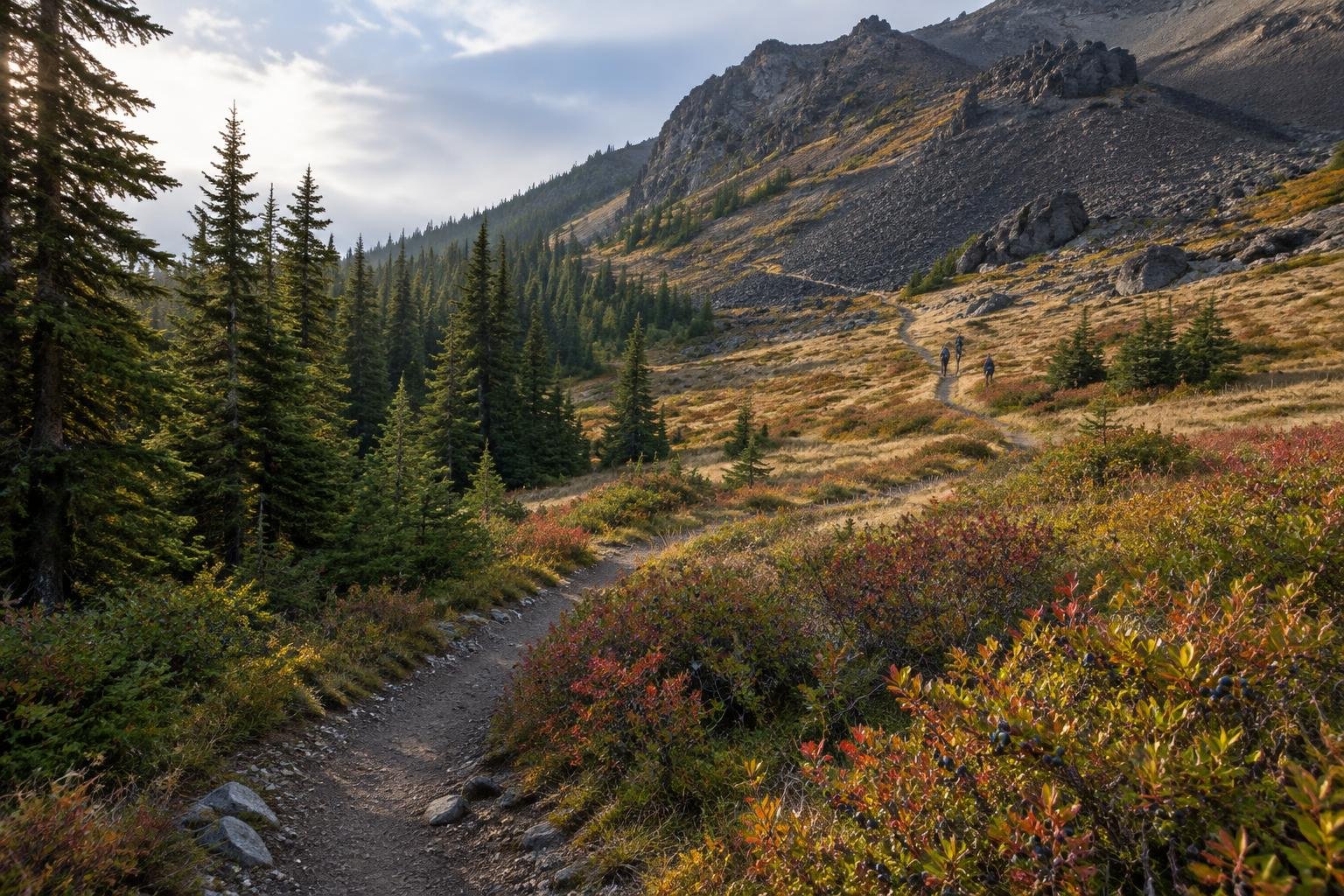
PCT Goat Rocks and PCT High Sierra at a glance
PCT Goat Rocks is a Washington Cascades section of the Pacific Crest Trail, crossing Old Snowy Mountain and the narrow Knife's Edge ridge. PCT High Sierra is a California Sierra Nevada climb to Forester Pass, the highest point on the whole 2,650-mile PCT. Hikers weigh them because both are famous, exposed alpine sections of the same long trail, and each can hold snow into summer.
| PCT Goat Rocks | PCT High Sierra | |
|---|---|---|
| Place | Cascades · Washington, USA | Sierra Nevada · California, USA |
| Distance | Most often hiked as a ~20-25 mile out-and-back day hike from the Snowgrass Flat or Berry Patch trailhead, joining the PCT past Old Snowy Mountain and across the Knife's Edge; on the PCT itself this section runs roughly 28-30 miles point-to-point between White Pass and Walupt Lake. The narrow 'Knife's Edge' ridge proper (PCT mile marker ~2284.5-2287) is only about 2-2.5 miles long. | Forester Pass (13,153 ft) is the single highest point on the entire 2,650-mile PCT. The direct PCT climb to the pass from the PCT/Bubbs Creek Trail junction is 7.9 miles one-way. Most hikers experience it as part of a multi-day High Sierra trip via the Kearsarge Pass Trailhead (Onion Valley) — round-trip backpacking routes to and past the pass run roughly 46-49 miles. |
| Elevation gain | Roughly 5,900-7,100 ft round trip depending on trailhead/route choice; the narrow Knife's Edge segment itself gains ~850 ft / loses ~950 ft | 3,595 ft over the 7.9-mile climb to the pass from the north (PCT/Bubbs Creek Trail junction); full Kearsarge Pass-approach round trips gain roughly 11,860-12,063 ft total |
| Difficulty | Strenuous to very strenuous — high alpine, exposed narrow ridge with steep drop-offs, snowfields common into midsummer, hypothermia-death incidents on record | Very strenuous / high alpine — the PCT's highest and one of its most exposed passes, often holds snow/ice into July |
| Route type | out-and-back | point-to-point |
| Official season | Late July to September, once the snow clears | July to September (later in heavy snow years) |
| Managed by | U.S. Forest Service | U.S. National Park Service & Forest Service |
Effort and difficulty
Both are rated very strenuous or close to it, but the effort is shaped differently. PCT Goat Rocks is most often hiked as a roughly 20-25 mile out-and-back, with about 5,900-7,100 ft of gain round trip, and the narrow Knife's Edge is only about 2-2.5 miles long. PCT High Sierra is the bigger commitment: the direct climb to the pass is 7.9 miles one-way with 3,595 ft of gain, but the Kearsarge Pass round trips run roughly 46-49 miles with about 11,860-12,063 ft of total gain. The Sierra route adds thin air at 13,153 ft, while Goat Rocks adds sustained exposure on broken rock.
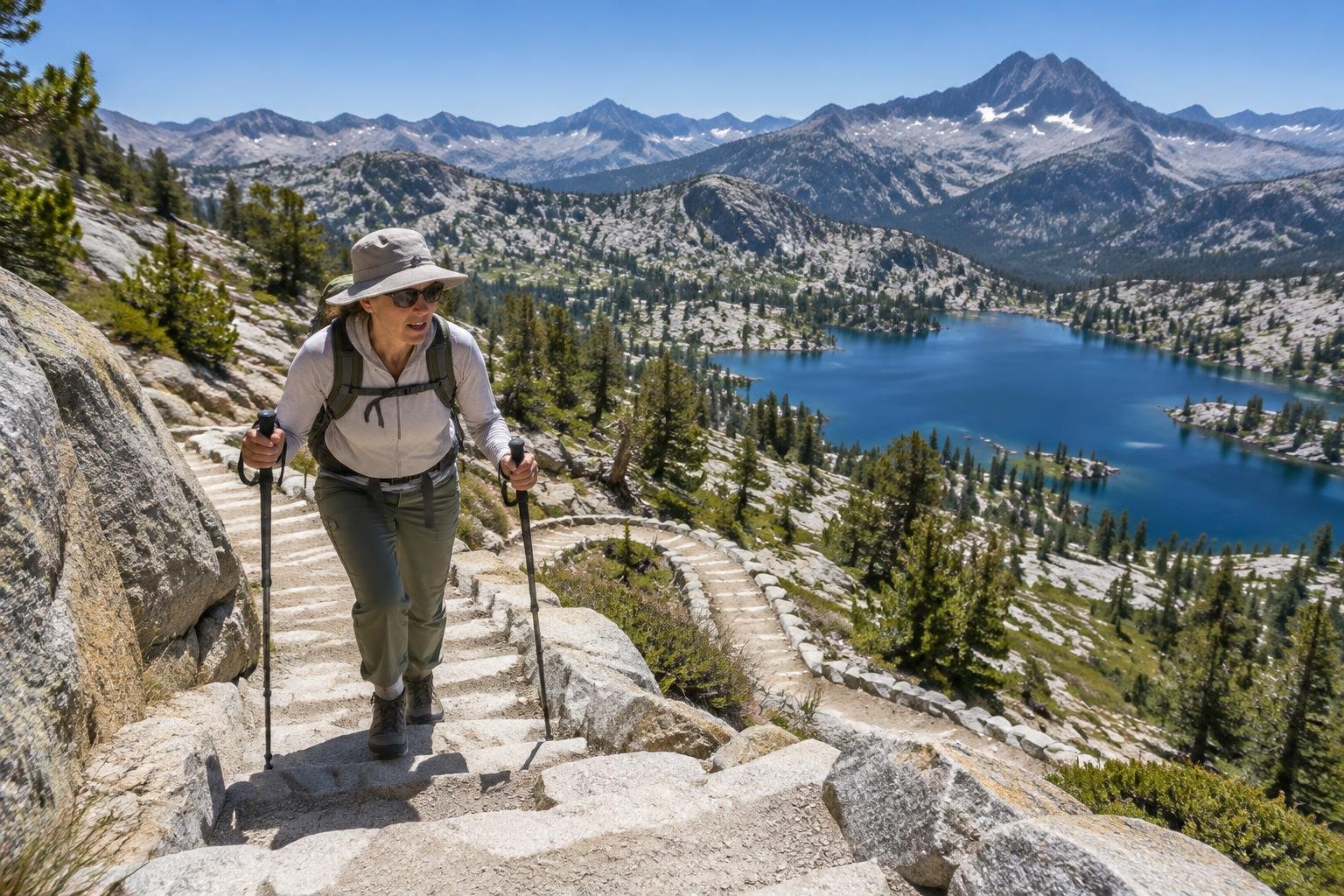
Season, permits and booking
PCT Goat Rocks lists late July to September, once the snow clears, and notes that the Knife's Edge is dangerous in snow, wind or storm. PCT High Sierra lists July to September, later in heavy snow years, and the pass often holds snow or ice into July. Permits differ too: Goat Rocks needs a free, self-issued wilderness permit at the trailhead, with camping restrictions at spots like Snowgrass Flat. The Sierra needs a wilderness permit under an NPS quota system in season, plus bear canisters in most of the park. Confirm current rules with each managing authority.
Which one is right for you?
Choose PCT Goat Rocks if…
Pick PCT Goat Rocks if you want a high-alpine ridge experience without a week of backpacking. It suits strong, experienced hikers comfortable with exposure, loose volcanic rock and possible snowfields, ideally with a settled forecast. It is commonly spread over two to three days point to point, and the facts note that strong hikers sometimes push the whole traverse in one very long day, though only with an early start and good weather.
How to hike PCT — Goat Rocks & the Knife’s EdgeChoose PCT High Sierra if…
Pick PCT High Sierra if you have several days to spare and want to stand on the highest point of the entire PCT. It suits hikers who can give themselves a couple of easier days and a night or two at altitude first, since the main difficulty is elevation more than terrain. The tread itself is well built and graded, which rewards patient, well-acclimatized pacing and a plan that allows more days than the distance suggests.
How to hike PCT — High Sierra & Forester PassWhat the two have in common
Both routes are high alpine sections of the Pacific Crest Trail and both are rated very strenuous or close to it. Each has a famously exposed stretch, a narrow ridge on one and a blasted rock shelf on the other. Both can hold snow well into summer, so each rewards early starts and a flexible schedule, and both require a wilderness permit. Neither is a casual outing, and each is best planned around weather and snow conditions.
How your choice changes what you pack
The choice shifts what you carry. A Goat Rocks trip of two to three days points toward a smaller pack, but you still need warm layers and wind protection for the exposed ridge. A High Sierra trip means several days of food, a bear-resistant canister and cold-weather layers for nights at altitude. On either route, carry traction or an ice axe if snow conditions call for it, and plan water and camp stops around the terrain.
Common questions
Which is harder, PCT Goat Rocks or PCT High Sierra?
Both are described as very strenuous. The High Sierra route is the bigger commitment because of its multi-day length, total climbing and altitude at 13,153 ft. Goat Rocks is shorter, but its narrow, exposed Knife's Edge ridge demands sustained attention, and snow, wind or storms make it dangerous.
Which is better for a first big alpine trip?
Neither is a beginner route. Both are rated strenuous to very strenuous, with exposure and possible snow. If you are building up, Goat Rocks involves fewer days, but you still need solid fitness and weather judgment. The Sierra route calls for acclimatization before attempting the pass.
When is the best time to hike each one?
PCT Goat Rocks is best from late July to September, once the snow clears. PCT High Sierra runs July to September, later in heavy snow years, and the pass often holds snow or ice into July. Check current conditions with the managing agencies before you go.
Do both trips need permits?
Yes. Goat Rocks requires a free, self-issued wilderness permit at the trailhead, with camping restrictions in places. The High Sierra requires a wilderness permit, with an NPS reservation quota in season and free self-issue permits outside it. Bear-resistant canisters are required in most of the park. Confirm current rules locally.
Sources
- U.S. Forest Service — fs.usda.gov (Gifford Pinchot National Forest, wilderness areas): official information for PCT Goat Rocks.
- U.S. National Park Service & Forest Service — nps.gov/seki (Sequoia & Kings Canyon wilderness permits): official information for PCT High Sierra.
Conditions, permits and access rules change without notice — confirm current information with each managing authority before you go. See our editorial policy.