
Best Time to Hike Nakasendo — Magome to Tsumago
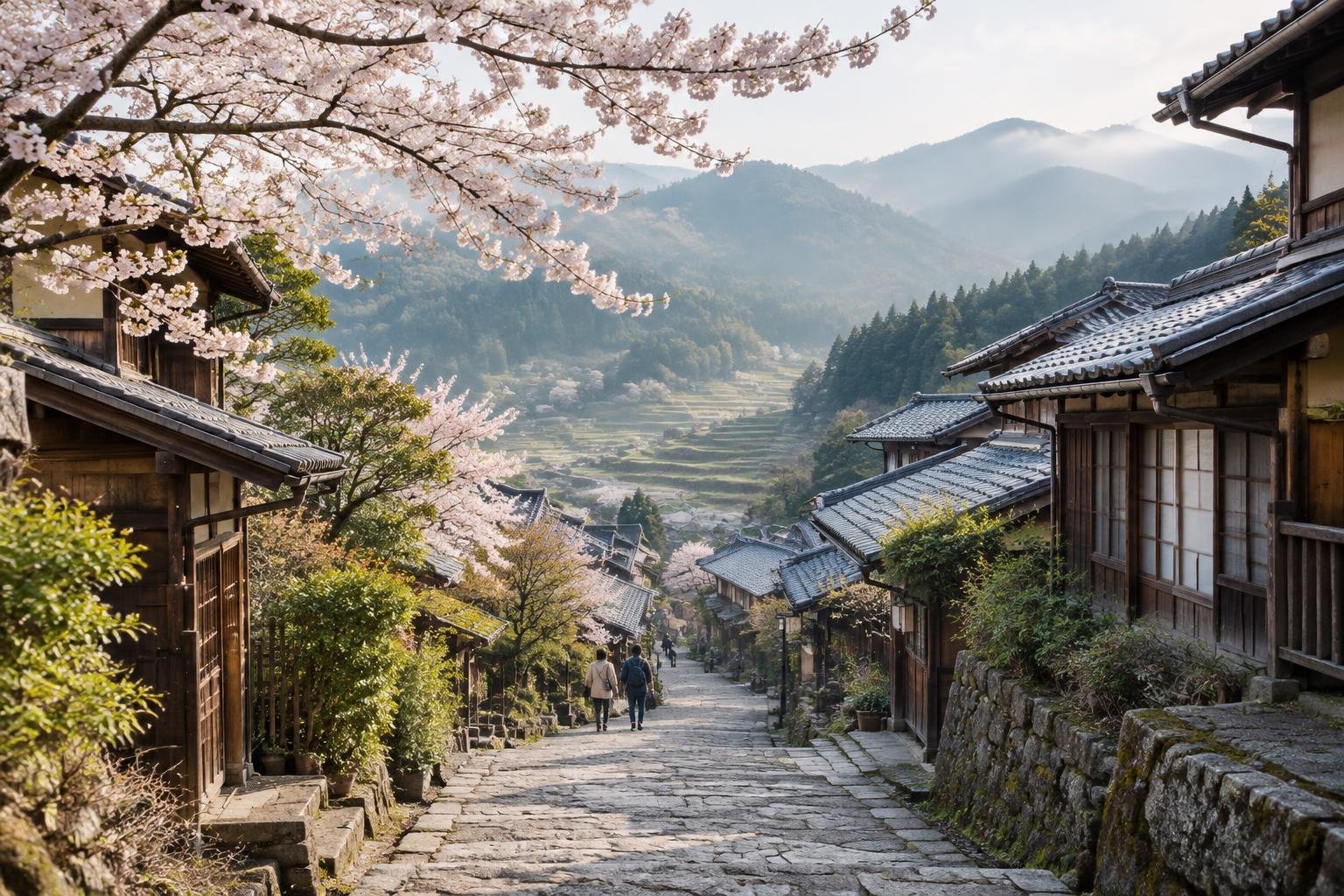
The best time to hike Nakasendo — Magome to Tsumago is spring to autumn, according to the official season guidance. Winter is described as snowy. Within that window, mild May and October sit between the wet early summer and the cool, drier late-autumn days.
Month-by-month climate for Nakasendo — Magome to Tsumago
| Month | Relative warmth | Rain | Daylight |
|---|---|---|---|
| Jan | Coldest | 59 mm | 9.8 h |
| Feb | Coldest | 76 mm | 10.7 h |
| Mar | Cool | 123 mm | 11.7 h |
| Apr | Cool | 158 mm | 12.9 h |
| May | Mild | 159 mm | 13.9 h |
| Jun | Warm | 197 mm | 14.4 h |
| Jul | Warmest | 253 mm | 14.2 h |
| Aug | Warmest | 179 mm | 13.3 h |
| Sep | Warmest | 221 mm | 12.2 h |
| Oct | Mild | 163 mm | 11.1 h |
| Nov | Cool | 83 mm | 10.1 h |
| Dec | Coldest | 80 mm | 9.6 h |
Modelled regional averages for 2010–2023 (rainfall) and calculated daylight hours; they describe the wider area, not a reading taken on the trail. “Relative warmth” compares each month with the warmest and coldest months of this place’s own year. It is not a temperature, and the high parts of a route are colder than the region around them.
The modelled averages show a clear wet season. July is the wettest month at about 253 mm, followed by September at 221 mm and June at 197 mm, while January is the driest at around 59 mm. Daylight swings from roughly 9.6 hours in December to about 14.4 hours in June. Relative to this place's own year, January, February and December are the coldest months, July through September are the warmest, and May and October sit in the mild middle. These are regional averages, not trail measurements.
Nakasendo — Magome to Tsumago season by season
Spring · March to May
Spring is part of the official spring-to-autumn window, and conditions ease as the months go on. March and April are cool by this place's own standards, with about 123 mm and 158 mm of rain on average, while May turns mild with around 159 mm. Daylight grows from roughly 11.7 hours in March to nearly 14 hours in May, which leaves plenty of time for a few-hours walk and an unhurried stop in each post town. Because the weather can still vary early in the season, check with the regional tourism authorities for current conditions.
Early to midsummer · June to August
These are the warmest months of the year here, with July and August the warmest of all. They also bring heavy rain on average: about 197 mm in June, 253 mm in July and 179 mm in August. Daylight is at its longest, peaking near 14.4 hours in June, so there is no shortage of time on the old road between Magome and Tsumago. The trade-off is wet weather, so expect that showers may be part of the day and plan the walk around them rather than against them.
Early autumn · September to October
September is still among the warmest months and the second-wettest at about 221 mm on average, so rain remains a real possibility. By October the warmth eases to mild and rainfall falls to roughly 163 mm, with daylight shortening from about 12.2 hours to 11.1 hours. This stretch sits inside the spring-to-autumn window and suits a walk that you pair with an overnight stay in Magome or Tsumago, which the permits and rules text singles out as what makes the experience special. Check local guidance closer to your dates.
Late autumn and winter · November to February
Late autumn turns cool and winter is the coldest part of the year here, and the official season guidance says winter is snowy. Rainfall is lowest in this period, with January the driest month at about 59 mm, but daylight is short, falling to roughly 9.6 hours in December. With so little daylight, the walking day is compressed and timing matters more. Because conditions can change quickly and snow is expected, confirm the current situation with the regional tourism authorities before planning a winter walk.
Official season guidance
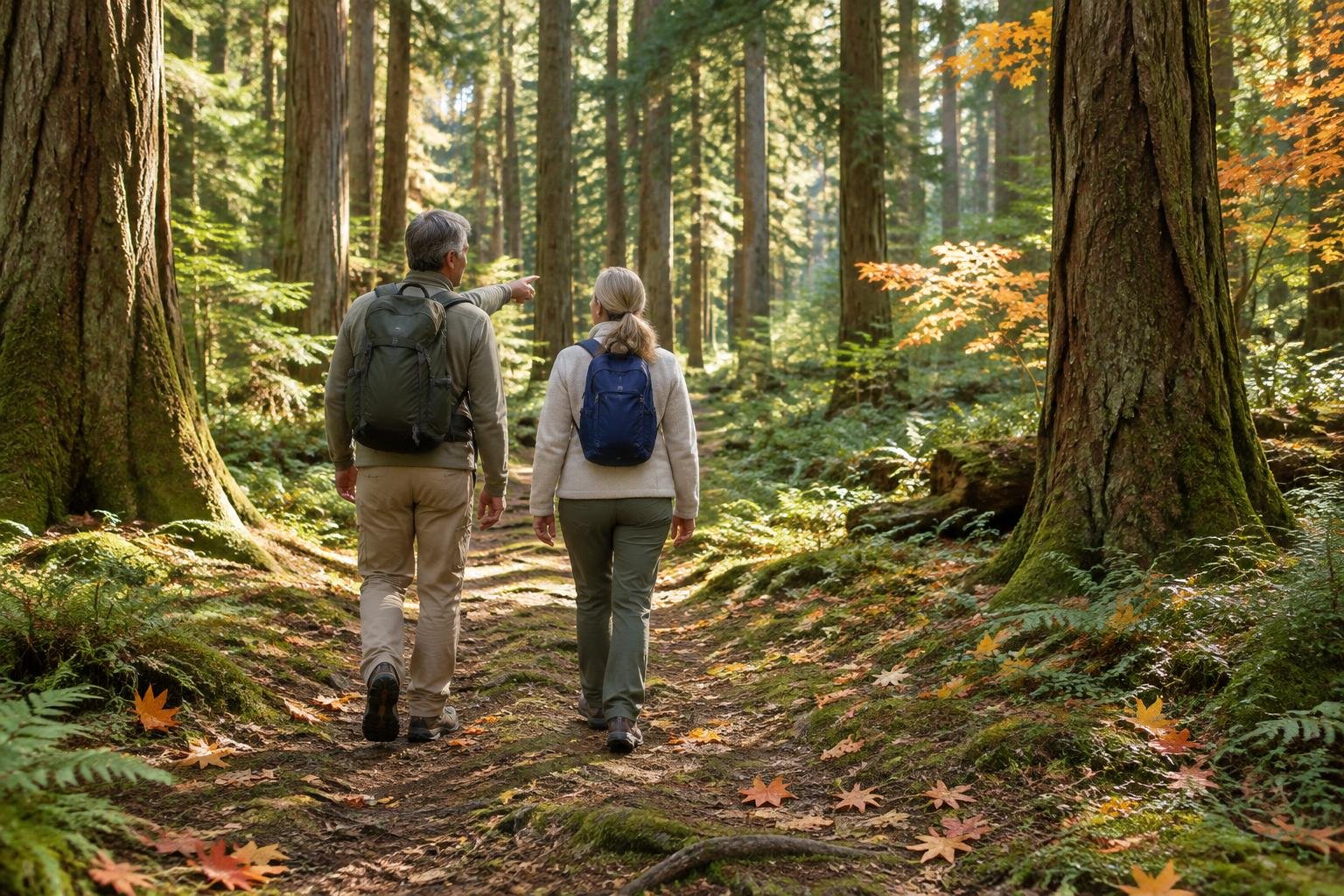
Regional tourism authorities: Spring to autumn; snowy in winter
No permit is needed — this is a gentle, well-signed few-hours walk on an old highway between two exquisitely preserved post towns. Staying overnight in Magome or Tsumago, rather than day-tripping, is what makes it special.
Check current dates on Japan National Tourism Organization (national tourist board)What to pack for the season
Pack for the season you choose rather than for an average day. In the wetter months, a reliable rain jacket and a way to keep your pack dry matter most. In the cooler months, warm layers are worth carrying, and in winter you should expect snow. Sun protection suits the long summer days, and a headlamp is a sensible backup when daylight is short.
For layering, rain cover and weather planning, see hiking in rain, heat and cold.
Timing mistakes to avoid
The most common mistake is treating the whole spring-to-autumn window as equally dry. Early summer and early autumn are among the wettest months in the modelled data, so a rain-free walk is not guaranteed. Another is planning winter as if it were a mild-season stroll, when the official season guidance says it is snowy and daylight is shortest. Finally, rushing through as a day trip can undercut the experience, since the permits and rules text recommends staying overnight in one of the post towns.
Common questions
When is the best time to walk from Magome to Tsumago?
The official season guidance points to spring to autumn, with winter described as snowy. Within that window, May and October are mild and avoid the heaviest rain of the summer months, though weather can still change. Check with the regional tourism authorities for current conditions.
Which months are the wettest for this walk?
On average, July is the wettest month at about 253 mm, followed by September at roughly 221 mm and June at about 197 mm. These are modelled regional averages rather than trail measurements, so treat them as a guide to the general pattern rather than a forecast.
Can you hike the Nakasendo in winter?
The official season guidance describes winter as snowy, and December to February are the coldest months of the year here. Daylight is also at its shortest, around 9.6 to 10.7 hours. Conditions can change, so confirm the current situation with the regional tourism authorities before deciding.
How much daylight can I expect on the trail?
Daylight ranges from about 9.6 hours in December to roughly 14.4 hours in June. For a short walk this is usually ample in the warmer months, but in late autumn and winter the shorter days leave less margin, so plan your start time carefully.
Sources
- Regional tourism authorities — Japan National Tourism Organization (national tourist board): official season and permit guidance.
- NASA POWER (Prediction Of Worldwide Energy Resources): monthly temperature and rainfall averages, 2010–2023, from MERRA-2 reanalysis. Daylight hours are calculated from latitude.
Conditions, closures and permit rules change without notice — confirm current information with the managing authority before you go. See our editorial policy and affiliate disclosure.