
Kumano Kodo vs Nakasendo: Which Should You Hike?
Choose Kumano Kodo if you want a multi-day, inn-to-inn pilgrimage walk with real climbing through forest and have time to book lodging well ahead; choose Nakasendo if you want a gentle, well-signed half-day walk between two preserved post towns, ideally with an overnight stay in one of them.
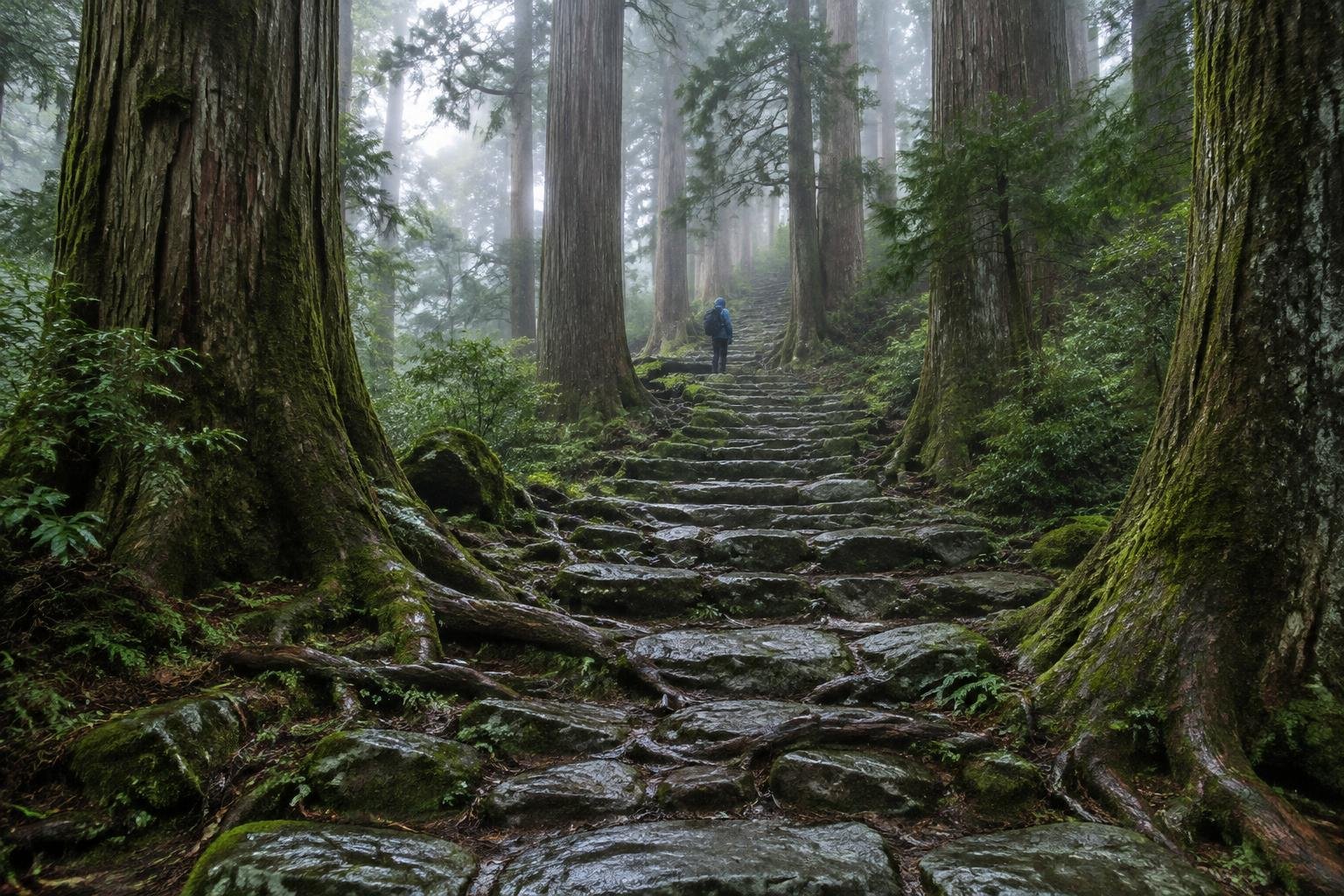
Kumano Kodo and Nakasendo at a glance
Kumano Kodo (the Nakahechi route) is a roughly 70-75 km pilgrim path across the Kii Peninsula, walked village to village over several days. Nakasendo (Magome to Tsumago) is an old highway of about 8 km between two Edo-era post towns. Both are Japanese heritage walks with no permit required, so people often weigh them when planning a first walking trip in Japan.
| Kumano Kodo | Nakasendo | |
|---|---|---|
| Place | Kii Peninsula · Wakayama, Japan | Kiso Valley · Nagano/Gifu, Japan |
| Distance | ~70-75 km, Takijiri-oji to the Kumano shrines and on to Nachi/the coast, typically walked over 4-7 days depending on exact start/end points and side trips | ~8 km, point-to-point (Magome to Tsumago); sources range 7.7-9 km depending on exact measured route |
| Elevation gain | ~4,160 m cumulative (single third-party estimate, not independently corroborated) | ~200-300 m gain climbing to Magome Pass (801 m), then net descent to Tsumago (420 m); third-party trackers vary 200-465 m depending on start/end points measured |
| Difficulty | Moderate to strenuous (multi-day mountain forest walking with significant daily climbs between village stages; no technical terrain) | Easy |
| Route type | thru-hike | point-to-point |
| Official season | Spring and autumn are ideal | Spring to autumn; snowy in winter |
| Managed by | Tanabe City Kumano Tourism Bureau | Regional tourism authorities |
Effort and difficulty
The gap in commitment is large. Kumano Kodo covers roughly 70-75 km, typically over 4-7 days, with about 4,160 m of cumulative gain (a single third-party estimate). Its difficulty is described as moderate to strenuous, with significant daily climbs between village stages and no technical terrain. Nakasendo runs about 8 km, with roughly 200-300 m of gain up to Magome Pass at 801 m, then a net descent to Tsumago at 420 m. Its difficulty is listed as easy, and most of the walking is downhill. Kumano Kodo is clearly the bigger undertaking, in both distance and sustained climbing.
Season, permits and booking
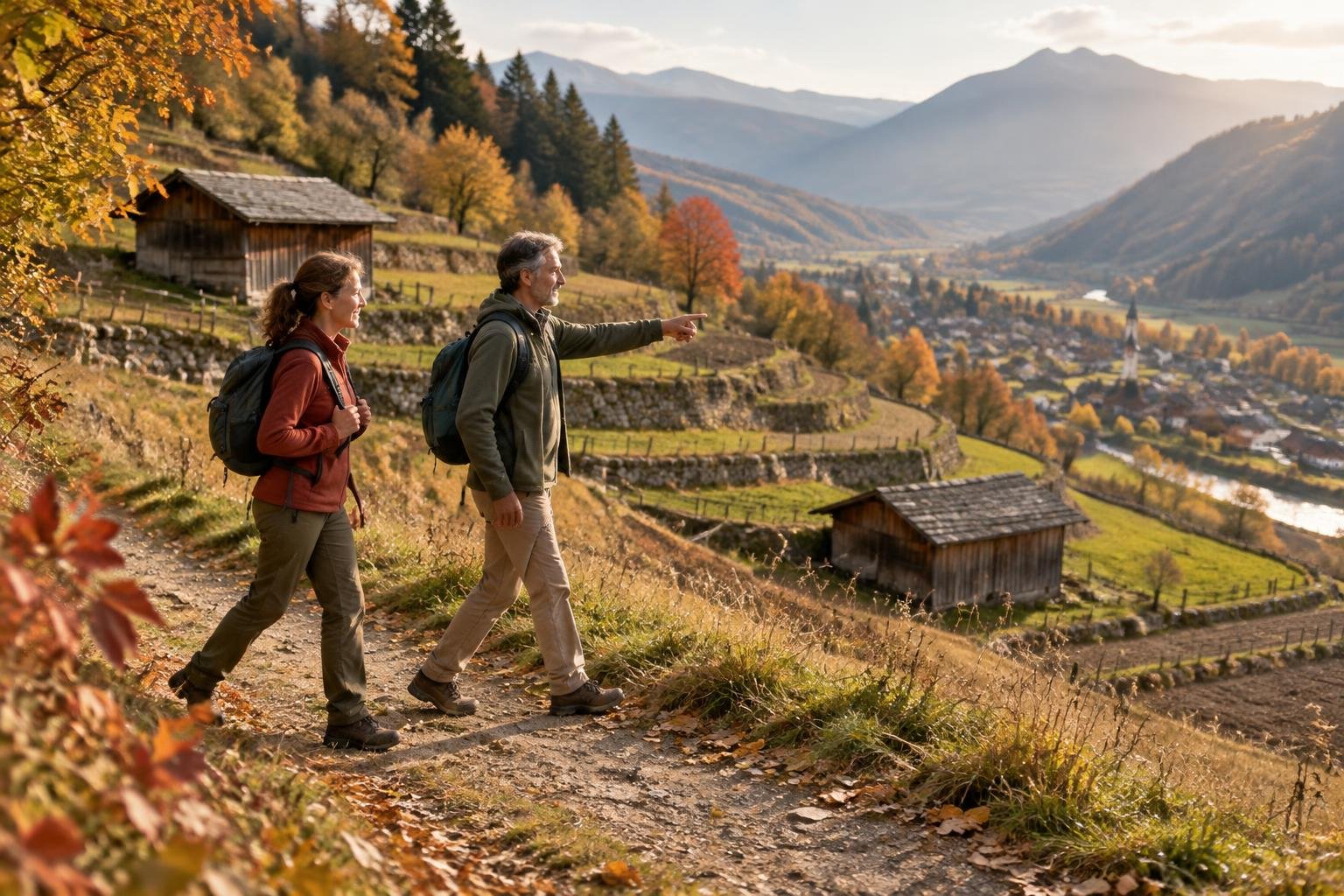
Kumano Kodo's official guidance is that spring and autumn are ideal. No permit is needed, but the inns are small and fill quickly, so lodging must be booked well ahead, and carrying the pilgrim stamp book is optional if you want shrine seals. Nakasendo is listed for spring to autumn and is snowy in winter, and it also requires no permit. Booking matters less for a half-day walk, though overnight stays in the post towns are worth arranging. Confirm current conditions and rules with each managing authority before you go.
Which one is right for you?
Choose Kumano Kodo if…
Pick Kumano Kodo if you have several days, are comfortable with repeated climbs and descents on roots, packed earth and mossy stone, and like the idea of a fixed inn-to-inn rhythm. It suits walkers who want a slow accumulation of forest, shrines and villages rather than big views. You must be willing to lock in lodging before leaving home and check rural bus connections each evening.
How to hike Kumano Kodo — NakahechiChoose Nakasendo if…
Pick Nakasendo if you have a single afternoon or one night, want a well-signed route with bilingual signposts, and prefer a mostly downhill walk. It suits first-time visitors, mixed-ability groups and anyone who wants to carry only a day pack, since a luggage-forwarding service runs between the two towns. Staying overnight in Magome or Tsumago adds the quiet lanes at dusk and first light.
How to hike Nakasendo — Magome to TsumagoWhat the two have in common
Both are historic walking routes in Japan that follow old travel corridors and need no permit. Both mix forest paths with stretches of original stone paving that can be slick when wet, and both pass through small villages where the trail meets roads. Each is supported by luggage-transfer services, so many people walk with only a day pack, and each is best experienced with an overnight stay rather than a rushed visit.
How your choice changes what you pack
The choice changes how much you carry and plan for. A multi-day walk means a day pack with spare layers, enough water for long climbs, and footwear with good grip for moss-covered stone, with luggage sent ahead between inns. A half-day outing needs far less: a small pack, a rain layer and water. Neither needs a stove or tent, since both are walked without camping or huts.
Common questions
Which is harder, Kumano Kodo or Nakasendo?
Kumano Kodo is harder. It is described as moderate to strenuous, with significant daily climbs across roughly 70-75 km, while Nakasendo's Magome to Tsumago section is listed as easy and about 8 km, with most of the route downhill.
Which is better for first-timers?
Nakasendo is the gentler introduction: short, well-signed and mostly downhill. Kumano Kodo can suit first-timers too if they are comfortable with several days of climbing and can book small inns well in advance.
Do I need a permit for either walk?
No permit is needed for either route. For Kumano Kodo the real planning task is booking the small village inns well ahead, since beds are limited and fill fast. Check each managing authority for current rules.
Can I shorten either trip?
Yes, in different ways. On Kumano Kodo, local buses connect villages and trailheads, so sections can be shortened or skipped. Nakasendo is already a short point-to-point walk, and it can be walked in reverse for a real climb and a quieter trail.
Sources
- Tanabe City Kumano Tourism Bureau — tb-kumano.jp (Kumano Tourism Bureau, Kumano Kodo): official information for Kumano Kodo.
- Regional tourism authorities — Japan National Tourism Organization (national tourist board): official information for Nakasendo.
Conditions, permits and access rules change without notice — confirm current information with each managing authority before you go. See our editorial policy.