
Best Time to Hike GR20 — Corsica
The best time to hike the GR20 in Corsica is June to September, once the snow clears the high stages, according to the park's guidance. Within that window, July and August are the driest months on average, while September brings longer evenings than you might expect but more rain.
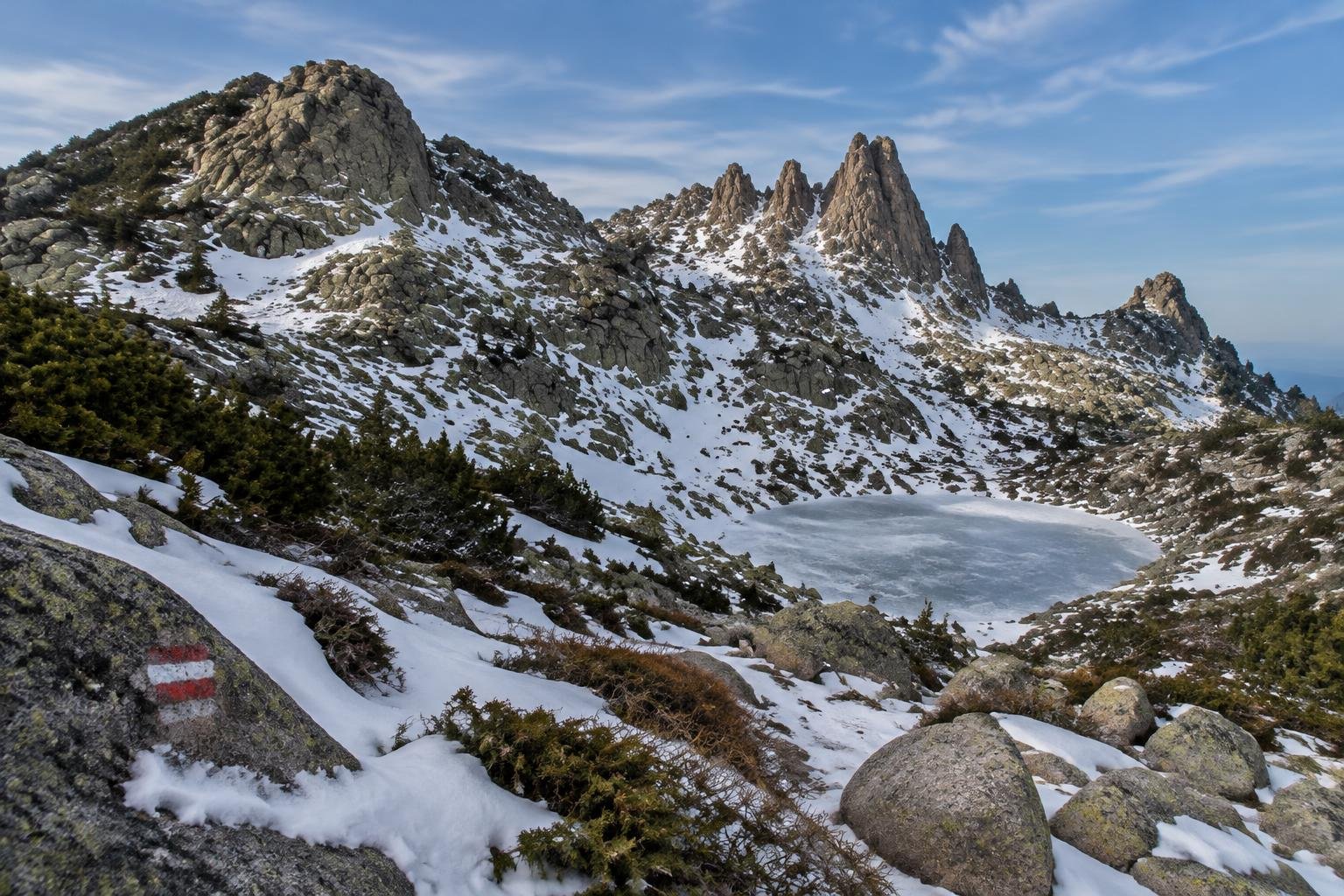
Month-by-month climate for GR20 — Corsica
| Month | Relative warmth | Rain | Daylight |
|---|---|---|---|
| Jan | Coldest | 54 mm | 9.2 h |
| Feb | Coldest | 59 mm | 10.3 h |
| Mar | Coldest | 58 mm | 11.7 h |
| Apr | Cool | 42 mm | 13.2 h |
| May | Mild | 45 mm | 14.4 h |
| Jun | Warmest | 21 mm | 15.1 h |
| Jul | Warmest | 11 mm | 14.8 h |
| Aug | Warmest | 13 mm | 13.7 h |
| Sep | Warm | 32 mm | 12.3 h |
| Oct | Mild | 63 mm | 10.8 h |
| Nov | Cool | 91 mm | 9.5 h |
| Dec | Coldest | 53 mm | 8.9 h |
Modelled regional averages for 2010–2023 (rainfall) and calculated daylight hours; they describe the wider area, not a reading taken on the trail. “Relative warmth” compares each month with the warmest and coldest months of this place’s own year. It is not a temperature, and the high parts of a route are colder than the region around them.
The modelled regional averages show a clear dry core in summer: July is the driest month at about 11 mm, followed by August at 13 mm and June at 21 mm. Rainfall climbs through September (32 mm), October (63 mm) and peaks in November at 91 mm. Daylight swings from about 8.9 hours in December to 15.1 hours in June. June, July and August are the warmest months of this place's year, while January to March are the coldest. These are regional averages, not trail measurements, so conditions on the high stages can differ.
GR20 — Corsica season by season
Late winter and early spring · January to April
These are the coldest and shortest-daylight months of the year here, with 9 to 13 hours of light and monthly rainfall typically between 42 and 59 mm. The park's guidance puts the walking season at June to September, once the snow clears the high stages, so this stretch falls outside it. Treat it as the period to avoid for a full traverse, and confirm current conditions with the managing authority before considering anything else.
Late spring · May to early June
May is mild by this place's own standards, with around 45 mm of rain and daylight reaching about 14.4 hours. June turns the warmest, with rainfall dropping to roughly 21 mm and nearly 15 hours of light. That makes the end of this window appealing on paper, but the park's guidance points to June onward as the time the snow clears the high stages, so check with the managing authority on current conditions before you commit.
High summer · July to August
July and August are the driest and warmest months on average, at about 11 mm and 13 mm of rain, with 14 to 15 hours of daylight. This is the core of the official June to September season and the most reliable period on the numbers. The trade-off is that refuge and pitch bookings are needed in season, so popular summer dates are the ones to secure early, and long exposed days will feel warm.
Early autumn and onward · September to December
September stays warm, with about 32 mm of rain and roughly 12 hours of daylight, and it still sits inside the official June to September window. After that, October brings around 63 mm, November peaks at about 91 mm, and December has the shortest days at under 9 hours. Treat late September as the practical end of the season and plan around shrinking daylight and rising rainfall.
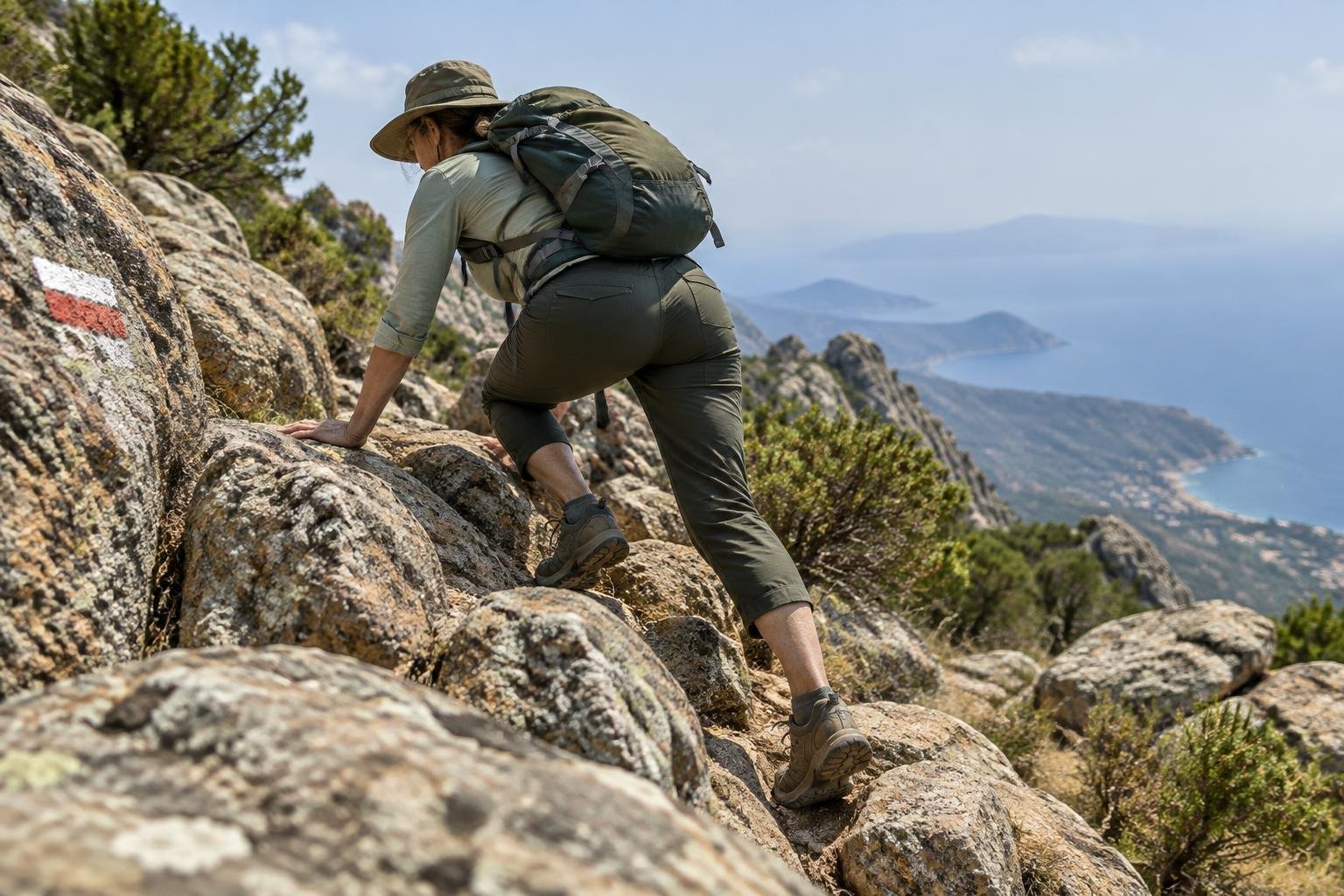
Official season guidance
Parc naturel régional de Corse: June to September, once the snow clears the high stages
No permit is required, but refuge and pitch bookings are needed in season. The GR20 is famously rugged with rock scrambling and long exposed days — it demands fitness and sure footing.
Check current dates on pnr.corsicaWhat to pack for the season
Pack for a wide spread of conditions across the season. Bring layers you can add or shed, reliable rain cover for the wetter shoulder months, and strong sun protection for long exposed days. As daylight shortens toward September, a headlamp and a realistic daily start time matter more than extra distance.
For layering, rain cover and weather planning, see hiking in rain, heat and cold.
Timing mistakes to avoid
The biggest mistake is picking a date from the monthly averages alone. The park's guidance ties the season to the snow clearing from the high stages, so a dry-looking month is no guarantee on the highest sections. Another is leaving bookings late: refuge and pitch reservations are needed in season, and the route is described as rugged with rock scrambling and long exposed days. Check current conditions and availability with the managing authority.
Common questions
What is the best month to hike the GR20?
On the modelled averages, July and August are the driest months at about 11 mm and 13 mm of rain, and both sit inside the park's June to September season. Conditions vary year to year, so confirm timing with the managing authority.
Can I hike the GR20 in May?
May is mild on average with about 45 mm of rain, but the park's guidance puts the season at June to September, once the snow clears the high stages. Check conditions with the managing authority before planning an early start.
Is September a good time for the GR20?
September is still within the official June to September season and stays warm, with about 32 mm of rain on average. Daylight drops to roughly 12 hours, so plan shorter days and keep a headlamp handy.
Do I need to book ahead in summer?
Yes. No permit is required, but refuge and pitch bookings are needed in season, which is the June to September window. Reserve early for July and August, the driest and most popular months, and confirm details with the managing authority.
Sources
- Parc naturel régional de Corse — pnr.corsica: official season and permit guidance.
- NASA POWER (Prediction Of Worldwide Energy Resources): monthly temperature and rainfall averages, 2010–2023, from MERRA-2 reanalysis. Daylight hours are calculated from latitude.
Conditions, closures and permit rules change without notice — confirm current information with the managing authority before you go. See our editorial policy and affiliate disclosure.