
How to Train for GR20
To train for the GR20, build an aerobic base with steady weekly walking, add a weekly hill or stair session, then spend your final weeks walking with a loaded pack on rough ground. Add leg and core strength on at least two days a week, include slow step-downs for the descents, and taper in the last one to two weeks. Allow roughly 8 to 12 weeks for a thru-hike of this size.
General fitness guidance, not medical or personal training advice. If you have a health concern, an injury, or you're returning to exercise after a long break, check with a doctor first.
What the GR20 asks of your body
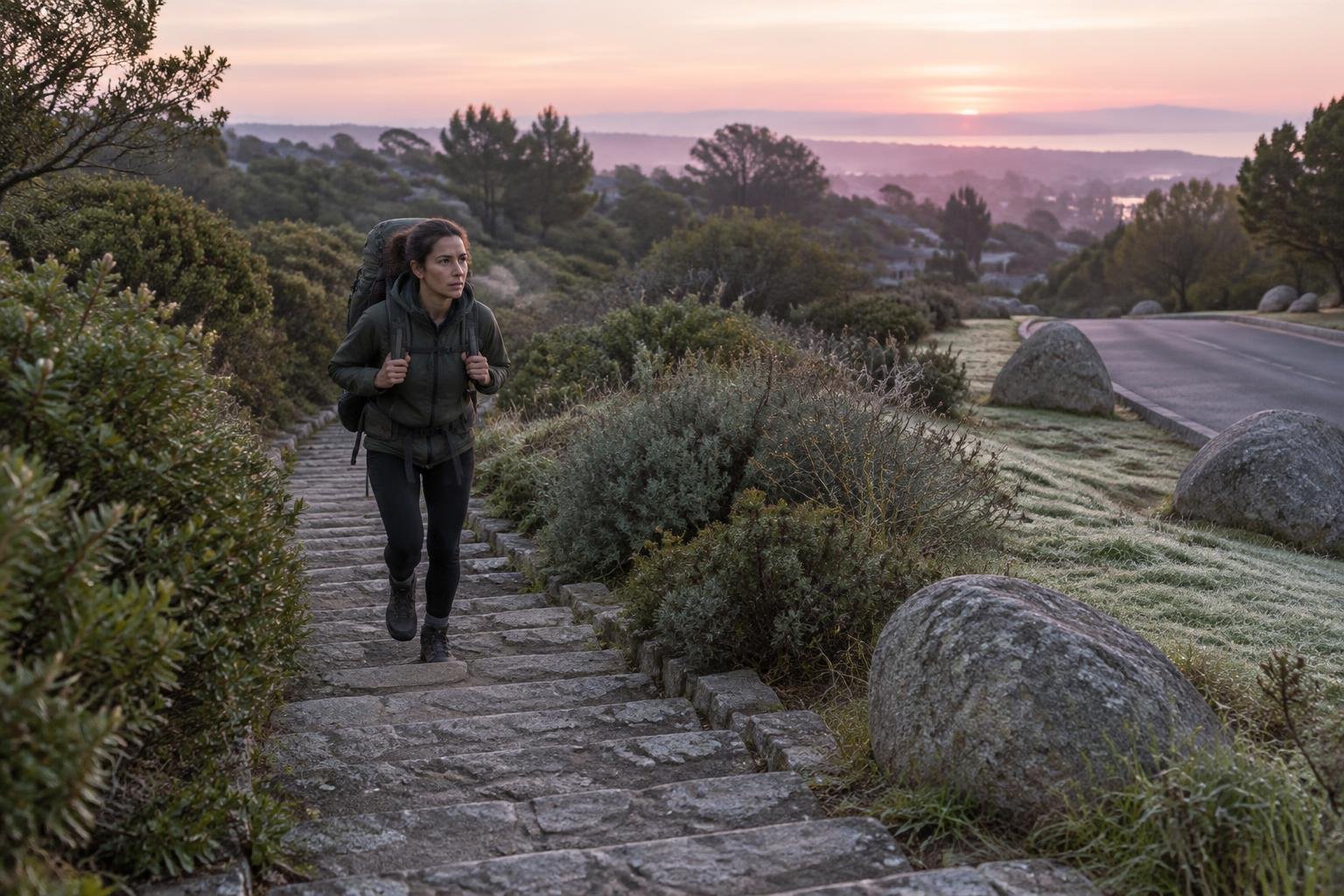
The published figures are demanding: about 180 km (112 mi) from Calenzana to Conca over 15 to 16 stages, with roughly 11,000 to 13,000 m of cumulative ascent. The route is rated very strenuous, for experts only. The overview describes bare granite slabs, boulder fields, chains and fixed cables, exposed ridge traverses and fast scree descents, with the northern half the rockier and more technical. That means the work comes from steep climbing, hands-on movement and hard descents, day after day. No daily mileage or elevation figures are published here, so check each stage in a current guidebook.
Start with a weekly base
Start from the CDC adult guidance: 150 minutes of moderate-intensity activity a week, or 75 minutes of vigorous activity, or an equivalent mix. It doesn't have to happen all at once, so it can be split across the week. For a trip like the GR20, treat that as the floor you reach before specific training begins, not the finish line. Reaching it first gives you an aerobic base, and it makes the later hill and loaded-pack sessions far more productive and easier on your body. If you have any health concerns, ask a doctor before ramping up.
The training plan, phase by phase
Aerobic base · Weeks 1 to 4
Walk regularly and build toward the CDC weekly target, mixing shorter walks with one longer one. Keep effort comfortable. Spreading the minutes across the week is fine. The goal is a dependable aerobic base, with about 4 to 8 weeks as the general guide, before you add much intensity or any real weight on your back.
Hills and stairs · Weeks 3 to 6
Add one weekly hill or stair session on top of your base walking. The GR20 is defined by relentless climbing, so make this session count: find the steepest sustained slope you can and keep a steady rhythm. Treat it as the foundation for what comes next, since climbing strength is what the later loaded walks will build on.
Loaded pack walks · Weeks 5 to 10
Start carrying a pack on your longer walks, light at first. Many people start around 10 pounds, then add weight in small steps. A commonly quoted ceiling is about 20% of body weight. Choose rough, uneven ground where you can, since that is closest to this route's boulders and slabs. Walk with the pack on hills too, not just flat paths.
Rehearsal and taper · Weeks 9 to 12
A couple of weeks out, rehearse with two loaded walks on consecutive days. They show how your legs, feet and shoulders cope with back-to-back effort, which is what a thru-hike demands. Then taper in the last one to two weeks, easing volume so you arrive fresh. Use this time to fix pack fit and gear problems.
Strength work that helps on the trail
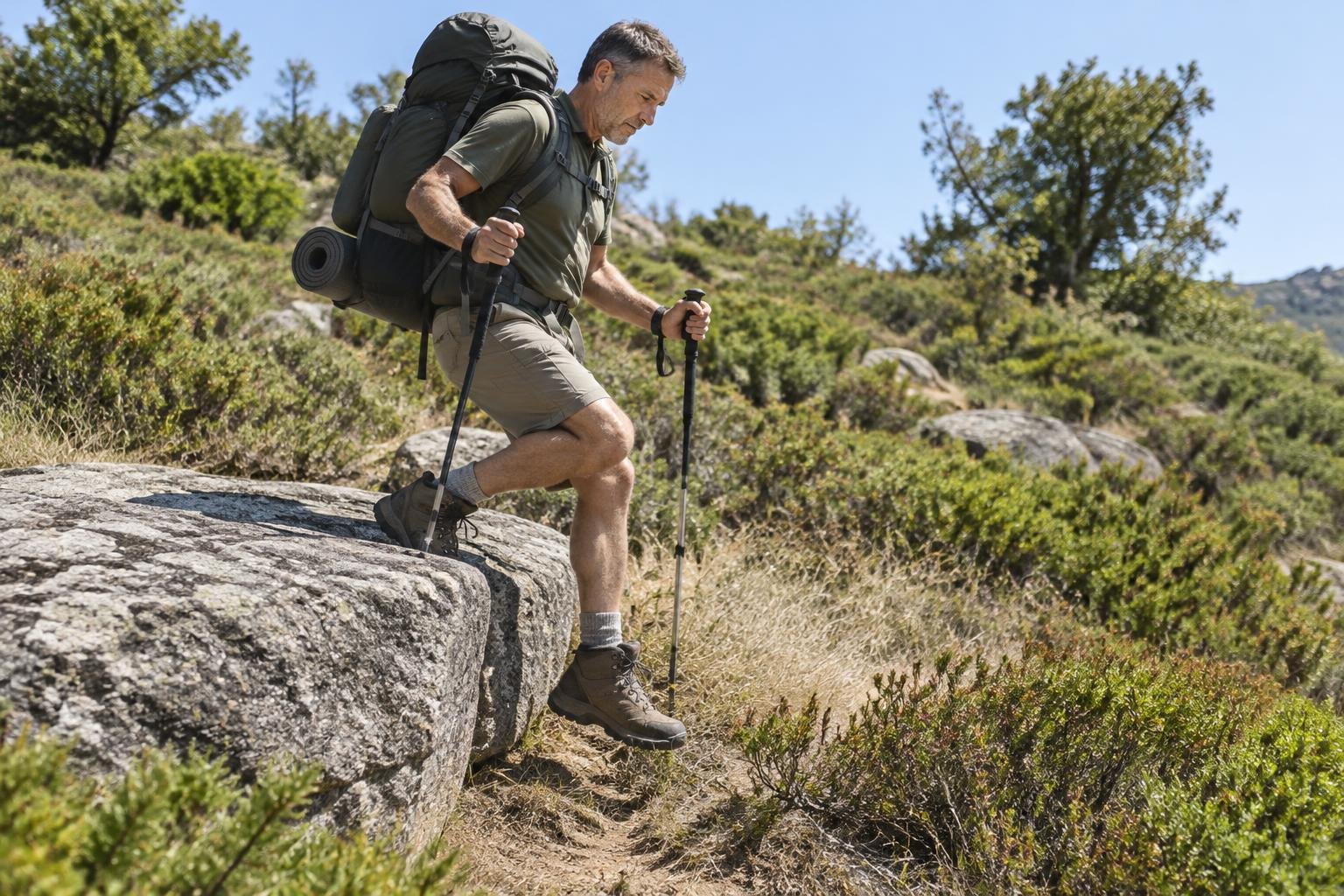
Do muscle-strengthening work on at least two days a week, covering all the major muscle groups, as the CDC advises. For the GR20, put the emphasis on legs, hips and core, which carry you up climbs and steady you on uneven rock. Add slow step-downs too. Stairs replicate downhill poorly, and step-downs train the control you need on the steep scree descents. Downhill loads the quads and causes delayed soreness, so build this in early rather than in your final weeks.
Pack walks and back-to-back days
Progress the pack gradually: start light, add weight in small steps, and keep it under the commonly quoted ceiling of about 20% of body weight. Because this is a two-week thru-hike of 15 to 16 stages, your body has to handle many loaded days in a row, which is why the back-to-back rehearsal matters. A couple of weeks out, do two loaded walks on consecutive days, and note where you feel hot spots, stiffness or fatigue, then adjust your pack and plan before you travel.
Terrain and descents
On the GR20 the terrain is the main challenge. The overview describes bare granite slabs and boulder fields where the way is a line of red-and-white paint flashes, chains and fixed cables on steep pitches, narrow exposed ridge traverses, and scree descents that drop hard and fast off the passes. The northern half is the more technical. Downhill loads the quads and causes delayed soreness, so train descents deliberately with slow step-downs and loaded walks on steep, uneven ground. Practice moving carefully over rough surfaces, not just covering distance.
Training mistakes to avoid
The most common mistake is training only on flat ground and never walking with a loaded pack. Another is ignoring downhill: stairs replicate descents poorly, so skip step-downs and you risk sore, tired quads on scree. Starting too late is a third. A multi-day trip with a full pack needs roughly 8 to 12 weeks. Adding pack weight too fast, skipping strength work, and skipping the back-to-back rehearsal and the taper round out the list.
Common questions
How long should I train for the GR20?
For a multi-day trip with a full pack, allow roughly 8 to 12 weeks. Spend about 4 to 8 weeks building an aerobic base, then add hills and loaded pack walks. Given this route's reputation, starting at the longer end is sensible. Ask a doctor first if you have health concerns.
How much weight should I train with?
Start light, around 10 pounds for many people, and add weight in small steps on your longer walks. A commonly quoted ceiling for a loaded pack is about 20% of body weight. Build up gradually rather than jumping to a heavy pack.
Do I need strength training for the GR20?
Yes. The CDC recommends muscle-strengthening activity on at least two days a week, working all major muscle groups. For this route, focus on legs, hips and core, and add slow step-downs, since downhill loads the quads and stairs replicate descents poorly.
What should my last two weeks look like?
A couple of weeks out, do two loaded walks on consecutive days to rehearse the back-to-back effort. Then taper over the last one to two weeks, easing volume so you arrive fresh. Use the rehearsal to check pack fit and spot problems early.
Sources
- Centers for Disease Control and Prevention — Physical Activity Guidelines for Adults: weekly aerobic and muscle-strengthening targets.
- Parc naturel régional de Corse — pnr.corsica: official route information.
- Training and fitness for hiking (this site): the general training progression this plan builds on.
See our editorial policy and affiliate disclosure.