
How to Train for Mount Whitney
To train for Mount Whitney, build an aerobic base with steady walking for about 4 to 8 weeks, add a weekly hill or stair session, then walk with a loaded pack and add weight in small steps. Keep leg, hip and core strength work going on at least 2 days a week, and taper in the final 1 to 2 weeks. Plan the altitude separately, because fitness alone will not carry you up this 22-mile out-and-back.
General fitness guidance, not medical or personal training advice. If you have a health concern, an injury, or you're returning to exercise after a long break, check with a doctor first.
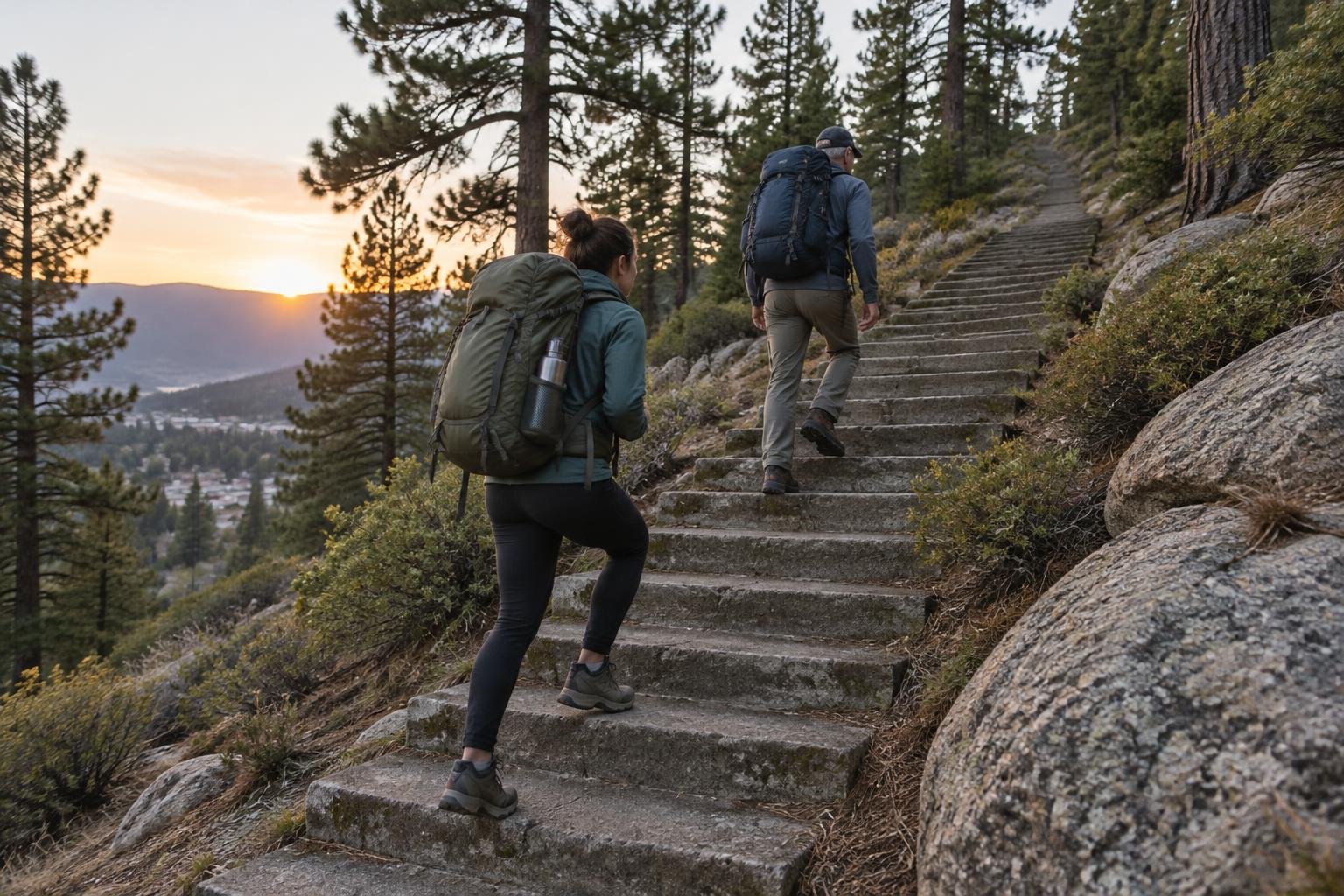
What Mount Whitney asks of your body
Mount Whitney Trail is a 22-mile (35.4 km) out-and-back from Whitney Portal at 8,360 ft to the 14,505 ft summit, with over 6,000 ft (1,830 m) of gain, commonly cited as about 6,100 ft. It is rated very strenuous and high-altitude. The overview describes a walk-up that is very long and very high: forest switchbacks, a shadeless granite basin, a steep stack of tight switchbacks, a cable-protected stretch, then an exposed rubbly shelf and a final gritty plod across the summit plateau. Most hikers leave in the dark, so expect a long day on your feet. No other effort figures are published here.
Start with a weekly base
The CDC suggests adults aim for 150 minutes of moderate-intensity activity a week, or 75 minutes of vigorous activity, or an equivalent mix. It does not have to happen all at once, so it can be split across the week. For this trip, treat that as the floor for your base phase rather than the finish line. Brisk walking counts toward it, and it is the same movement you will repeat for hours on the mountain. If you have any health concerns, ask a doctor before ramping up.
The training plan, phase by phase
Aerobic base · Weeks 1 to 4
Walk most days and build toward the CDC weekly baseline. Keep the effort conversational and let the minutes accumulate, split across the week if that suits your schedule. Walking is the best training for a walk-up like this one, so favor it over cross-training that does not load your legs the way a long trail will. The goal here is simply a dependable habit and a comfortable base to build on.
Hills and stairs · Weeks 3 to 6
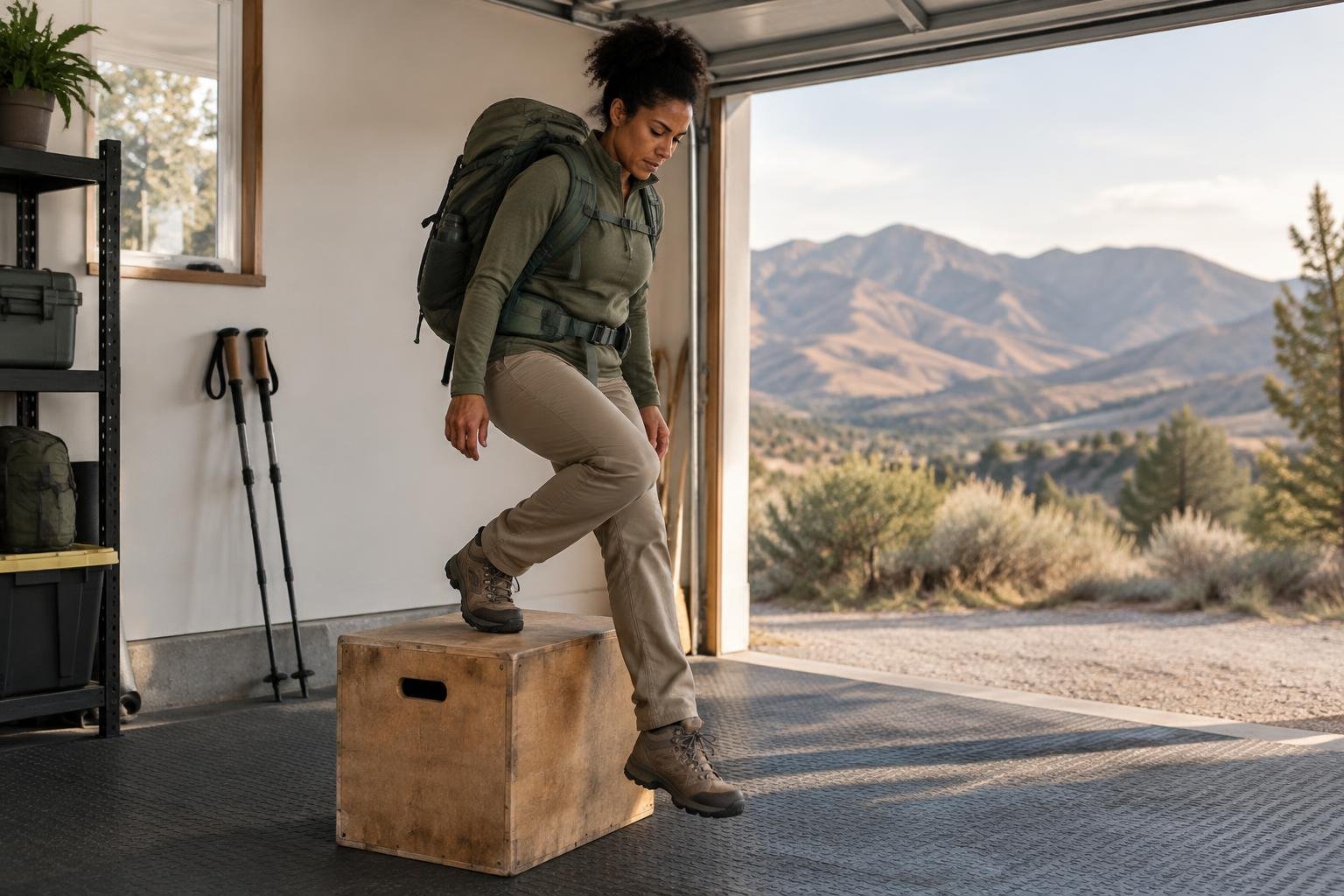
Keep the base going and add one weekly hill or stair session. The Whitney Trail is a long, sustained grind, so favor steady climbing over short bursts. Stairs and hill repeats teach your legs and lungs to keep working uphill. Because stairs replicate downhill poorly, pair them with slow step-downs, which you will need on the way back down the switchbacks.
Loaded pack walks · Weeks 5 to 10
Start walking with a pack, light at first, since many people begin around 10 pounds, and add weight in small steps. A commonly quoted ceiling for a loaded pack is about 20% of body weight. Allow roughly 8 to 12 weeks overall for a multi-day trip with a full pack. If you plan the two-day version with overnight gear, this phase matters most.
Rehearsal and taper · Weeks 9 to 12
A couple of weeks out, rehearse with two loaded walks on consecutive days so your legs know what a second day feels like. Then taper in the last 1 to 2 weeks, easing volume so you arrive rested rather than depleted. Use this stretch to check boots, pack fit and your layers. The taper is not a time to cram in a big new effort.
Strength work that helps on the trail
The CDC recommends muscle-strengthening activity on at least 2 days each week, working all major muscle groups. For Whitney, put extra attention on legs, hips and core, since they carry you and the pack up thousands of feet and back down. Add slow step-downs to your routine, because stairs replicate downhill poorly and downhill loads the quads, causing delayed soreness. Stronger legs make the long descent more comfortable.
Pack walks and back-to-back days
Begin with a light pack, around 10 pounds for many people, and add weight in small steps rather than jumping up. A commonly quoted ceiling is about 20% of body weight. If you plan the two-day version, practice with the overnight gear you will actually carry, since you would haul it up the steepest ground. A couple of weeks before the trip, do two loaded walks on consecutive days. For the single-push day, that rehearsal builds tolerance for long hours on your feet.
Altitude: why a slow ascent matters
The route's notes put it plainly: spending at least a night, ideally more, sleeping high in the area beforehand does more for your chances than extra fitness. Altitude guidance says to avoid going from low elevation to a sleeping altitude of 2,750 m (9,000 ft) or more in a single day. Spending 2 to 3 nights at roughly 2,450 to 2,750 m (8,000 to 9,000 ft) before going higher is protective against acute mountain sickness. Sleeping altitude matters most because low oxygen is worst during sleep. Fitness does not replace a slow ascent.
More in our guide to hiking at altitude and acclimatization.
Training mistakes to avoid
The biggest mistake is training only on flat ground and never walking with the pack you will carry. Another is ignoring downhill, which loads the quads and causes delayed soreness, so skipping step-downs leaves your legs unprepared for the descent. Starting too late is common too, when roughly 8 to 12 weeks is a sensible window for a multi-day trip. Finally, do not treat fitness as a substitute for acclimatizing. Arriving and going straight up is the plan most likely to go wrong.
Common questions
How long should I train for Mount Whitney?
For a multi-day trip with a full pack, roughly 8 to 12 weeks is a sensible window. Spend about 4 to 8 weeks on an aerobic base, then add hills and loaded pack walks, and taper in the last 1 to 2 weeks. Ask a doctor if you have health concerns.
Can I train hard enough to skip acclimatizing?
No. Training fitness does not replace a slow ascent. Altitude guidance recommends spending nights at moderate elevation before going higher, and notes that sleeping altitude matters most. Sleeping high in the area beforehand helps more than extra fitness.
Do I need to train with a pack for the one-day push?
Yes, a lighter one still helps. Start around 10 pounds and add weight gradually, keeping loaded packs near the commonly quoted ceiling of about 20% of body weight. Two loaded walks on consecutive days, a couple of weeks out, are a good rehearsal.
How much strength work should I do?
The CDC recommends muscle-strengthening activity on at least 2 days each week, covering all major muscle groups. For Whitney, focus on legs, hips and core, and add slow step-downs to prepare your quads for the long descent.
Sources
- Centers for Disease Control and Prevention — Physical Activity Guidelines for Adults: weekly aerobic and muscle-strengthening targets.
- CDC Yellow Book — High-Altitude Travel and Altitude Illness: ascent-rate guidance (consistent with Wilderness Medical Society recommendations).
- U.S. Forest Service & National Park Service — fs.usda.gov/inyo: official route information.
- Training and fitness for hiking (this site): the general training progression this plan builds on.
See our editorial policy and affiliate disclosure.