
Best Time to Hike Simien Mountains
The best time to hike the Simien Mountains is October to March, the dry season named in the official season guidance. Modelled rainfall is lowest from November through February, and daylight stays steady at roughly 11 to 12 hours. Confirm current conditions with the park office in Debark.
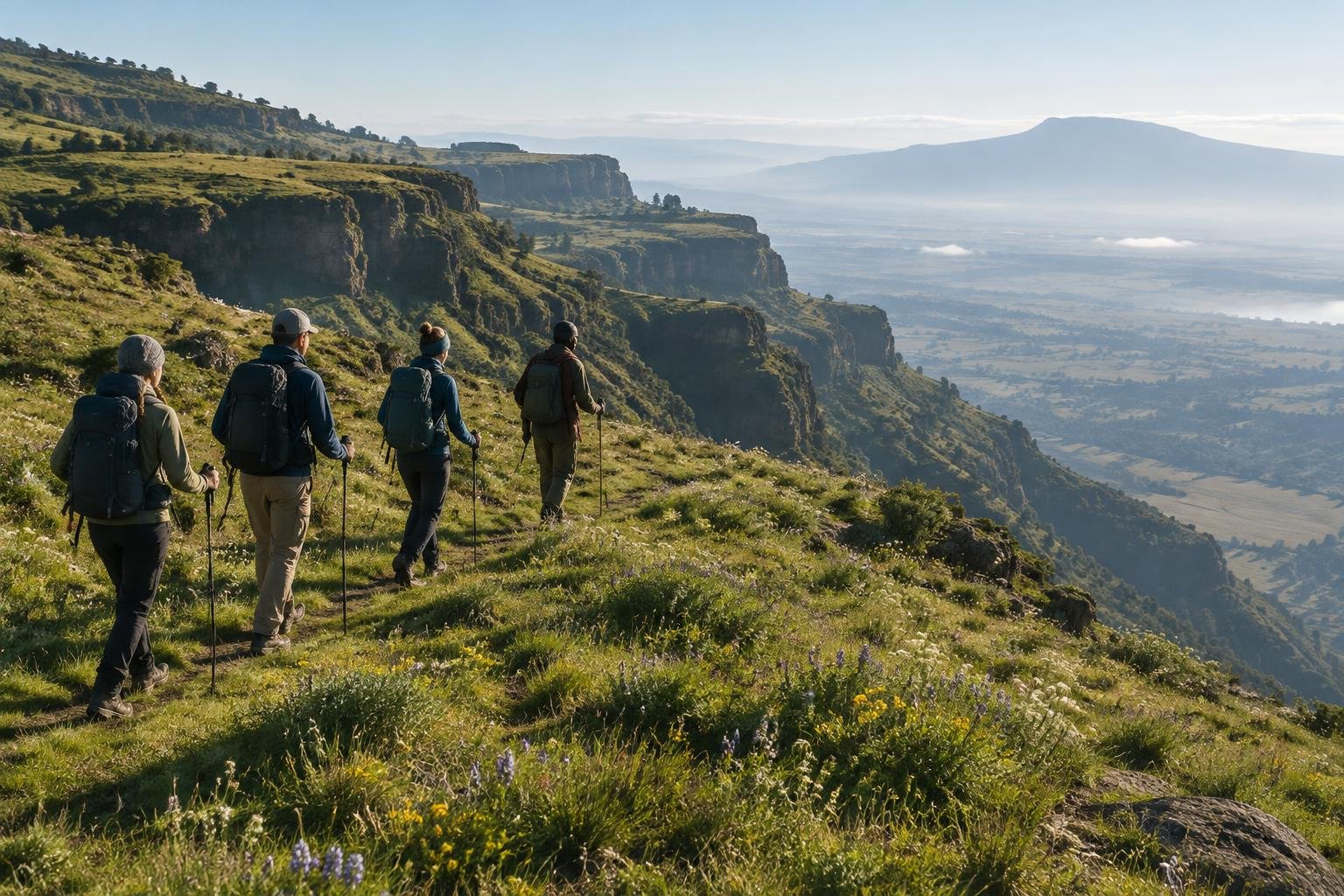
Month-by-month climate for Simien Mountains
| Month | Rain | Daylight |
|---|---|---|
| Jan | 4 mm | 11.3 h |
| Feb | 9 mm | 11.6 h |
| Mar | 16 mm | 11.9 h |
| Apr | 52 mm | 12.3 h |
| May | 68 mm | 12.6 h |
| Jun | 84 mm | 12.8 h |
| Jul | 276 mm | 12.7 h |
| Aug | 257 mm | 12.4 h |
| Sep | 84 mm | 12.1 h |
| Oct | 40 mm | 11.7 h |
| Nov | 13 mm | 11.4 h |
| Dec | 6 mm | 11.2 h |
Modelled regional averages for 2010–2023 (rainfall) and calculated daylight hours; they describe the wider area, not a reading taken on the trail. Temperature changes little from month to month here, so we don’t chart it. Altitude, not season, drives how cold it feels on the route, so check the managing authority’s guidance for the section you plan to walk.
The numbers show a sharply wet midyear. July is the wettest month at about 276 mm, followed by August at about 257 mm, while December and January are the driest at roughly 6 mm and 4 mm. Rainfall climbs from April through June, then falls back through September and October. Daylight swings only a little, from about 11.2 hours in December to about 12.8 hours in June. Temperature barely changes by month here, so altitude, not season, drives how cold it feels. These are modelled regional averages rather than readings taken on the trail.
Simien Mountains season by season
Early dry season · October to November
October is a transition month, with rainfall typically around 40 mm after the heavy midyear wet season. By November the average drops to about 13 mm, and conditions are generally settling toward the dry stretch the official season guidance describes. Daylight is about 11.4 to 11.7 hours, so plan your walking days around an earlier dusk. This is a sensible window for scheduling a trek, though it is worth checking with the park office in Debark for current conditions.
Core dry season · December to March
This stretch sits inside the October to March dry season and holds the lowest rainfall figures of the year: about 6 mm in December, 4 mm in January, 9 mm in February and 16 mm in March. Daylight runs from roughly 11.2 hours to 11.9 hours, so days are on the shorter side. Because the park is a high, cold plateau, warm layers matter even when the rain is light. Park rules require a licensed scout, so arrange that through the park office in Debark.
Building wet season · April to June
Outside the official dry season, rainfall steps up month by month: about 52 mm in April, 68 mm in May and 84 mm in June. Daylight is at its longest here, up to about 12.8 hours in June, which gives more walking time between showers. Averages hide day-to-day variation, so a trek in these months means planning for wetter spells than the dry season brings. The managing authority's guidance points to October to March, so treat these months as the less favored option.
Peak wet season · July to September
July and August are the wettest months of the year at about 276 mm and 257 mm, far above anything else in the dataset. September eases to about 84 mm, still well above the dry-season months. Daylight is about 12.1 to 12.7 hours, but the long days come with the heaviest modelled rainfall. This is the opposite of the October to March window the official season guidance recommends, so these months are the hardest to justify for a first trek. Check with the park office before committing.
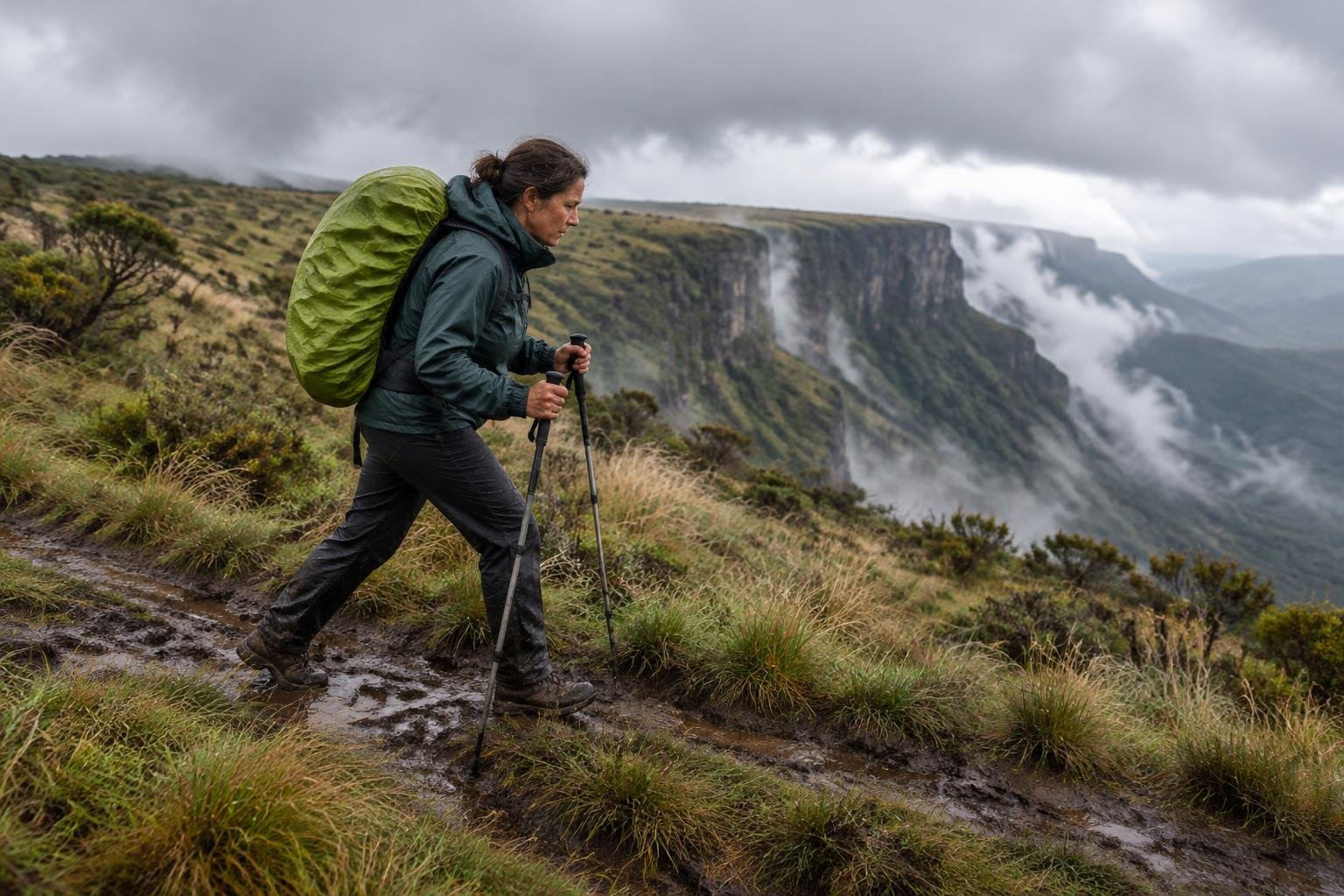
Official season guidance
Ethiopian Wildlife Conservation Authority (EWCA): October to March (dry season)
Park rules require a licensed scout (a guide is optional), arranged with the park office in Debark; most visitors book an organized trek. It’s a high, cold plateau — pack warm layers, and keep a respectful distance from the gelada baboons and other wildlife.
Check current dates on simienmountain.org (Simien Mountains National Park)What to pack for the season
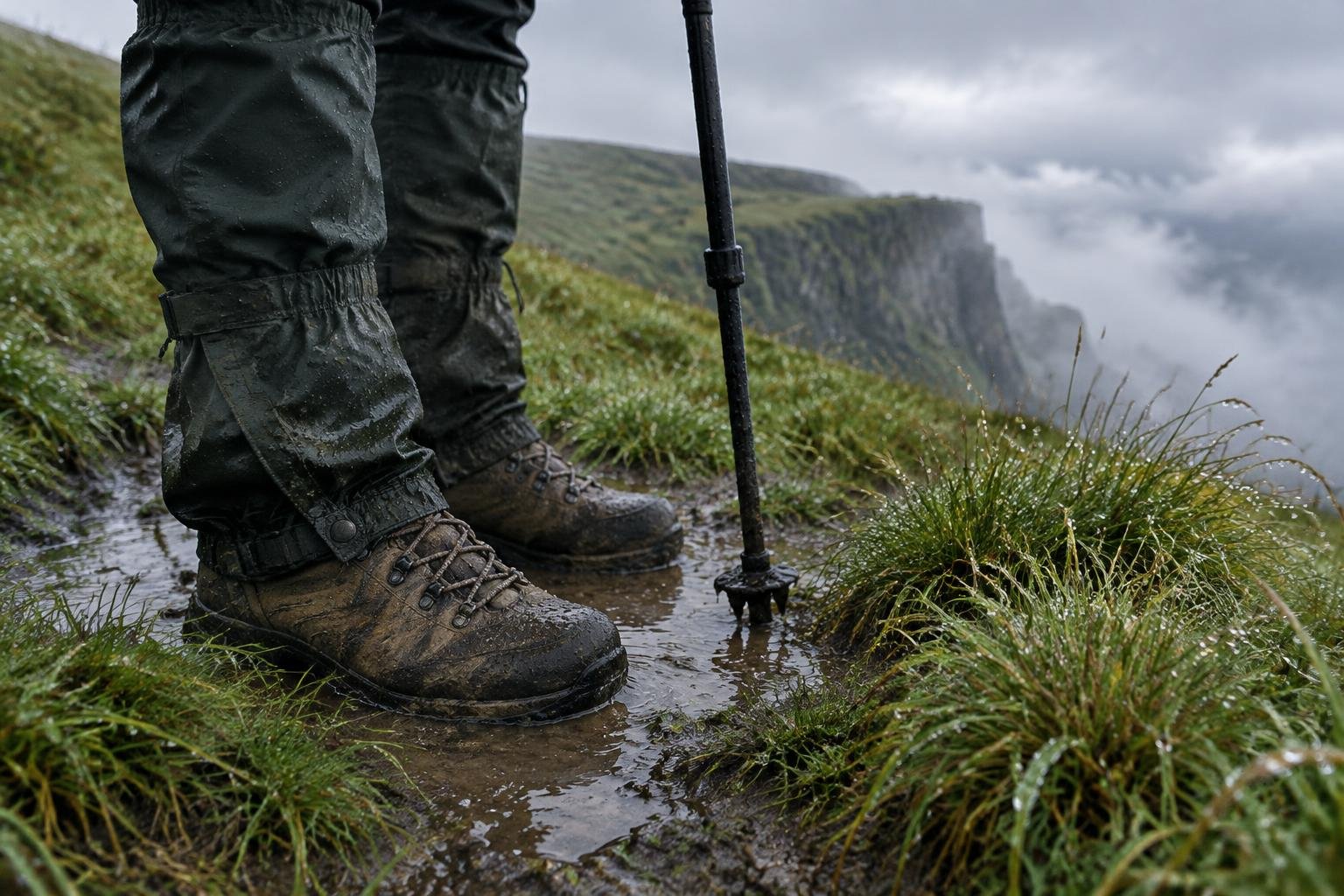
Packing follows the season. The park is a high, cold plateau, so bring warm layers whatever the month. In the drier months, rain cover can be light but still worth carrying. In the wetter months, make waterproof protection a priority. Daylight is roughly 11 to 13 hours year-round, so carry a headlamp for early starts and late finishes.
For layering, rain cover and weather planning, see hiking in rain, heat and cold.
Timing mistakes to avoid
The biggest mistake is picking a month by feel instead of checking the numbers. Modelled rainfall jumps from about 84 mm in September to about 276 mm in July, so a few weeks can change the trek completely. Another is assuming a dry month means a warm one; at this altitude the plateau is cold, and the park rules say to pack warm layers. Finally, don't leave the licensed scout until the last minute, since the scout is arranged through the park office in Debark, and ask that office about current conditions.
Common questions
What is the best month to hike the Simien Mountains?
The official season guidance gives October to March as the dry season. Within that window, the modelled averages show the lowest rainfall from November to February, with January the driest at about 4 mm. Choose within that range based on how much rain risk you can accept, and confirm conditions with the park office.
Is July a good time to hike the Simien Mountains?
Generally not. July is the wettest month in the modelled data at about 276 mm, and it falls outside the October to March dry season given in the official season guidance. Daylight is long at about 12.7 hours, but heavy rainfall is the main constraint, so check with the managing authority before planning a trek then.
How much daylight is there for hiking in the Simien Mountains?
Daylight is fairly steady through the year, from about 11.2 hours in December to about 12.8 hours in June. That means roughly 11 to 13 hours to work with in any month. In the dry season the days run on the shorter side, so plan your start times and carry a headlamp.
Do I need a guide to hike the Simien Mountains?
Park rules require a licensed scout, arranged with the park office in Debark. A guide is optional, and most visitors book an organized trek. Timing matters here too, since the dry season from October to March is the window the official season guidance recommends, so arrange your scout and dates together.
Sources
- Ethiopian Wildlife Conservation Authority (EWCA) — simienmountain.org (Simien Mountains National Park): official season and permit guidance.
- NASA POWER (Prediction Of Worldwide Energy Resources): monthly temperature and rainfall averages, 2010–2023, from MERRA-2 reanalysis. Daylight hours are calculated from latitude.
Conditions, closures and permit rules change without notice — confirm current information with the managing authority before you go. See our editorial policy and affiliate disclosure.