
Best Time to Hike Drakensberg Amphitheatre & Tugela Falls
The best time to hike the Drakensberg Amphitheatre and Tugela Falls is autumn and spring, March to May and September to November, according to the managing authority's guidance. Summer brings storms, and the chain ladders are not a place to be caught in one, so plan around the drier, steadier months.
Month-by-month climate for Drakensberg Amphitheatre & Tugela Falls
| Month | Relative warmth | Rain | Daylight |
|---|---|---|---|
| Jan | Warmest | 156 mm | 13.6 h |
| Feb | Warmest | 129 mm | 13 h |
| Mar | Warmest | 104 mm | 12.2 h |
| Apr | Mild | 60 mm | 11.3 h |
| May | Cool | 18 mm | 10.6 h |
| Jun | Coldest | 10 mm | 10.2 h |
| Jul | Coldest | 18 mm | 10.3 h |
| Aug | Cool | 21 mm | 11 h |
| Sep | Mild | 29 mm | 11.8 h |
| Oct | Warm | 67 mm | 12.7 h |
| Nov | Warmest | 99 mm | 13.5 h |
| Dec | Warmest | 157 mm | 13.8 h |
Modelled regional averages for 2010–2023 (rainfall) and calculated daylight hours; they describe the wider area, not a reading taken on the trail. “Relative warmth” compares each month with the warmest and coldest months of this place’s own year. It is not a temperature, and the high parts of a route are colder than the region around them.
The modelled rainfall shows a sharp split. December and January are the wettest months on average, at about 157 mm and 156 mm, while June is the driest at roughly 10 mm, with May, July and August also light. Daylight swings from about 10.2 hours in June to 13.8 hours in December. Relative to this place's own year, December to March are the warmest months and June and July the coldest, with April, May, August, September and October sitting between. These are modelled regional averages, not readings taken on the escarpment.
Drakensberg Amphitheatre & Tugela Falls season by season
Early autumn · March to April
March still carries summer's rain, at about 104 mm on average, and it ranks among the warmest months of the year here, so afternoon storms remain a real possibility. April eases off to roughly 60 mm and turns mild, with daylight shrinking from about 12.2 to 11.3 hours. This is the start of the authority's recommended autumn window, so favor April if you want the drier end, and keep your timing flexible around the forecast.
Late autumn and winter · May to August
May is cool and very dry at about 18 mm on average, and it is the last month of the recommended autumn window. June and July are the coldest months of this place's year and receive the shortest daylight, around 10.2 to 10.3 hours, so you have less time for the ladders and the plateau. August stays cool, with about 21 mm of rain. Dry months do not remove the cold up top, so treat the escarpment guidance as your cue to check conditions first.
Spring · September to October
September is mild and still dry at about 29 mm on average, with daylight stretching to roughly 11.8 hours. October turns warm and wetter, at about 67 mm, as the season builds toward summer storms. Both months fall inside the recommended spring window, and September gives you a good balance of light, low rainfall and gentler conditions. Longer days help if you want an unhurried pace on the climb.
Summer storm season · November to February
November to February are the warmest months of this place's year, but also the stormiest. Rainfall climbs from about 99 mm in November to roughly 157 mm in December, and January and February remain heavy at 156 mm and 129 mm. The authority notes that summer brings storms, and the exposed chain ladders should not be attempted in them. Daylight is longest, up to about 13.8 hours, which helps, though it does not offset the weather risk.
Official season guidance
Ezemvelo KZN Wildlife: Autumn and spring (Mar–May, Sep–Nov); summer brings storms
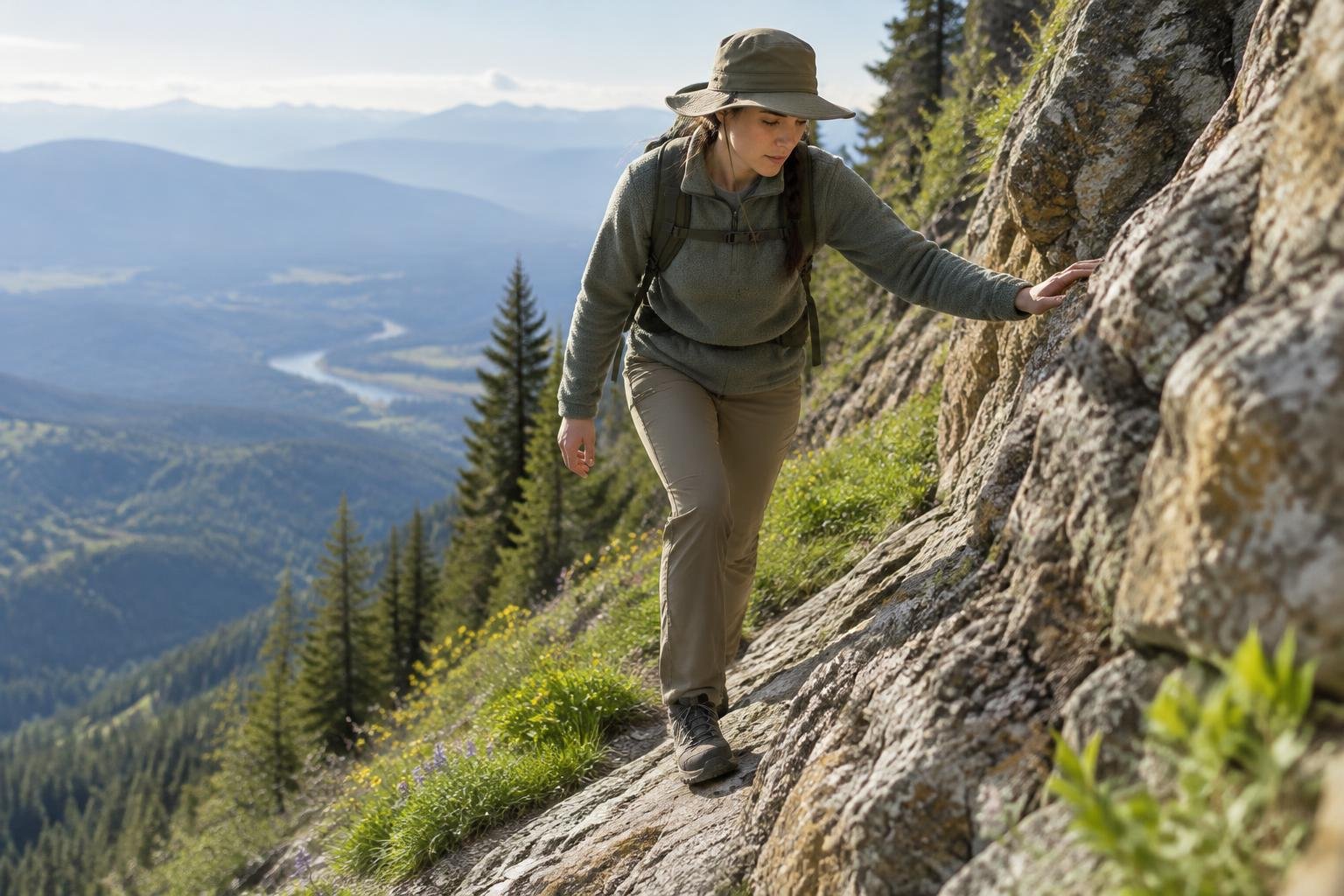
The classic route climbs via the Sentinel car park and exposed chain ladders to the plateau and the top of Tugela Falls; check Ezemvelo KZN Wildlife for current permit and booking rules for overnight trips onto the escarpment. Weather turns fast and cold up top — check conditions and don’t attempt the ladders in storms.
Check current dates on UNESCO World Heritage Centre (uKhahlamba Drakensberg Park)What to pack for the season
Pack for sharp swings between the lower slopes and the plateau. Bring layers you can add or shed, a reliable waterproof shell for the wetter months, sun protection for long daylight, and a headlamp in case the short winter days or a slow climb push you past dusk. Gloves and a warm hat earn their place on the cooler end of the year.
For layering, rain cover and weather planning, see hiking in rain, heat and cold.
Timing mistakes to avoid
The commonest mistake is picking a summer date for the warmth and longest days, then facing storms on the exposed chain ladders. Another is treating a dry month as a guarantee, when weather can turn fast and cold on the plateau. Do not rely on a single month either: check the managing authority, Ezemvelo KZN Wildlife, for current permit and booking rules before an overnight trip, and confirm conditions close to your date.
Common questions
Which months are best for Tugela Falls?
The managing authority's guidance points to autumn and spring, March to May and September to November. Within those, the modelled data shows April to May and September as lighter on rain, though conditions still change, so confirm closer to your date.
Is summer a bad time to hike the Amphitheatre?
Summer brings storms, and the climb uses exposed chain ladders that should not be attempted in bad weather. December and January are also the wettest months on average, so summer carries the greatest timing risk.
Does the dry winter make it a good time to go?
June and July are the driest months on the modelled data, but they are also the coldest and have the shortest daylight, around 10.2 hours. Weather can turn fast and cold up top, so dryness alone does not make winter the better choice.
Should I check anything before choosing a date?
Yes. Check Ezemvelo KZN Wildlife for current permit and booking rules, especially for overnight trips onto the escarpment, and look at conditions close to your date. Do not attempt the ladders in storms, since the official guidance warns that weather turns quickly.
Sources
- Ezemvelo KZN Wildlife — UNESCO World Heritage Centre (uKhahlamba Drakensberg Park): official season and permit guidance.
- NASA POWER (Prediction Of Worldwide Energy Resources): monthly temperature and rainfall averages, 2010–2023, from MERRA-2 reanalysis. Daylight hours are calculated from latitude.
Conditions, closures and permit rules change without notice — confirm current information with the managing authority before you go. See our editorial policy and affiliate disclosure.