
Best Time to Hike Presidential Traverse
The best time to hike the Presidential Traverse is July to September, according to the official season guidance. That window pairs the warmest months of the year with long daylight, though the managing authority notes alpine weather here is severe year-round, so plan for change.
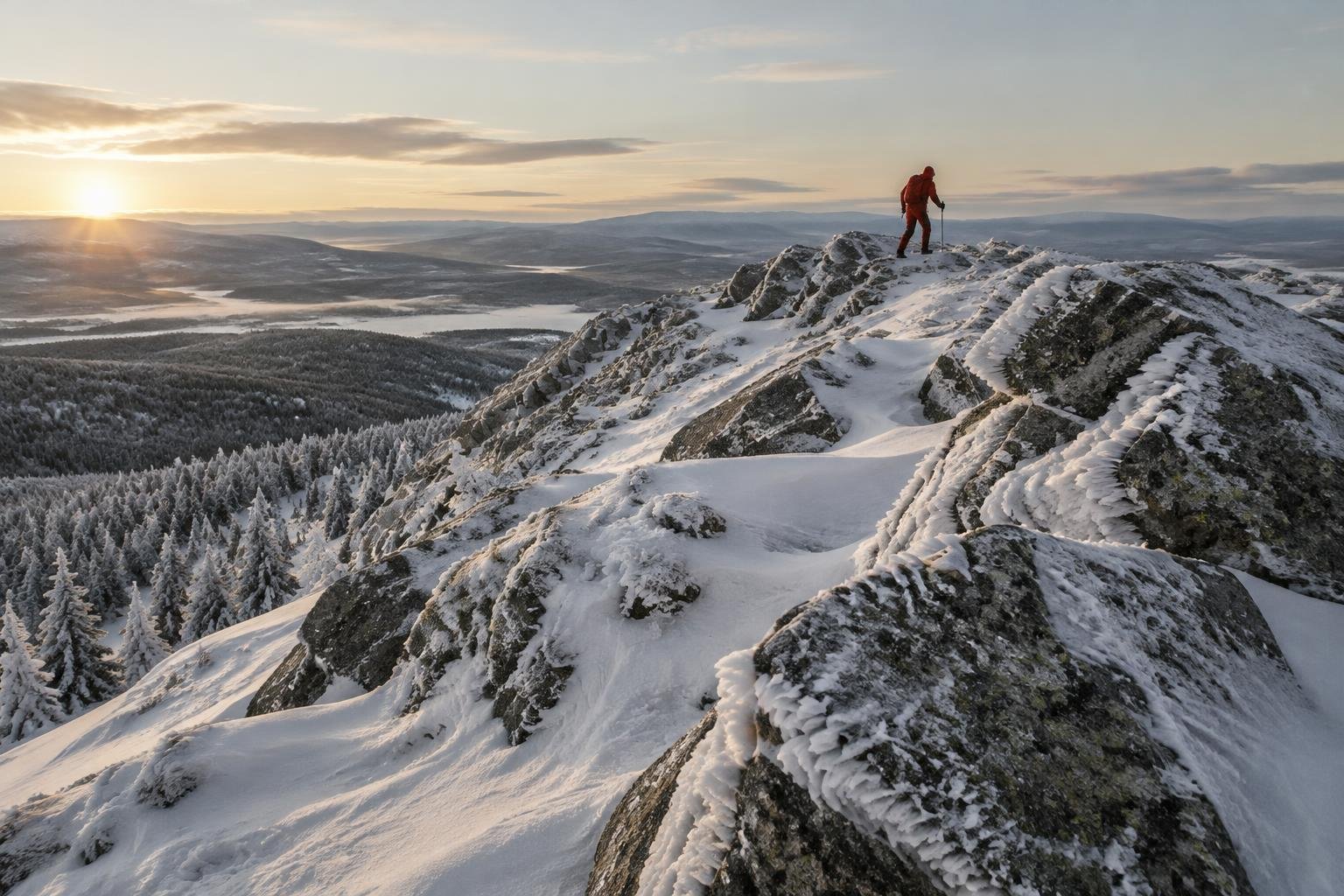
Month-by-month climate for Presidential Traverse
| Month | Relative warmth | Rain | Daylight |
|---|---|---|---|
| Jan | Coldest | 72 mm | 9 h |
| Feb | Coldest | 70 mm | 10.2 h |
| Mar | Cool | 73 mm | 11.6 h |
| Apr | Mild | 103 mm | 13.2 h |
| May | Warm | 105 mm | 14.6 h |
| Jun | Warmest | 129 mm | 15.3 h |
| Jul | Warmest | 123 mm | 15 h |
| Aug | Warmest | 116 mm | 13.8 h |
| Sep | Warmest | 102 mm | 12.3 h |
| Oct | Warm | 123 mm | 10.7 h |
| Nov | Cool | 81 mm | 9.4 h |
| Dec | Coldest | 109 mm | 8.7 h |
Modelled regional averages for 2010–2023 (rainfall) and calculated daylight hours; they describe the wider area, not a reading taken on the trail. “Relative warmth” compares each month with the warmest and coldest months of this place’s own year. It is not a temperature, and the high parts of a route are colder than the region around them.
Across the year, rainfall typically ranges from about 70 mm in February to 129 mm in June, so no month is truly dry; the wettest stretch runs from April through October, with June and July among the heaviest. Daylight swings widely, from roughly 8.7 hours in December to 15.3 hours in June. Relative to this place's own year, June through September are the warmest months, while December through February are the coldest. These are modelled regional averages, not measurements taken on the ridge.
Presidential Traverse season by season
Winter · December to February
These are the coldest months of the local year and carry the shortest days, with only about 8.7 to 10.2 hours of daylight. Rainfall averages roughly 70 to 109 mm a month. The official season guidance points to summer rather than winter for this traverse, and it warns that alpine weather is severe year-round. Short daylight leaves little margin on a long ridge day, so anyone considering this window should check current conditions and guidance with the managing authority first.
Spring · March to May
Spring warms from cool in March to mild in April and warm in May, while daylight grows from about 11.6 hours to 14.6 hours. Rainfall rises too, from around 73 mm in March to roughly 105 mm in May. This falls outside the official July to September window, and the managing authority describes alpine weather as severe year-round, so conditions on the high ridge can differ sharply from the lower valleys. Check with the managing authority before planning a spring attempt.
Summer · June to September
This is the core season. June through September are the warmest months of the local year, with daylight from about 15.3 hours in June easing to 12.3 hours in September. Rainfall typically runs roughly 100 to 130 mm a month, so showers are common even in the best weather. The official season guidance centers on July to September, and the managing authority notes Mount Washington is known for severe, fast-changing weather, so keep a flexible schedule and be ready to turn back.
Autumn · October to November
Autumn cools from warm in October to cool in November, and daylight drops from about 10.7 hours to 9.4 hours. October is one of the wetter months, averaging around 123 mm, before November eases to roughly 81 mm. Both months sit outside the official July to September guidance, and shrinking daylight shortens the usable window for a long ridge day. Because alpine weather is severe year-round, confirm current conditions with the managing authority before committing to a late-season outing.
Official season guidance
U.S. Forest Service (White Mountain National Forest): July to September; alpine weather is severe year-round
No permit is required, but AMC hut stays must be booked in advance. Mount Washington is known for severe, fast-changing weather — carry full layers and be ready to turn back.
Check current dates on fs.usda.gov (White Mountain National Forest)What to pack for the season
Packing should follow the swing between valley and ridge. Carry full layers, since the managing authority warns of severe, fast-changing weather, plus reliable rain protection for the wetter months. Sun cover helps in the long summer days. In shoulder and winter months, daylight is short, so a headlamp becomes a core item rather than a backup.
For layering, rain cover and weather planning, see hiking in rain, heat and cold.
Timing mistakes to avoid
The biggest timing mistake is treating the July to September window as a guarantee of good weather; the managing authority says alpine weather is severe year-round. Another is ignoring that AMC hut stays must be booked in advance, which can shape which dates are realistic. Relying on a single month's averages instead of checking current conditions before you go, or underestimating how little daylight remains outside midsummer, also causes trouble.
Common questions
When is the best time to hike the Presidential Traverse?
The official season guidance gives July to September as the best window. Those months fall in the warmest part of the local year and have long daylight, though the managing authority stresses that alpine weather is severe and can change quickly, so flexibility matters more than any single month.
Is it too wet to hike in summer?
Modelled averages show roughly 100 to 130 mm of rain a month from June through September, so showers are typical rather than unusual. Wet weather doesn't rule out the season, but good rain protection and a willingness to adjust or turn back are important, as the managing authority advises.
How much daylight can I expect?
Daylight is longest in June at about 15.3 hours and shortest in December at about 8.7 hours. Within the July to September window it runs from roughly 15.0 hours in July down to about 12.3 hours in September, so later-season hikers have noticeably less time on the ridge.
Do I need a permit or reservation for timing my trip?
The managing authority states that no permit is required, but AMC hut stays must be booked in advance. If you plan to use the huts, that booking requirement may influence which dates you choose, so arrange it early and confirm details with the managing authority.
Sources
- U.S. Forest Service (White Mountain National Forest) — fs.usda.gov (White Mountain National Forest): official season and permit guidance.
- NASA POWER (Prediction Of Worldwide Energy Resources): monthly temperature and rainfall averages, 2010–2023, from MERRA-2 reanalysis. Daylight hours are calculated from latitude.
Conditions, closures and permit rules change without notice — confirm current information with the managing authority before you go. See our editorial policy and affiliate disclosure.