
Best Time to Hike Mount Kinabalu
The best time to hike Mount Kinabalu is during the drier months, roughly March to September, according to the official season guidance. Modelled rainfall is lowest in February and March, but plan for wet weather in any month and book permits and hostel beds well ahead.
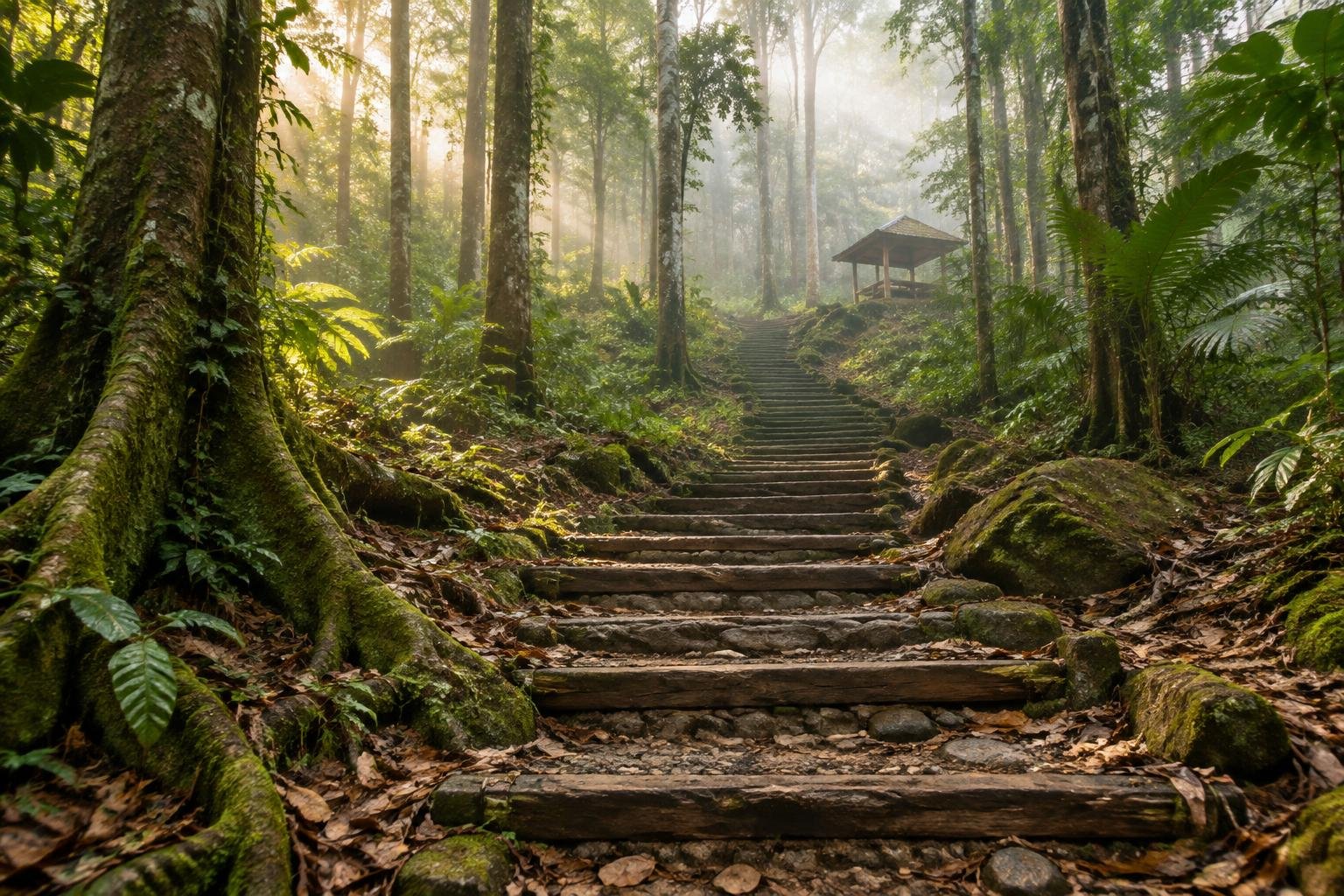
Month-by-month climate for Mount Kinabalu
| Month | Rain | Daylight |
|---|---|---|
| Jan | 241 mm | 11.7 h |
| Feb | 107 mm | 11.8 h |
| Mar | 106 mm | 12 h |
| Apr | 144 mm | 12.1 h |
| May | 209 mm | 12.3 h |
| Jun | 248 mm | 12.4 h |
| Jul | 258 mm | 12.3 h |
| Aug | 242 mm | 12.2 h |
| Sep | 262 mm | 12 h |
| Oct | 288 mm | 11.9 h |
| Nov | 274 mm | 11.7 h |
| Dec | 296 mm | 11.6 h |
Modelled regional averages for 2010–2023 (rainfall) and calculated daylight hours; they describe the wider area, not a reading taken on the trail. Temperature changes little from month to month here, so we don’t chart it. Altitude, not season, drives how cold it feels on the route, so check the managing authority’s guidance for the section you plan to walk.
Regional modelled rainfall is lowest in March (106 mm) and February (107 mm), then climbs through April (144 mm) and May (209 mm). From June to September it sits around 242 to 262 mm, and it peaks from October to December, with December the wettest at 296 mm. Daylight varies little through the year, from about 11.6 hours in December to 12.4 hours in June. Temperature barely changes by month here, so altitude, not season, drives how cold it feels. Check the managing authority's guidance for current conditions.
Mount Kinabalu season by season
Late winter to early spring · February to April
This stretch holds the driest modelled months of the year, with February and March both near 106 mm and April rising to 144 mm. It fits the official season guidance of roughly March to September, so it is the most dependable window for a guided two-day climb. Daylight sits near 12 hours, which gives a steady rhythm for the early start and the descent. Typically you still need rain cover on the rainforest lower trail, and the granite summit stays cold. Because this window is popular, hostel beds and permits fill early, so book well ahead.
Late spring to midsummer · May to July
Still inside the official season guidance, but rainfall on average builds from 209 mm in May to around 248 to 258 mm in June and July. Daylight is at its longest, about 12.3 to 12.4 hours, which helps with a pre-dawn summit push and a daylight descent. Expect showers in the rainforest section and plan layers and waterproofs accordingly. Conditions change, so confirm current rules and any trail updates with Sabah Parks before you commit to dates. Booking far in advance remains important because hostel beds effectively cap numbers.
Late summer to early autumn · August to October
August and September fall within the official season guidance, though modelled rainfall is already high at 242 and 262 mm, and October climbs to 288 mm, outside the drier window. Daylight shortens gradually from about 12.2 hours in August to 11.9 in October. Weather on the mountain can turn quickly, so treat these months as less predictable than the early part of the season. Pack for persistent rain on the lower trail and cold, exposed granite higher up. Check with Sabah Parks about current rules and conditions before booking.
Wet season · November to January
These are among the wettest modelled months, with November at 274 mm, December at 296 mm and January at 241 mm, and they sit outside the drier window in the official season guidance. Daylight is at its shortest, about 11.6 to 11.7 hours, which leaves less margin for the summit day. Wet rainforest sections and cold, exposed granite near the top make for a harder trip. If these are your only dates, confirm current rules and conditions with Sabah Parks and allow flexibility in case plans change.
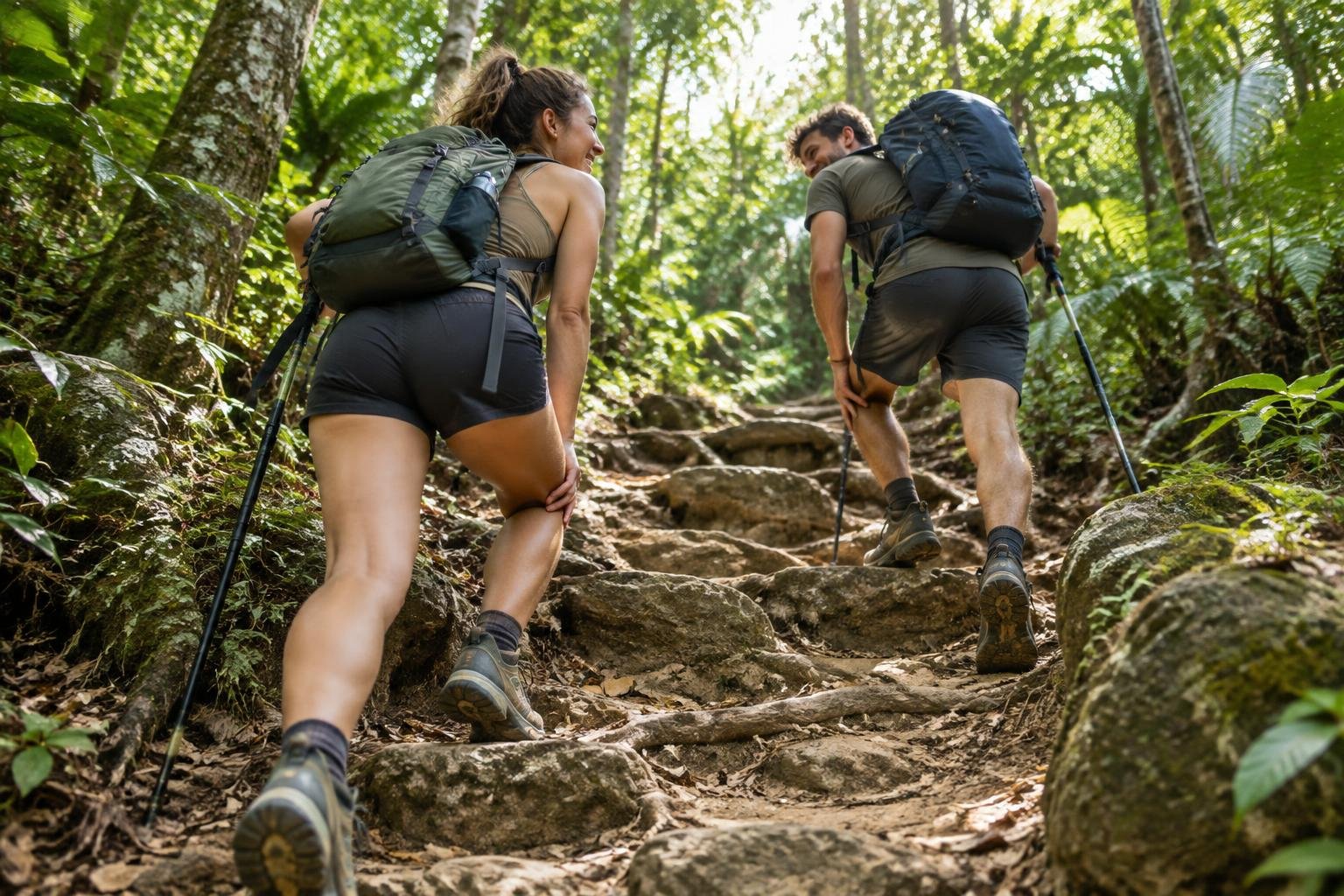
Official season guidance
Sabah Parks: Drier months (roughly March–September)
Climbing is regulated by Sabah Parks and normally involves a permit, a mountain guide and a mid-mountain overnight (confirm current rules with Sabah Parks), and the number of hostel beds effectively caps how many can climb — so book far in advance. The lower trail is rainforest; the summit is cold and granite-bare.
Check current dates on sabahparks.org.myWhat to pack for the season
Packing follows the season. In every month, bring reliable rain cover for the rainforest section and warm layers for the cold, bare granite near the summit. A headlamp matters because daylight is only around 12 hours and the climb involves an early start. In wetter months, prioritize waterproofing for your pack and spare dry layers for the overnight stop.
For layering, rain cover and weather planning, see hiking in rain, heat and cold.
Timing mistakes to avoid
A common mistake is treating the drier window as a guarantee and ignoring that modelled rainfall is still well above 100 mm in most months. Another is leaving booking late: permits, a guide and a mid-mountain overnight are normally required, and hostel beds effectively cap numbers, so the best dates go first. Relying on a single month's figures is also risky, since these are regional averages, not trail measurements. Confirm current rules and conditions with Sabah Parks.
Common questions
When is the driest time to climb Mount Kinabalu?
The official season guidance points to the drier months, roughly March to September. In the modelled regional data, February and March are the lowest for rainfall, at about 107 and 106 mm. These are averages, so showers are still possible in any month. Check with Sabah Parks for current conditions before you go.
Can I climb Mount Kinabalu in the wet season?
Rainfall averages are highest from October to December, up to about 296 mm in December, and these months fall outside the drier window. Climbing is regulated by Sabah Parks, so rules and availability can change. If you only have wet-season dates, confirm what is currently permitted and expect wet rainforest trail and cold granite higher up.
How far ahead should I book for the best months?
Well in advance. Climbing normally involves a permit, a mountain guide and a mid-mountain overnight, and the number of hostel beds effectively caps how many people can climb. The drier months are the most sought after, so dates there fill first. Confirm current booking rules directly with Sabah Parks.
Does daylight change much through the year?
Not much. Calculated daylight ranges from about 11.6 hours in December to 12.4 hours in June. That means a similar early start and daylight window year-round, so a headlamp is useful in any season. Rainfall, not daylight, is the bigger difference between months for this climb.
Sources
- Sabah Parks — sabahparks.org.my: official season and permit guidance.
- NASA POWER (Prediction Of Worldwide Energy Resources): monthly temperature and rainfall averages, 2010–2023, from MERRA-2 reanalysis. Daylight hours are calculated from latitude.
Conditions, closures and permit rules change without notice — confirm current information with the managing authority before you go. See our editorial policy and affiliate disclosure.