
Best Time to Hike Valley of Flowers
The best time to hike Valley of Flowers is July to September, the monsoon bloom window named in the official season guidance. Rain is heavy in those months, so plan for wet, slippery trails. Check the Uttarakhand Forest Department for current permit and timing rules before you go.
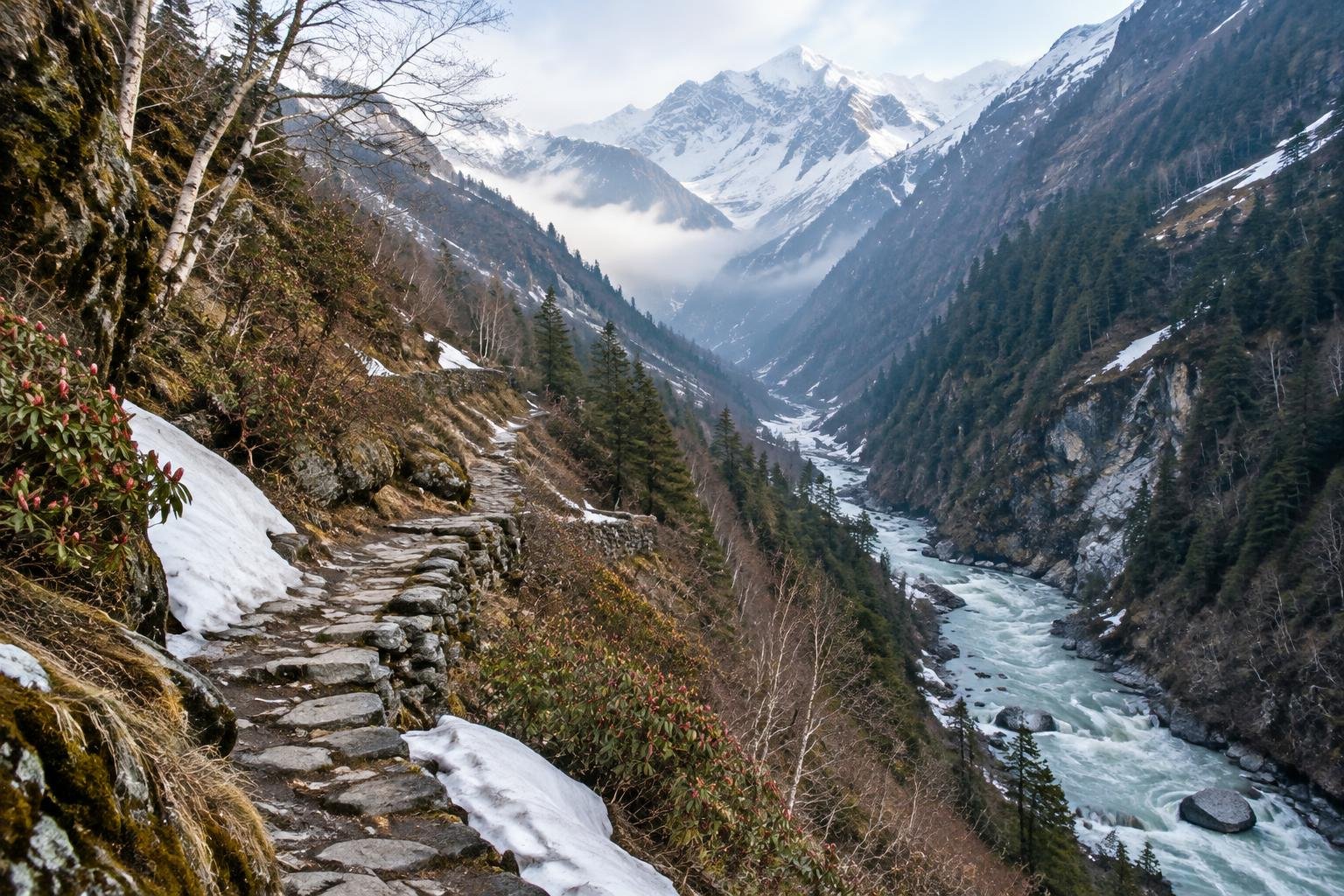
Month-by-month climate for Valley of Flowers
| Month | Relative warmth | Rain | Daylight |
|---|---|---|---|
| Jan | Coldest | 41 mm | 10.2 h |
| Feb | Coldest | 45 mm | 10.9 h |
| Mar | Cool | 39 mm | 11.8 h |
| Apr | Mild | 37 mm | 12.8 h |
| May | Warmest | 55 mm | 13.6 h |
| Jun | Warmest | 117 mm | 14 h |
| Jul | Warmest | 252 mm | 13.8 h |
| Aug | Warmest | 225 mm | 13.1 h |
| Sep | Warmest | 130 mm | 12.2 h |
| Oct | Mild | 26 mm | 11.2 h |
| Nov | Cool | 7 mm | 10.4 h |
| Dec | Coldest | 13 mm | 10 h |
Modelled regional averages for 2010–2023 (rainfall) and calculated daylight hours; they describe the wider area, not a reading taken on the trail. “Relative warmth” compares each month with the warmest and coldest months of this place’s own year. It is not a temperature, and the high parts of a route are colder than the region around them.
The modelled averages show a sharply wet season. July is typically the wettest month at 252 mm, followed by August at 225 mm and September at 130 mm, while November is driest at just 7 mm. Daylight swings from about 10.0 hours in December to 14.0 hours in June, so summer days are long. Relative to this place's own year, May through September are the warmest months and December through February the coldest. These are regional averages, not readings from the valley itself.
Valley of Flowers season by season
Late spring · March to May
Warmth climbs from cool in March to the warmest of the year by May, and rainfall on average stays low at 37 to 55 mm a month. Daylight stretches from 11.8 to 13.6 hours, which gives generous time on the trail. This is not the bloom window in the official season guidance, which points to July to September. Treat this period as a shoulder season and confirm access with the managing authority before planning.
Early monsoon · June
June is among the warmest months of the year here and has the longest days, at about 14.0 hours of daylight. Rainfall jumps to roughly 117 mm on average as the monsoon builds, much more than May. The official season guidance starts in July, so June sits just before the main bloom window. Expect wetter trails and changeable conditions, and check current arrangements with the Uttarakhand Forest Department.
Peak bloom · July to September
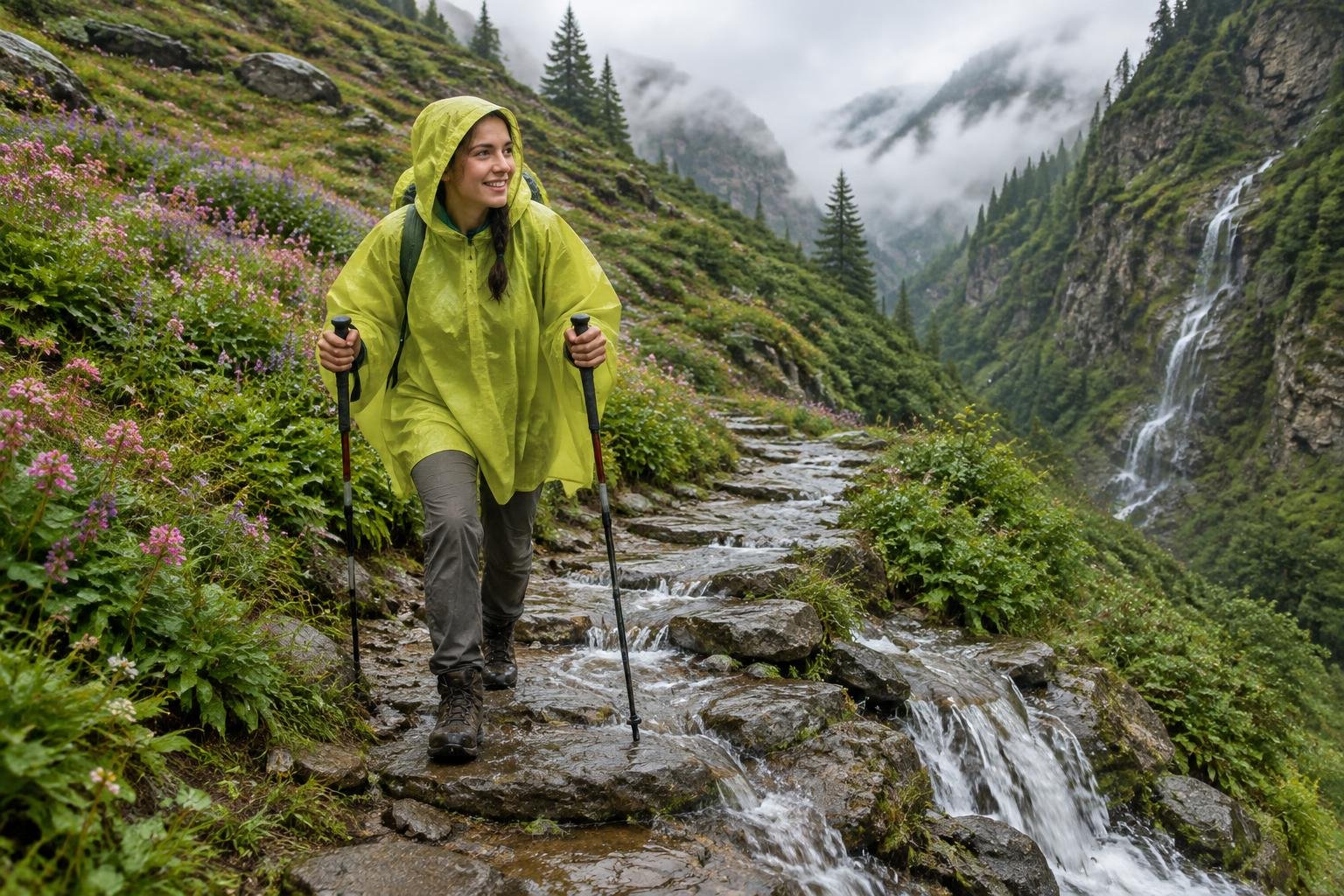
This is the window the official season guidance recommends. It is also the wettest stretch, with July at 252 mm, August at 225 mm and September at 130 mm on average. These are among the warmest months of the year, with daylight of about 13.8 hours in July easing to 12.2 hours in September. Expect rain, leeches and slippery trails, as the permits and rules text notes. Wet-weather planning matters more than chasing a perfect dry day.
Autumn and winter · October to February
Rainfall drops away, with November the driest month at 7 mm and December at 13 mm on average. Daylight shrinks to about 10.0 to 11.2 hours, so days are short. Relative to this place's own year, warmth falls from mild in October to cool in November and the coldest months from December to February. This falls outside the July to September bloom window, so confirm with the managing authority whether access and conditions allow a visit.
Official season guidance
Uttarakhand Forest Department: July to September, during the monsoon bloom
Entry to the national park is regulated (permit and timing rules apply, so check current arrangements) and no overnight stay is allowed inside the valley — you day hike from Ghangaria and return. The bloom coincides with the monsoon, so expect rain, leeches and slippery trails.
Check current dates on uttarakhandtourism.gov.in (Uttarakhand Tourism, state tourism board)What to pack for the season
Season drives packing here. For the monsoon bloom, bring reliable rain cover for you and your pack, quick-drying layers and shoes with good grip for slippery trails. Pack protection against leeches and a spare dry layer. Long summer days help, but a headlamp is a sensible backup for the early start and return to Ghangaria.
For layering, rain cover and weather planning, see hiking in rain, heat and cold.
Timing mistakes to avoid
The biggest mistake is treating the bloom as separate from the rain. The July to September window in the official season guidance is also the wettest, so waiting for dry weather means missing it. Another is ignoring permit and timing rules, since entry is regulated and no overnight stay is allowed inside the valley. Day hikes start and finish at Ghangaria, so build your schedule around that. Check current arrangements with the Uttarakhand Forest Department before you commit to dates.
Common questions
When is the Valley of Flowers in bloom?
The official season guidance gives July to September as the bloom window, which coincides with the monsoon. Exact peak timing varies from year to year, so confirm current conditions and access with the Uttarakhand Forest Department before you set dates.
Which month is wettest for this hike?
July is typically the wettest month, at about 252 mm on average, with August close behind at 225 mm. These are modelled regional averages rather than readings from the trail, so use them as a guide to what the monsoon is generally like here.
Can I hike the Valley of Flowers outside July to September?
The official season guidance centers on July to September. Outside that window, rain is lower in places, but access, permits and conditions may differ. Check with the Uttarakhand Forest Department for what is currently allowed before planning a visit in another month.
How much daylight will I have?
Daylight is longest around June at roughly 14.0 hours and shortest in December at about 10.0 hours. During the July to September window you typically get 12.2 to 13.8 hours, which suits a full day hike from Ghangaria with time to return.
Sources
- Uttarakhand Forest Department — uttarakhandtourism.gov.in (Uttarakhand Tourism, state tourism board): official season and permit guidance.
- NASA POWER (Prediction Of Worldwide Energy Resources): monthly temperature and rainfall averages, 2010–2023, from MERRA-2 reanalysis. Daylight hours are calculated from latitude.
Conditions, closures and permit rules change without notice — confirm current information with the managing authority before you go. See our editorial policy and affiliate disclosure.