
Affiliate disclosure: this page contains affiliate links. Purchases made through them may earn us a commission at no extra cost to you. See our affiliate disclosure.
In plain English
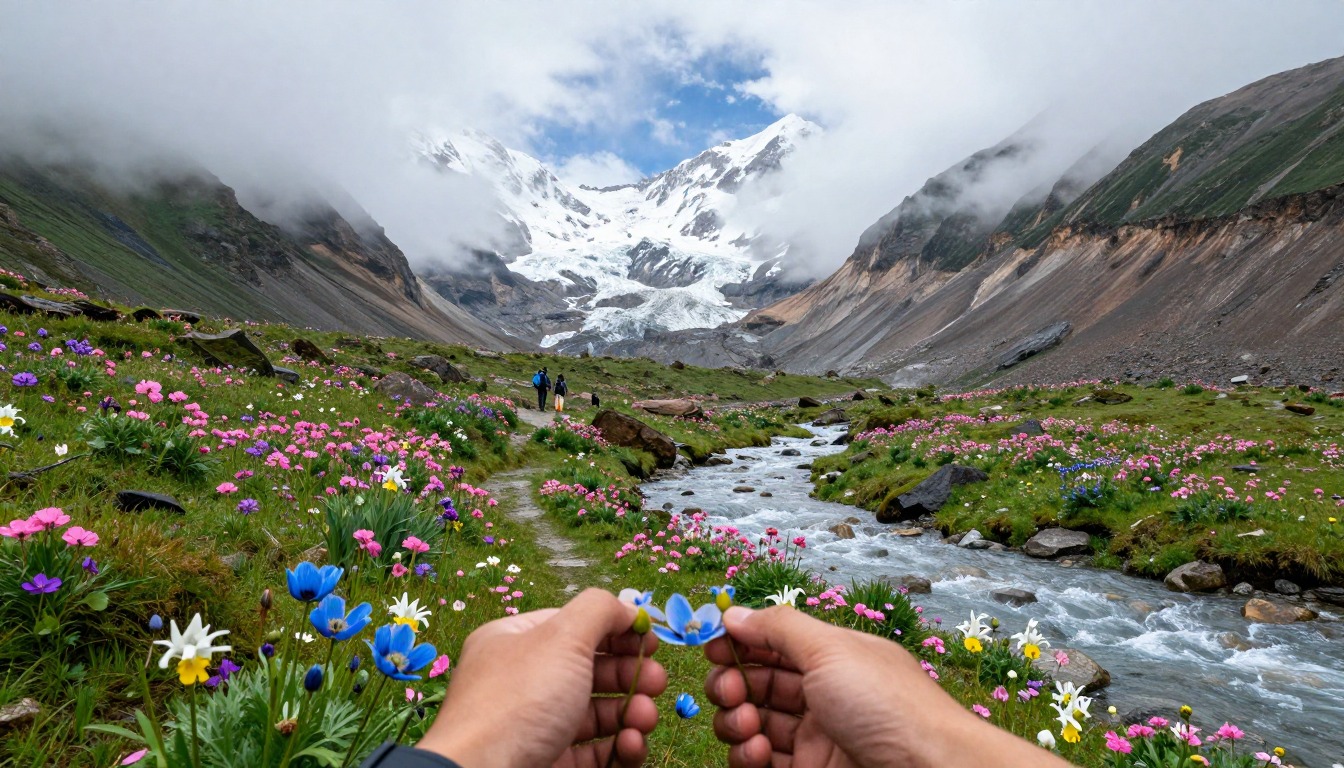
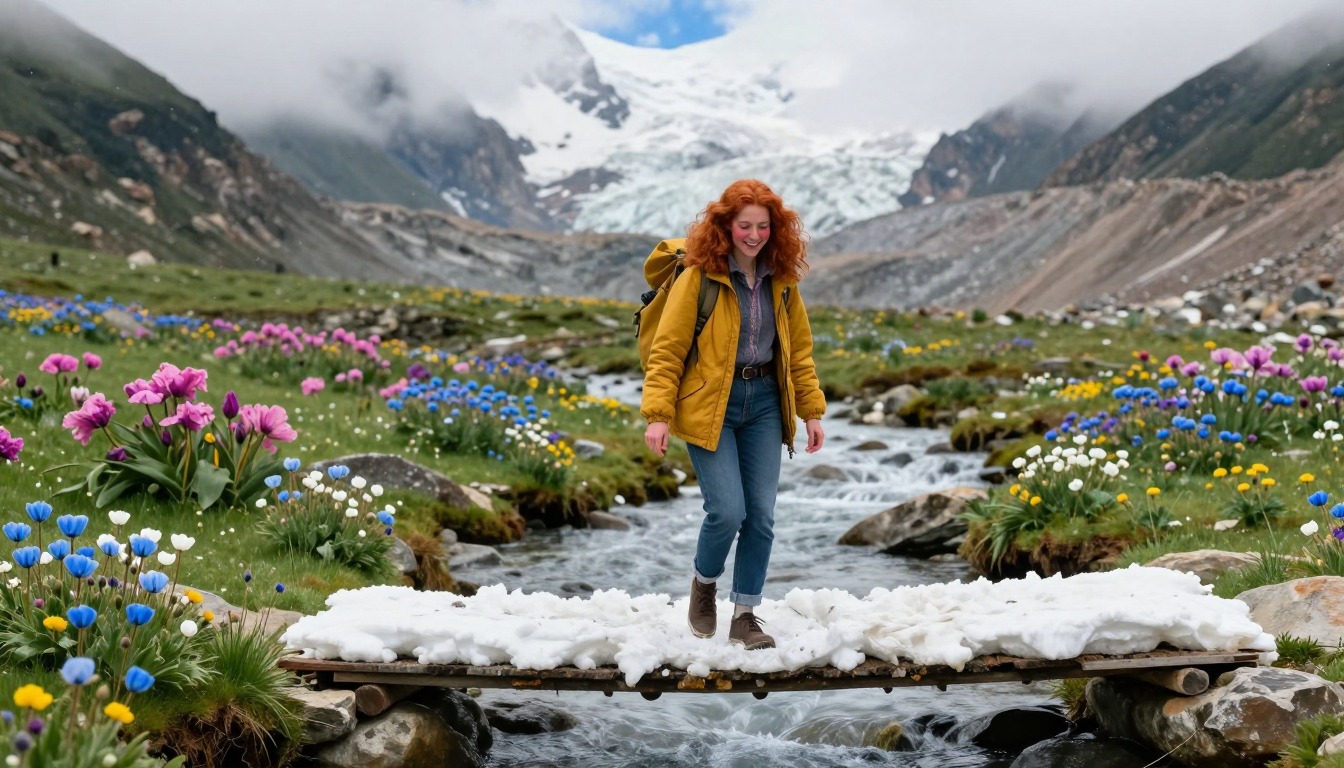
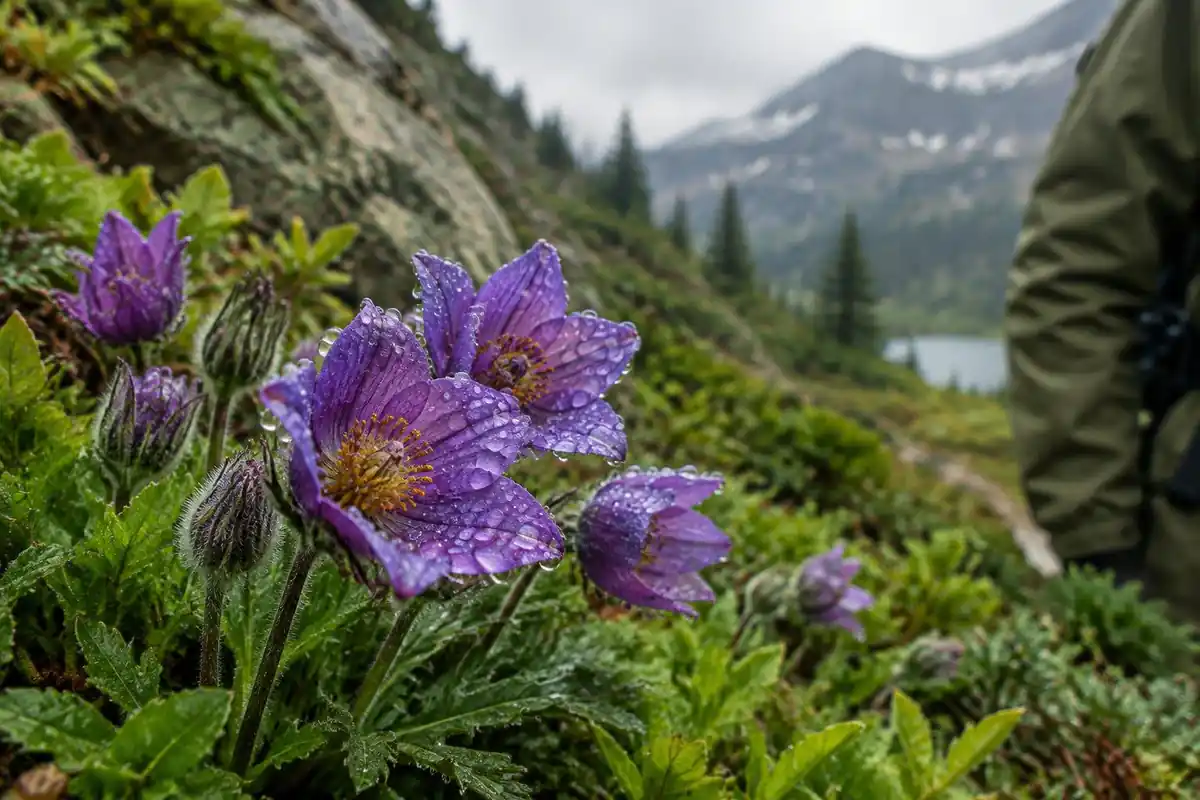
The Valley of Flowers is a high valley in the Indian Himalaya that fills with wildflowers during the monsoon. You reach it by walking up a steep, wet gorge from a village called Ghangaria. The valley itself is gentle. The climb to get there, and the walk back down, are what tire people.
The rain that makes the flowers grow also makes the path slippery. Stone stays slick all day, streams run across the trail, and afternoons often bring rain. That is why most walkers start early and turn back well before dark.
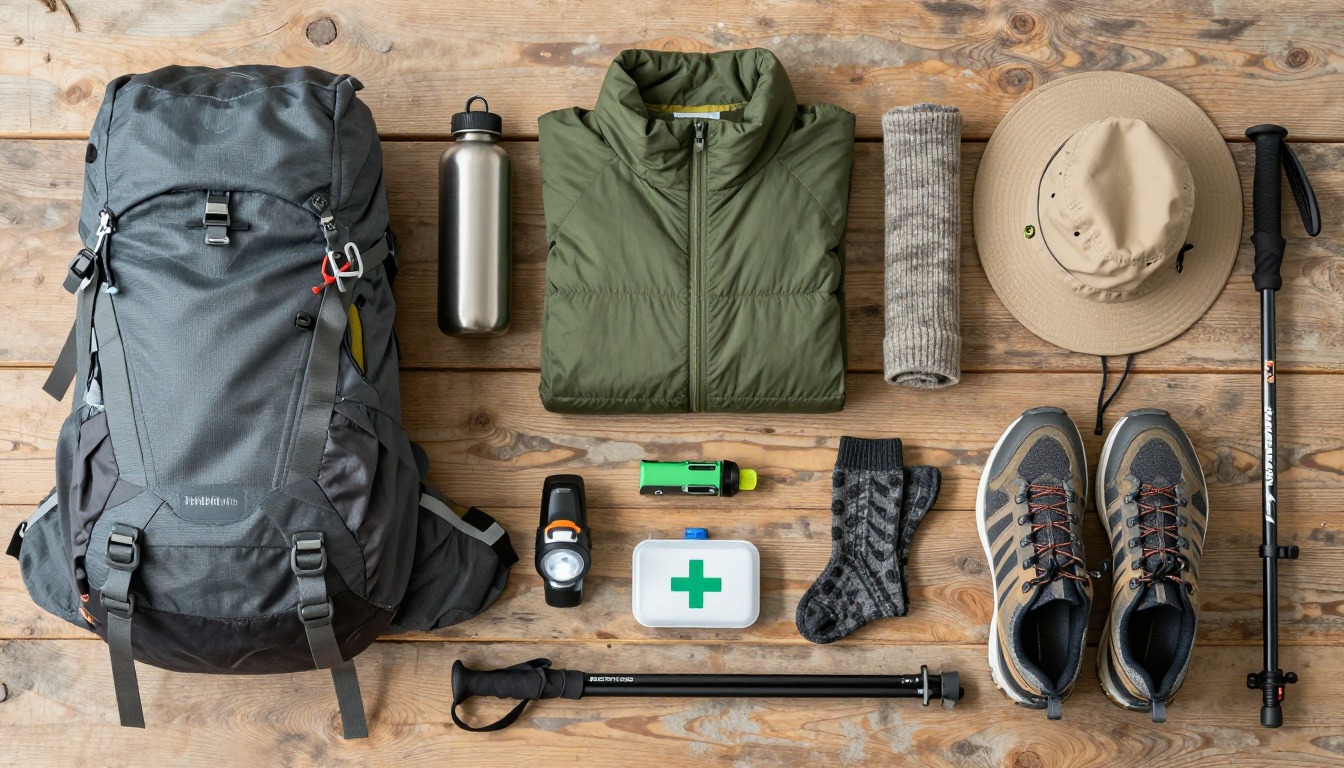
For your pack, waterproofing matters more than size. You want a rain jacket, a dry bag for spare clothes, a hat, and shoes with good grip. A small daypack is enough because everything runs out and back from the village.
What the hike is like
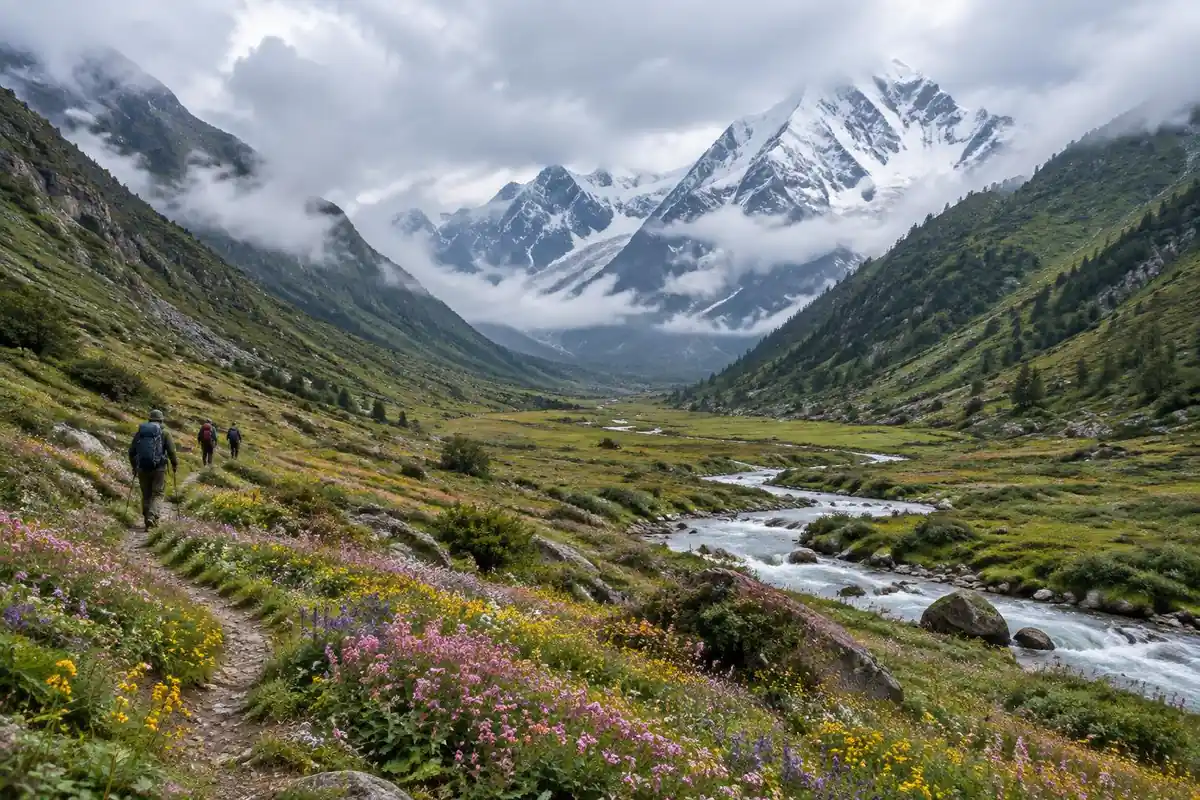
Both hikes from Ghangaria start the same way and then split. The Valley of Flowers trail leaves the village, passes a forest checkpost, and drops to cross the river before climbing through a steep, wet gorge on a stone-laid path, with waterfalls spilling across the trail, side-streams running full after rain, and rock that stays slick all day. Higher up the gorge opens out and the grade relaxes into the valley itself, where the walking turns easy underfoot and braided paths wander through meadow. The Hemkund Sahib trail is a different animal: an unrelenting paved pilgrim staircase of switchbacks climbing hard from the same village, busy with pilgrims and ponies, with almost no flat ground until the lake at the top. Same trailhead, entirely different day.
How to plan the itinerary
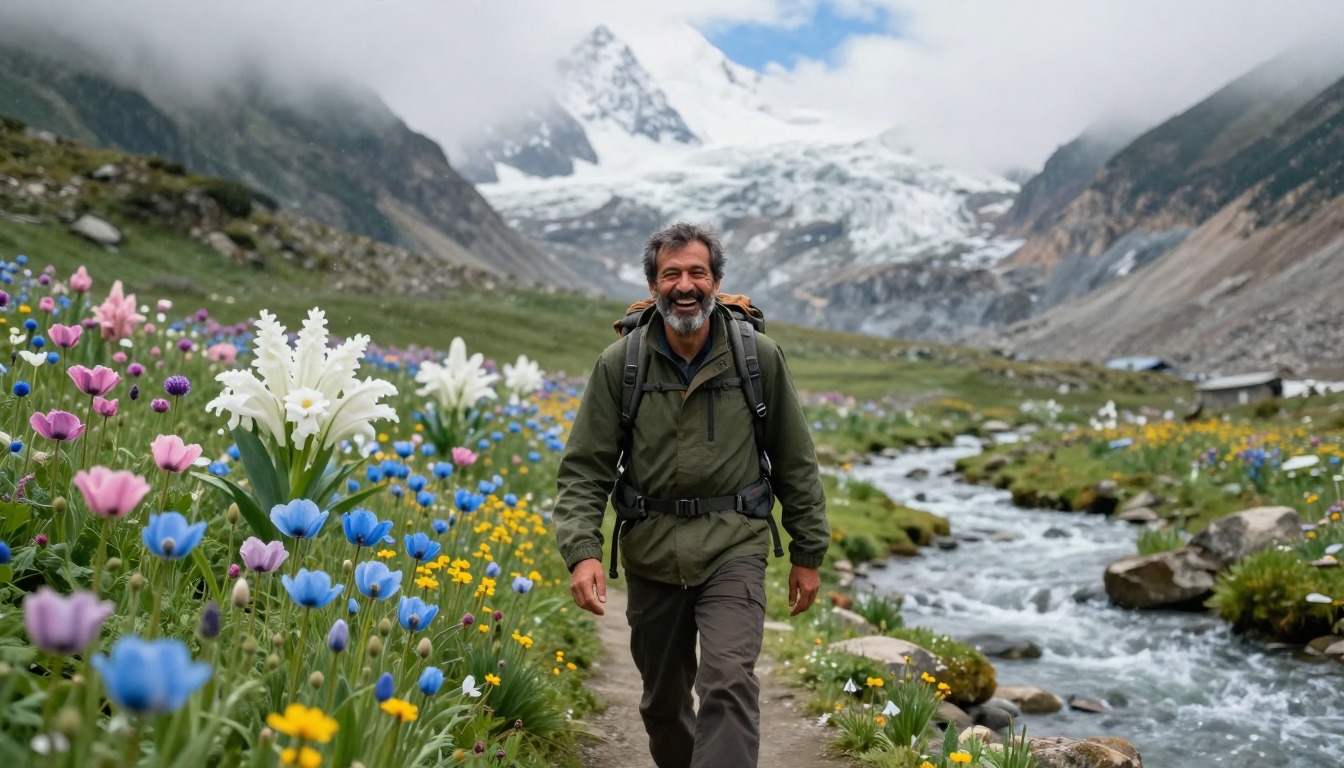
Everything runs out and back from Ghangaria, because the park is treated as day-use only. The usual plan is a full day for the valley itself, walking in on the morning permit, spending the middle of the day up in the meadows, and being back through the gate before it closes, then a separate day for Hemkund Sahib, which is short but climbs hard enough to deserve its own morning. Most trekkers allow two or three nights in Ghangaria so a rained-out day does not cost them the trip. Getting to the village is itself a half-day on foot from the roadhead, so arrival and departure are travel days rather than hiking ones. Afternoons bring rain with fair reliability in the bloom season, which is why nearly everyone starts early and turns for home well before dark.
Plan this trip in 5 steps
-
Pick the right pack
Match a pack to your trip, fit and priorities.
-
Plan food & water
Calories, food weight and water for your days on trail.
Trail-specific tips
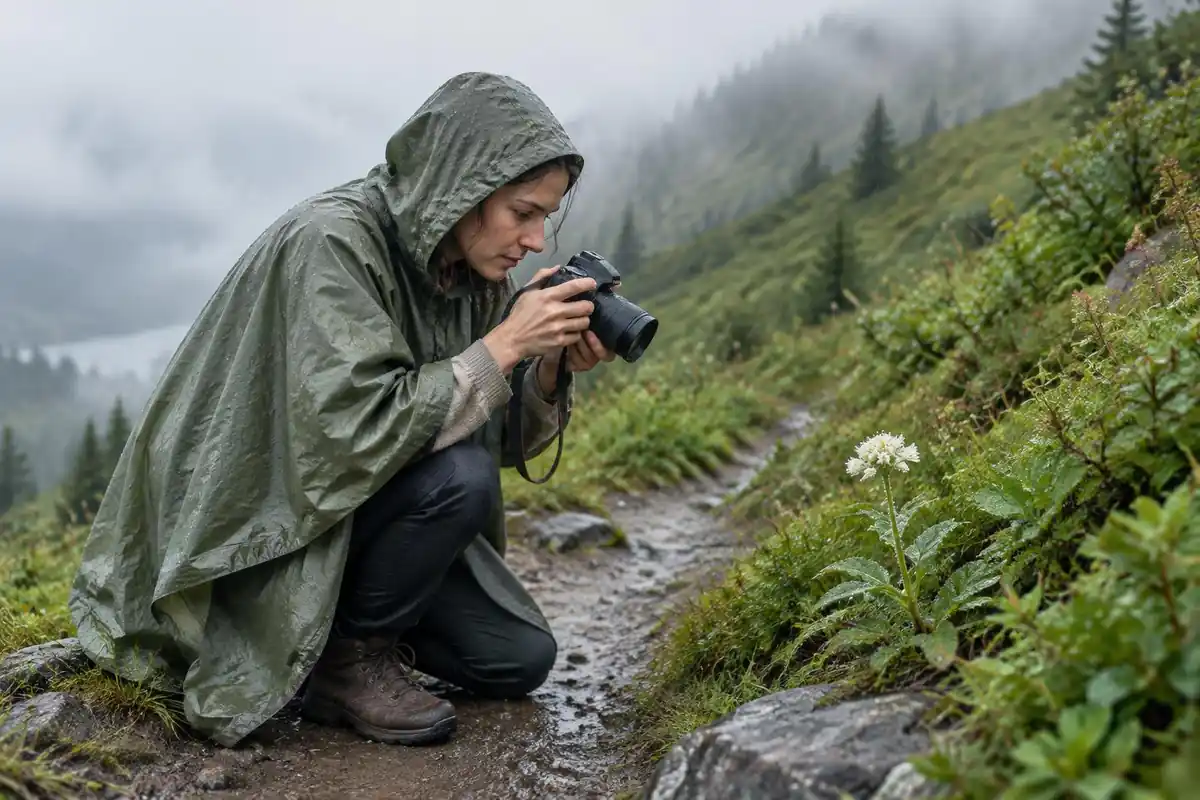
Plan the day around the weather pattern rather than your energy. Mornings are usually the clear, workable window, and afternoons bring rain that turns the gorge section genuinely slippery on the way back down. Gaiters and a real rain layer matter more here than warm clothing does. Leeches are a fact of the lower forest in the wet, so check your legs at stops. The classic mistake is trying to fit the valley and the Hemkund climb into one day; they share a trailhead but not a difficulty level. General wet-weather advice is at /trail-smarts/.
Permits & rules
Entry to the national park is regulated (permit and timing rules apply, so check current arrangements) and no overnight stay is allowed inside the valley — you day hike from Ghangaria and return. The bloom coincides with the monsoon, so expect rain, leeches and slippery trails.
Gear suited to this hike
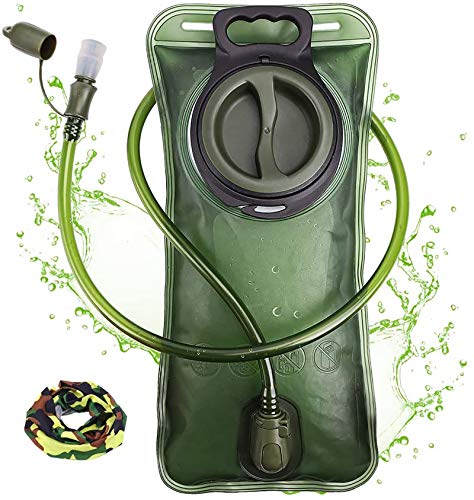
Matched to the terrain and conditions here. Real products — check current price on Amazon.



Rain, seams and keeping the day pack dry
Rain in the bloom season is the norm, not the exception. REI notes that pack fabrics usually have a waterproof interior coating, but water can still seep through seams and zippers.1 Deuter makes the same point about sustained downpours.3 Waterproof stuff sacks inside the pack are an alternative to a rain cover, and REI says they can work better than a cover in wind.1
Chilling is the health risk that comes with all this water. The CDC says hypothermia can develop above 40°F if you are chilled from rain, sweat or cold water.4 A dry insulating layer in a waterproof bag is what lets you warm up at the turnaround point.
Slick stone, gaiters and poles
The gorge section combines wet stone, waterfalls and full side-streams. Poles help on the descent: a 1999 study on a 25-degree downhill ramp found knee compressive and shear forces fell by 12 to 25% with poles,2 and a second study found the benefit held across no-pack, day-pack and heavier loads.5 On level meadow ground the benefit is smaller, as one study found no reduction in knee compression on level walking.6
For leeches, the existing page suggests gaiters and tucked-in layers. Kahtoola describes gaiters as sealing around footwear to keep dirt, dust, rocks and snow out;7 that supports the idea of a closed cuff at the ankle, but there is no source here on how well any gaiter blocks leeches, so treat it as practical advice and check your legs and socks at each stop.
Altitude, sun and day-use rules
The valley sits high enough that altitude matters. The CDC Yellow Book says an unacclimatized person sleeping at 8,000 ft or above is at risk of altitude illness and that fitness does not protect against it.8 Since the plan is to base in Ghangaria for two or three nights, treating those nights as acclimatization is sensible.
This page describes the park as day-use only, with a morning permit and a gate closing time. Confirm all three with the forest department or your accommodation, and read any current alert about trail conditions before you go.
Leave No Trace on a fragile meadow
The National Park Service's Leave No Trace principles include solid waste in catholes 6 to 8 inches deep at least 200 feet from water, camp and trails, and packing out toilet paper and hygiene products.9 In a protected flower valley, staying on the path and carrying out all litter is the norm to follow.
Common questions
Can you camp or stay overnight in the Valley of Flowers?
No. The park is treated as day-use only, so you hike in on a permit each morning and must be back out before the gate closes; confirm the current entry rules, permits and gate times with the forest department or your accommodation. That single rule shapes the whole trip, since it means every visit is an out-and-back from the village outside the park rather than a walk deeper into the valley.
Is the hike into the valley difficult?
The valley floor itself is gentle walking, but getting there is not. The gorge section climbs steadily on wet stone with streams crossing the path, and the return descent on the same ground is where people slip. Altitude adds to it. Steady fitness and careful footing matter more than any technical skill.
How does the Hemkund Sahib hike compare?
It is much steeper and much more relentless, a paved staircase of switchbacks that climbs continuously from the village to a high lake. The surface is easier than the valley gorge, but the sustained gradient and the thinner air make it the harder of the two days for most hikers, even though it takes less time.
How bad are the rain and leeches during the bloom season?
Plan for rain most afternoons and treat dry days as a bonus. The lower forest stretches hold leeches in wet conditions, which is unpleasant rather than dangerous; gaiters, tucked-in layers, and a check at each stop keep it manageable. The wet is exactly what produces the bloom, so it comes as a package.
Complete gearsets for this trip
Full curated kits built for exactly this kind of hike.
Trail conditions, permits and access rules change without notice — always confirm current information on the official source above before you go. Some facts on this page are still pending owner verification and are marked accordingly. Product links and the accommodation map are affiliate links: we may earn a commission at no extra cost to you; product prices and availability are shown on Amazon, and accommodation prices on the booking site. See our affiliate disclosure.