
Affiliate disclosure: this page contains affiliate links. Purchases made through them may earn us a commission at no extra cost to you. See our affiliate disclosure.
In plain English
Mount Kinabalu is climbed in two days, and the overnight stop is part of the plan. You walk up on day one, sleep in a hostel partway up the mountain, get up in the middle of the night and climb to the summit for sunrise. The bed is not extra: the park sells it together with your permit, your meals and your insurance as a package.
Because the mountain has a limited number of beds, it also has a limited number of climbers. Sabah Parks says one hostel takes 20 climbers a day and the other 30.1 That is why booking is the hardest part of the trip. You book a date online, pay right away, and the booking is not refundable if you cancel, so check every name and date before you pay.
Everything on the mountain runs on a schedule. You register in the morning, walk up with your guide, rest at the hostel, eat at dinner time and then start the summit climb in the dark. You need warm clothing, a headlamp and grippy shoes.1 It helps to think of the trip as a short, tightly timed program with a very cold morning at the end.
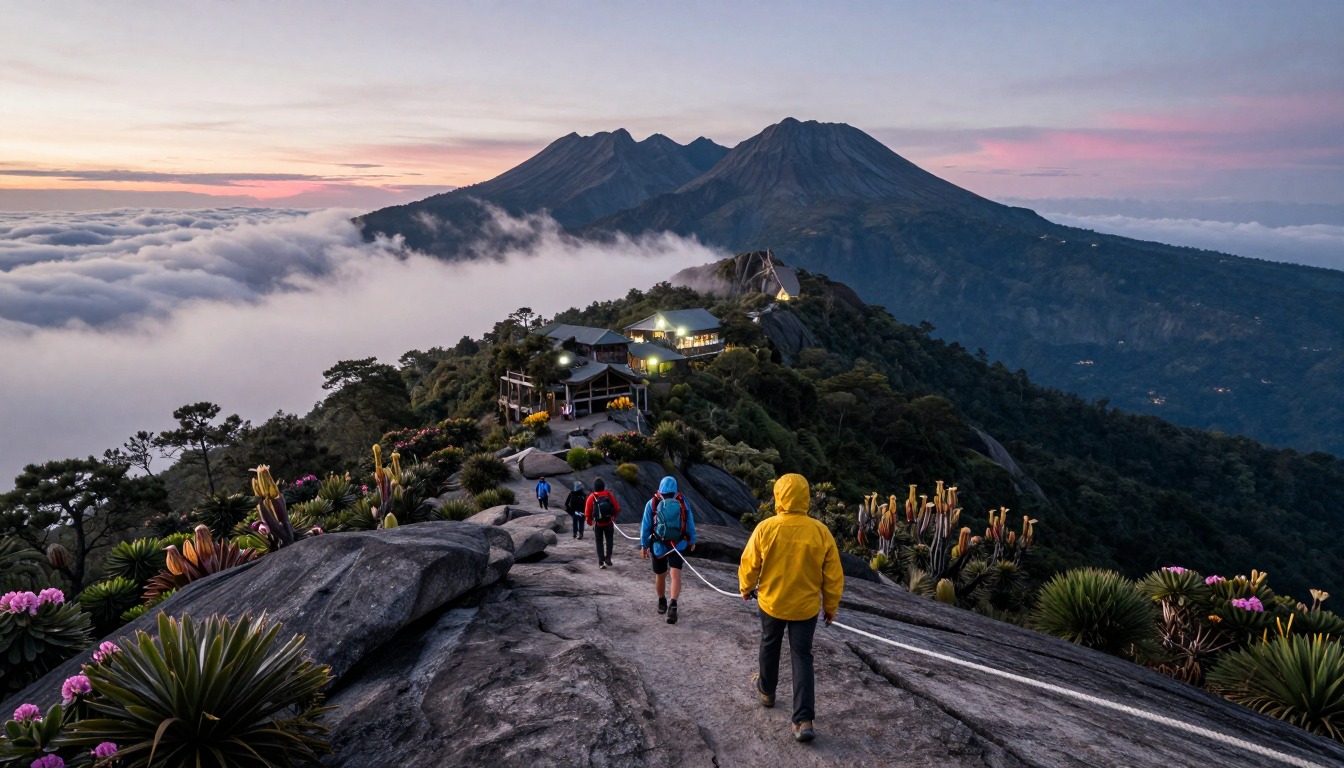
Mount Kinabalu rises out of Sabah's rainforest in Malaysian Borneo to a bare granite summit at 4,095 meters, inside Kinabalu Park, a UNESCO World Heritage Site managed by Sabah Parks. The standard route is a guided two-day climb, and because an overnight stay partway up is mandatory before the dawn summit push, where you sleep is arranged before you even start walking. A climbing permit and a licensed guide are required for every ascent.
Why hike here
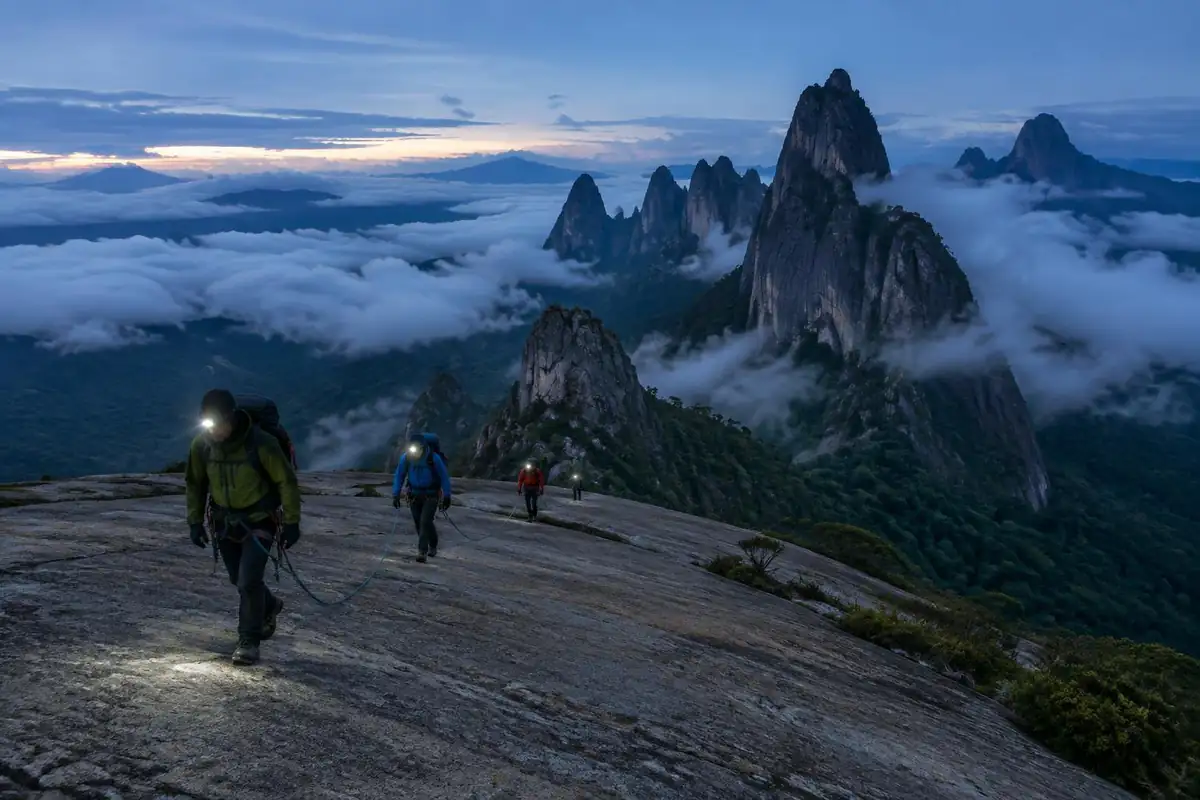
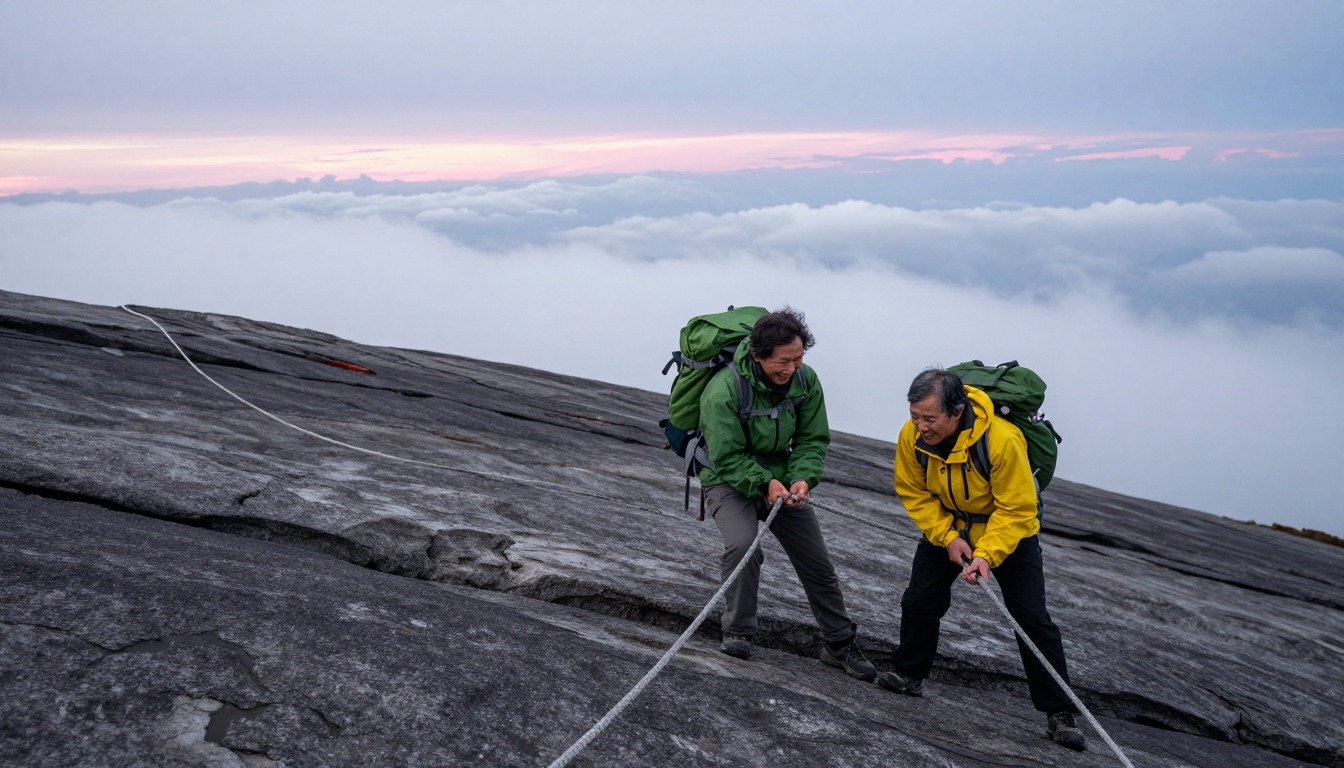
The appeal is the transition you walk through in a single push: thick, humid rainforest gives way within hours to stunted montane scrub, then to open rock with fixed ropes guiding hikers up smooth granite slabs. Most climbers leave the overnight stop in darkness, headlamps picking out the trail, so the reward is arriving on the summit plateau as the sky lightens and the granite dome catches the first color of dawn. The cold at the top is a sharp contrast to the sweat-soaked lower trail, and that swing in temperature and terrain over such a short distance is what makes the climb memorable rather than just a long uphill walk.
Getting there
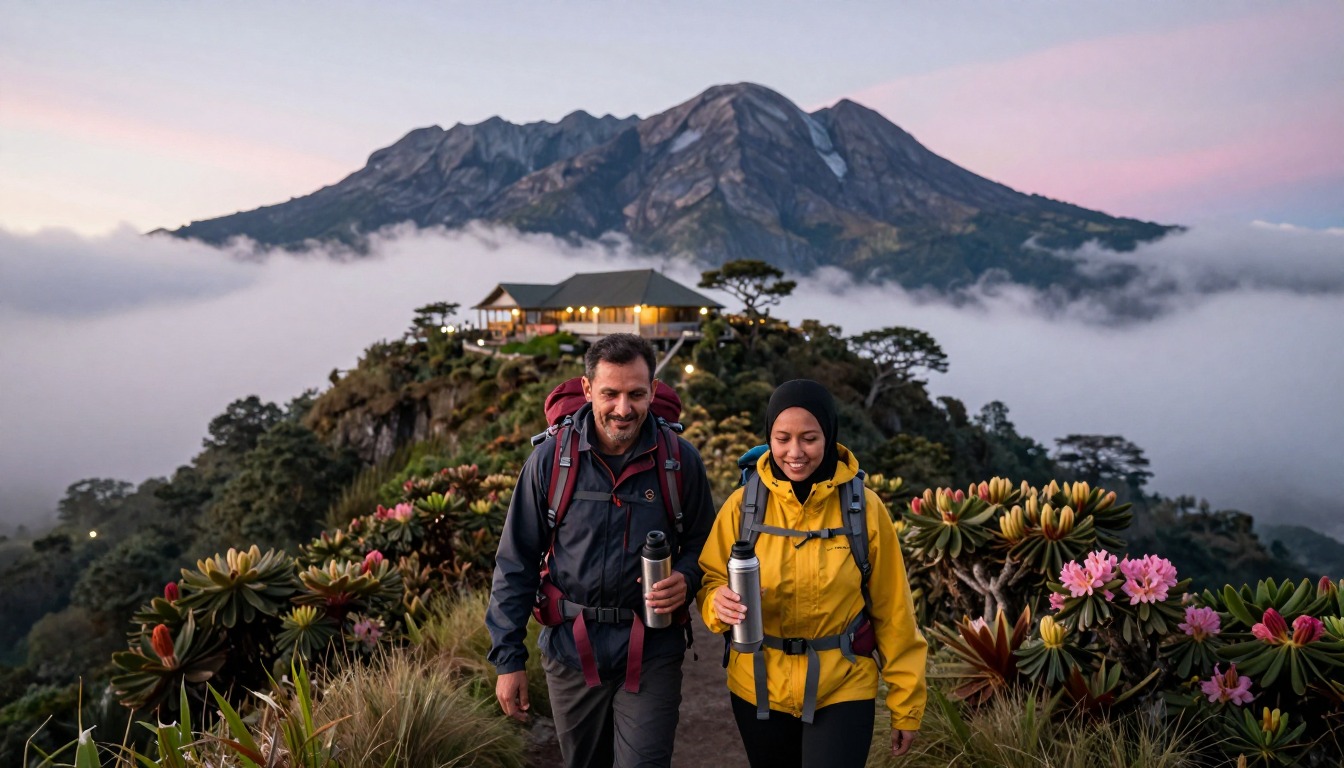
Most hikers fly into Kota Kinabalu, Sabah's main international gateway, then travel by road to Kinabalu Park at the mountain's base, a trip of a couple of hours through the highland town of Kundasang. Many climbers overnight in Kota Kinabalu or in Kundasang before the climb to arrive at the park gate rested and ready for an early check-in, since the guided ascent and the mandatory overnight partway up both run on a fixed schedule. Onward transport is generally arranged through tour operators or park transfers rather than public transit.
Where to stay
The realistic options, closest-to-the-trail first. Book through the official links — we don't list prices or availability because they change all the time.
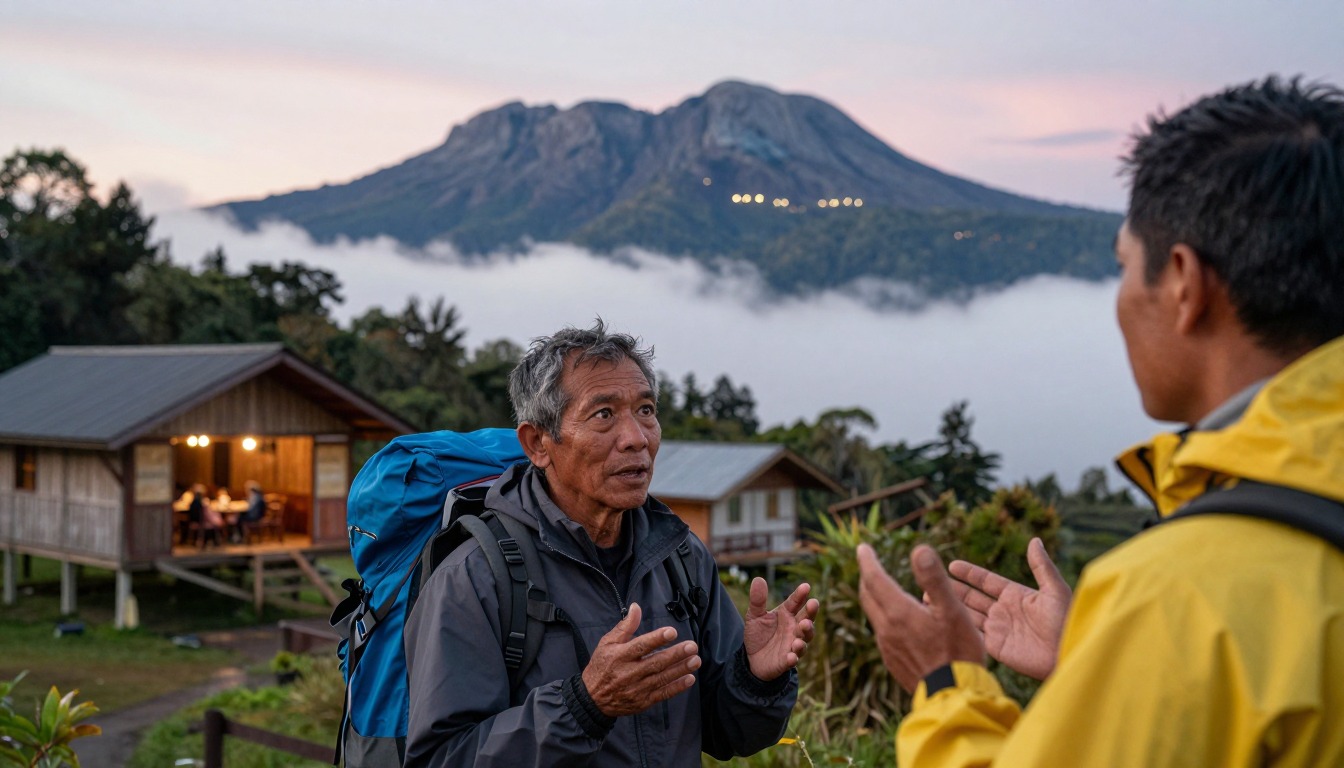
For example: Hostels partway up the mountain (Lemaing and Panalaban, with meals at Laban Rata) for the overnight before the dawn summit
Most climbers — a mid-mountain overnight is the normal plan, and beds are the bottleneck.
Bed availability limits climbing permits; book months in advance.
Park concessionaire (booked well ahead)For example: Park headquarters lodges and hotels in Kundasang at the mountain gate
Climbers the night before, plus non-summit visitors.
A convenient base at the park entrance; Kota Kinabalu city is ~2 hours away.
Nearby lodging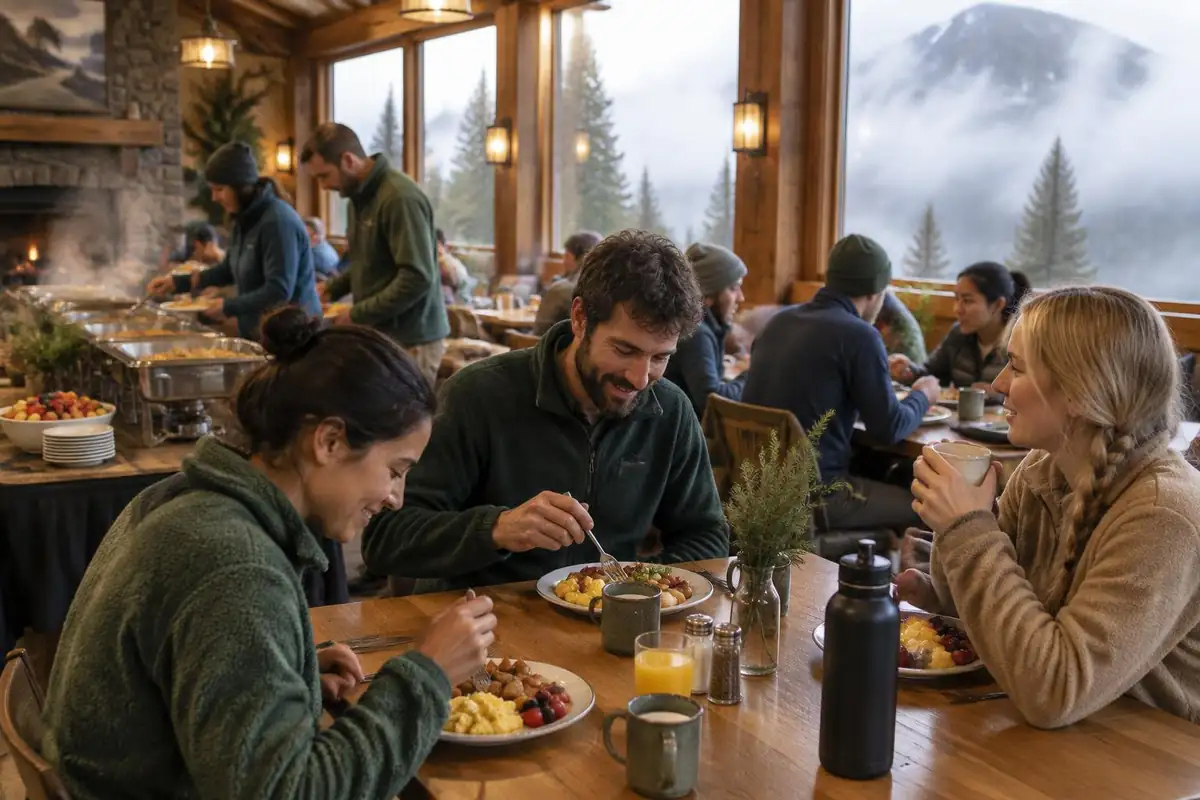
Permits & rules
Climbing is regulated by Sabah Parks and normally involves a permit, a mountain guide and a mid-mountain overnight (confirm current rules with Sabah Parks), and the number of hostel beds effectively caps how many can climb — so book far in advance. The lower trail is rainforest; the summit is cold and granite-bare.
Gear you'll want for this trip
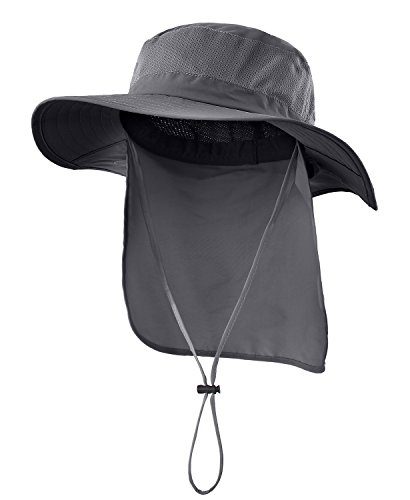
Matched to the terrain and conditions here. Real products — check current price on Amazon.


The bed is the permit
Guides say the number of resthouse beds effectively caps how many people can climb, and Sabah Parks' own climbing page confirms the structure. It lists two hostel options, Lemaing Hostel, with 20 climbers a day, and Panalaban Hostel, with 30 a day, and says both packages include one night's accommodation, three meals, a climbing permit and insurance.1 Reservations are online only and subject to available slots, and the 2026 season opened for booking on 1 December 2025, before the season began in January. As of 19 September 2026 the park said bookings for the 2027 season had not yet opened.1
The booking terms are strict. The park says payment must be made online within the time shown or the reservation is cancelled without notice, name replacements are not allowed, cancellations are non-refundable, and only one date change is allowed, within the same year and subject to slots.1 It also says there is no refund for weather-related cancellations once you have passed the Timpohon Gate.1 One naming detail is worth knowing: guides often group the accommodation as resthouses near Laban Rata, while the park lists the hostels as Lemaing and Panalaban and names Laban Rata Resthouse as the place where dinner, supper and breakfast are served.1
A schedule with no slack
Sabah Parks sets out the itinerary. On day one you arrive and register between 7:00 and 10:30 am, meet your assigned guide, transfer to the Timpohon Gate, attend a rules briefing and climb to the hostel, with check-in from 1:00 pm and dinner between 4:30 and 7:00 pm.1 On day two, supper is served between 2:00 and 3:30 am, climbers should reach the Sayat-Sayat checkpoint by 5:30 am, spend around 10 to 15 minutes at the summit for photographs, then descend. Hostel check-out is by 10:30 am, and the park asks climbers to aim to be back at the Timpohon Gate before 4:00 pm.1
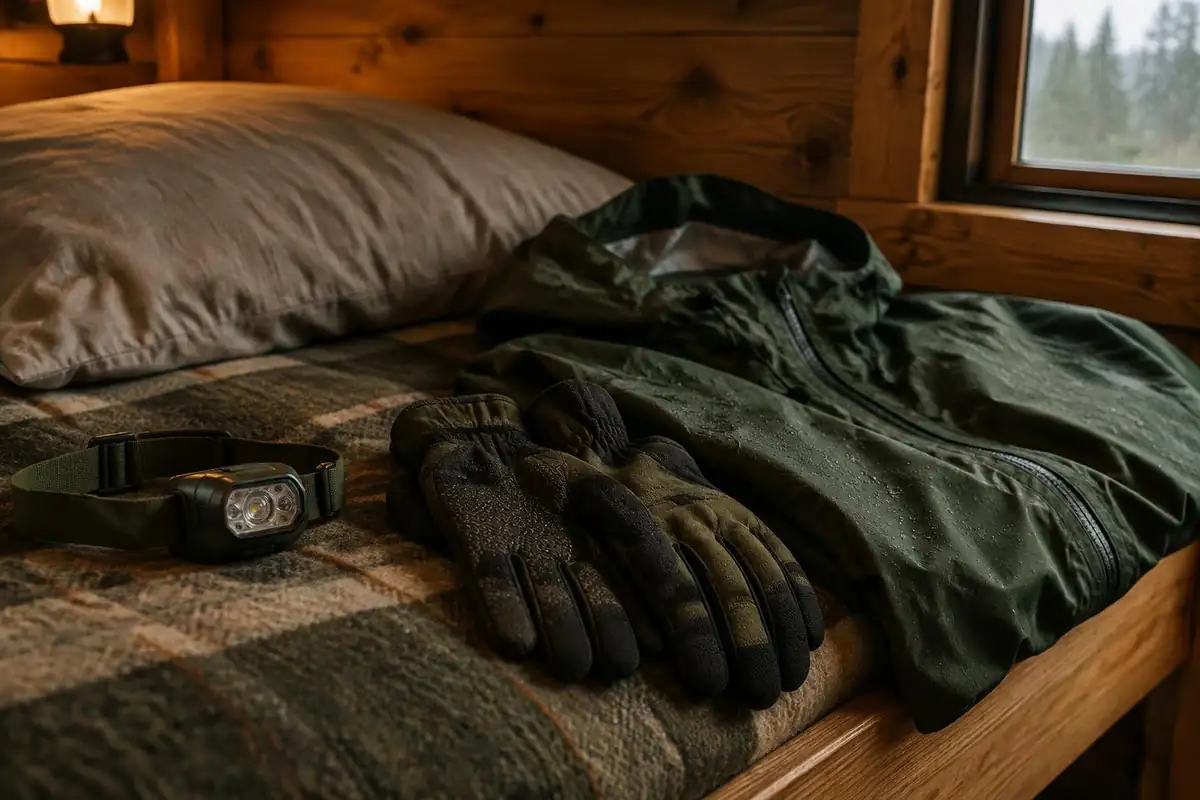
That leaves a short night. The consequence for your pack is that everything you need for the summit push has to be laid out and ready before you sleep, including your headlamp, warm layers and gloves. Altitude adds to the challenge: the CDC says physical fitness and training do not protect against altitude illness, and that headache is the main symptom of acute mountain sickness, so tell your guide immediately if you feel unwell, as the park itself asks.2,1
Rules that shape what you carry
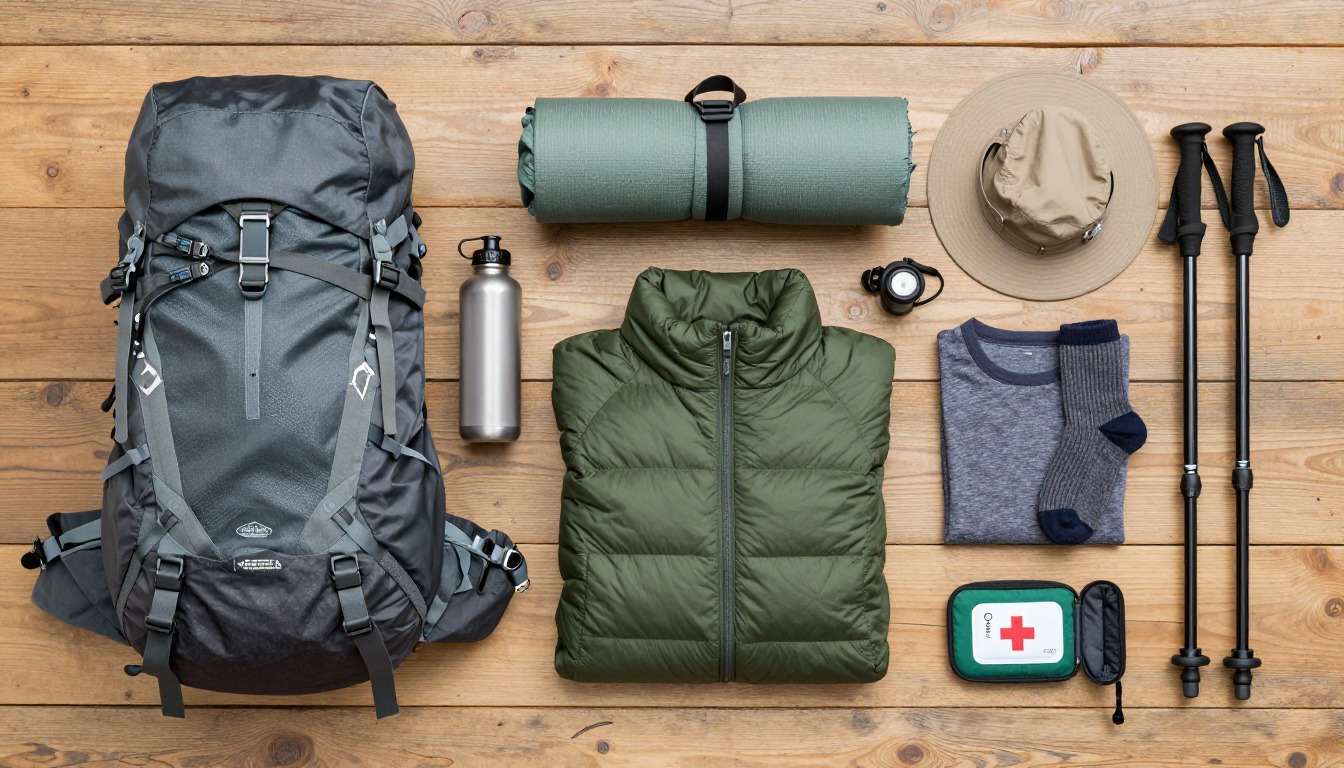
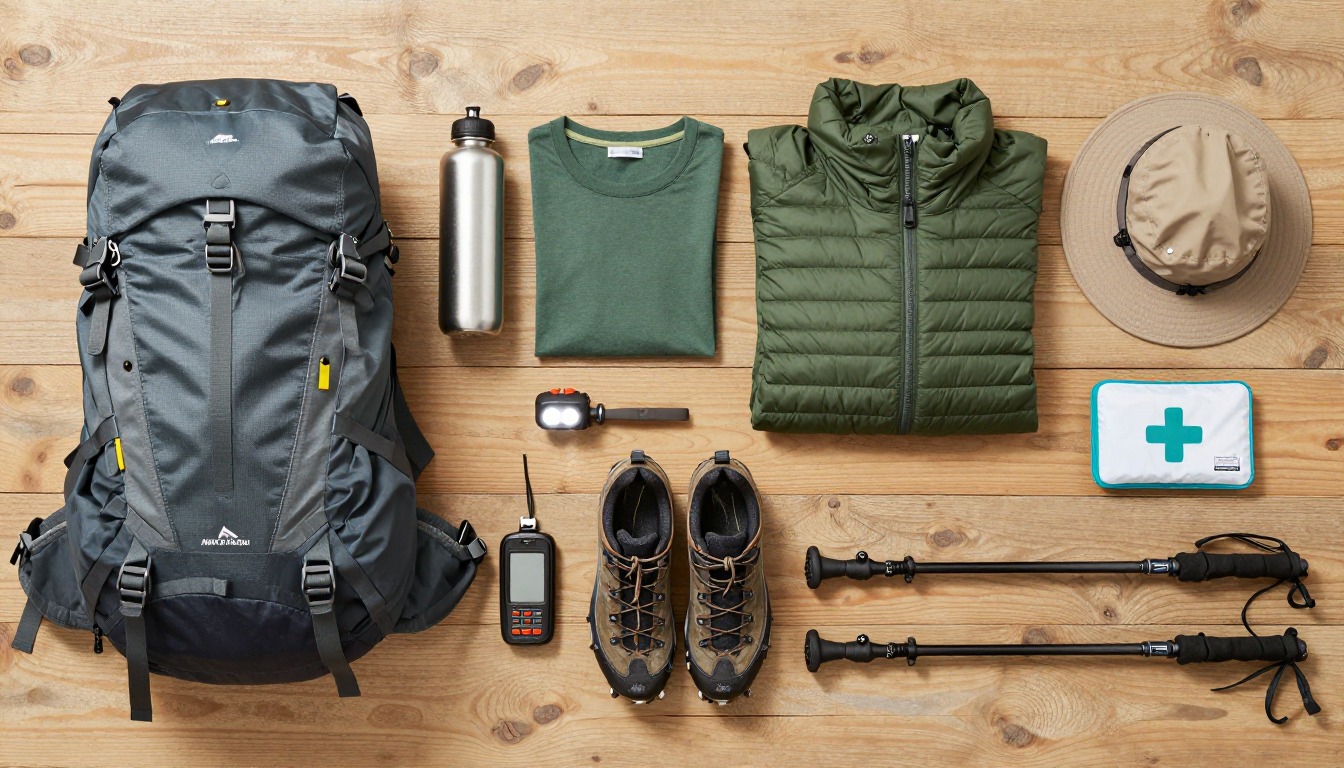
The park's packing list is short and specific: warm clothing for cold summit conditions, a waterproof headlamp, a waterproof windbreaker, a whistle, high-energy snacks and drinks, waterproof gloves with a good grip and hiking shoes with a good grip.1 The park tells climbers to use the white rope on the section above Panalaban at all times, both ascending and descending, to expect limited mobile phone and internet coverage, and to save documents offline.1 If you lose your guide and the rope, the instruction is to stop, stay put and blow your whistle.1
The park also says guide arrangements are one guide per five climbers, and that a list of health conditions, including heart disease, hypertension, chronic asthma and diabetes, are reasons to refrain from climbing and to speak to a qualified clinician about high-altitude travel first.1 The CDC notes that hypothermia can develop above 40°F if a person is chilled by rain, sweat or cold water, which is why the waterproof layers matter even on a tropical mountain.3 Confirm current fees, dates and rules on the Sabah Parks booking site before you commit.
Common questions
Do I need to book the mountain lodging far in advance?
Yes, this is the single most important piece of planning for this climb. The mountain hostels, Lemaing and Panalaban, where every climber must spend the mandatory night before the summit push, have a limited number of beds (Sabah Parks caps them at 20 and 30 climbers a day), and meals are served at Laban Rata Resthouse. Reservations are online only, and that bed count effectively caps how many people can climb on any given day. Book as far ahead as you possibly can.
Can I climb Mount Kinabalu independently, without a guide?
No. A licensed mountain guide and a valid climbing permit are mandatory for every ascent, arranged through Sabah Parks or an authorized operator before you start. Guides are assigned per group and stay with climbers for the entire route, including the pre-dawn summit push, so independent climbing simply isn't permitted on this mountain.
When is the best time of year to climb?
The drier months, roughly March through September, generally offer more stable conditions for both the humid lower rainforest trail and the exposed granite summit push. Even in the drier season, tropical rain is always possible, so pack for hot, humid conditions lower down and cold, windy weather at the summit, and confirm current conditions with your guide before setting out.
Complete gearsets for this trip
Full curated kits built for exactly this kind of hike — what to bring, why, and links to similar gear.
Lodging details are compiled from official parks, refuge associations and reservation systems and can change without notice. We publish no prices, availability or ratings — always confirm current information on the official site before booking or setting out. Product links and the accommodation map are affiliate links: we may earn a commission at no extra cost to you; product prices and availability are shown on Amazon, and accommodation prices on the booking site. See our affiliate disclosure.