
Affiliate disclosure: this page contains affiliate links. Purchases made through them may earn us a commission at no extra cost to you. See our affiliate disclosure.
In plain English
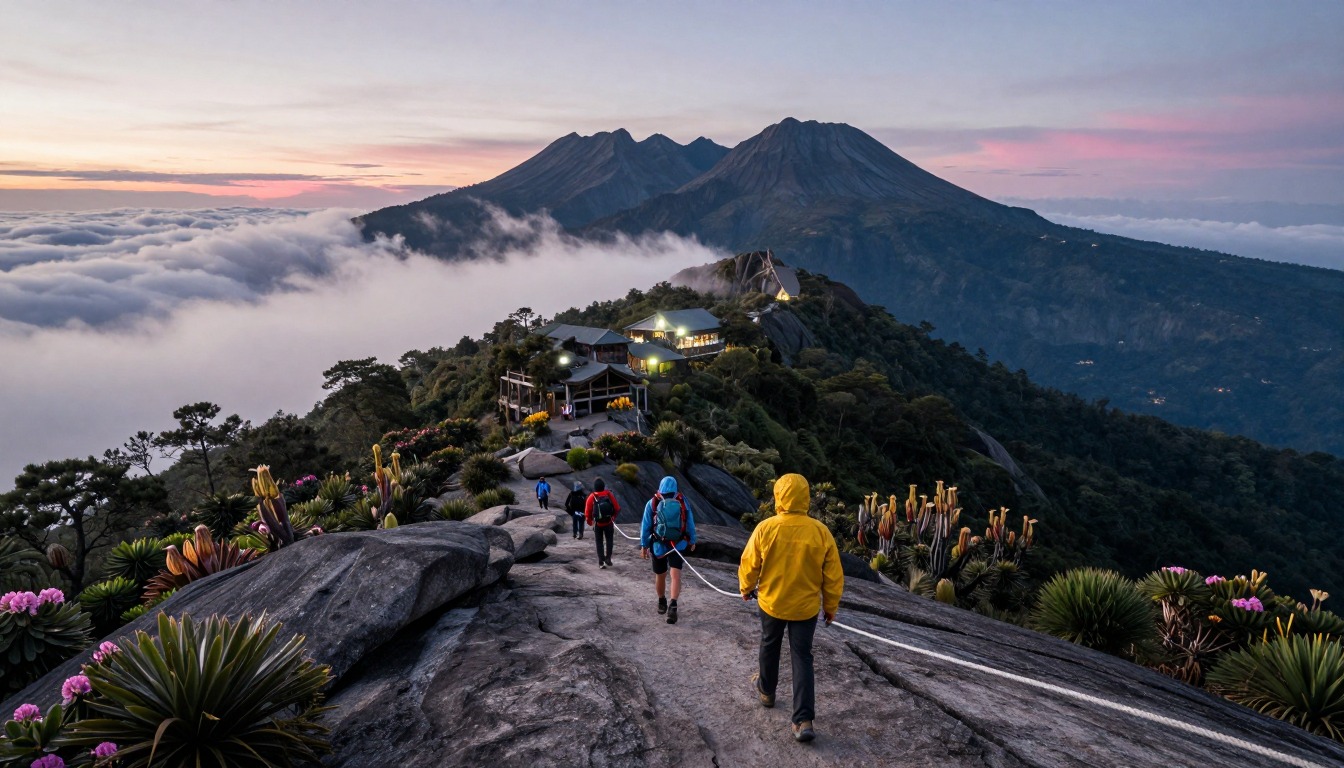
Mount Kinabalu is a tall mountain in Borneo that you climb over two days. Day one is a long staircase of stone and wooden steps through rainforest to an overnight stop. Day two starts in the middle of the night, when you walk across bare granite to reach the top for sunrise, then head all the way back down.
It is tropical at the bottom and cold at the top. Many people are surprised by that. By the summit you are high enough that the air is thin and the wind can be strong, so a warm jacket, hat and gloves matter even though you started out sweating.
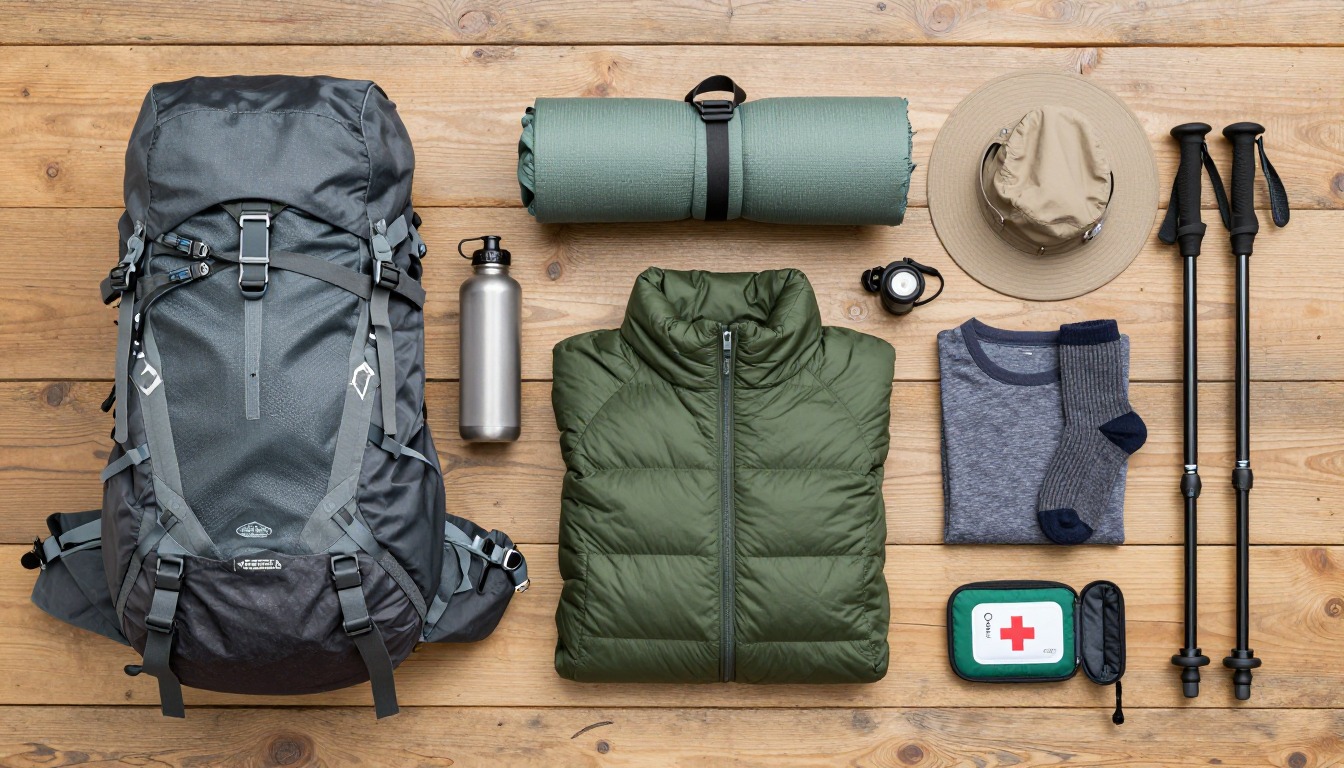
For your pack, keep it small. A guide and accommodation are part of the standard climb, so you mainly carry clothes, water, snacks and a headlamp. Waterproofing matters because rain can come at any time, and a light pack makes the thousands of steps easier.
What the hike is like
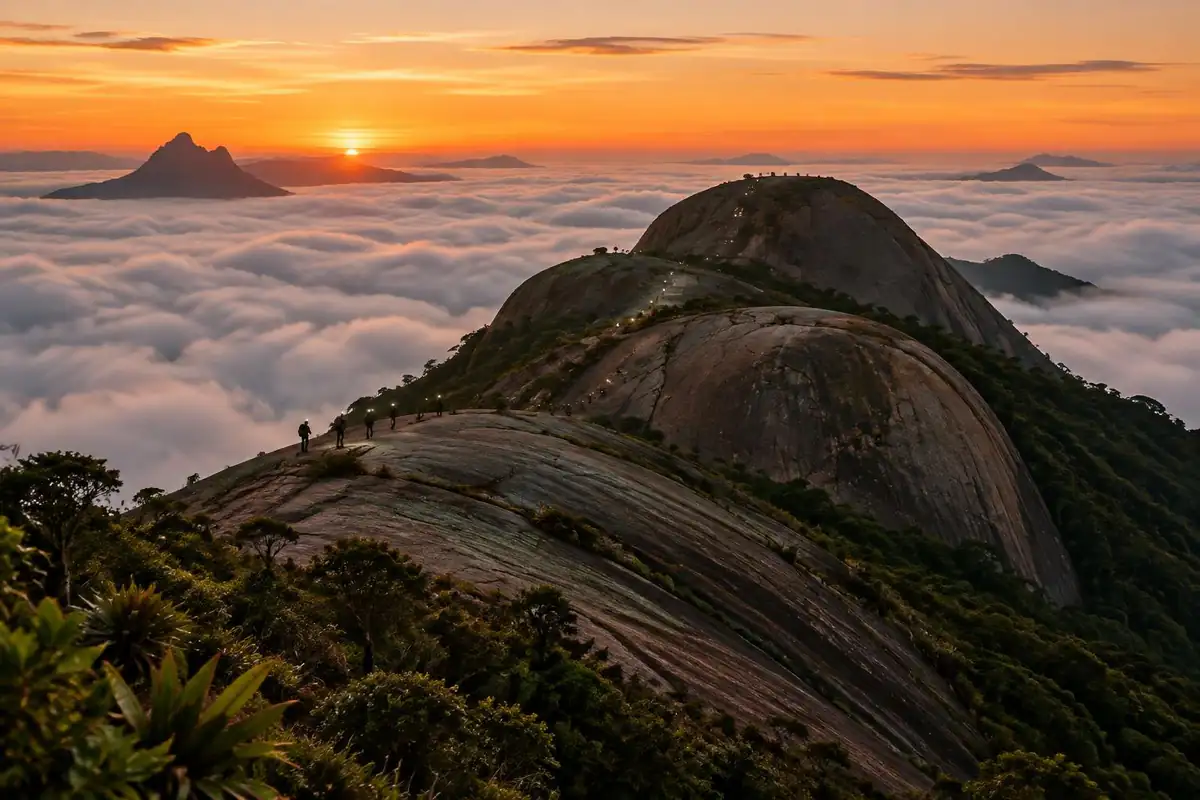
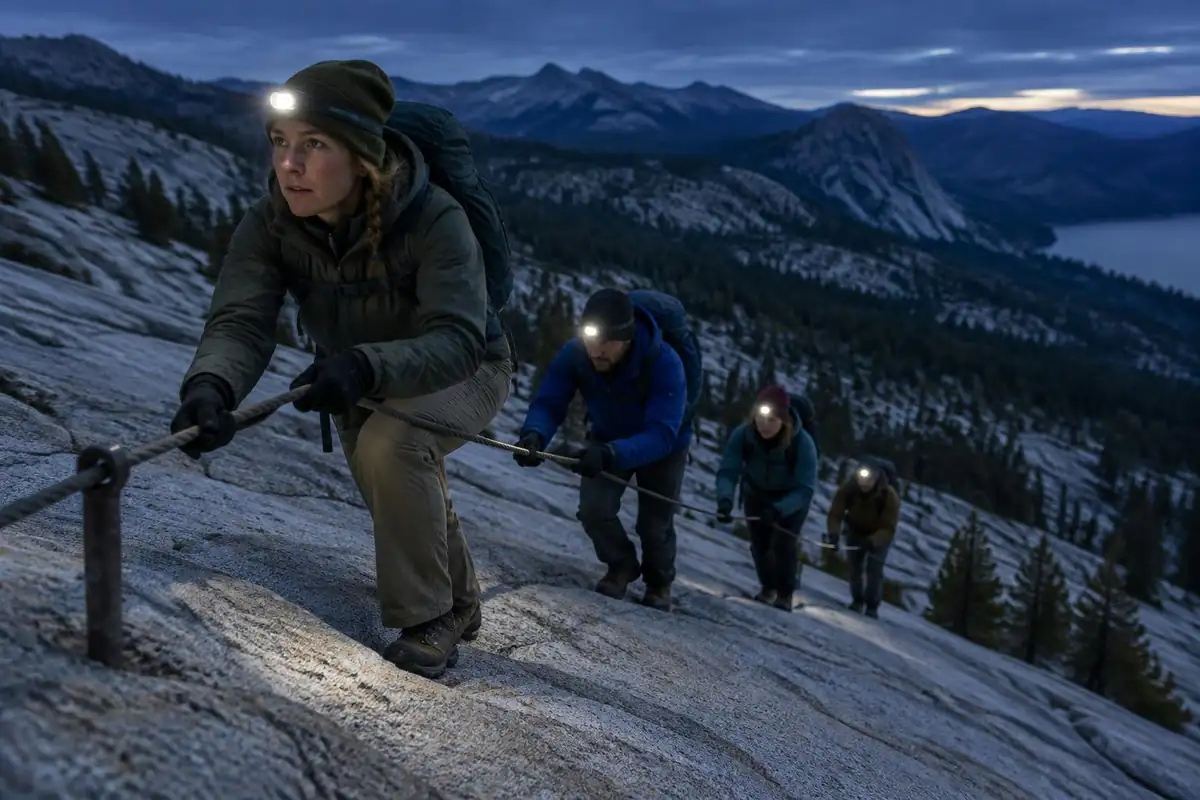
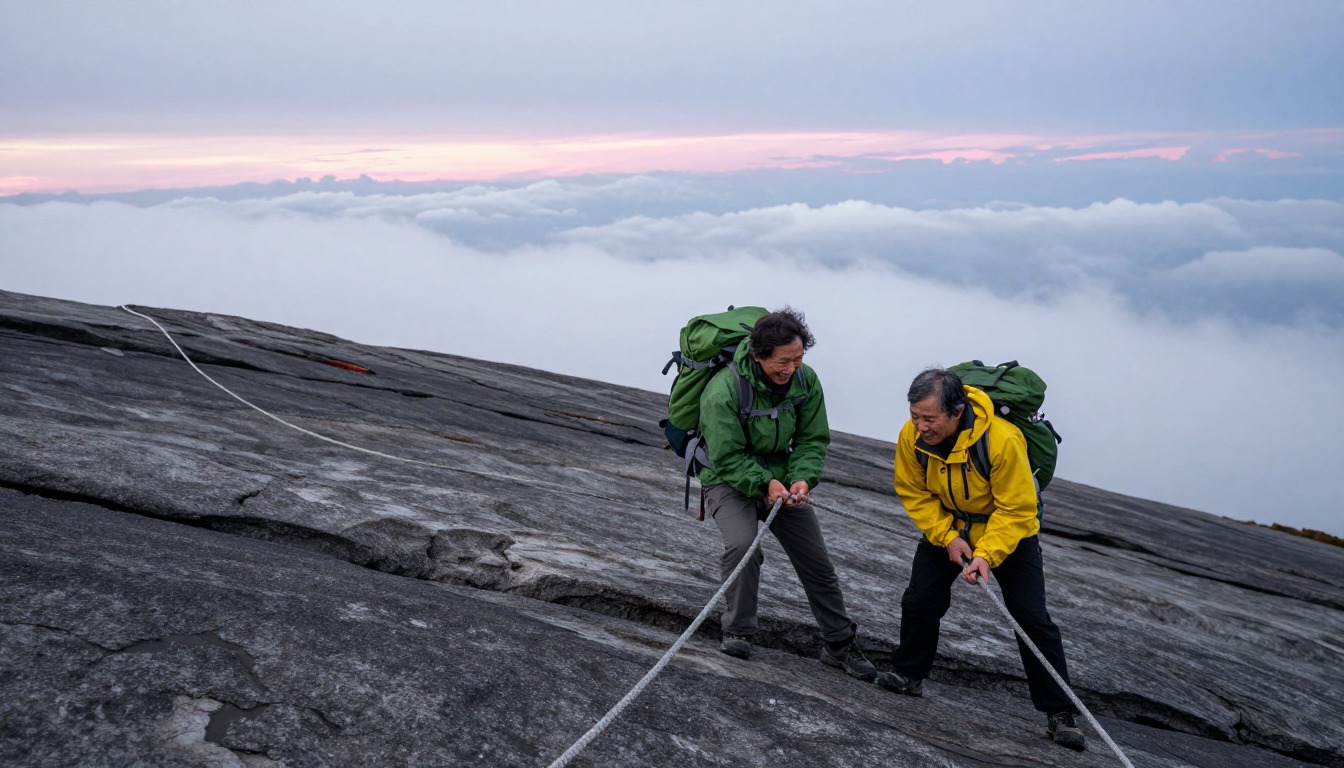
The climb is essentially a staircase. From the gate the trail rises through rainforest on an endless sequence of stone and timber steps, roots, and rock, with simple shelters at intervals. There is almost no flat ground on the whole ascent and very little descent either, which makes it a straightforward but monotonous grind on the quadriceps. The forest shrinks as you gain height, from tall canopy to twisted montane scrub to bare rock. Above the overnight stop the character changes completely: the route leaves the vegetation behind and crosses wide, smooth granite slabs, with fixed ropes bolted to the rock to guide and steady climbers where there is no obvious line. The last stretch to the summit is a walk across open granite, cold, windy, and usually done in the dark.
How to plan the itinerary
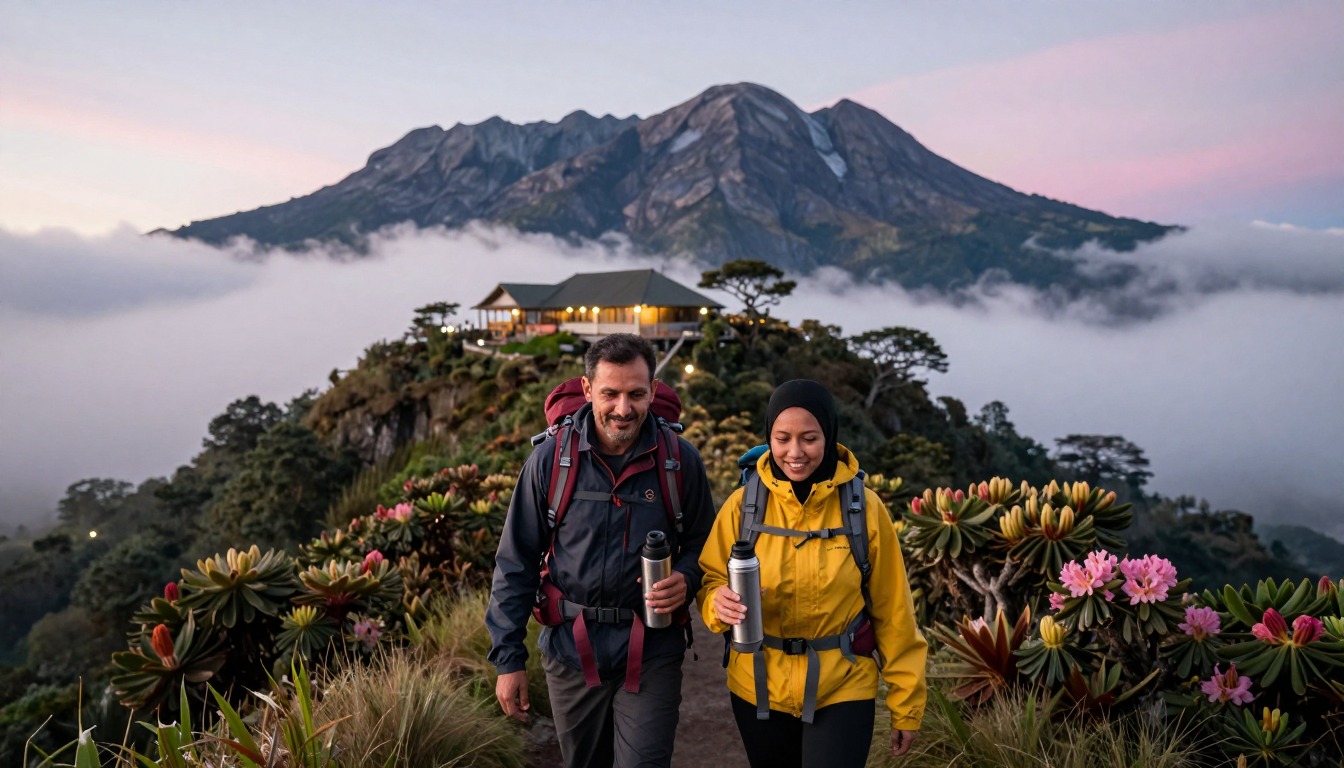
The structure is fixed rather than chosen. Climbers on the standard route go up to the mid-mountain lodging on the first day, sleep there, then pushes for the summit in the early hours of the second day before descending all the way to the park gate the same morning. Day one is a half-day of climbing at a steady pace with a guide; the summit push starts in the middle of the night so climbers reach the top around dawn. The descent is the part people underestimate, retracing the entire ascent in one go on legs that have already done a summit push, and it generally takes longer than expected. Most climbers add a night near the park or in the nearest town both before and after, since check-in is early and the post-descent day is not one anyone wants to spend traveling far.
Plan this trip in 5 steps
-
Pick the right pack
Match a pack to your trip, fit and priorities.
-
Plan food & water
Calories, food weight and water for your days on trail.
-
Estimate your time
Pre-filled with this trail’s distance and climb — adjust for your pace.
Trail-specific tips
The descent, not the summit, is what wrecks people. You come down everything you went up in a single push, on a staircase, so poles and controlled pacing will save your knees and taking the last hours slowly is not a failure. On the granite above the treeline the fixed ropes are there for balance and line-finding rather than climbing; use them lightly and watch for wet rock. Dress for two climates in one trip, since the lower trail is hot and humid and the summit is genuinely cold and windy. For general preparation, see /trail-smarts/.
Permits & rules
Climbing is regulated by Sabah Parks and normally involves a permit, a mountain guide and a mid-mountain overnight (confirm current rules with Sabah Parks), and the number of hostel beds effectively caps how many can climb — so book far in advance. The lower trail is rainforest; the summit is cold and granite-bare.
Gear suited to this hike
Matched to the terrain and conditions here. Real products — check current price on Amazon.


Booking, closures and what Sabah Parks publishes
Sabah Parks lists an online Mount Kinabalu booking service and a climbing planner on its site.1 Its news items have included a notice of a temporary closure of the canopy walkway until further notice, a news item dated September 14, 2026 about a climber rescued after a five-day search, and a report of a climber being fined for illegal entry.1 Those items are a reminder that the summit trail is regulated and that going off the standard route is treated seriously.
Check the climbing planner and booking terms directly for whether a guide and the mid-mountain lodging are mandatory. Book early, because the lodging bed is the limiting factor for most dates.
Altitude and the pre-dawn summit push
The CDC Yellow Book says any unacclimatized person sleeping at 8,000 ft or above is at risk of altitude illness, and that fitness and training do not protect against it.2 Kinabalu's two-day format takes climbers from the tropics to high sleeping altitude in one day. Headache is the main symptom of acute mountain sickness and typically starts 2 to 12 hours after arrival; it improves rapidly with descent of 1,000 ft or more, and you should never go higher to sleep while symptomatic.2
This is general information; see a doctor before you go if you have health conditions, and get medical help if symptoms worsen.
Cold granite, wind and light
The tropical setting misleads people about the summit. The CDC says hypothermia can develop even in air above 40°F if a person is chilled by rain, sweat or cold water, and lists hikers as a higher-risk group.3 The NPS advises layers you can add or remove and wool or synthetic over cotton.4 A shell that blocks wind and a warm hat are the key pieces.
Headlamps are the recommended light source because they are hands-free,5 which matters when you hold a fixed rope with one hand. UV is stronger at higher elevations, about 6% per kilometer according to the EPA,6 so sun protection is needed for the descent in full daylight.
The descent and your knees
The stepped descent is what most people remember. A laboratory study found poles lowered knee compressive and shear forces by 12 to 25% on a steep downhill ramp,7 and another found a benefit for no pack, day-pack and heavier loads.8 If poles are allowed by your guide and operator, they are worth carrying for the way down.
Common questions
Do you need climbing experience for the fixed ropes near the summit?
No. The ropes are handrails rather than climbing equipment, there to mark the line and give something to hold on smooth, sloping granite. No harness or technical skill is involved on the standard route. Comfort on exposed rock in the dark helps, and your guide sets the pace across that section.
How hard is the summit morning?
Short but demanding. You start in the middle of the night, cold and underslept, gain height quickly on rock, and finish in wind at a genuinely high altitude for the tropics. It is walking rather than climbing, but the combination of cold, darkness, and thin air makes it feel considerably harder than the first day.
Can you climb Mount Kinabalu in a single day?
The standard route is built around an overnight partway up, so the normal answer is no; check Sabah Parks' climbing planner and booking terms for whether a guide and the lodging are required. That structure exists both to manage numbers and to set climbers up for a dawn summit. Planning assumes two days, with the bed partway up booked long in advance as the limiting factor.
What hurts most afterward?
Quadriceps and knees, almost universally, because of the long stepped descent all the way back to the gate in one go. Sore legs for several days afterward are normal even among fit climbers. Poles, a measured pace on the way down, and not booking demanding travel for the following day all help.
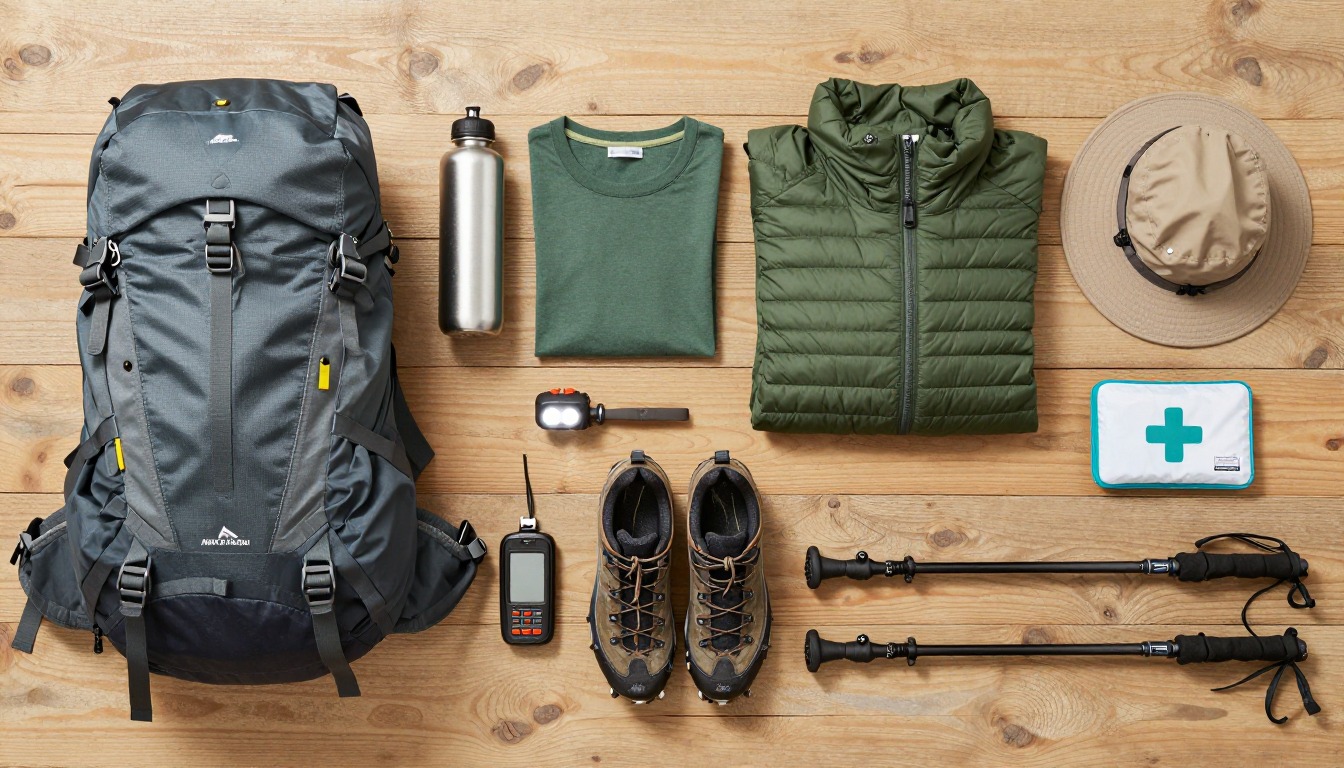
Complete gearsets for this trip
Full curated kits built for exactly this kind of hike.
Trail conditions, permits and access rules change without notice — always confirm current information on the official source above before you go. Some facts on this page are still pending owner verification and are marked accordingly. Product links and the accommodation map are affiliate links: we may earn a commission at no extra cost to you; product prices and availability are shown on Amazon, and accommodation prices on the booking site. See our affiliate disclosure.