
Best Time to Hike Kjeragbolten
The best time to hike Kjeragbolten is June to September, when the mountain road is open, according to the official season guidance. Those months are also the warmest of the year here and have long daylight, though September brings noticeably more rain than June.
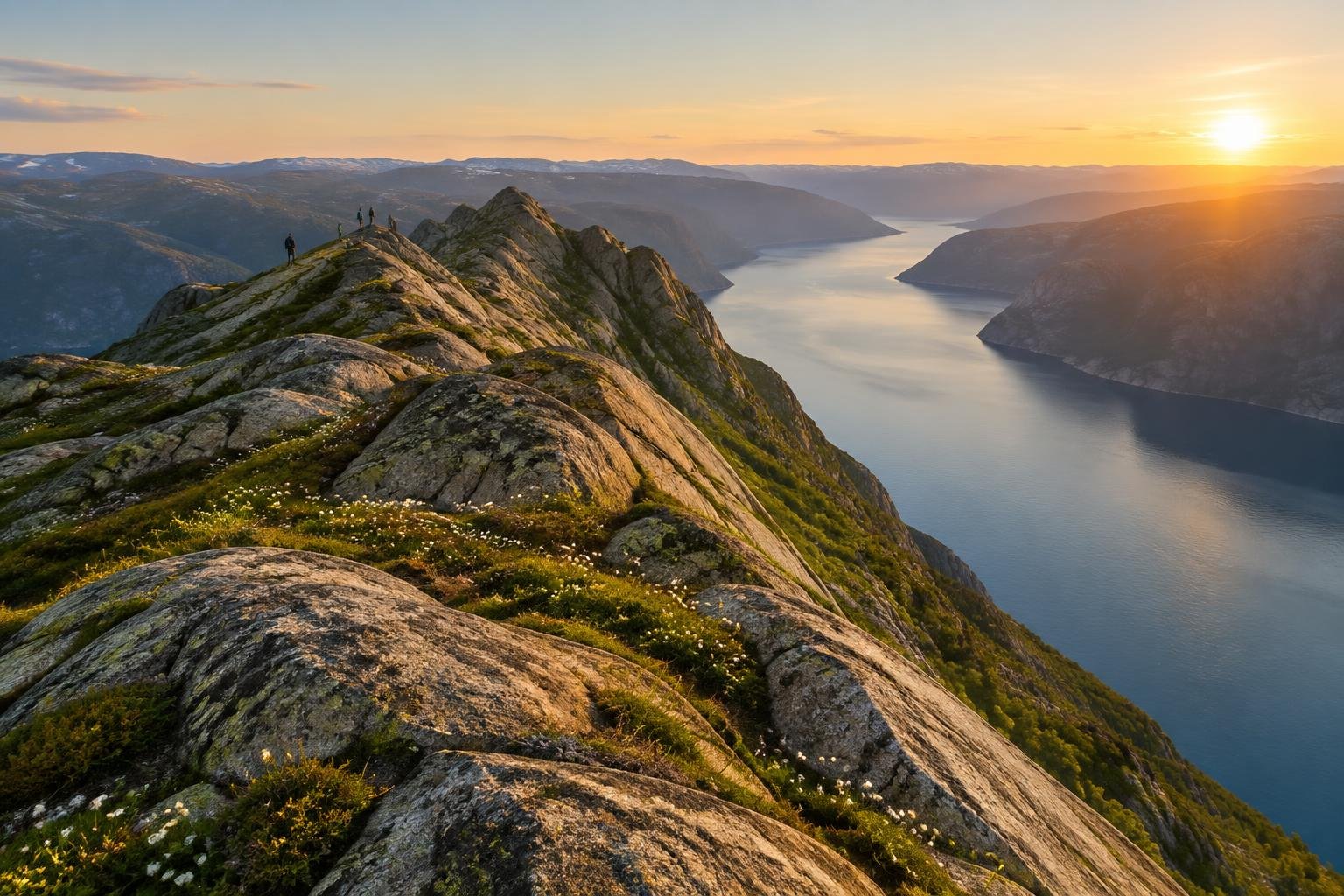
Month-by-month climate for Kjeragbolten
| Month | Relative warmth | Rain | Daylight |
|---|---|---|---|
| Jan | Coldest | 215 mm | 6.6 h |
| Feb | Coldest | 185 mm | 8.9 h |
| Mar | Coldest | 145 mm | 11.4 h |
| Apr | Cool | 106 mm | 14.1 h |
| May | Warm | 131 mm | 16.6 h |
| Jun | Warmest | 134 mm | 18.1 h |
| Jul | Warmest | 166 mm | 17.5 h |
| Aug | Warmest | 181 mm | 15.2 h |
| Sep | Warmest | 203 mm | 12.5 h |
| Oct | Mild | 223 mm | 9.8 h |
| Nov | Cool | 200 mm | 7.3 h |
| Dec | Coldest | 262 mm | 5.9 h |
Modelled regional averages for 2010–2023 (rainfall) and calculated daylight hours; they describe the wider area, not a reading taken on the trail. “Relative warmth” compares each month with the warmest and coldest months of this place’s own year. It is not a temperature, and the high parts of a route are colder than the region around them.
The modelled averages show a wet place all year. Rainfall typically ranges from about 106 mm in April, the driest month, to 262 mm in December, the wettest. Daylight swings from roughly 5.9 hours in December to about 18.1 hours in June. June, July, August and September are the relatively warmest months of this place's own year, while December through March are the coldest. Rainfall within the open season climbs from around 134 mm in June to 203 mm in September, so the early part of the window is typically the drier end.
Kjeragbolten season by season
Early summer · June to July
This is the heart of the official season, when the mountain road is open. Daylight is at its longest, about 18.1 hours in June and 17.5 in July, which gives generous room for a strenuous day hike. Rainfall typically sits around 134 mm in June and 166 mm in July, and both months are among the relatively warmest of the year. The route still involves steep, chain-assisted climbs over bare rock, so dry rock matters whatever the month. Confirm current conditions with the managing authority before you go.
Late summer · August to September
These months remain inside the June to September season guidance, and September is still among the relatively warmest months here. The trade-off is rain: averages rise to about 181 mm in August and 203 mm in September. Daylight shortens from roughly 15.2 hours to 12.5, so an early start matters more. Wet rock makes the exposed final section harder, and the guidance says to step onto the boulder only when the rock is dry. Check road opening and conditions with the managing authority.
Shoulder months · April to May and October to November
These months fall outside the official season, which is tied to the mountain road being open. April is the driest month in the data at about 106 mm and has around 14.1 hours of daylight, but it is still cool by this place's own standards. May is relatively warm with about 131 mm of rain, while October and November return to heavier rain, around 223 and 200 mm. Because the season guidance points to June to September, treat these months as uncertain and check with the managing authority before planning.
Winter · December to March
December through March are the coldest months of this place's own year and sit well outside the June to September season. Daylight is very limited, about 5.9 hours in December and 6.6 in January, and rainfall is heavy, with December the wettest month at roughly 262 mm. The route crosses bare rock with steep, chain-assisted climbs and an enormous drop, so these months are not what the official season guidance describes. Confirm access and conditions with the managing authority rather than relying on these averages.
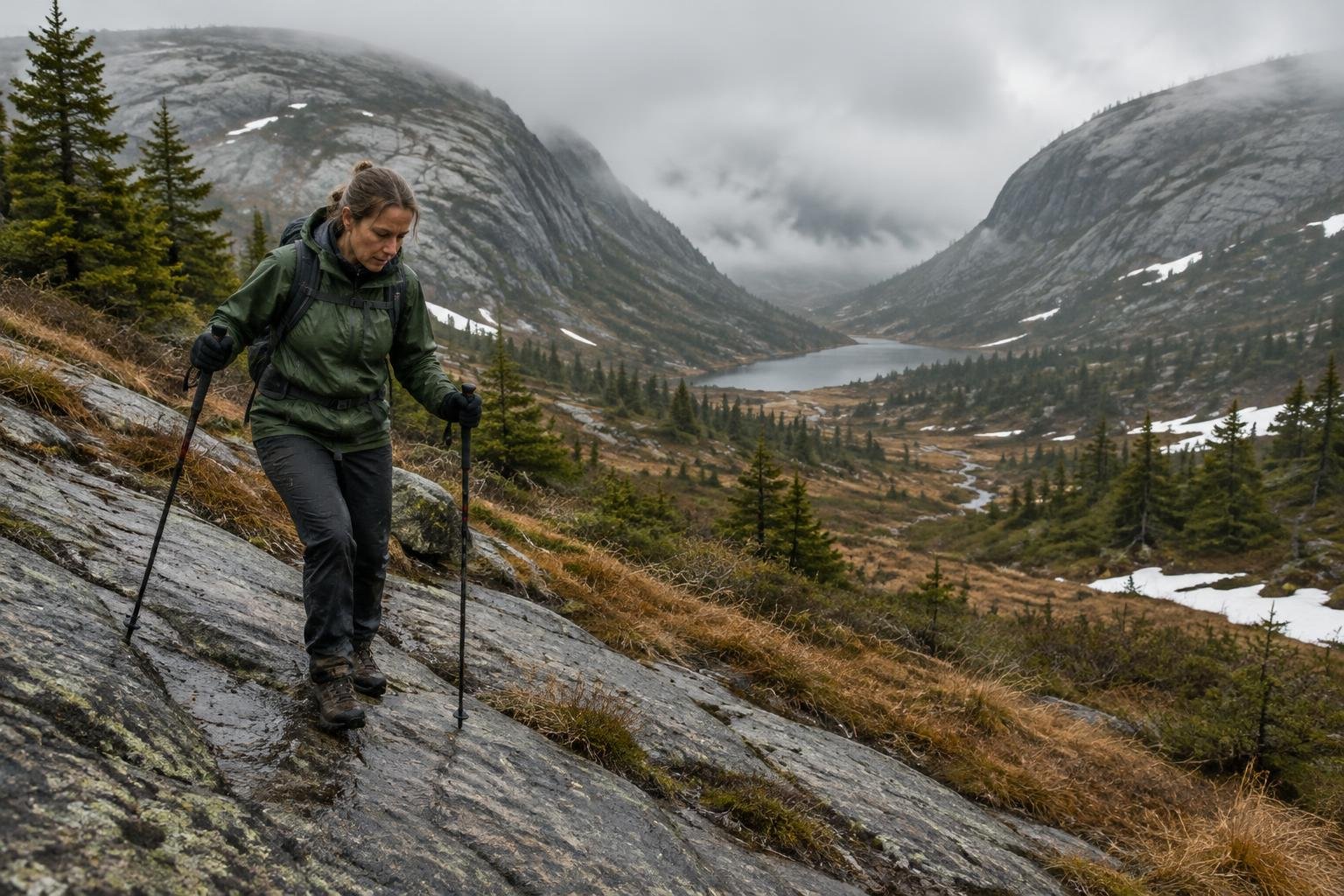
Official season guidance
Regional tourism & landowners: June to September, when the mountain road is open
No permit is needed. Reaching the boulder involves steep, chain-assisted climbs over bare rock; only step onto Kjeragbolten if you are sure-footed and the rock is dry — the drop beneath it is enormous.
Check current dates on visitnorway.com (Visit Norway, national tourist board)What to pack for the season
Packing should follow the season and the rain. Even in the warmest months, bring layers you can add or remove, and a waterproof shell, because averages show wet conditions year-round. Footwear with good grip matters on bare rock. Sun protection suits the long summer days. In shoulder months, carry a headlamp, since daylight shrinks quickly after June.
For layering, rain cover and weather planning, see hiking in rain, heat and cold.
Timing mistakes to avoid
A common mistake is treating the whole year as hikeable because the numbers look similar month to month. The official season guidance ties access to the mountain road being open, so check that first. Another is choosing late September for the longer-sounding summer feel while ignoring the heavier rain and shorter daylight. Wet rock is the key issue at the boulder, where the guidance asks for dry rock and sure footing. Finally, climate averages are regional and modelled, so they cannot confirm trail conditions on the day.
Common questions
When is the best month to hike Kjeragbolten?
The official season guidance gives June to September, when the mountain road is open. Within that window, June is typically the driest month at around 134 mm and has the longest daylight at about 18.1 hours, so it is a sensible starting point. Always confirm current conditions with the managing authority.
Can I hike Kjeragbolten outside June to September?
The season guidance is June to September and ties it to the mountain road being open. Outside those months, the route and access are not described by that guidance, and daylight shrinks sharply, to about 5.9 hours in December. Check with the managing authority before planning anything outside the season.
Does rainfall change much across the hiking season?
Yes. Modelled averages rise from about 134 mm in June to 166 mm in July, 181 mm in August and 203 mm in September. These are regional averages rather than trail measurements, but they suggest early summer is typically the drier part of the season. Wet rock affects the final section, so conditions matter.
How much daylight can I expect on the hike?
Daylight is longest in early summer, about 18.1 hours in June and 17.5 in July, and shortens to roughly 15.2 hours in August and 12.5 in September. Because this is a strenuous day hike, starting early matters more late in the season. Plan your timing around the daylight you will actually have.
Sources
- Regional tourism & landowners — visitnorway.com (Visit Norway, national tourist board): official season and permit guidance.
- NASA POWER (Prediction Of Worldwide Energy Resources): monthly temperature and rainfall averages, 2010–2023, from MERRA-2 reanalysis. Daylight hours are calculated from latitude.
Conditions, closures and permit rules change without notice — confirm current information with the managing authority before you go. See our editorial policy and affiliate disclosure.