
Trolltunga vs Kjerag: Which Should You Hike?
Choose Trolltunga if you want a long, committing mountain day (or an overnight) across a wide plateau and have the stamina for about 27 km round trip from the main trailhead. Choose Kjerag if you want a shorter day, about 11 km round trip, but with steep, chain-assisted rock and a strong head for heights.
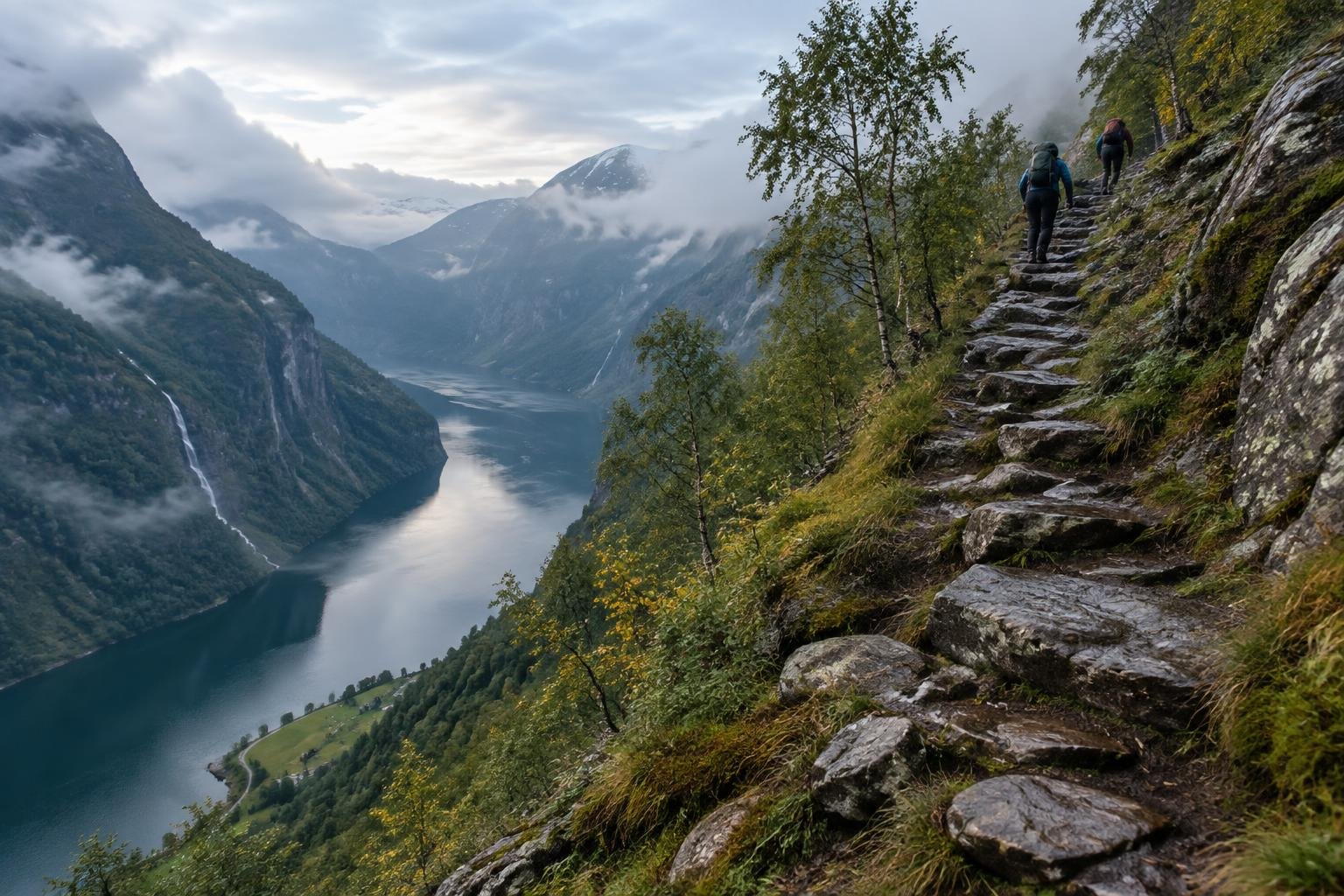
Trolltunga and Kjerag at a glance
Trolltunga is a long out-and-back from the Hardanger area to a rock ledge reached by a short drop off the main plateau route. Kjerag is an out-and-back from Øygardstøl above Lysefjord to a boulder wedged in a chasm. Both are famous Norwegian cliff-edge hikes, so people often weigh the two when planning a trip to the fjord country.
| Trolltunga | Kjerag | |
|---|---|---|
| Place | Hardanger · Norway | Lysefjord · Norway |
| Distance | 27 km (16.8 miles) round trip from the main P2 Skjeggedal trailhead (20 km / 12.4 mi round trip from the higher P3 Mågelitopp trailhead) | ~11 km (6.8 miles) round trip from the Øygardstøl trailhead |
| Elevation gain | ~800 m (2,625 ft) from the main Skjeggedal trailhead | ~800 m (2,625 ft) cumulative, via three steep ascents/descents |
| Difficulty | Very strenuous; usually a long day (commonly 8-12 hours), often split with an overnight stay | Strenuous / Demanding — steep sections are aided by fixed chains and wires |
| Route type | out-and-back | out-and-back |
| Official season | Mid-June to September; outside mid-summer conditions are harder and guiding is often advised | June to September, when the mountain road is open |
| Managed by | Regional tourism & landowners | Regional tourism & landowners |
Effort and difficulty
The numbers point in different directions. Trolltunga is 27 km (16.8 miles) round trip from the main Skjeggedal trailhead, or 20 km (12.4 miles) from the higher Mågelitopp trailhead, with about 800 m (2,625 ft) of gain from Skjeggedal. It is rated very strenuous and usually takes 8-12 hours. Kjerag is about 11 km (6.8 miles) round trip with about 800 m (2,625 ft) of cumulative gain over three steep ascents and descents. It is rated strenuous, with chains and wires on the steepest sections. Trolltunga is the bigger commitment in time and distance; Kjerag packs comparable climbing into fewer kilometers and leans on technical footing.
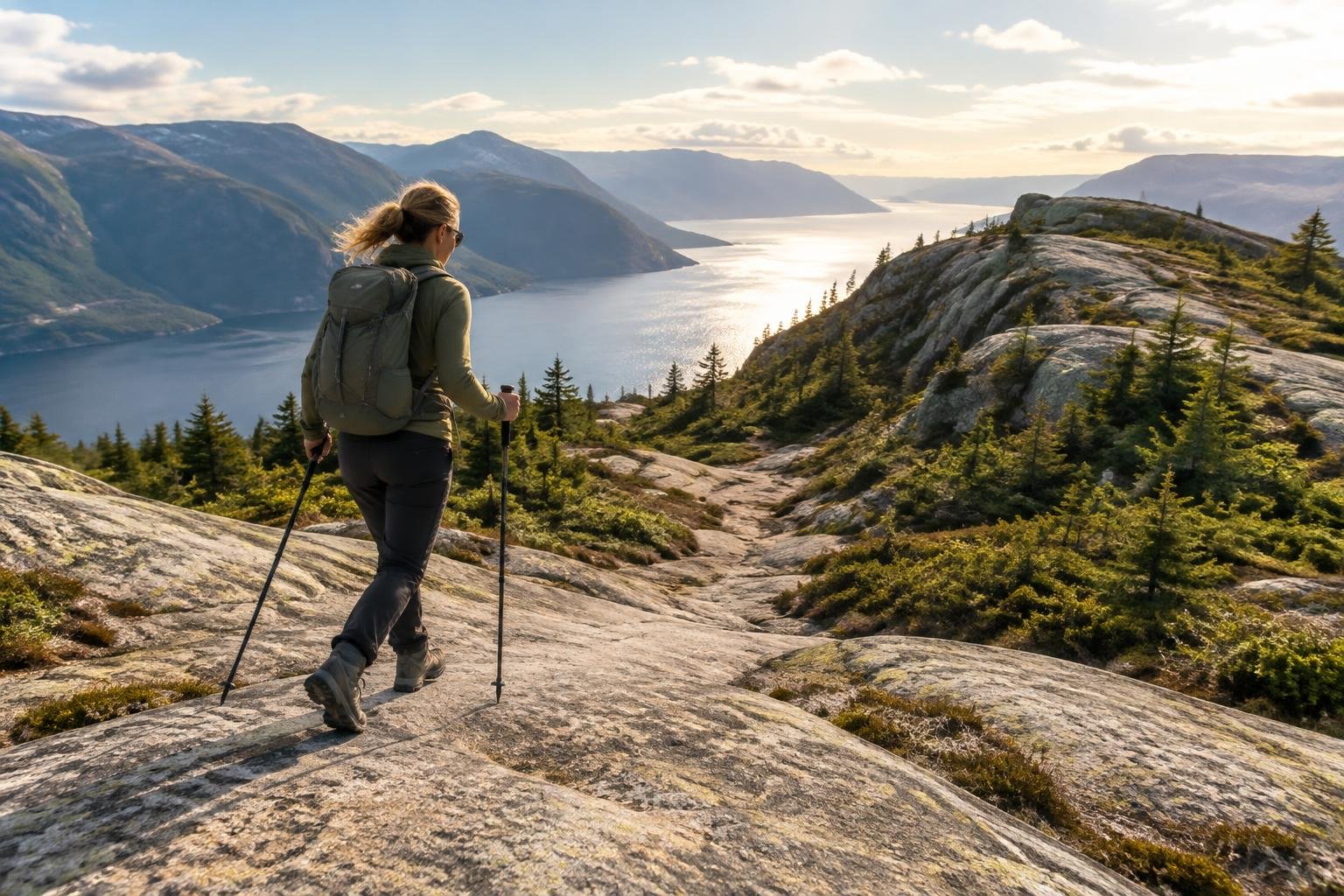
Season, permits and booking
Trolltunga's official best season is mid-June to September, and outside mid-summer conditions are harder, with guiding often advised. No permit is needed. Kjerag's season runs June to September, tied to the mountain road being open, and no permit is needed there either. Kjerag also depends on road and ferry access, which run on their own schedules. Rules, access and conditions change, so confirm current details with the regional tourism bodies and landowners for each route before you travel.
Which one is right for you?
Choose Trolltunga if…
Pick Trolltunga if you are comfortable with a very long day on foot, or want to split it into an overnight with camping gear on the plateau. It suits hikers who like rolling, open terrain, can navigate by cairns and painted markers, and will respect a firm turnaround time. Taking the transport to the higher trailhead is worth considering, since it skips the steepest opening climb.
How to hike TrolltungaChoose Kjerag if…
Pick Kjerag if you want a full-value day hike without a 27 km commitment and you are at ease on steep, bare granite using fixed chains. It suits sure-footed hikers who can manage exposure. Step onto the boulder only if the rock is dry and you feel secure, because the drop beneath it is enormous. Plan around the seasonal road and ferry timetable.
How to hike KjeragboltenWhat the two have in common
Both are out-and-back routes in Norway that end at a dramatic rock feature above a big drop. Both cross open, rocky terrain marked by cairns and painted markers rather than a worn tread, and both include boggy ground. Neither requires a permit. Each has a return leg that takes real effort, so neither should be treated as a downhill stroll back. Both sit in a June-to-September window.
How your choice changes what you pack
Trolltunga's length and exposure on the plateau favor a bigger pack with full layers, plenty of food and water, and, if you split the trip, shelter and stove capacity for a night out. Kjerag favors a lighter day pack but footwear with solid grip on smooth rock and gloves or hands you trust for chain sections. In both cases, weather can change, so carry warm and waterproof layers.
Common questions
Which is harder, Trolltunga or Kjerag?
Trolltunga is rated very strenuous and is far longer, at 27 km round trip from the main trailhead. Kjerag is rated strenuous or demanding with about 11 km round trip, but its steep, chain-assisted rock and exposure make it technically demanding. Which feels harder depends on whether endurance or exposure is your limit.
Which is better for first-timers?
Neither is a beginner walk. Kjerag is shorter, which suits hikers building experience, but it needs comfort with steep rock and chains. Trolltunga suits hikers with strong endurance, and using the higher trailhead shortens the day. Be honest about your fitness, and check conditions with the official sources.
Can I do either as a day hike?
Yes. Kjerag is described as a day hike out and back from Øygardstøl. Trolltunga can be done in a single long push, commonly 8-12 hours, though many hikers split it with a night on the plateau. Start early and set a firm turnaround time for either.
Do I need a permit for Trolltunga or Kjerag?
FACTS state that no permit is needed for either route. Trolltunga is still a very long, exposed mountain day, and Kjerag involves steep, chain-assisted climbing. Access and rules can change, so confirm current details with the regional tourism bodies and landowners before you go.
Sources
- Regional tourism & landowners — visitnorway.com (Visit Norway, national tourist board): official information for Trolltunga.
- Regional tourism & landowners — visitnorway.com (Visit Norway, national tourist board): official information for Kjerag.
Conditions, permits and access rules change without notice — confirm current information with each managing authority before you go. See our editorial policy.