
Best Time to Hike Gros Morne
The best time to hike Gros Morne is late June to September, according to the official season guidance from Parks Canada. Gros Morne Mountain reopens to hikers on June 28 after a May 1 closure that protects wildlife, so plan any summit attempt around that date.
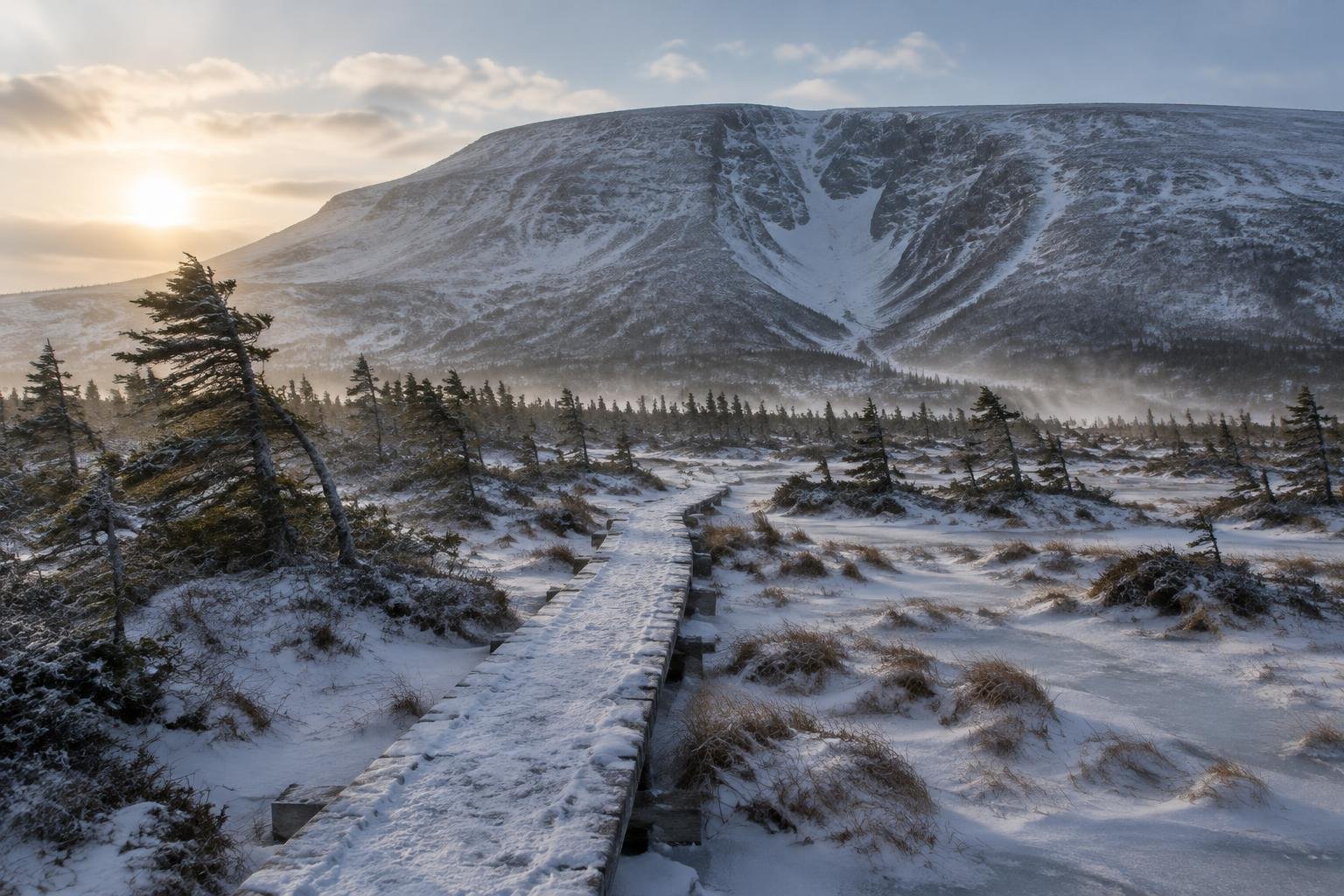
Month-by-month climate for Gros Morne
| Month | Relative warmth | Rain | Daylight |
|---|---|---|---|
| Jan | Coldest | 135 mm | 8.4 h |
| Feb | Coldest | 119 mm | 9.9 h |
| Mar | Coldest | 91 mm | 11.6 h |
| Apr | Cool | 91 mm | 13.5 h |
| May | Warm | 98 mm | 15.1 h |
| Jun | Warmest | 105 mm | 16.1 h |
| Jul | Warmest | 119 mm | 15.7 h |
| Aug | Warmest | 115 mm | 14.2 h |
| Sep | Warmest | 139 mm | 12.3 h |
| Oct | Warm | 132 mm | 10.5 h |
| Nov | Mild | 135 mm | 8.8 h |
| Dec | Coldest | 127 mm | 7.9 h |
Modelled regional averages for 2010–2023 (rainfall) and calculated daylight hours; they describe the wider area, not a reading taken on the trail. “Relative warmth” compares each month with the warmest and coldest months of this place’s own year. It is not a temperature, and the high parts of a route are colder than the region around them.
The modelled averages show a wet place all year. Rainfall typically runs from about 91 mm in March and April to 139 mm in September, with January and October through December also on the damp side. June is among the drier of the warm months at roughly 105 mm. Daylight swings widely, from about 7.9 hours in December to 16.1 hours in June. June through September are this place's warmest months relative to its own year, while January through March are the coldest. These are regional averages, not trail measurements.
Gros Morne season by season
Winter and early spring · December to April
These months are the coldest and darkest stretch of the year at Gros Morne. Daylight is only about 7.9 to 9.9 hours from December through February, then grows to roughly 13.5 hours by April. Rainfall typically stays between about 91 and 135 mm. The official season guidance does not point to this period for hiking, so check with Parks Canada about conditions and access before planning anything beyond short, low-level outings.
Late spring · May to mid-June
Days lengthen quickly, from about 15.1 hours of daylight in May to 16.1 in June, and May is already relatively warm for this place. Rainfall typically sits near 98 to 105 mm. The key constraint is that Gros Morne Mountain is closed to hikers from May 1 until June 28 to protect wildlife. Lower-elevation walks may still be possible, but confirm what is open with Parks Canada before you travel.
Peak summer · Late June to August
This is the core of the official season. Gros Morne Mountain has reopened from June 28, and June through August are the warmest months of the year here, with daylight of about 14.2 to 16.1 hours. Rainfall typically runs from roughly 105 to 119 mm, so wet weather is still possible even in the best window. The long days give you flexibility for the 17-km Gros Morne Mountain loop. Western Brook Pond's boat tour also fits this period.
Early autumn and late fall · September to November
September is still within the recommended season and remains among the warmest months, though it is typically the wettest at about 139 mm, and daylight is down to about 12.3 hours. By October and November conditions turn cooler and daylight shrinks to roughly 10.5 and 8.8 hours, with rainfall still around 132 to 135 mm. Late September is a good target if you want to finish before the days shorten, but check current conditions with Parks Canada.
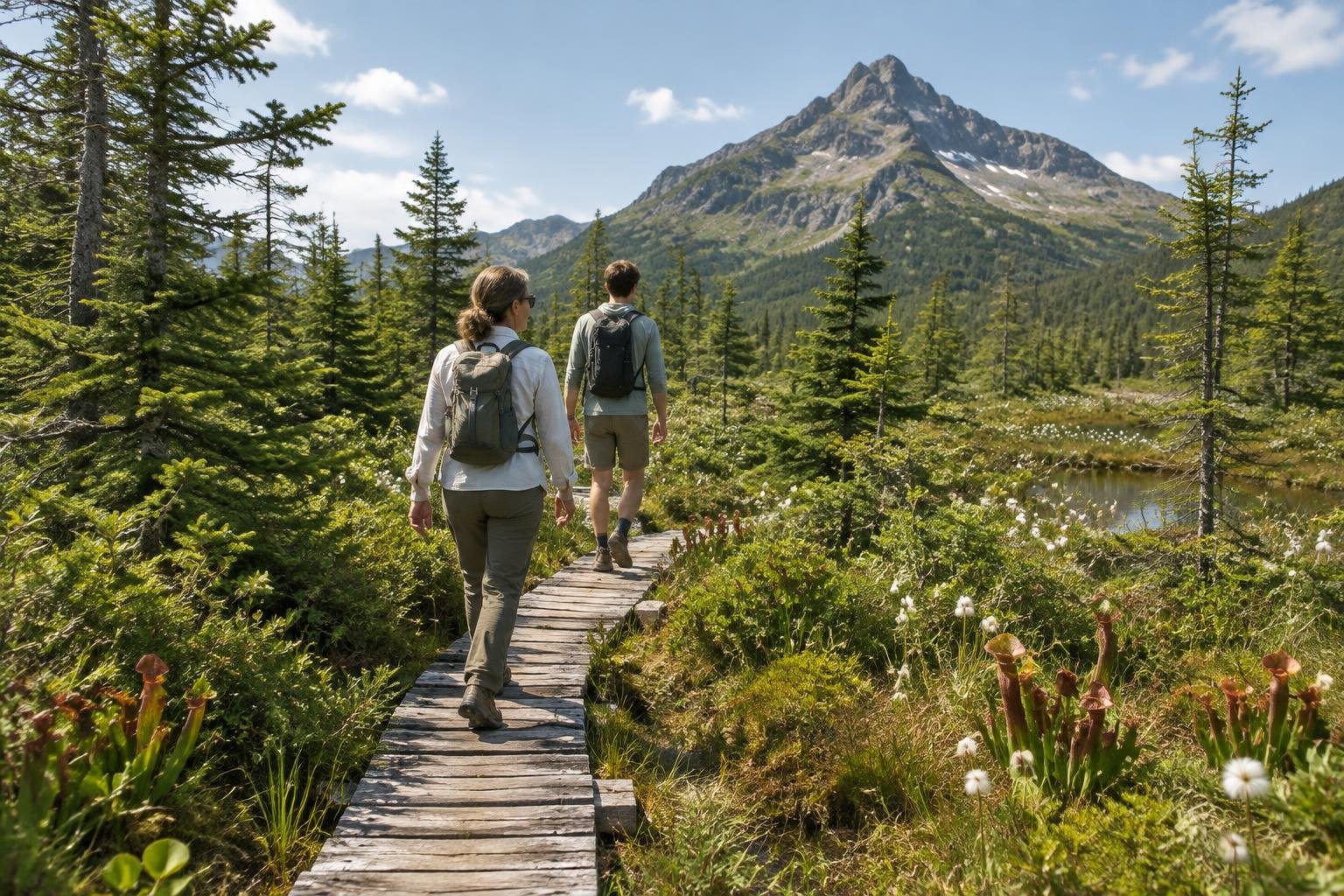
Official season guidance
Parks Canada: Late June to September; Gros Morne Mountain is closed to hikers from May 1 until June 28
No hiking permit is needed (a park entry pass is required). Gros Morne Mountain (a 17-km loop) is closed to hikers from May 1 and reopens on June 28 to protect wildlife; the famous Western Brook Pond gorge is reached by a boat tour across the pond.
Check current dates on parks.canada.caWhat to pack for the season
Because rainfall stays high in every month, pack a reliable waterproof shell and rain cover for your pack even in midsummer. Bring warm layers for cooler mornings and exposed ground. Sun protection is worthwhile on the long June and July days. In shoulder months, carry a headlamp, since daylight shortens quickly after September.
For layering, rain cover and weather planning, see hiking in rain, heat and cold.
Timing mistakes to avoid
The biggest mistake is planning a Gros Morne Mountain hike for May or early June, when the route is closed to hikers until June 28. Another is assuming summer means dry weather, since rainfall typically stays above 100 mm in most warm months. Hikers also sometimes ignore that Western Brook Pond is reached by boat tour, which has its own timing. Always check dates and access with Parks Canada rather than relying on a single month.

Common questions
When does Gros Morne Mountain open for hiking?
Gros Morne Mountain is closed to hikers from May 1 and reopens on June 28, a closure meant to protect wildlife. That makes late June the earliest sensible time to plan the 17-km loop. Confirm the exact opening and any other restrictions with Parks Canada before you go.
Is Gros Morne wet all year?
Based on modelled regional averages, rainfall typically stays between about 91 and 139 mm every month, so yes, wet weather is always possible. The driest months on average are March and April, but those are not in the official hiking season. Pack rain protection whenever you visit.
How much daylight do I get in summer?
Daylight is longest around June at roughly 16.1 hours and is still about 15.7 hours in July and 14.2 in August. By September it falls to about 12.3 hours. These calculated figures give you ample time for long day hikes in the core season.
Do I need a permit to hike in Gros Morne?
No hiking permit is needed, but a park entry pass is required. The Western Brook Pond gorge is reached by a boat tour across the pond, so check timing for that separately. For current rules and conditions, confirm with Parks Canada, the managing authority.
Sources
- Parks Canada — parks.canada.ca: official season and permit guidance.
- NASA POWER (Prediction Of Worldwide Energy Resources): monthly temperature and rainfall averages, 2010–2023, from MERRA-2 reanalysis. Daylight hours are calculated from latitude.
Conditions, closures and permit rules change without notice — confirm current information with the managing authority before you go. See our editorial policy and affiliate disclosure.