
Best Time to Hike Banff — Plain of Six Glaciers & Lake Louise
The best time to hike Banff's Plain of Six Glaciers and Lake Louise is June to September, according to the official season guidance. Higher trails can hold snow into early summer, so late June through early September is usually the most reliable stretch, with the longest daylight hours of the year.
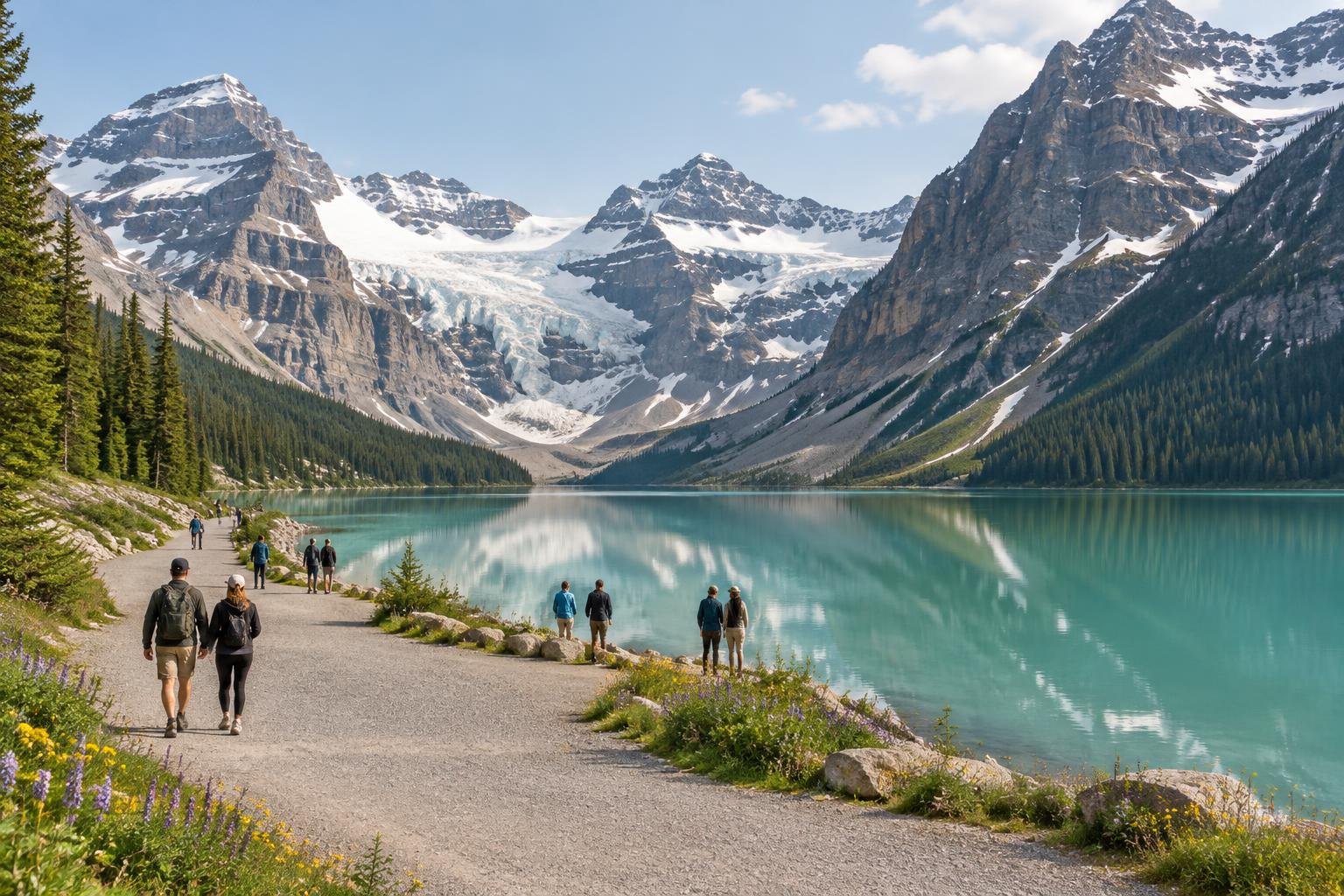
Month-by-month climate for Banff — Plain of Six Glaciers & Lake Louise
| Month | Relative warmth | Rain | Daylight |
|---|---|---|---|
| Jan | Coldest | 61 mm | 8.1 h |
| Feb | Coldest | 57 mm | 9.7 h |
| Mar | Coldest | 82 mm | 11.5 h |
| Apr | Cool | 70 mm | 13.6 h |
| May | Warm | 82 mm | 15.4 h |
| Jun | Warmest | 121 mm | 16.4 h |
| Jul | Warmest | 85 mm | 15.9 h |
| Aug | Warmest | 71 mm | 14.4 h |
| Sep | Warmest | 76 mm | 12.4 h |
| Oct | Mild | 75 mm | 10.4 h |
| Nov | Coldest | 89 mm | 8.6 h |
| Dec | Coldest | 67 mm | 7.6 h |
Modelled regional averages for 2010–2023 (rainfall) and calculated daylight hours; they describe the wider area, not a reading taken on the trail. “Relative warmth” compares each month with the warmest and coldest months of this place’s own year. It is not a temperature, and the high parts of a route are colder than the region around them.
The modelled averages show June as the wettest month at about 121 mm, while February is the driest at roughly 57 mm. Rainfall is otherwise fairly steady, mostly 60 to 90 mm a month, so no single month is dramatically wetter than the rest. Daylight swings widely, from about 7.6 hours in December to 16.4 hours in June. Relative to this place's own year, June through September are the warmest months, May is warm, April and October are cool to mild, and November through March are the coldest.
Banff — Plain of Six Glaciers & Lake Louise season by season
Early summer · June to July
June brings the longest days, about 16 hours of light, and the warmest conditions of the year, but it is also the wettest month on average at about 121 mm. The official guidance notes that snow lingers on higher trails into early summer, so expect the upper sections near the tea house to be the last to clear. July is typically drier at around 85 mm, with similar long daylight, which makes it a strong choice for reliable footing. Confirm current trail conditions with Parks Canada before you go.
Late summer · August to September
August and September stay in the warmest group of months, and rainfall typically eases to roughly 71 to 76 mm. Daylight shrinks from about 14.4 hours in August to 12.4 hours in September, so start earlier in the day as the season advances. These weeks sit inside the official June to September window and are often the most dependable for hiking the higher trails after the snow has had time to melt. Check Parks Canada for any bear-related trail restrictions.
Shoulder season · April to May and October
April is cool, May is warm, and October is mild, all in relative terms for this place's year. Rainfall runs about 70 to 82 mm a month. These months fall outside the official June to September window, and snow lingers on higher trails into early summer, so higher routes may not be in hiking condition in spring. Daylight ranges from about 10.4 hours in October to 15.4 hours in May. Treat these months with caution and check with the managing authority, Parks Canada, before planning.
Winter · November to March
November through March are the coldest months of the year here, with only about 7.6 to 11.5 hours of daylight and monthly rainfall between roughly 57 and 89 mm. February is the driest month on average, but that does not make these months suited to the summer hiking this page covers. They sit well outside the official June to September season. If you are considering a winter visit, rely on current guidance from Parks Canada about access, conditions and what is appropriate to attempt.
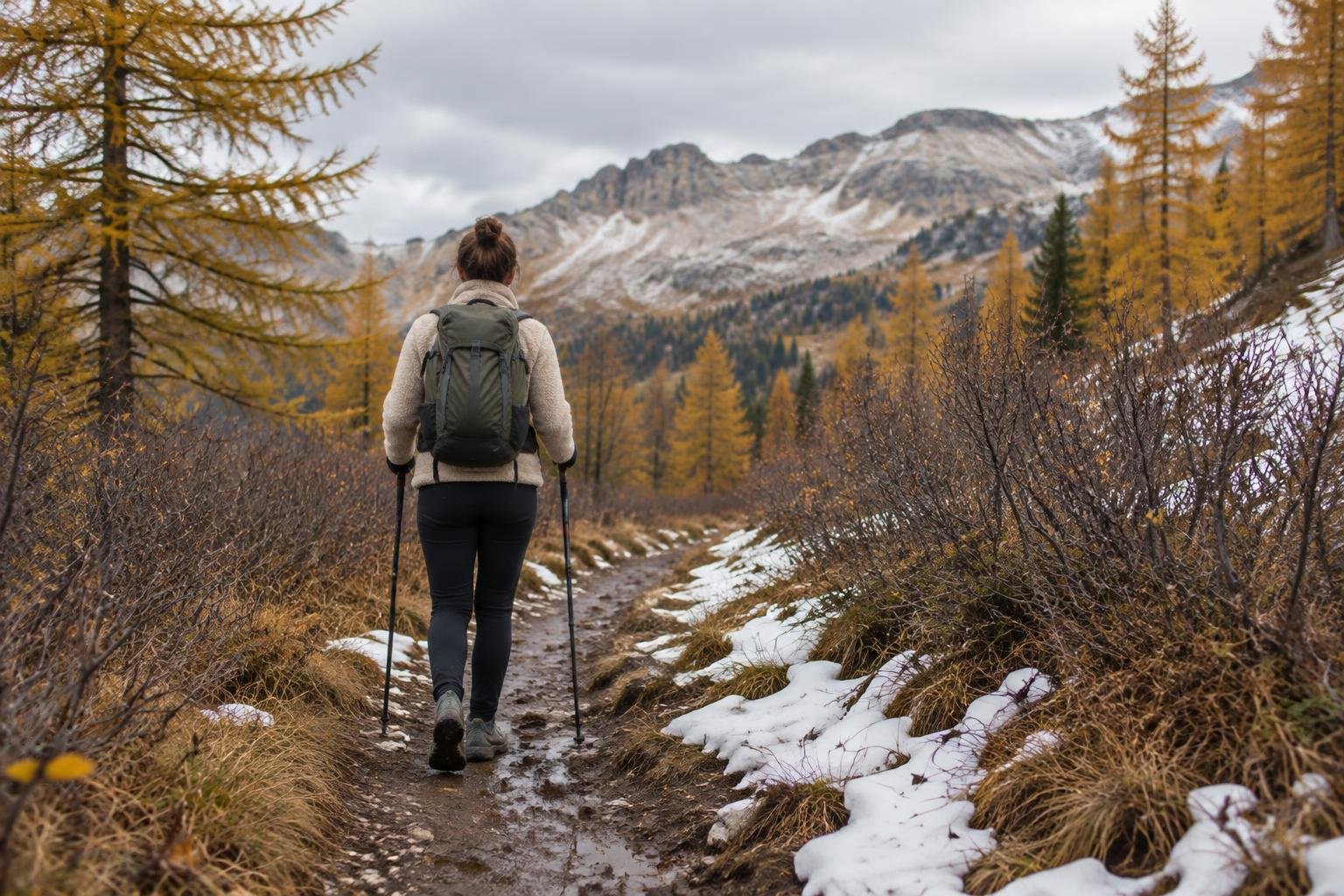
Official season guidance
Parks Canada: June to September; snow lingers on higher trails into early summer
No permit is needed for the day hikes, though a park entry pass is required to be in Banff. Access to Lake Louise and Moraine Lake is by Parks Canada transit or reservation rather than casual parking, so check Parks Canada before you go. This is bear country — carry bear spray, make noise, and check for trail restrictions.
Check current dates on parks.canada.caWhat to pack for the season
Because snow can linger early in the season and rain is possible in every month, pack in layers you can add or shed as you climb. Bring reliable rain cover, sun protection for long summer days, and sturdy footwear for variable ground. Daylight shortens quickly after August, so carry a headlamp if your day could run late.
For layering, rain cover and weather planning, see hiking in rain, heat and cold.
Timing mistakes to avoid
A common mistake is treating the whole June to September window as identical. Early in June, higher trails can still hold snow, while June is also the wettest month on average, so conditions near the tea house may differ from the lower lakeshore path. Another is assuming a long summer day means unlimited time; daylight drops from about 16 hours in June to about 12 hours by September. Finally, access to Lake Louise is by transit or reservation rather than casual parking, so plan your arrival time with Parks Canada's guidance.
Common questions
When is the best month to hike the Plain of Six Glaciers?
The official season guidance gives June to September. Within that, July through early September usually offers the warmest conditions and a lower chance of lingering snow on higher trails. June has the longest days but is typically the wettest month, so check current conditions with Parks Canada.
Will there still be snow on the trail in June?
It can be. The official guidance says snow lingers on higher trails into early summer, so upper sections may be the last to clear. Conditions change from year to year, so confirm the current state of the trail with Parks Canada before you set out rather than relying on averages.
How much daylight do I have for a summer day hike?
Daylight is generous in summer, averaging about 16.4 hours in June, 15.9 in July, 14.4 in August and 12.4 in September. The window narrows quickly as autumn approaches, so plan an earlier start in September and carry a headlamp in case your day runs longer than expected.
Is it worth going outside June to September?
The official season guidance is June to September, and snow can linger on higher trails early in summer. April, May and October are cooler or milder in relative terms, but conditions are less predictable. Check with Parks Canada about trail conditions and restrictions before planning a trip outside the main season.
Sources
- Parks Canada — parks.canada.ca: official season and permit guidance.
- NASA POWER (Prediction Of Worldwide Energy Resources): monthly temperature and rainfall averages, 2010–2023, from MERRA-2 reanalysis. Daylight hours are calculated from latitude.
Conditions, closures and permit rules change without notice — confirm current information with the managing authority before you go. See our editorial policy and affiliate disclosure.