




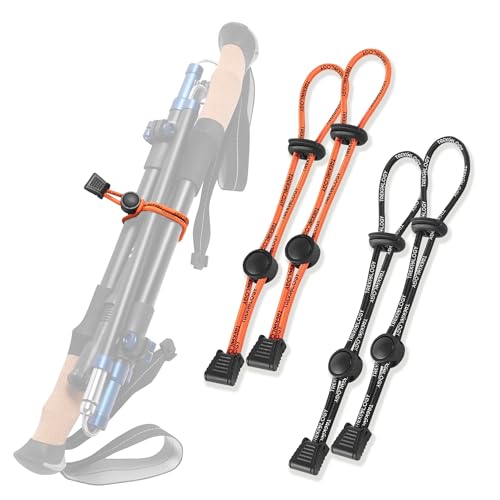

Compression straps are the paired webbing straps running across or along the sides of a hiking backpack that cinch the pack body inward, pulling a load closer to your back and shrinking unused volume when the pack isn't full. Tightening them evenly on both sides keeps a partially loaded pack from swaying as you walk.
How many compression straps does a pack have?
Most day hiking and backpacking packs carry two to four pairs of compression straps, positioned as a top row, a middle row, and sometimes a bottom row along each side. Smaller daypacks under 30 liters often get by with a single pair, since there's less pack volume to manage. Larger backpacking and mountaineering packs, built to carry loads that vary a lot trip to trip, more often use three rows so the top, middle, and bottom of the load can be cinched independently.
Each row typically attaches to a compression rail — a vertical strip of reinforced webbing sewn into the side panel — rather than to the loose fabric of the pack bag itself. Anchoring straps to a rail spreads the pulling force across a wider area of fabric and stops the strap from tearing through a single stitch point under repeated tightening. Two buckle styles show up on almost every pack:
- Ladder-lock buckles hold tension securely and release with a squeeze at the base; common on the main compression rows.
- Side-release buckles snap open with one press and are faster to undo one-handed; common where a strap needs to come off quickly, such as a pole-attachment point.
Why does tightening compression straps matter?
Cinching compression straps down matters because a loose, under-compressed pack shifts weight away from your spine every time you step onto uneven ground, working against the balance the frame and hipbelt are designed to provide. A pack loaded well under its rated capacity — say, a 60-liter pack carrying a 35-liter weekend load — has empty space that lets gear inside shift and settle unevenly with every stride. Compression straps close that gap by squeezing the pack body around the load rather than leaving it to the shoulder straps and hipbelt to fight a shifting center of mass.
The right amount of compression is firm enough that the pack doesn't flex or bulge when you press on the side panel, but not so tight that it distorts the frame sheet or pinches items like a hydration reservoir or a fuel canister sitting inside. Overtightening one side more than the other pulls the load off-center, which is a more common balance problem on the trail than an overloaded pack. For how a well-fitted hipbelt and load-lifter combination carries the bulk of that same weight, see load lifter straps.
Can compression straps hold gear on the outside?
Yes. Compression straps double as an improvised lashing point: sliding a rolled sleeping pad, tent poles, or a pair of trekking poles under a cinched strap holds them against the pack body without any dedicated hardware. This works best for light, low-bulk items, since the strap wasn't engineered as a load-bearing carry point the way a bottom strap or daisy chain is.
Using a compression strap this way does reduce how much it can still cinch the pack body itself, since part of its length is now wrapped around an external item rather than pulling fabric inward. On packs with three strap rows, hikers commonly reserve the bottom row for this kind of improvised external carry and leave the top and middle rows free to manage internal volume.
| Use case | Typical strap row | Trade-off |
|---|---|---|
| Compressing a partially loaded pack | Top and middle | None — primary function |
| Lashing a rolled pad or poles | Bottom row | Less compression available on that row |
| Securing a jacket on a short stretch | Any free row | Snag risk if left loose |