Backpacks by Activity Questions, Answered
15 researched, fact-checked answers to the questions hikers ask most about backpacks by activity.
Affiliate disclosure: this page contains affiliate links. Purchases made through them may earn us a commission at no extra cost to you. See our affiliate disclosure.
In plain English
The word activity covers everything from a two-hour walk to a week in the mountains to a flight overseas. The pack question is the same each time: what do you need to bring, and how heavy will it be? A short walk needs water, snacks, a jacket and a small safety kit. A trip where you sleep outside adds a tent, sleeping gear, a stove and more food.
Some activities change the list in big ways. Winter camping means warmer, puffier gear, which takes more room. Staying in mountain huts means someone else provides the bed and the meals, so the pack gets smaller. Flying means the pack must fit the airline's size box and leave behind things like stove fuel.
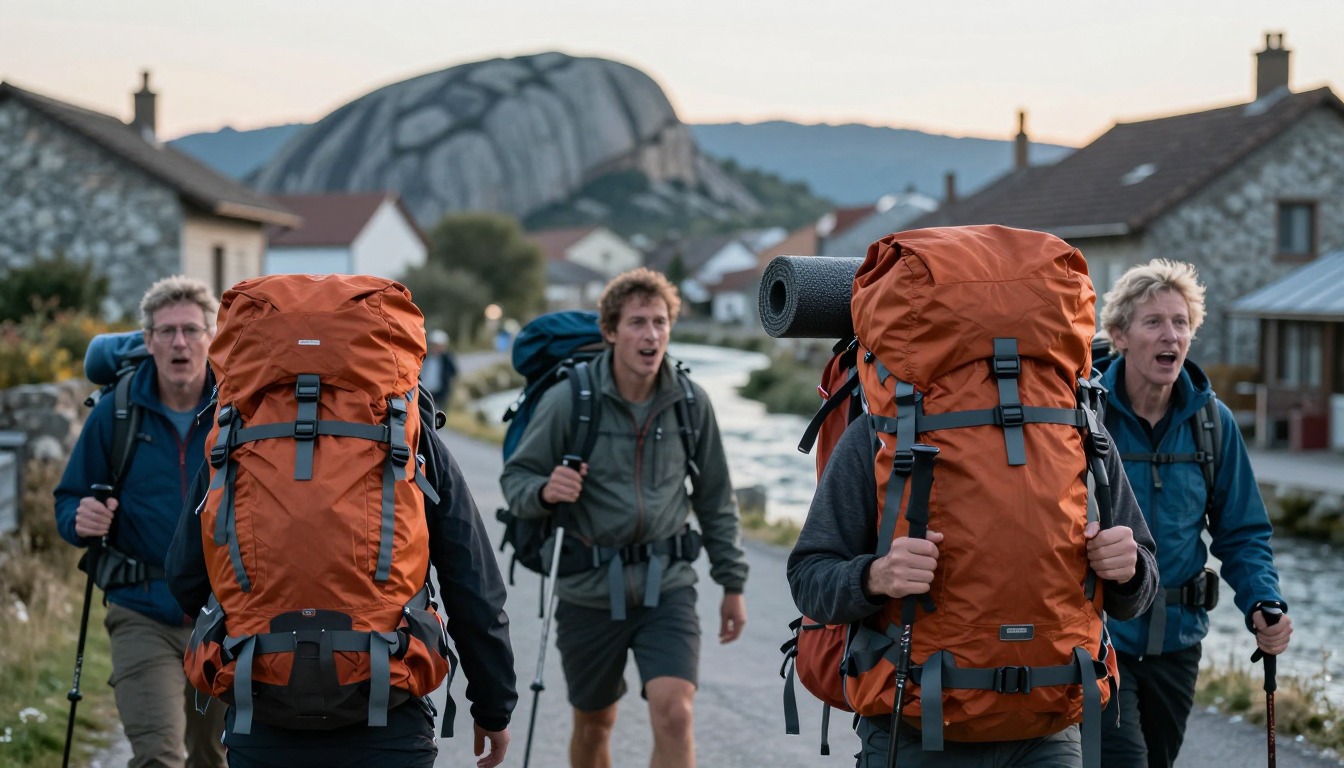
A hip belt is the padded strap that wraps around your hips. It lets your legs, which are strong, take weight off your shoulders, a bit like resting a heavy box on a table edge instead of holding it out with straight arms. The heavier the load, the more a hip belt helps.
How much weight a hip belt really moves
The day-hiking answer notes that makers cite figures up to about 80% for the share a hip belt carries. That figure is real, but it sits at the top of a wide range. The Washington Trails Association and Big Agnes both put it around 80%, and Alpkit says 60–80%.2,5,6 US Army doctrine, looking at soldiers carrying 31 to 90 lb with a frame and hip belt, puts it at about 30% on the hips and lower back and 70% on the shoulders.1 Different packs, loads and ways of measuring likely explain the gap, so treat 80% as a best case for a well-fitted framed pack, not a promise.
The direction of the advice is not in dispute. A lab study found the hip region tolerates pack pressure significantly better than the shoulders, and its authors recommend shifting load to the hips wherever possible.7 A military review adds that hip belts should be used whenever possible because they reduce shoulder pressure.8 The 10–15 lb threshold in the answer is a comfort guideline, not a measured cutoff.
Winter, avalanche and hut trips change the gear list
Winter packs are bigger because the gear is bulkier, and fuel is part of it. Isobutane boils at about 11°F at sea level, so it vaporizes poorly in the cold, and canister pressure falls as temperatures drop.9,10 That is one reason winter campers often switch to liquid-fuel stoves, whose bottles take their own space. Yellowstone advises testing stoves, filters and fuel in cold conditions before a trip, and keeping shelters well ventilated to prevent carbon monoxide buildup.11
Avalanche terrain adds gear you cannot skip. The Forest Service says everyone in the party should carry a transceiver, probe and shovel, and that the gear is useless if you travel alone.4 Hut trips go the other way: the Appalachian Mountain Club's White Mountain huts include dinner and breakfast in a full-service stay, which takes the stove and much of the food out of the pack.12
Flying with a hiking pack
The plane answer gives Delta's cabin size of 22 x 14 x 9 inches as an example. That size is confirmed for Delta, whose carry-on limit is 22 x 14 x 9 inches and 45 linear inches; other airlines set their own limits, so check yours.3 Delta also lets a small backpack count as the free personal item if it fits under the seat in front.3
What goes inside matters as much as size. TSA prohibits flammable cooking fuel in both carry-on and checked bags, allows camp stoves only when completely emptied and cleaned, and does not allow bear spray in either.13,14,15 Sharp-tipped hiking poles cannot go in carry-on bags.16
How long packs last, and what warranties cover
Some guides give a 5-to-10-year lifespan, which is an estimate; no published study backs a figure. What is documented is how brands handle wear. Osprey says it will repair or replace a bag for any damage, whenever it was made.17 Gregory covers defects for as long as you own the pack but excludes normal wear, and notes that foam padding compresses over time.18 Deuter gives two years plus a lifetime repair service where repair is possible.19 Sun is a quiet pack-killer too: Nikwax says UV exposure destroys water repellency and reduces fabric tear strength.20
Relevant Products