
How to Train for Camino Francés
To train for the Camino Francés, build an aerobic base with steady walking for about 4 to 8 weeks, add a weekly hill or stair session, then walk with a loaded pack, starting light and adding weight in small steps. Fit in strength work on at least 2 days a week, practice slow step-downs for the steep descent into Roncesvalles, and taper in the last 1 to 2 weeks.
General fitness guidance, not medical or personal training advice. If you have a health concern, an injury, or you're returning to exercise after a long break, check with a doctor first.
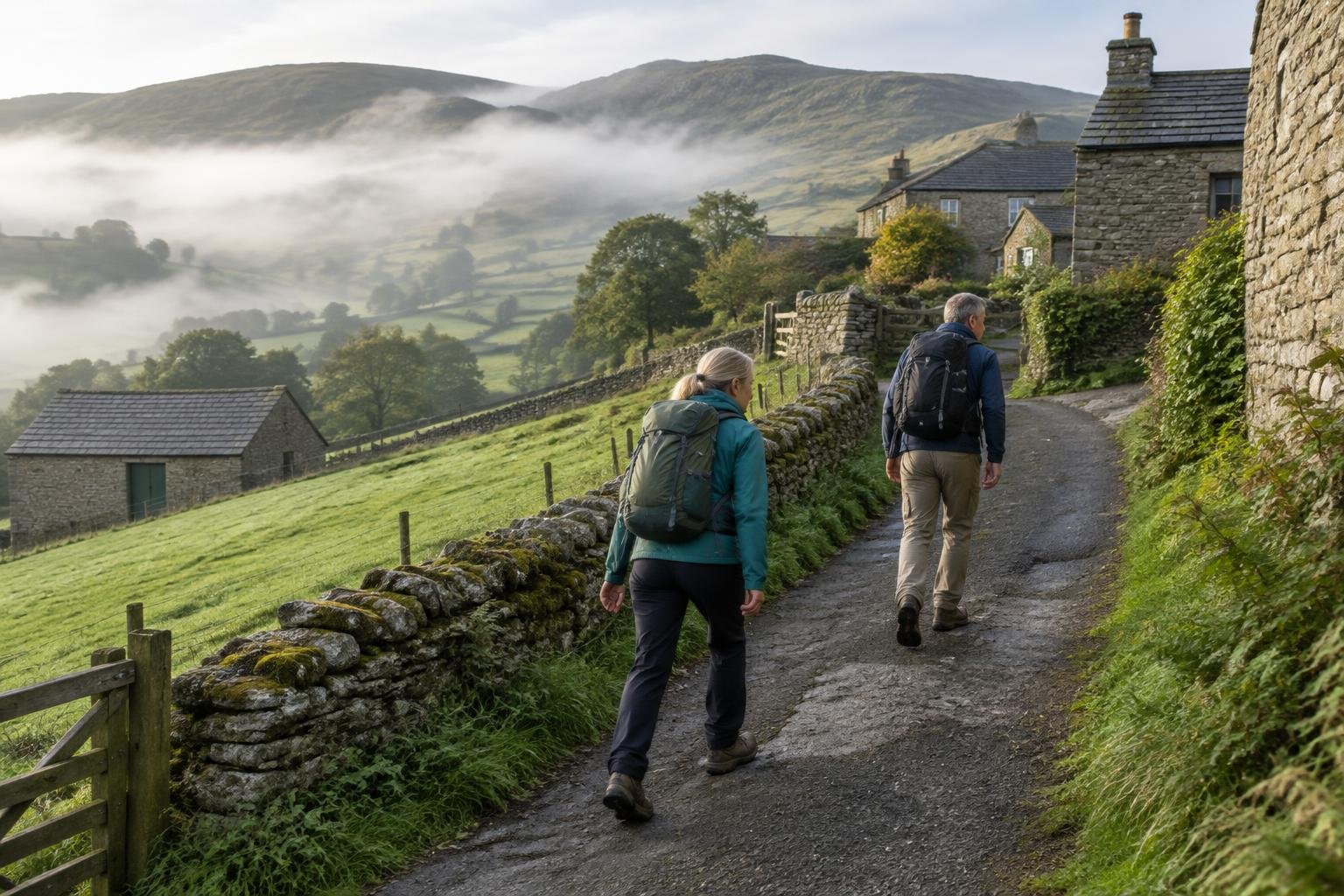
What the Camino Francés asks of your body
The Pyrenees start is a point-to-point day of roughly 24 to 25 km from Saint-Jean-Pied-de-Port to Roncesvalles, with about 1,300 to 1,400 m of ascent and about 650 m of descent, cresting the Col de Lepoeder at 1,450 to 1,480 m. It is rated strenuous and widely cited as one of the hardest single days on the Camino Francés. The climb begins within minutes of town and barely relents, first on a steep paved lane, then on grass and gravel in open pasture with little shelter. The late descent through beech woodland is steep on roots and loose stone, which tests your legs after a long climb. Pace and fuel for a full day, not a short burst.
Start with a weekly base
Start from the CDC adult guidance: 150 minutes of moderate-intensity activity a week, or 75 minutes of vigorous activity, or an equivalent mix. It does not need to happen all at once, so you can split it across the week. For a trip that opens with a long climb, treat that as your starting floor, not your target. Brisk walking counts, and it is the most specific training you can do. Once that weekly habit is steady, the hill sessions and loaded walks below build on it, and the base keeps the first day from being a shock.
The training plan, phase by phase
Aerobic base · Weeks 1 to 4
Walk regularly to reach the CDC weekly baseline: 150 minutes of moderate activity, or 75 minutes of vigorous activity, or a mix, split across the week however suits you. Keep most sessions comfortable and conversational. The aim is consistency, not heroics. Aerobic base-building is usually given about 4 to 8 weeks, so use these first weeks to make walking a routine you can keep up while the rest of the plan layers on top.
Hills and stairs · Weeks 5 to 8
Keep the base walks and add one hill or stair session each week. The route climbs steadily from the first minutes, so practice sustained uphill effort rather than short bursts. Find the longest, steepest hill you can reach and repeat it at a pace you can hold. Add slow, controlled step-downs, because stairs replicate downhill poorly and the descent into Roncesvalles is steep.
Loaded pack walks · Weeks 9 to 12
Begin carrying a pack on your longer walks. Many people start around 10 pounds and add weight in small steps. A commonly quoted ceiling is about 20% of body weight, so avoid overloading. Keep your hill session going, now with the pack when it feels comfortable. A multi-day trip with a full pack is commonly given roughly 8 to 12 weeks of preparation, so these weeks are where you rehearse the real thing.
Taper · Final 1 to 2 weeks
Ease back in the last 1 to 2 weeks so you arrive fresh instead of tired. Keep walking, but shorten the sessions and drop the heaviest loads. A couple of weeks out, you should already have done your rehearsal of two loaded walks on consecutive days. Use the taper to sort out boots, pack fit and the plan for the first day, including whether to split the climb.
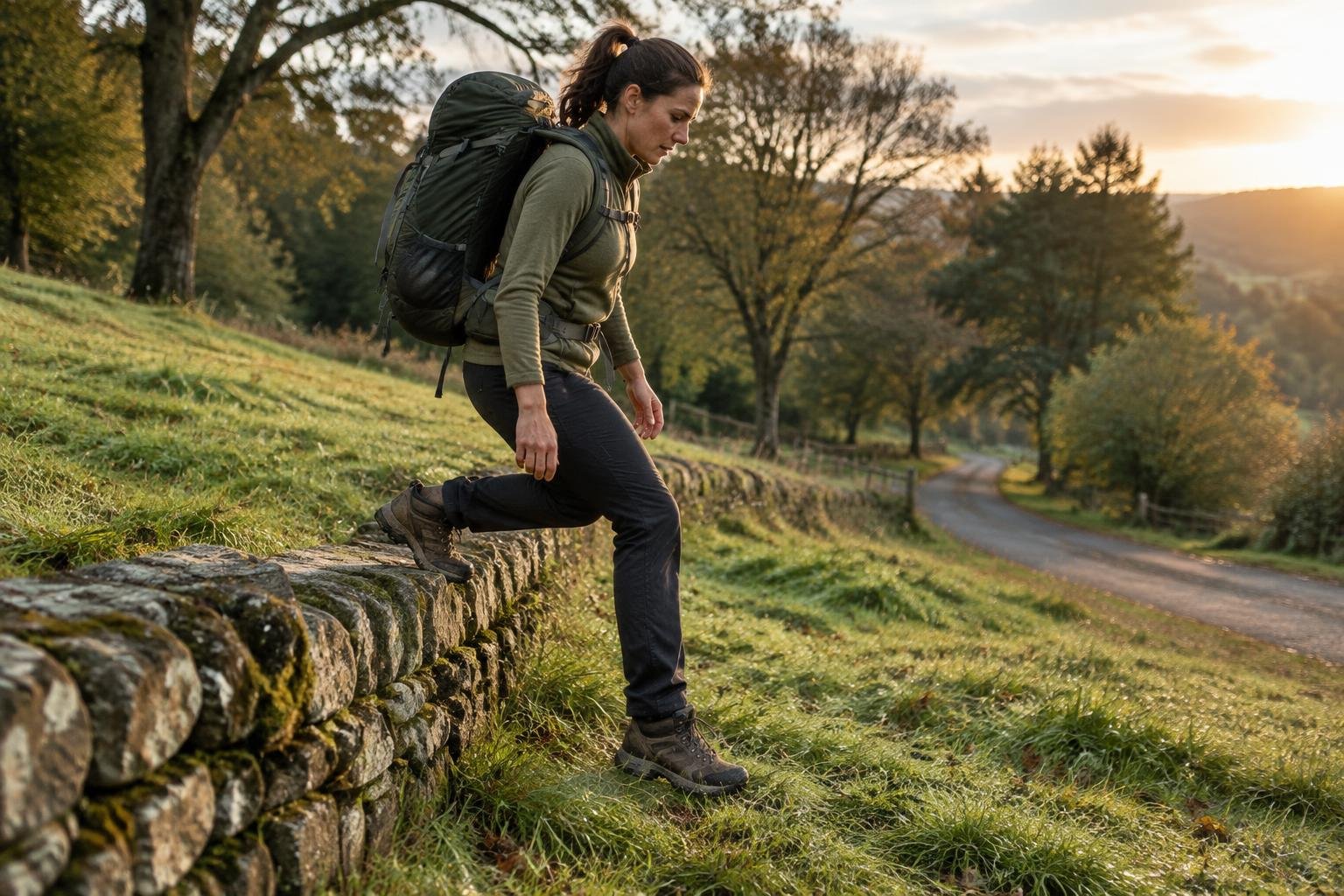
Strength work that helps on the trail
The CDC recommends muscle-strengthening activity on at least 2 days each week, working all major muscle groups. For this route, put the emphasis on legs, hips and core, which carry you up the long climb and hold you steady on the loose, rooty descent. Add slow step-downs, since stairs replicate downhill poorly. Descending loads the quads and causes delayed soreness, so train that braking action deliberately instead of leaving the first real test of it to the mountain.
Pack walks and back-to-back days
Start light, many people around 10 pounds, and add weight in small steps, keeping the load below the commonly quoted ceiling of about 20% of body weight. Because this is a single long point-to-point day, make your longest loaded walks resemble it: sustained climbing, then a steep descent. A couple of weeks before you go, rehearse with two loaded walks on consecutive days. That shows how your feet, shoulders and hips respond when you start the second day already tired, which is what a long Camino is like.
Terrain and descents
This route's challenge is terrain and descent. The ascent is long and steady, first on a steep paved lane, then on grass and gravel in open pasture with little shelter from wind and cloud. The descent beyond the border high point drops sharply through beech woodland on roots and loose stone, and many pilgrims take the gentler forestry-track alternative instead. Downhill loads the quads and causes delayed soreness, so practice slow step-downs and hill descents with a pack. Waymarking is sparse, so pair fitness with route-finding care in poor visibility.
Training mistakes to avoid
The most common mistake is never walking with a loaded pack until the trip itself. Another is training only on flat ground and ignoring the descent, which the ledger flags as a separate demand because stairs replicate downhill poorly. Starting too late also compresses the 8 to 12 weeks a multi-day trip with a full pack usually needs. Skipping the taper, overloading the pack past about 20% of body weight, and treating the first day as a warm-up are further errors, since this stage is rated strenuous.
Common questions
How long should I train for the Camino Francés?
For a multi-day trip with a full pack, allow roughly 8 to 12 weeks. Spend about 4 to 8 weeks on an aerobic base, then add hills and loaded pack walks, and taper in the last 1 to 2 weeks. If you are already active, you may need less.
Do I need to train differently for the Pyrenees day?
Yes, emphasize sustained climbing and controlled descending. The stage is about 24 to 25 km with roughly 1,300 to 1,400 m of ascent and a steep descent. Add a weekly hill or stair session, plus slow step-downs to prepare your quads.
How heavy should my training pack be?
Start light, many people begin around 10 pounds, and add weight in small steps. A commonly quoted ceiling is about 20% of body weight. Build up gradually rather than jumping to a full load.
Is strength training necessary?
The CDC recommends muscle-strengthening activity on at least 2 days a week, working all major muscle groups. For this route, focus on legs, hips and core, and include slow step-downs for the descent. If you have health concerns, ask a doctor first.
Sources
- Centers for Disease Control and Prevention — Physical Activity Guidelines for Adults: weekly aerobic and muscle-strengthening targets.
- Regional authorities & pilgrim associations — oficinadelperegrino.com: official route information.
- Training and fitness for hiking (this site): the general training progression this plan builds on.
See our editorial policy and affiliate disclosure.