
Best Time to Hike Rocky Mountain NP — Sky Pond & Emerald Lake
The best time to hike Rocky Mountain NP's Sky Pond and Emerald Lake is June to September, once the snow clears on the high routes. The National Park Service notes autumn can also be good, but conditions change quickly. Summer needs a timed-entry reservation for the Bear Lake Road corridor.
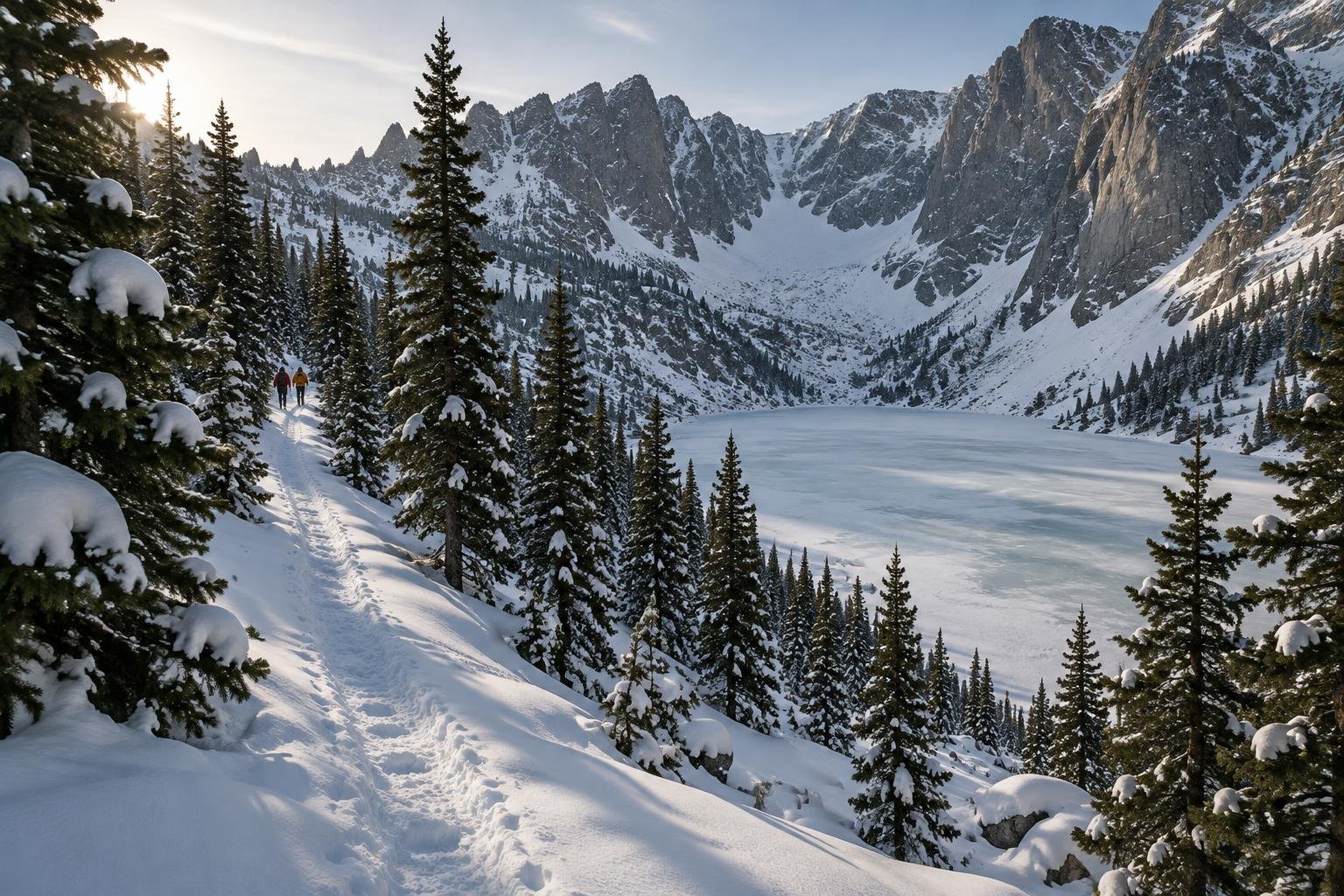
Month-by-month climate for Rocky Mountain NP — Sky Pond & Emerald Lake
| Month | Relative warmth | Rain | Daylight |
|---|---|---|---|
| Jan | Coldest | 37 mm | 9.4 h |
| Feb | Coldest | 44 mm | 10.5 h |
| Mar | Cool | 49 mm | 11.7 h |
| Apr | Mild | 66 mm | 13.1 h |
| May | Warm | 77 mm | 14.2 h |
| Jun | Warmest | 40 mm | 14.9 h |
| Jul | Warmest | 56 mm | 14.6 h |
| Aug | Warmest | 39 mm | 13.6 h |
| Sep | Warmest | 39 mm | 12.3 h |
| Oct | Mild | 41 mm | 10.9 h |
| Nov | Cool | 37 mm | 9.7 h |
| Dec | Coldest | 42 mm | 9.1 h |
Modelled regional averages for 2010–2023 (rainfall) and calculated daylight hours; they describe the wider area, not a reading taken on the trail. “Relative warmth” compares each month with the warmest and coldest months of this place’s own year. It is not a temperature, and the high parts of a route are colder than the region around them.
The modelled averages show the wettest months as May (77 mm) and April (66 mm), with July (56 mm) the wettest of the summer window. June, August and September are among the drier months at roughly 39 to 40 mm. Daylight swings from about 9.1 hours in December to 14.9 hours in June. Relative to this place's own year, June through September are the warmest months, while December through February are the coldest. These are regional averages, not trail measurements.
Rocky Mountain NP — Sky Pond & Emerald Lake season by season
Winter · December to February
These are the coldest months of this place's own year, and daylight is at its shortest, around 9 to 10.5 hours. Rainfall averages are modest at 37 to 44 mm, but the official season guidance points to June to September for the high routes once snow clears, so winter is not the standard window for Sky Pond and Emerald Lake. Short days leave little margin for a long out-and-back. If you consider going, check current conditions with the National Park Service before you commit.
Spring · March to May
Spring warms from cool in March to mild in April and warm in May, and daylight stretches from about 11.7 to 14.2 hours. This is also the wettest stretch of the year on average, with April at 66 mm and May at 77 mm. The official season guidance says the high routes are best once the snow clears, and that is typically not yet the case early in this window. Treat spring as a shoulder period where conditions can change quickly, and confirm trail status with the managing authority.
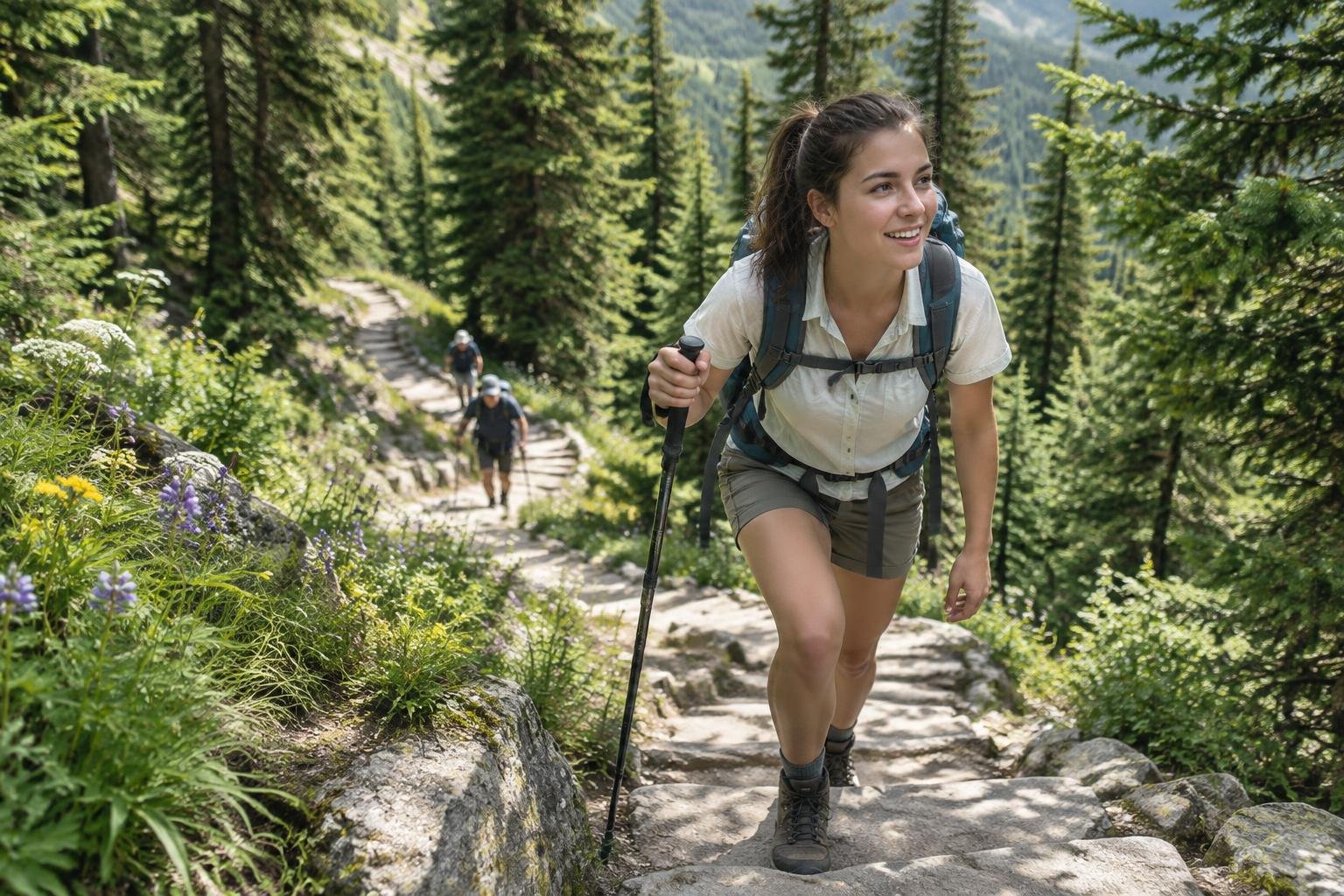
Summer · June to August
June through August are the warmest months of this place's own year and carry the longest days, up to about 14.9 hours in June. Rainfall typically averages 40 mm in June, 56 mm in July and 39 mm in August, so July tends to be the wettest of the three. This sits squarely inside the official June to September window for the high routes. Because the Bear Lake Road corridor needs a timed-entry reservation in summer, plan the date and entry slot before you pick a hiking day.
Early autumn and late autumn · September to November
September is still among the warmest months of this place's year and a drier one at about 39 mm, with daylight around 12.3 hours, and it falls within the official June to September window. October turns mild and November cool, with daylight dropping from 10.9 to 9.7 hours. The official guidance says autumn can also be good but that conditions change quickly, so treat later autumn with more caution than September. Check with the National Park Service for current conditions before heading up.
Official season guidance
U.S. National Park Service: June to September for the high routes once the snow clears (autumn can also be good, but conditions change quickly)
Sky Pond and Emerald Lake are day hikes and need no hiking permit, but the park requires a timed-entry reservation for the Bear Lake Road corridor in summer. Overnights need a separate wilderness permit.
Check current dates on nps.gov/romoWhat to pack for the season
Pack for the season you choose rather than the month alone. Bring layers you can add or shed, rain cover for the wetter months, and sun protection for long days above the trailhead. In shoulder months and late autumn, shorter daylight makes a headlamp a sensible backup even on a day hike.
For layering, rain cover and weather planning, see hiking in rain, heat and cold.
Timing mistakes to avoid
The most common mistake is picking a single month and assuming the route will be clear. The official season guidance ties good conditions on the high routes to the snow clearing, and the monthly averages cannot tell you when that happens in a given year. Another is overlooking the summer timed-entry reservation for the Bear Lake Road corridor, which affects when you can arrive. Finally, in autumn, short days and quickly changing conditions mean starting late can leave little margin.
Common questions
What is the best month to hike Sky Pond and Emerald Lake?
The official season guidance gives June to September for the high routes once the snow clears. Within that window, June, August and September are typically drier at around 39 to 40 mm, while July averages somewhat more at 56 mm. Confirm current trail conditions with the National Park Service before you go.
Is autumn a good time to hike here?
The managing authority notes autumn can also be good, but conditions change quickly. September is still among the warmest and drier months on average, while October is mild and November cool, with shorter daylight. Later in the season, check current conditions and allow for less daylight.
Do I need a permit or reservation in summer?
Sky Pond and Emerald Lake are day hikes and need no hiking permit, but the park requires a timed-entry reservation for the Bear Lake Road corridor in summer. Overnights need a separate wilderness permit. Check the National Park Service for the current requirements before choosing your date.
How much daylight will I have?
Daylight typically ranges from about 9.1 hours in December to 14.9 hours in June. In the June to September window it runs from roughly 12.3 to 14.9 hours. Shoulder months are noticeably shorter, so plan your start time around the daylight for your chosen month.
Sources
- U.S. National Park Service — nps.gov/romo: official season and permit guidance.
- NASA POWER (Prediction Of Worldwide Energy Resources): monthly temperature and rainfall averages, 2010–2023, from MERRA-2 reanalysis. Daylight hours are calculated from latitude.
Conditions, closures and permit rules change without notice — confirm current information with the managing authority before you go. See our editorial policy and affiliate disclosure.