
Best Time to Hike Appalachian Trail — McAfee Knob
The best time to hike Appalachian Trail — McAfee Knob is April to June and again from September to November, the windows the managing authorities point to. Spring and fall give mild to warm conditions and workable daylight, while confirming current rules before any overnight stay.
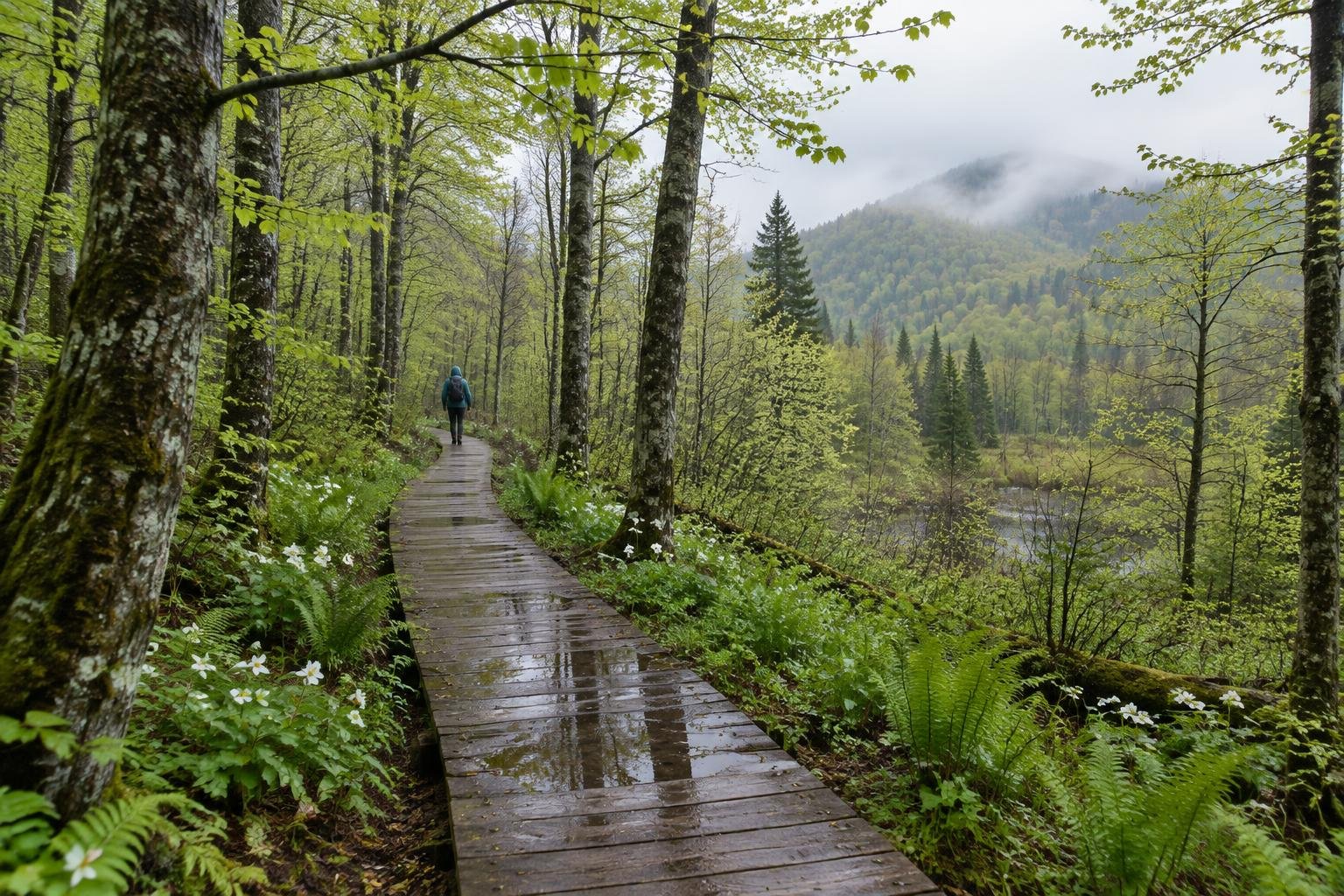
Month-by-month climate for Appalachian Trail — McAfee Knob
| Month | Relative warmth | Rain | Daylight |
|---|---|---|---|
| Jan | Coldest | 75 mm | 9.7 h |
| Feb | Coldest | 84 mm | 10.6 h |
| Mar | Cool | 82 mm | 11.7 h |
| Apr | Mild | 100 mm | 13 h |
| May | Warm | 111 mm | 14 h |
| Jun | Warmest | 97 mm | 14.6 h |
| Jul | Warmest | 102 mm | 14.3 h |
| Aug | Warmest | 91 mm | 13.4 h |
| Sep | Warmest | 98 mm | 12.2 h |
| Oct | Mild | 83 mm | 11 h |
| Nov | Cool | 68 mm | 9.9 h |
| Dec | Coldest | 83 mm | 9.4 h |
Modelled regional averages for 2010–2023 (rainfall) and calculated daylight hours; they describe the wider area, not a reading taken on the trail. “Relative warmth” compares each month with the warmest and coldest months of this place’s own year. It is not a temperature, and the high parts of a route are colder than the region around them.
Rainfall on this stretch of the Blue Ridge is fairly even through the year, typically between about 68 mm in November and 111 mm in May, so no month is truly dry. April to July sit at the wetter end, around 97 to 111 mm. Daylight swings from roughly 9.4 hours in December to 14.6 hours in June. Relative to this place's own year, January, February and December are the coldest months, June through September the warmest, and spring and late fall fall in between.
Appalachian Trail — McAfee Knob season by season
Spring · March to May
Spring is the start of the season the managing authorities recommend, with April and May running from mild to warm for this place. Rainfall climbs from about 82 mm in March to around 111 mm in May, so wet trail sections and showers are likely. Daylight grows from roughly 11.7 hours to 14 hours, which gives plenty of margin for a day hike to McAfee Knob. Pack rain cover and layers, since mornings can feel cooler than afternoons.
Summer · June to August
June through August are the warmest months of this place's year, with daylight peaking at about 14.6 hours in June. Rainfall typically stays around 91 to 102 mm a month, so afternoon wet weather is a realistic possibility. June falls inside the recommended April to June window, while July and August sit outside it, so check the managing authority's guidance. Start early, carry plenty of water, and plan for sun exposure on open sections.
Early fall · September to October
September and October fall inside the recommended September to November window. September is among the warmest months of the year here, while October cools to mild. Rainfall eases from about 98 mm to 83 mm, and daylight shortens from roughly 12.2 hours to 11 hours, so plan to finish well before dusk. These months suit anyone wanting a mild hike with less rain than late spring, though conditions still vary day to day.
Late fall and winter · November to February
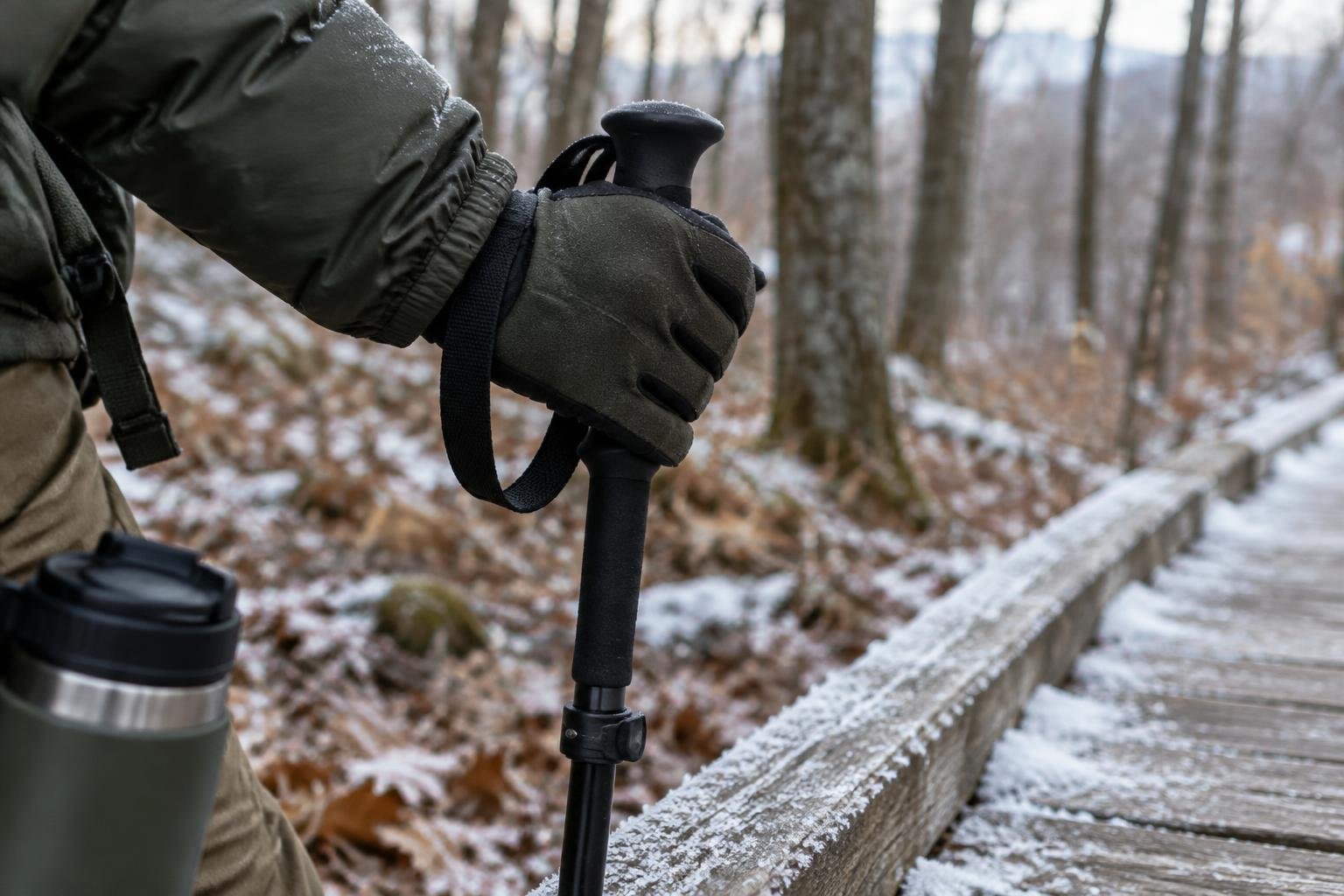
November is the last month of the recommended window, cool for this place with about 68 mm of rain, the lowest of the year. December through February are the coldest months of this place's year, with only about 9.4 to 10.6 hours of daylight. Short days make timing critical, and headlamps become essential if you start late. Winter is outside the official season guidance, so confirm current conditions and any rules with the managing authority first.
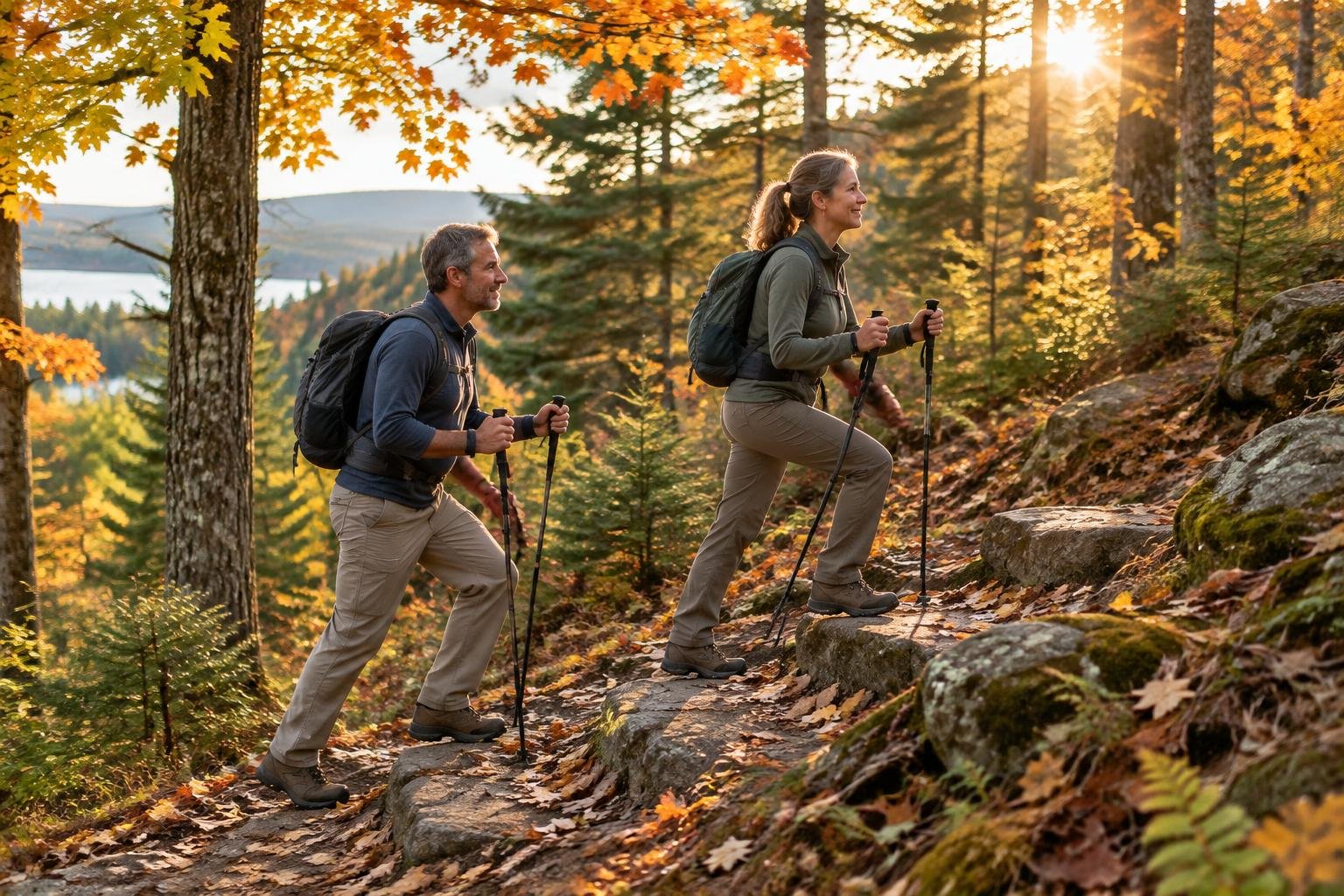
Official season guidance
Appalachian Trail Conservancy & NPS: April–June and September–November
No permit is generally needed for a day hike to McAfee Knob; for overnight stays, shelters and campfires check the current rules with the Appalachian Trail Conservancy and the land managers.
Check current dates on nps.gov/appa (Appalachian Trail Park Office)What to pack for the season
Pack for the season you choose. Spring and fall call for adjustable layers and reliable rain cover, since rainfall stays moderate throughout the year. Summer adds extra water and sun protection. Short late-fall and winter days make a headlamp and spare warmth sensible. Always carry a bag that handles wet weather.
For layering, rain cover and weather planning, see hiking in rain, heat and cold.
Timing mistakes to avoid
A common mistake is picking a single month and ignoring how little rainfall varies, then being surprised by wet trail in an otherwise pleasant window. Another is overlooking the short days from November to February, which shrink the time available for a day hike. Treating summer as inside the recommended window is also risky. For overnight stays, shelters or campfires, check current rules with the Appalachian Trail Conservancy and land managers before you go.
Common questions
When is the best time to hike McAfee Knob?
The managing authorities point to April to June and September to November. These windows combine mild to warm conditions with usable daylight, from roughly 11 to 14.6 hours. Conditions still change, so confirm current guidance with the Appalachian Trail Conservancy or NPS before you set out.
Is summer a good time to hike McAfee Knob?
June through September are the warmest months of this place's year, with up to about 14.6 hours of daylight. Rainfall typically stays around 91 to 102 mm a month. Only June falls inside the recommended window, so check the managing authority's guidance and start early.
How much daylight can I expect in winter?
Daylight falls to roughly 9.4 hours in December and about 9.7 hours in January, rising to 10.6 hours in February. That leaves a short window for a day hike, so start early, carry a headlamp, and allow extra margin before dark.
Does it rain a lot on this hike?
Rainfall is fairly steady all year, typically from about 68 mm in November up to roughly 111 mm in May. No month is truly dry, so rain cover is sensible in any season. These are modelled regional averages rather than readings taken on the trail itself.
Sources
- Appalachian Trail Conservancy & NPS — nps.gov/appa (Appalachian Trail Park Office): official season and permit guidance.
- NASA POWER (Prediction Of Worldwide Energy Resources): monthly temperature and rainfall averages, 2010–2023, from MERRA-2 reanalysis. Daylight hours are calculated from latitude.
Conditions, closures and permit rules change without notice — confirm current information with the managing authority before you go. See our editorial policy and affiliate disclosure.