
Affiliate disclosure: this page contains affiliate links. Purchases made through them may earn us a commission at no extra cost to you. See our affiliate disclosure.
In plain English
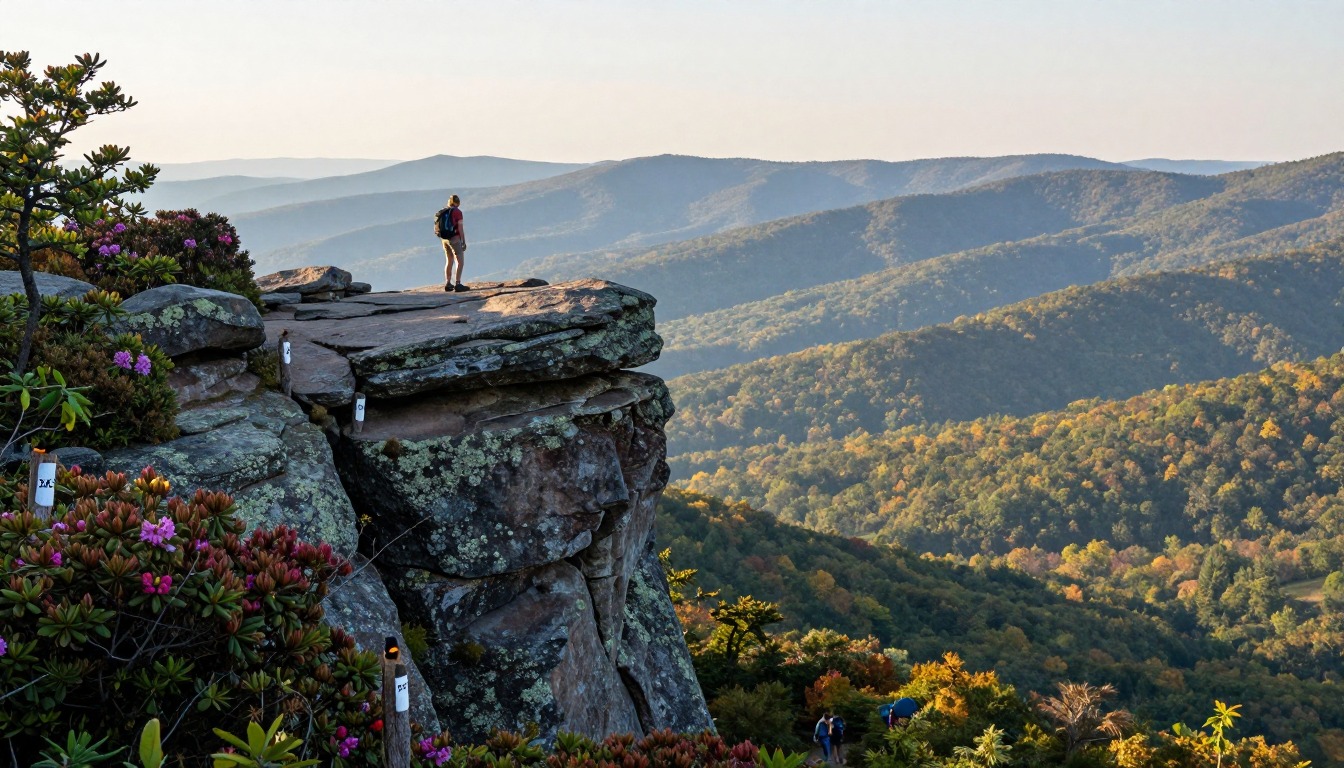
McAfee Knob is a big, flat shelf of rock sticking out over a valley in Virginia, and it sits on the Appalachian Trail, a footpath that runs all the way from Georgia to Maine.1 You walk up a steady hill through the woods for a few hours, sit on the rock, and walk back the same way. You do not need to climb with your hands.
Because it is famous, lots of people go, especially at sunrise and sunset. If you walk in the dark, you need a headlamp, a small light that straps to your head so both hands stay free.6 The walk back down in the dark always feels longer than the walk up.
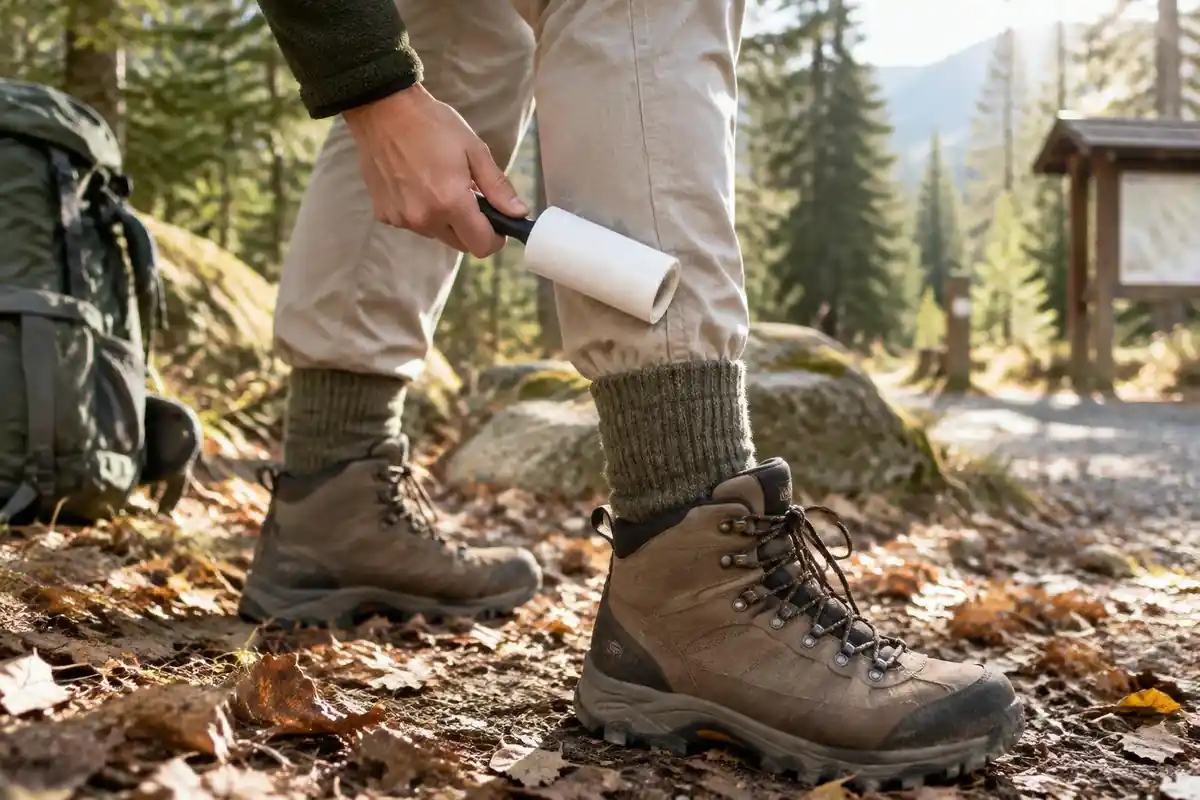
Ticks, tiny bugs that can carry illness, live in the grass and leaves here in warm months. Stay in the middle of the path and check your skin after the hike.4 A small daypack with water, snacks, a jacket and a light is all you need for a day visit.
What the hike is like
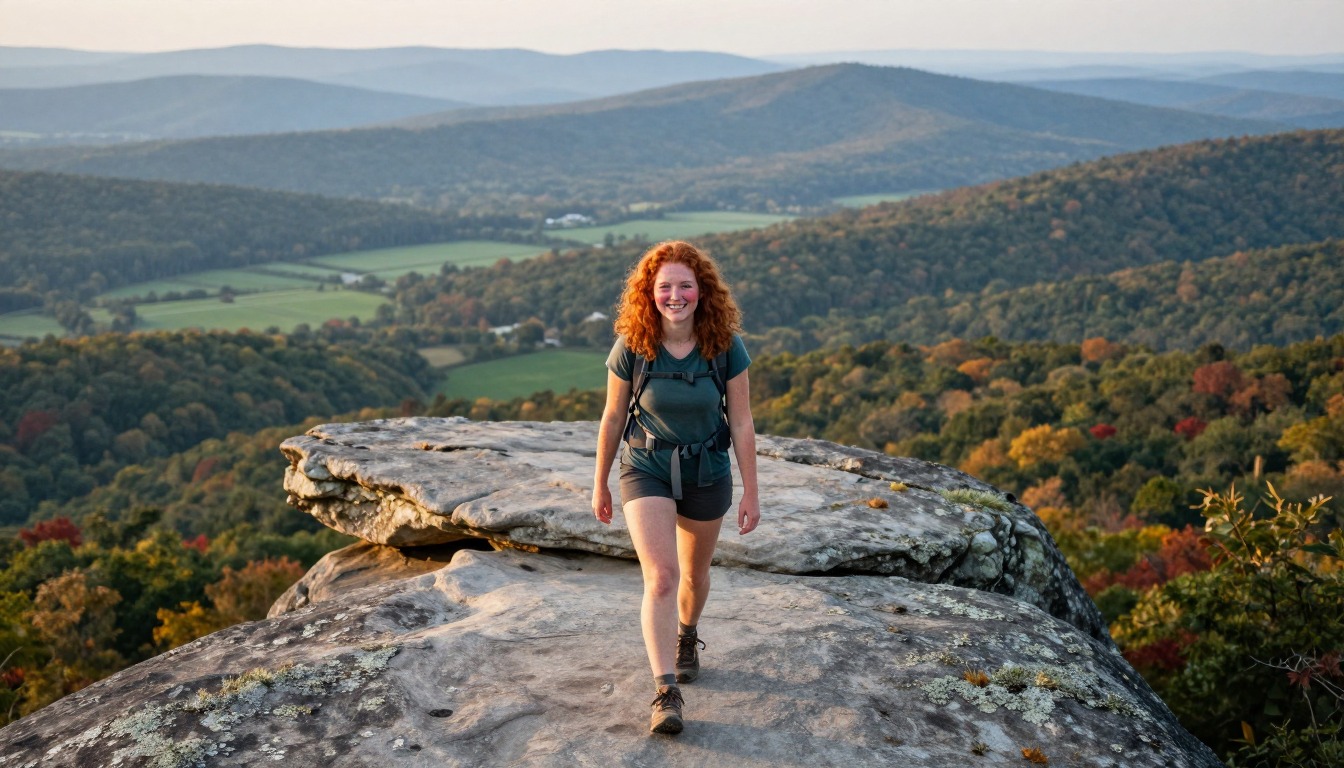
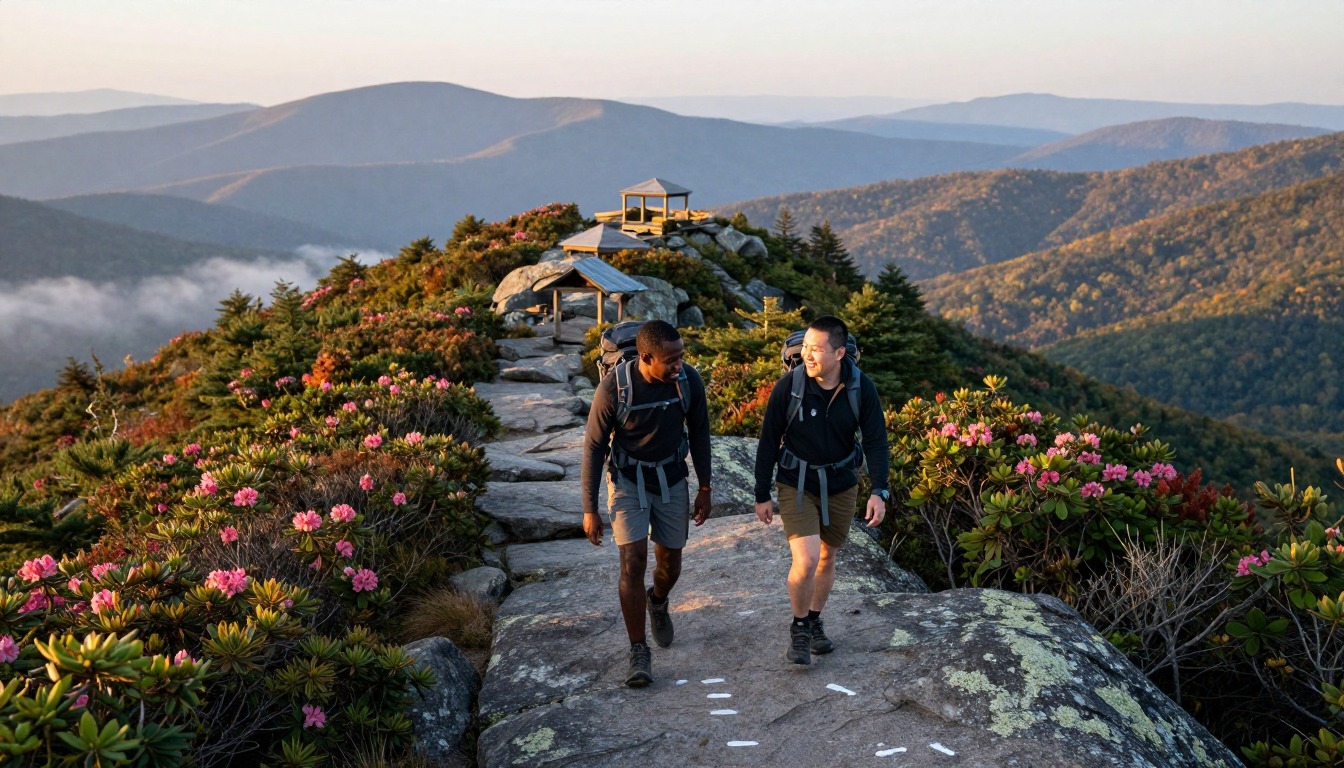
From the lot on VA-311 the route crosses the road and settles straight into classic Appalachian Trail rhythm: a steady, unspectacular grade on hard-packed tread, with stone steps and stretches of wooden boardwalk laid over ground that stays wet. It climbs through Blue Ridge hardwood forest, and the shelters along the way, Johns Spring and Catawba Mountain, serve as the natural waypoints. One section follows an old fire road and feels more like walking a lane than a mountain trail, which is a useful place to make up time. Near the top the grade eases and the trail rolls along the ridge through rhododendron and rock before the trees simply stop. The famous overhang is a broad, tilted shelf of rock with open air on one side and plenty of room behind it. Nothing on the route requires hands; the work is cumulative rather than technical.
How to plan the itinerary
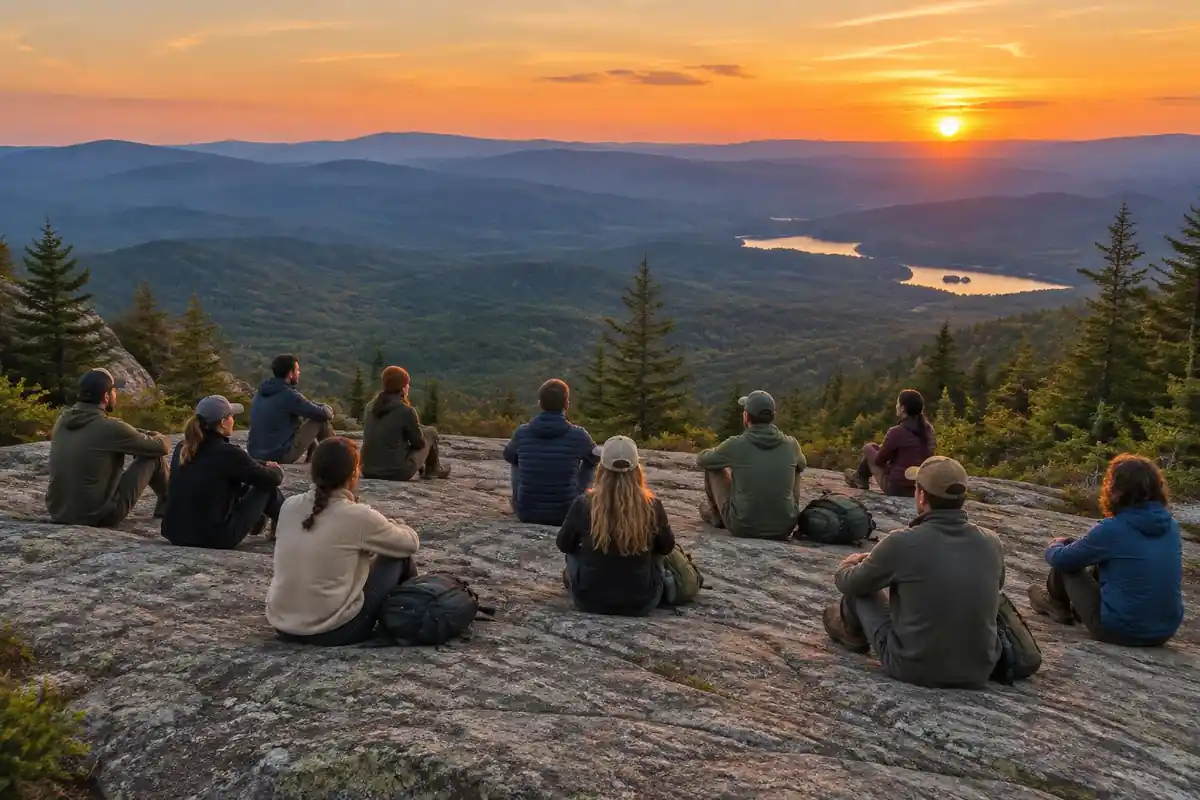
The overwhelming majority treat this as an out-and-back half day: up, sit on the rock a while, back down the same way. Starting early has less to do with the walking than with the parking lot, which is small and does not empty quickly once it fills. Hikers who want more usually continue north along the ridge to Tinker Cliffs and return, turning a half day into a long one, or string the full Triple Crown together with Dragon's Tooth over two or three days using the designated shelters between. Sunrise and sunset trips are a local tradition, which means walking one direction by headlamp and having the judgment to allow far more time for the descent in the dark than the map suggests. Based in Roanoke, the drive out is short enough to make a pre-dawn start genuinely practical.
Plan this trip in 5 steps
-
Pick the right pack
Match a pack to your trip, fit and priorities.
-
Book a place to stay
Campgrounds, huts and lodges near Appalachian Trail — McAfee Knob.
-
Plan food & water
Calories, food weight and water for your days on trail.
-
Estimate your time
Pre-filled with this trail’s distance and climb — adjust for your pace.
Trail-specific tips
The climb is steady rather than steep, so the classic mistake is going out hard on the easy opening grade and arriving at the ridge cooked with nothing left for the return. Carry all your water; do not plan around what you might find at the shelters. On the slab itself, the drop is real and unguarded, and the rock gets slick in mist or after rain, so keep well back from the lip and be patient about photos on a crowded weekend. For general trail safety and wet-weather judgment, see /trail-smarts/.
Permits & rules
No permit is generally needed for a day hike to McAfee Knob; for overnight stays, shelters and campfires check the current rules with the Appalachian Trail Conservancy and the land managers.
Gear suited to this hike
Matched to the terrain and conditions here. Real products — check current price on Amazon.



Why this stretch is so busy, and what that means on the ground
The Appalachian Trail Conservancy reports 16.9 million recreation visits to the A.T. in 2025 and describes volunteers as the heart and soul of the trail.1 Heavy use is why the page stresses the small parking lot, and it also explains the designated shelters and campsites: concentrating camping in a few places protects the rest of the ridge. If you stay overnight, the NPS Leave No Trace guidance is to dig catholes 6 to 8 inches deep at least 200 feet from water, camp and trails, and to pack out toilet paper.7
The ATC also reports that recovery from Hurricane Helene is ongoing, damage it calls the worst in the trail's history.1 McAfee Knob itself is a short out-and-back, but anyone linking longer sections should check the ATC's current trail status before committing to a route.
Sunrise and sunset: timing the light and the descent
NOAA's solar calculator gives sunrise and sunset for any location and date, though actual times can differ slightly because of atmospheric conditions.3 The National Weather Service defines civil twilight as the period until the sun is 6 degrees below the horizon; during it terrain is visible and artificial light is often not needed, but by nautical twilight detailed activity is curtailed without a light.8 For a sunset trip that means you have roughly the civil-twilight window before you need your headlamp on the descent.
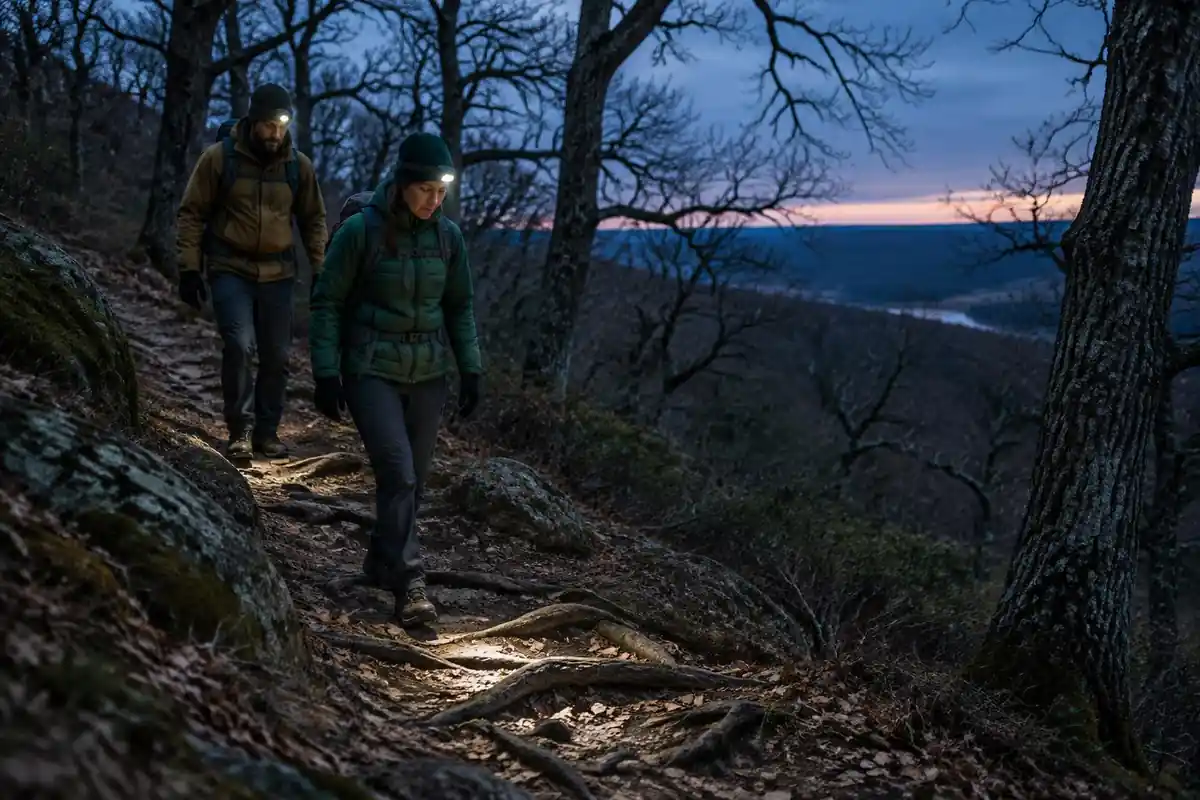
Naismith's rule gives about 3.8 hours of moving time for the page's 8.8 miles and roughly 1,800 feet of gain.9 Add rest time on the rock and a slower night descent. The NPS lists headlamps as the recommended light because they are hands-free, and advises telling someone where you are going and when you expect to be back.6
Ticks, water and the overnight Triple Crown pack
The CDC says ticks are most active April through September, recommends EPA-registered repellents, and notes clothing and gear can be treated with 0.5% permethrin.4 Showering within two hours of coming indoors has been shown to reduce Lyme disease risk, and early Lyme symptoms appear 3 to 30 days after a bite; see a doctor if a rash or fever follows.10
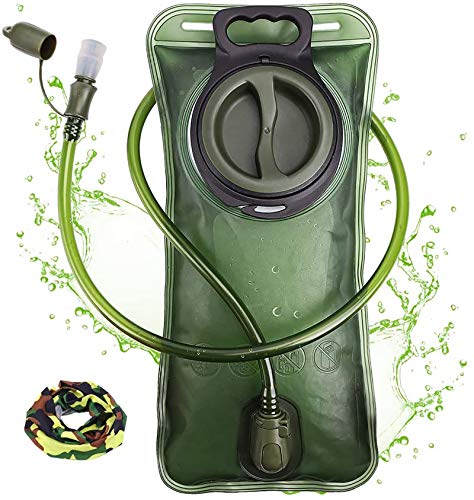
The page warns that shelter water sources are unreliable. If you do use one, the CDC says even a clear stream can carry germs, and most portable filters remove parasites but not viruses or bacteria, so check what your treatment method covers.11
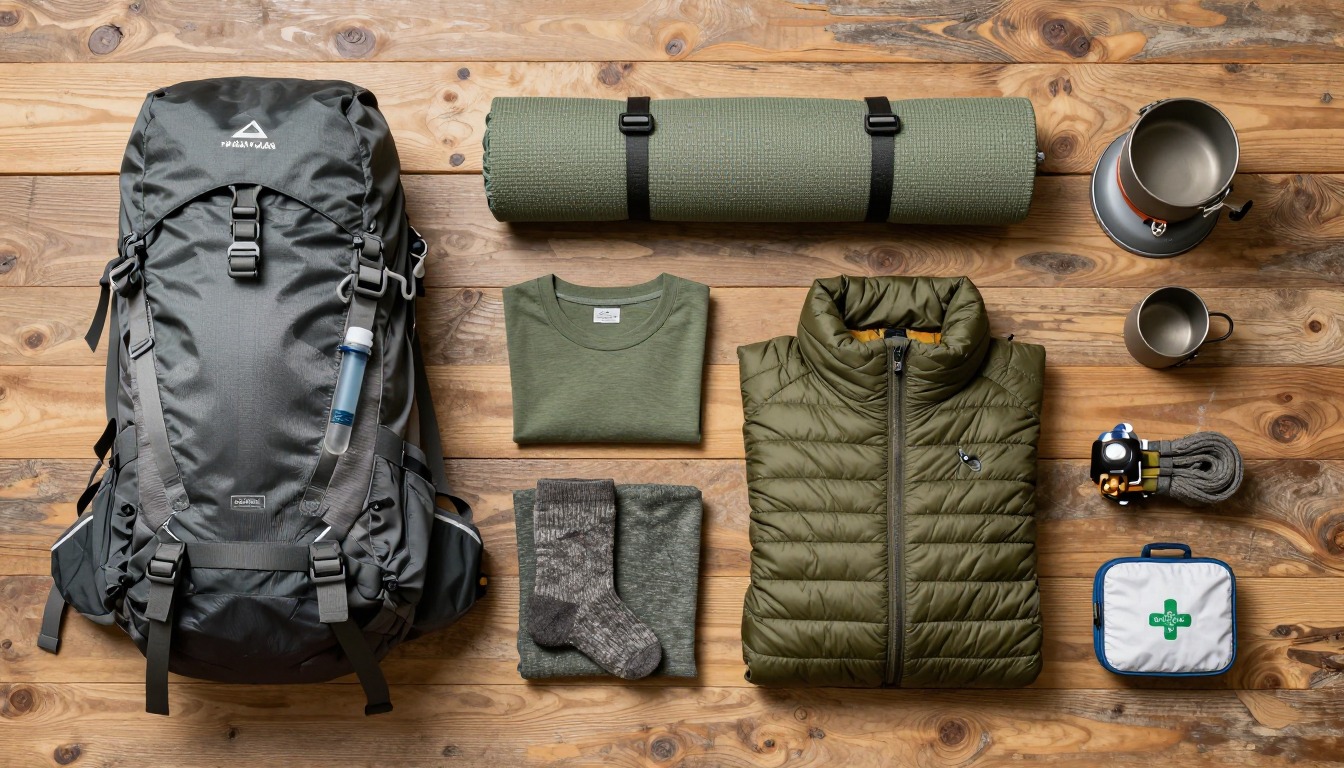
For the two-to-three-day Triple Crown, the ATC defines base weight as everything minus consumables and names the pack, shelter and sleeping bag as the big three, usually the heaviest items.5 The hiking-community rule of keeping a pack under 20% of body weight has no primary source; a 2004 study found A.T. long-distance backpackers actually carried about 25% (men) and 28% (women).12 WTA suggests a 45–50 L pack for a standard one- or two-night trip.13
Common questions
Is McAfee Knob a good hike for beginners?
It is one of the more beginner-friendly big-name hikes on the Appalachian Trail, because the grade is moderate and there is no scrambling. It is still a real climb over a sustained distance, so it suits someone in reasonable walking shape rather than a complete first-timer. Go at a conversational pace, budget time for the return, and it is very manageable.
Is there water along the trail?
There are seasonal sources associated with the shelters, but they are not reliable and should never be your plan. Carry what you need for the full round trip, and carry more in summer, when Virginia humidity does most of the damage. If you do take water from a source, treat it. General water and safety guidance is on /trail-smarts/.
Can I hike out for sunrise or sunset?
Plenty of people do, and it is one of the reasons the trail is so popular. Both mean walking a section in the dark with a headlamp, so bring a spare light and warmer layers than the daytime forecast suggests. Sunset trips catch more people out, because the descent takes longer in the dark than the climb did in daylight.
Do I need trekking poles?
They are not required, and many hikers do this one without them. Poles earn their keep on the descent, where the cumulative pounding on the steady grade and the wet boardwalk sections is where sore knees come from. If you already hike with poles, bring them. If you do not, you will not find yourself stuck without them here.
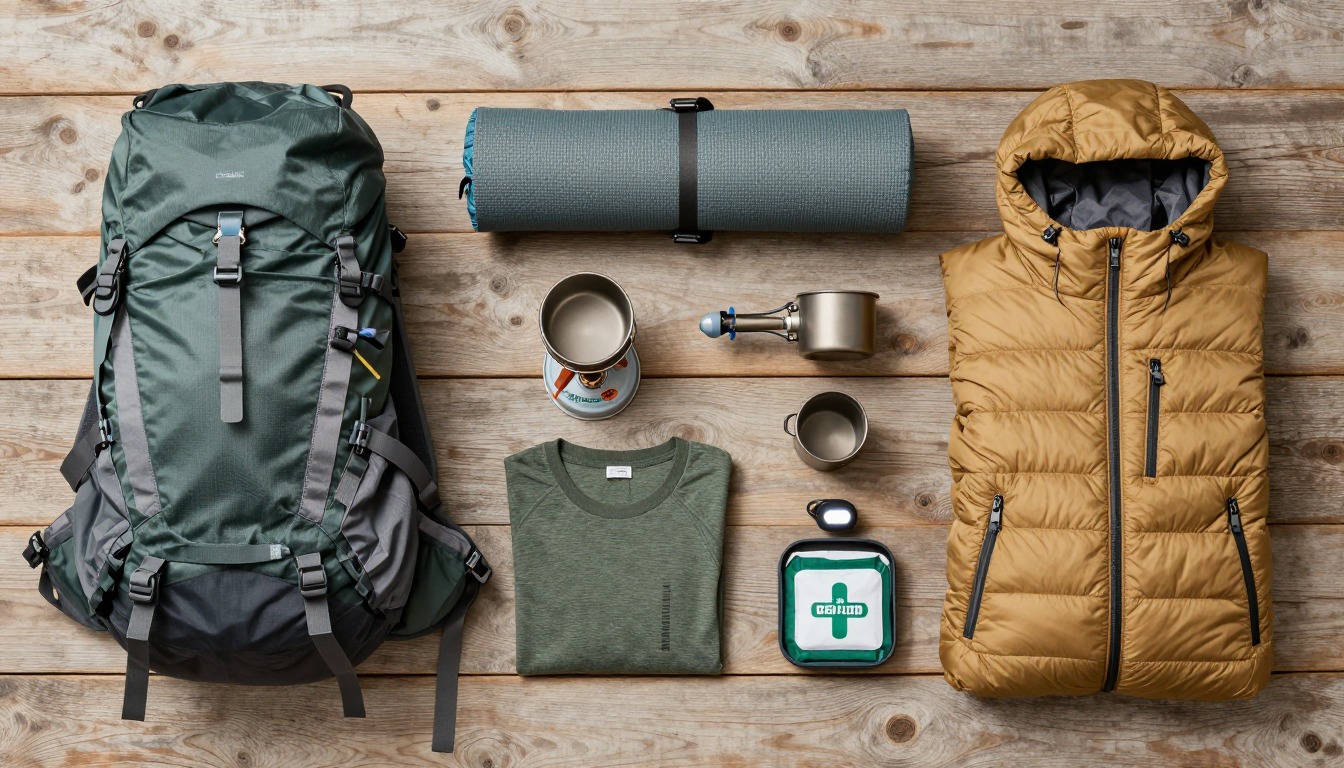
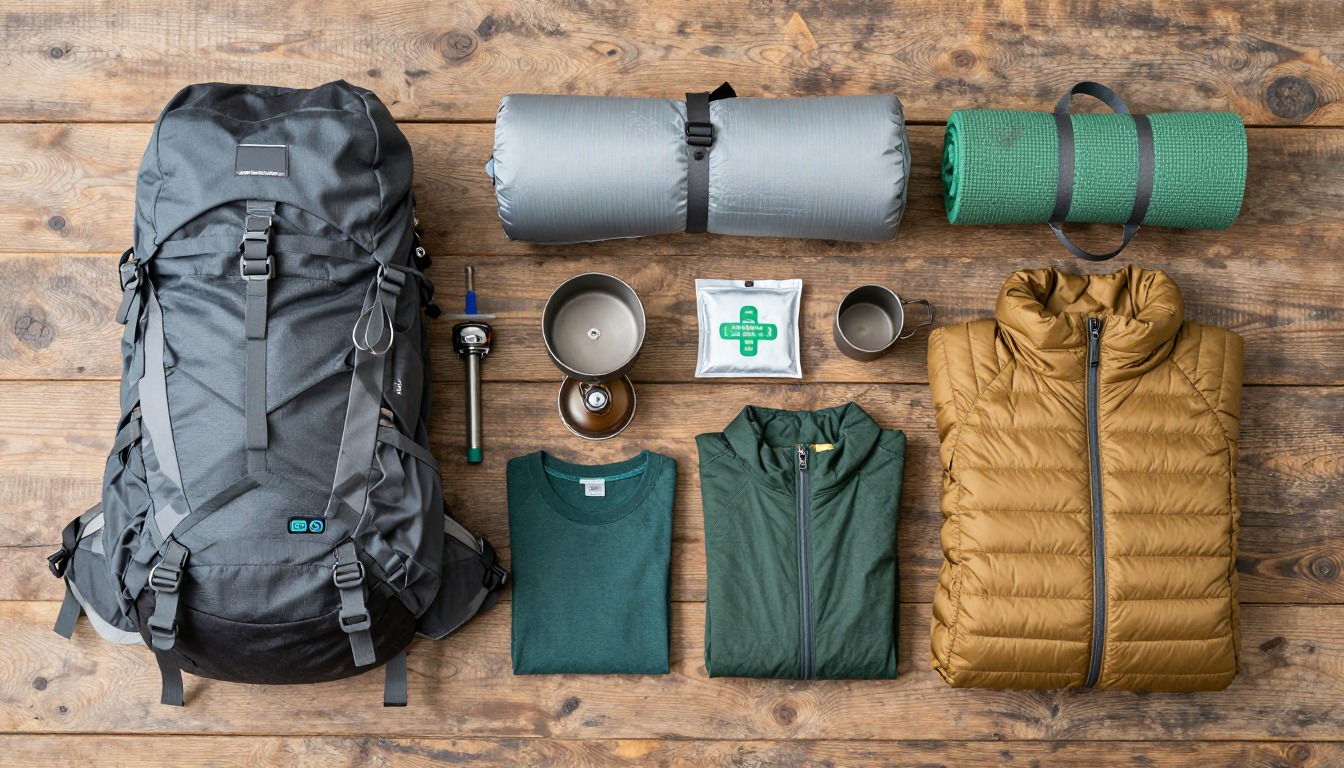
Complete gearsets for this trip
Full curated kits built for exactly this kind of hike.
Trail conditions, permits and access rules change without notice — always confirm current information on the official source above before you go. Some facts on this page are still pending owner verification and are marked accordingly. Product links and the accommodation map are affiliate links: we may earn a commission at no extra cost to you; product prices and availability are shown on Amazon, and accommodation prices on the booking site. See our affiliate disclosure.