
Best Time to Hike Acadia National Park
The best time to hike Acadia National Park is late May to October, according to the official season guidance, with fall foliage a highlight. June through September is typically the warmest stretch, with long daylight of roughly 12 to 15 hours, so granite and coastal routes are easiest to plan.
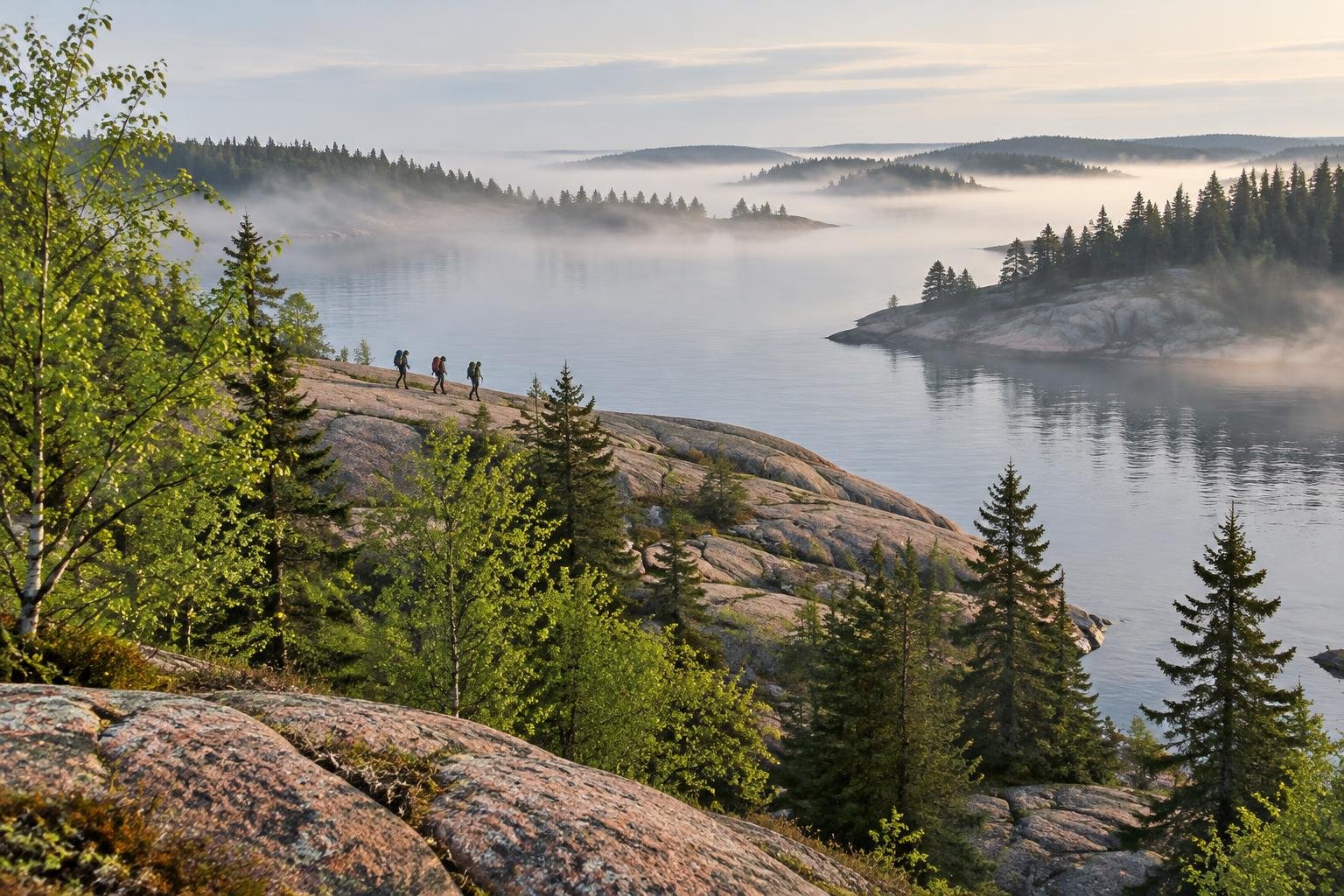
Month-by-month climate for Acadia National Park
| Month | Relative warmth | Rain | Daylight |
|---|---|---|---|
| Jan | Coldest | 119 mm | 9 h |
| Feb | Coldest | 93 mm | 10.2 h |
| Mar | Coldest | 93 mm | 11.6 h |
| Apr | Mild | 106 mm | 13.2 h |
| May | Warm | 96 mm | 14.6 h |
| Jun | Warmest | 117 mm | 15.3 h |
| Jul | Warmest | 93 mm | 15 h |
| Aug | Warmest | 100 mm | 13.8 h |
| Sep | Warmest | 116 mm | 12.3 h |
| Oct | Warm | 144 mm | 10.7 h |
| Nov | Cool | 124 mm | 9.4 h |
| Dec | Coldest | 158 mm | 8.7 h |
Modelled regional averages for 2010–2023 (rainfall) and calculated daylight hours; they describe the wider area, not a reading taken on the trail. “Relative warmth” compares each month with the warmest and coldest months of this place’s own year. It is not a temperature, and the high parts of a route are colder than the region around them.
The modelled regional averages show a fairly even rainfall pattern, mostly between 93 and 119 mm a month, with October (144 mm) and December (158 mm) the wettest. February, March and July are among the driest at around 93 mm. Daylight swings from about 8.7 hours in December to 15.3 hours in June, which matters for planning longer hikes. Relative to Acadia's own year, June through September are the warmest months and January through March the coldest.
Acadia National Park season by season
Late spring · Late May to June
The official season guidance starts in late May, and the numbers show why it works: May is relatively warm for this place, daylight stretches to about 14.6 hours, and June reaches over 15 hours. Rainfall typically sits around 96 to 117 mm a month, so carry rain cover even when the forecast looks settled. Long evenings leave room for exposed granite routes without rushing. Conditions can still vary from trail to trail, so check the managing authority's guidance before you commit to a route.
Summer · July to August
July and August are among the warmest months of Acadia's year, and rainfall typically eases to around 93 to 100 mm, with July one of the drier months in the data. Daylight is still generous at about 15.0 hours in July and 13.8 in August, which supports early starts and relaxed finishes. Summer is also when a vehicle reservation is required to drive Cadillac Summit Road in season, so check current reservation and entrance-pass rules before planning a trip that depends on driving up.
Fall · September to October
Fall is a highlight in the official season guidance, thanks to the foliage. September is still among the warmest months of the year, with about 12.3 hours of daylight, while October is warm but turning, with daylight down to roughly 10.7 hours. October is also the wettest month of the main season at about 144 mm, so wet rock and shorter days deserve respect. Plan finishes well before dusk and keep a headlamp handy as the days shorten.
Late fall to early spring · November to April
Outside the official season window, the data points to the coldest part of Acadia's year. January through March are the coldest months, April is only mild, and daylight falls to about 8.7 hours in December. Rainfall stays substantial, with December the wettest month at about 158 mm. The official season guidance does not recommend this stretch, so if you are considering it, confirm current conditions and any seasonal access changes with the managing authority first.
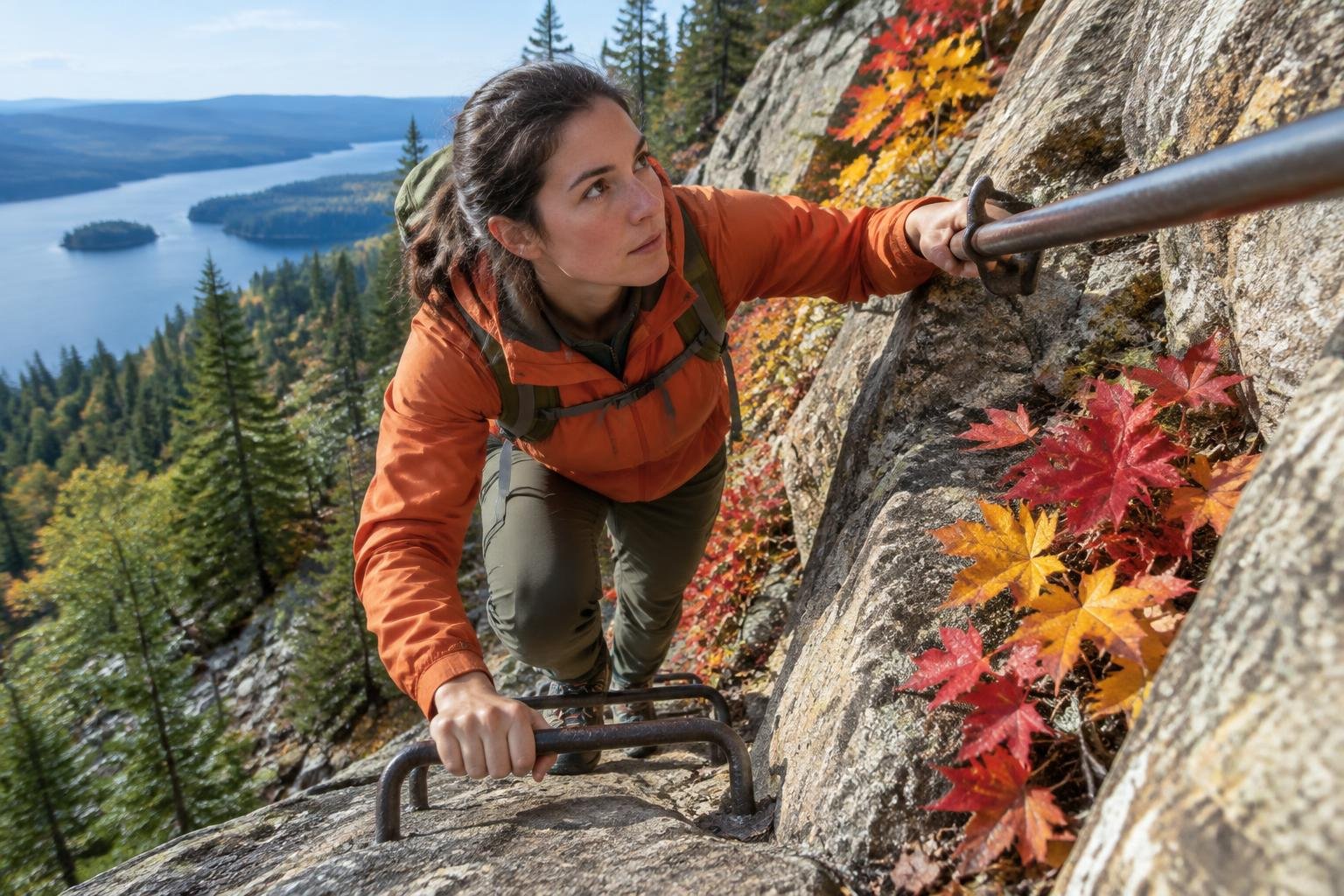
Official season guidance
U.S. National Park Service: Late May to October; fall foliage is a highlight
No hiking permit is needed. A vehicle reservation is required to drive Cadillac Summit Road in season; check current entrance-pass and reservation rules before you go.
Check current dates on nps.gov/acadWhat to pack for the season
Packing here follows the season and the daylight. Bring layers you can add or shed as conditions change, reliable rain cover for a region with steady rainfall year-round, and sun protection for exposed granite in the warmest months. In fall and the shoulder months, carry a headlamp, since daylight shrinks quickly and finishing after dark is easy to do by accident.
For layering, rain cover and weather planning, see hiking in rain, heat and cold.
Timing mistakes to avoid
The most common mistake is picking a single month and ignoring the official season guidance of late May to October. Another is assuming summer means dry weather, when rain typically falls in every month. Fall foliage draws visitors, but shorter days make late finishes risky on exposed routes. Finally, do not forget the Cadillac Summit Road vehicle reservation requirement in season; check current rules before you go.
Common questions
When is the best time to hike Acadia National Park?
The official season guidance points to late May through October, with fall foliage a highlight. Within that window, June through September is typically the warmest and offers the longest daylight, so it suits most hikers looking for easier planning.
Is fall a good time to hike Acadia?
Yes. The official season guidance highlights fall foliage. Be aware that October is typically the wettest month of the main season at about 144 mm, and daylight drops to roughly 10.7 hours, so start early and carry a headlamp.
Is it too wet to hike Acadia in summer?
Rain typically falls across the whole year in the regional data, at roughly 93 to 117 mm a month in summer. July is one of the drier months. Summer is still a strong window, but pack rain cover and expect wet rock after showers.
Do I need a permit or reservation to hike Acadia?
No hiking permit is needed. A vehicle reservation is required to drive Cadillac Summit Road in season, and entrance-pass rules apply. Rules can change, so check current requirements with the U.S. National Park Service before you travel.
Sources
- U.S. National Park Service — nps.gov/acad: official season and permit guidance.
- NASA POWER (Prediction Of Worldwide Energy Resources): monthly temperature and rainfall averages, 2010–2023, from MERRA-2 reanalysis. Daylight hours are calculated from latitude.
Conditions, closures and permit rules change without notice — confirm current information with the managing authority before you go. See our editorial policy and affiliate disclosure.