
Best Time to Hike Bryce Canyon — Navajo & Queen’s Garden
The best time to hike Bryce Canyon is May to October, the window the National Park Service guidance points to. Within it, June offers the warmest weather, the driest month and the longest days, while May and October are milder with more modest daylight. Nights on the rim stay cold throughout.
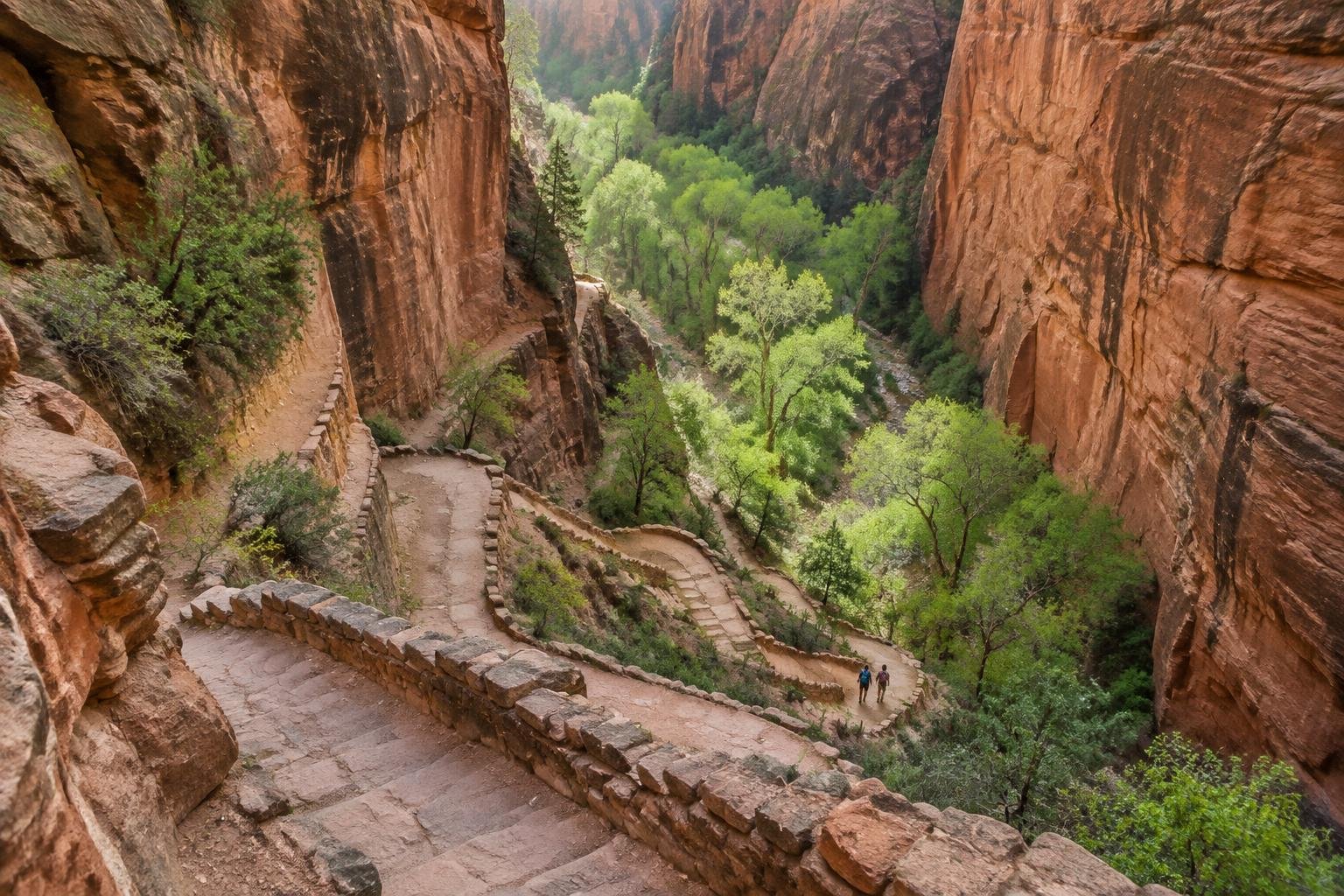
Month-by-month climate for Bryce Canyon — Navajo & Queen’s Garden
| Month | Relative warmth | Rain | Daylight |
|---|---|---|---|
| Jan | Coldest | 21 mm | 9.7 h |
| Feb | Coldest | 18 mm | 10.6 h |
| Mar | Cool | 22 mm | 11.7 h |
| Apr | Mild | 11 mm | 13 h |
| May | Mild | 14 mm | 14 h |
| Jun | Warmest | 7 mm | 14.6 h |
| Jul | Warmest | 34 mm | 14.4 h |
| Aug | Warmest | 34 mm | 13.5 h |
| Sep | Warm | 28 mm | 12.2 h |
| Oct | Mild | 25 mm | 11 h |
| Nov | Cool | 13 mm | 9.9 h |
| Dec | Coldest | 18 mm | 9.4 h |
Modelled regional averages for 2010–2023 (rainfall) and calculated daylight hours; they describe the wider area, not a reading taken on the trail. “Relative warmth” compares each month with the warmest and coldest months of this place’s own year. It is not a temperature, and the high parts of a route are colder than the region around them.
The modelled regional averages show June as the driest month at about 7 mm, with April next at 11 mm. July and August are the wettest at about 34 mm each, which fits the summer storm pattern, and September follows at 28 mm. Daylight swings from roughly 9.4 hours in December to 14.6 hours in June. Warmth is relative to this place's own year: June through August are the warmest months, December through February the coldest, and spring and autumn sit in between.
Bryce Canyon — Navajo & Queen’s Garden season by season
Late spring · May
May opens the official season for the Navajo Loop and Queen's Garden. The modelled numbers show mild conditions, about 14 mm of rain and 14 hours of daylight, which gives a comfortable amount of time for a loop with a steep climb out of the amphitheater. The rim sits at roughly 8,000 to 9,000 feet, so nights stay cold even when days are mild. Check with the National Park Service for current trail conditions before you set out.
Early summer · June
June is the warmest month of the year here by the modelled labels and also the driest, with about 7 mm of rain on average. Daylight peaks near 14.6 hours, so you can start early, finish well before dark and still have time to linger at the viewpoints. Because the days are warm, early starts help keep the climb back up to the rim more pleasant. Nights on the rim remain cold at this altitude, so the cold-night note in the season guidance still applies.
Mid to late summer · July to September
July and August are the warmest months and also the wettest, at about 34 mm each, and September follows at about 28 mm with warm conditions. Rain is modelled as a monthly total, so it does not tell you how it falls on a given day, and the averages cannot predict individual storms. Daylight shortens from about 14.4 hours in July to 12.2 in September. If you hike in this window, keep an eye on the forecast and confirm conditions with the managing authority before committing to the loop.
Autumn and the off-season · October to April
October is still inside the official season, with mild warmth, about 25 mm of rain and 11 hours of daylight, so plan the loop for the middle of the day. From November the modelled warmth drops to cool, then to the coldest months from December through February, with daylight under 10 hours at the low point. March is cool and April mild, but both fall outside the season guidance, which runs May to October. Outside that window, confirm conditions and access with the National Park Service before you plan a hike.
Official season guidance
U.S. National Park Service: May to October; the rim sits near 8,000–9,000 ft with cold nights
No permit is needed for the day-hike loop. A seasonal park shuttle serves the amphitheater; overnight backcountry trips need a permit.
Check current dates on nps.gov/brcaWhat to pack for the season
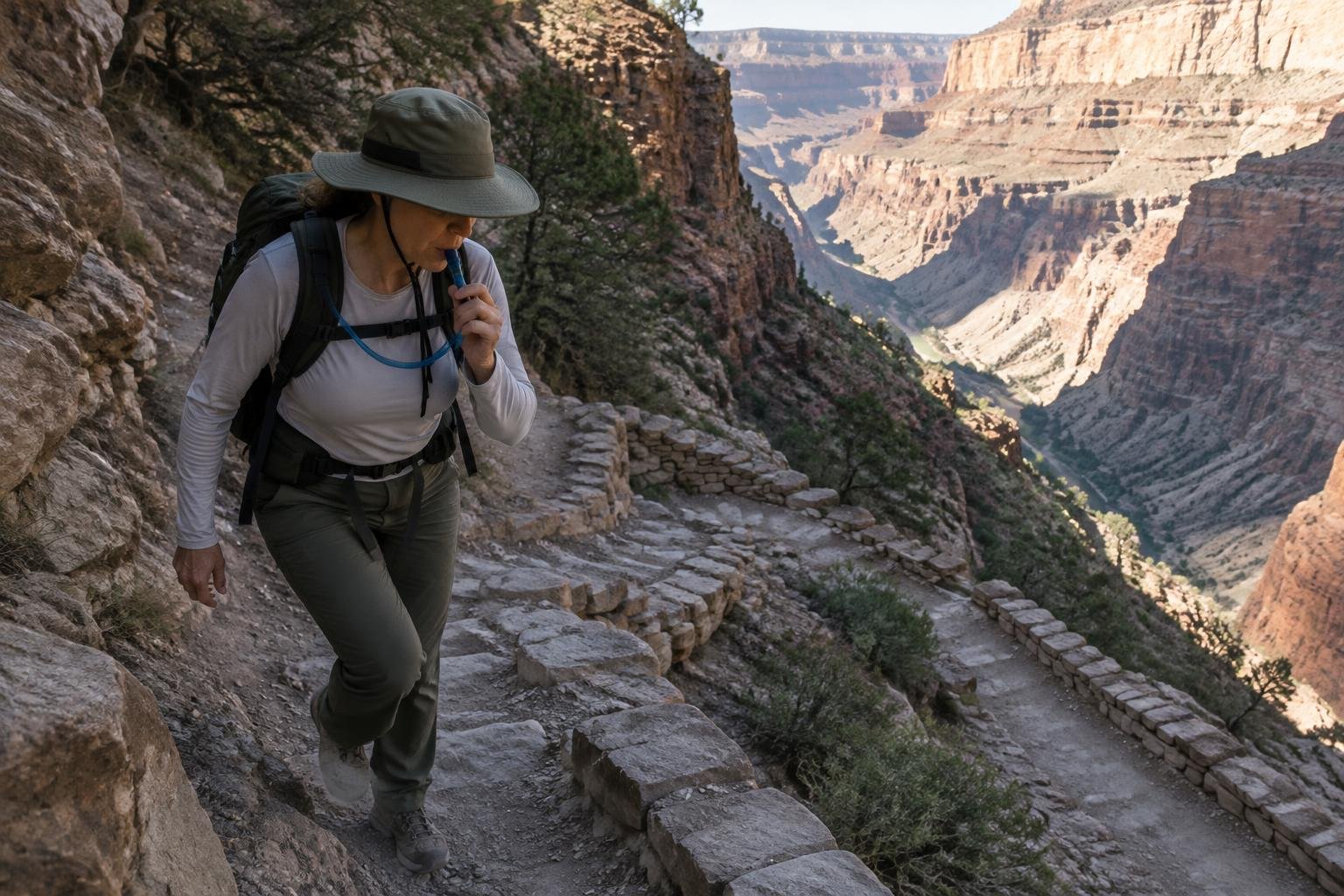
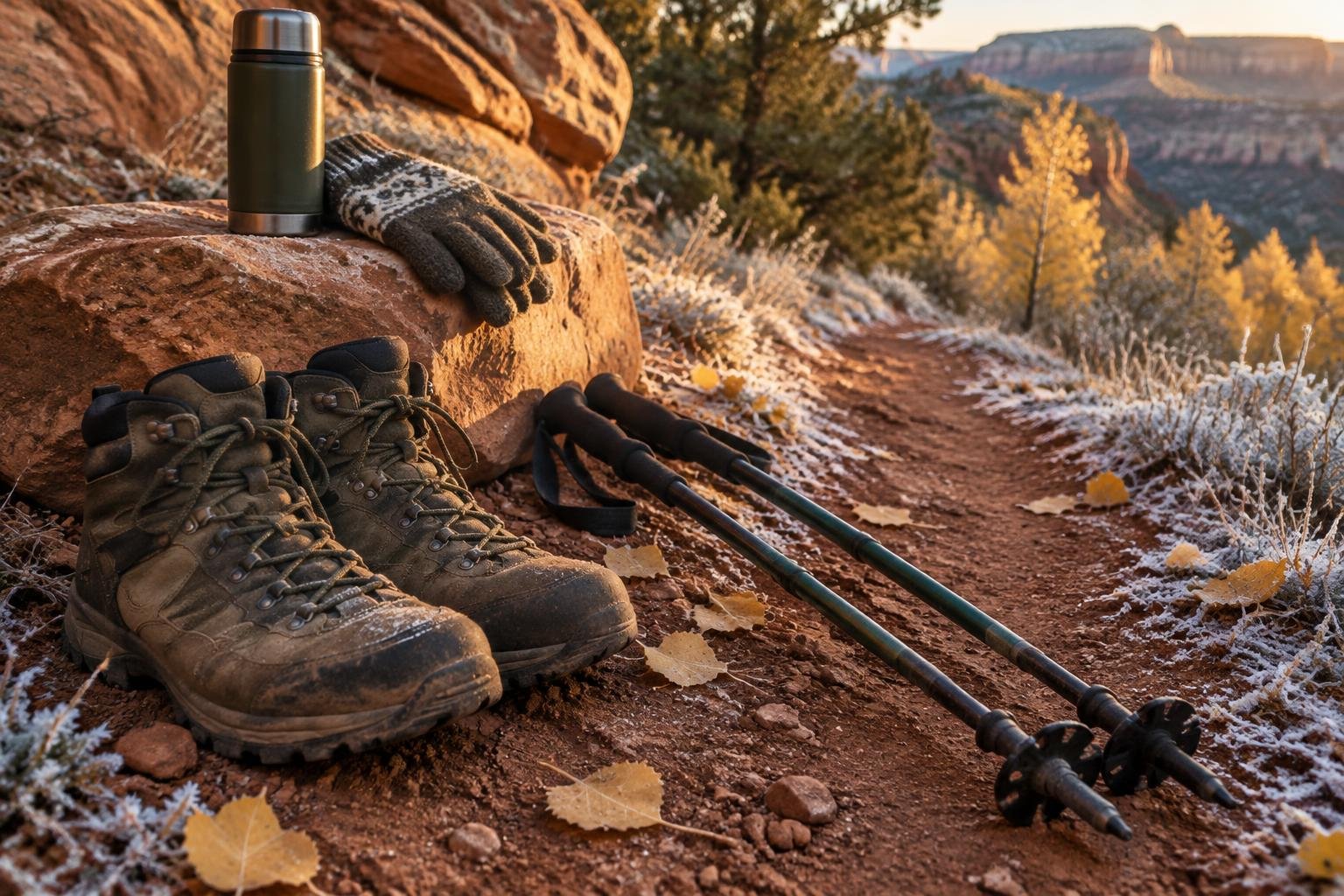
Packing should follow the season and the altitude. Carry layers, since the rim has cold nights even in the warm months, plus rain cover for the wetter summer months. Bring sun protection for the long days around June. Pack a headlamp if you might finish late, especially in October when daylight shortens to about 11 hours.
For layering, rain cover and weather planning, see hiking in rain, heat and cold.
Timing mistakes to avoid
The main mistake is treating the whole May to October window as equal. July and August are the warmest and wettest months here, while June is the driest, so the middle of the season is not uniform. Another is ignoring the cold nights on the rim and dressing only for midday warmth. Starting late and running short of daylight is also common, particularly in October. Finally, do not rely on regional averages alone; confirm current conditions with the National Park Service before heading out.
Common questions
What is the best month to hike Bryce Canyon?
June is the strongest single choice by the modelled numbers: it is the warmest, the driest at about 7 mm of rain, and has the longest daylight at about 14.6 hours. May and October are also inside the official season and are milder. Conditions vary, so confirm with the National Park Service.
Can I hike Bryce Canyon in winter?
Winter falls outside the official May to October season guidance, and December through February are the coldest months of the year here, with under about 11 hours of daylight. The rim sits at roughly 8,000 to 9,000 feet. Check with the National Park Service for current access and conditions before planning anything.
Is summer a bad time to hike Bryce Canyon?
Not necessarily, but July and August are the wettest months at about 34 mm each, alongside the warmest weather. The averages cannot tell you how rain falls on a given day. Check the forecast, start early and carry rain cover, then confirm conditions with the National Park Service.
How much daylight will I have for the hike?
Daylight ranges from about 9.4 hours in December to about 14.6 hours in June. During the official May to October season it runs from roughly 11 hours in October to over 14 hours in May through July. Plan your start time so you finish before dark, and carry a headlamp as a backup.
Sources
- U.S. National Park Service — nps.gov/brca: official season and permit guidance.
- NASA POWER (Prediction Of Worldwide Energy Resources): monthly temperature and rainfall averages, 2010–2023, from MERRA-2 reanalysis. Daylight hours are calculated from latitude.
Conditions, closures and permit rules change without notice — confirm current information with the managing authority before you go. See our editorial policy and affiliate disclosure.