
Best Time to Hike Grand Teton — Cascade Canyon
The best time to hike Grand Teton — Cascade Canyon is June to September, matching the official season guidance. Those months are typically the warmest of the year here, with long daylight of roughly 12 to 15 hours. July is usually the driest month, while conditions can change, so confirm with the National Park Service.
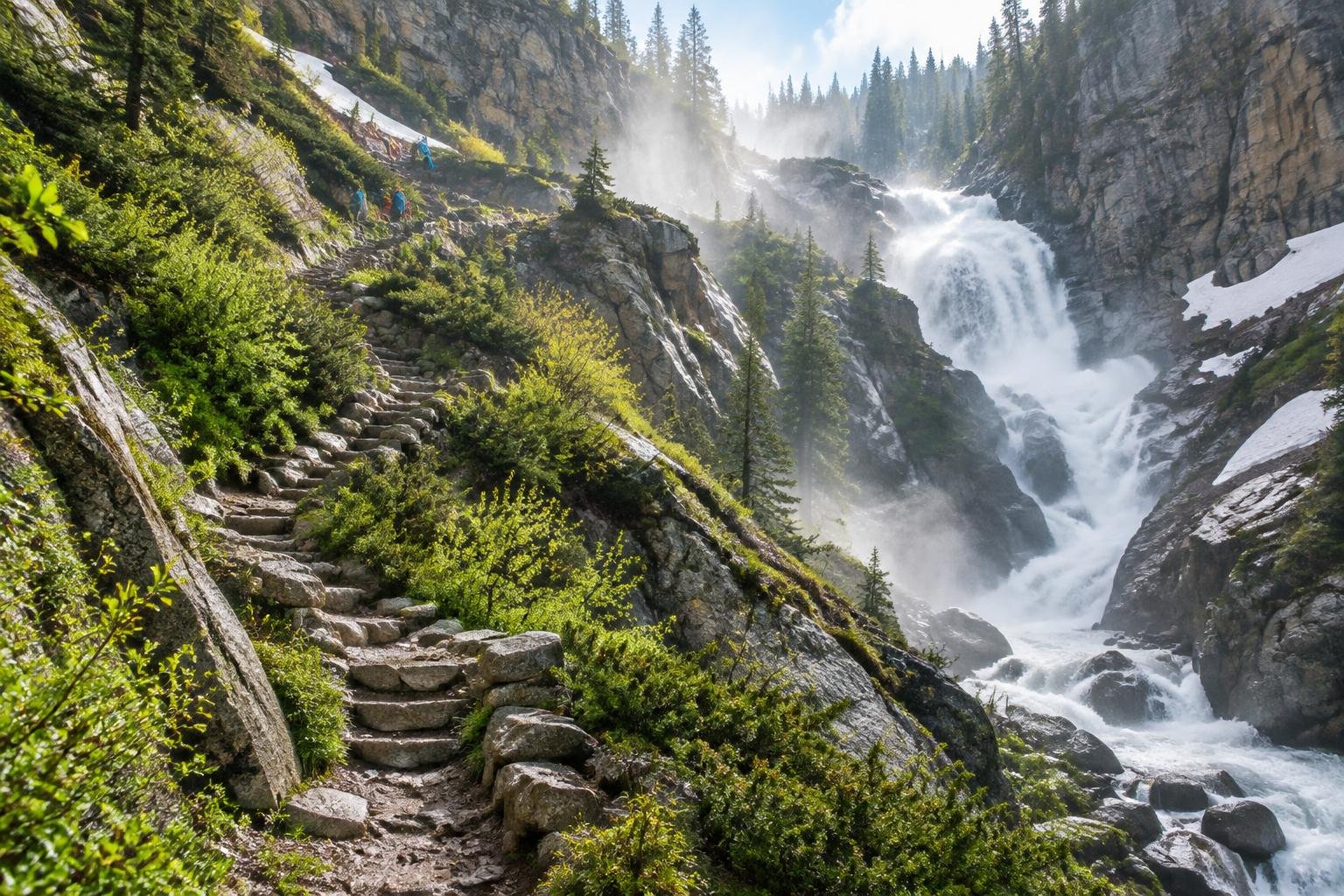
Month-by-month climate for Grand Teton — Cascade Canyon
| Month | Relative warmth | Rain | Daylight |
|---|---|---|---|
| Jan | Coldest | 77 mm | 9.1 h |
| Feb | Coldest | 78 mm | 10.3 h |
| Mar | Coldest | 75 mm | 11.6 h |
| Apr | Cool | 76 mm | 13.2 h |
| May | Warm | 76 mm | 14.5 h |
| Jun | Warmest | 60 mm | 15.2 h |
| Jul | Warmest | 30 mm | 15 h |
| Aug | Warmest | 43 mm | 13.8 h |
| Sep | Warmest | 53 mm | 12.3 h |
| Oct | Mild | 64 mm | 10.8 h |
| Nov | Cool | 76 mm | 9.4 h |
| Dec | Coldest | 88 mm | 8.7 h |
Modelled regional averages for 2010–2023 (rainfall) and calculated daylight hours; they describe the wider area, not a reading taken on the trail. “Relative warmth” compares each month with the warmest and coldest months of this place’s own year. It is not a temperature, and the high parts of a route are colder than the region around them.
The modelled averages show a clear dry window in summer. July is the driest month at about 30 mm, followed by August at 43 mm and September at 53 mm, while December is the wettest at 88 mm and the winter and early spring months sit near 75 to 78 mm. Daylight swings from about 8.7 hours in December to 15.2 hours in June, which changes how much time you have for the day. In relative terms, June through September are the warmest months of this place's year, and January through March are the coldest. These are regional averages, not trail measurements, so treat them as a guide to the pattern.
Grand Teton — Cascade Canyon season by season
Early summer · June
June is the start of the official season guidance and brings the longest daylight of the year, about 15.2 hours on average. It is among the warmest months of this place's year, with modelled rainfall near 60 mm, which is wetter than the peak summer months. Longer days give you flexibility for an early start and a relaxed pace. Because conditions can differ from average at the start of the season, check with the National Park Service about trail and boat shuttle status before you go.
Peak summer · July to August
July and August are the heart of the season and the driest stretch in the data, at roughly 30 mm and 43 mm of rain on average. Both sit among the warmest months of the year here, and daylight stays generous at about 15.0 and 13.8 hours. That combination makes these months a natural fit for the Cascade Canyon day hike, with or without the Jenny Lake shuttle boat. Expect this to be the most popular time, so plan an early start and check current conditions with the managing authority.
Early fall · September to October
September is still within the official season and remains among the warmest months, with modelled rain around 53 mm and about 12.3 hours of daylight. October is milder in relative terms, rainfall rises to about 64 mm, and daylight shortens to roughly 10.8 hours, so there is less margin for a slow day. This shoulder period can suit hikers who prefer a quieter canyon, but the official guidance ends after September. Confirm trail and shuttle information with the National Park Service first.
Late fall to spring · November to May
From November through May the data shows the coldest and cool months of the year, with December the wettest at about 88 mm and daylight dropping to about 8.7 hours. These months fall outside the official June to September season guidance. May turns relatively warm and daylight reaches about 14.5 hours, but rainfall stays around 76 mm and conditions can still differ from the averages. If you are considering a trip outside the season, check current conditions and any rules with the National Park Service before committing.
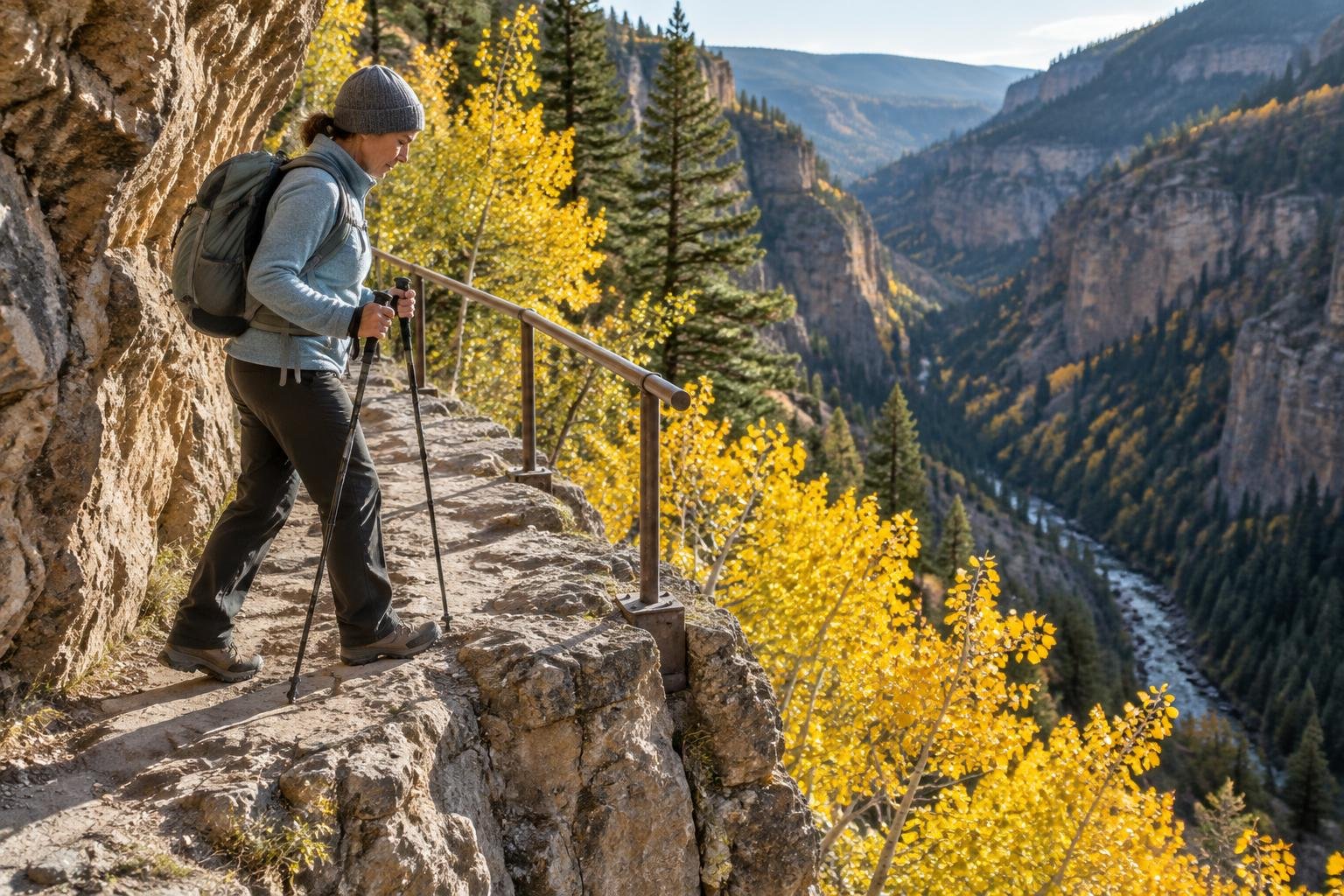
Official season guidance
U.S. National Park Service: June to September
No permit is needed for the Cascade Canyon day hike. The Jenny Lake shuttle boat saves about 4 miles round trip. Overnight backcountry trips require a permit; store all food properly in bear country.
Check current dates on nps.gov/grteWhat to pack for the season
Packing should follow the season you choose. In the warm summer window, plan for layers you can add or remove, rain cover for the occasional wetter day, and sun protection for long daylight hours. In shoulder months, shorter days make a headlamp worth carrying. Overnight trips need bear-aware food storage, as the park rules state.
For layering, rain cover and weather planning, see hiking in rain, heat and cold.
Timing mistakes to avoid
A common mistake is relying on a single month's average and ignoring the official June to September guidance. Another is arriving in June or October assuming summer conditions, when rainfall and daylight differ from July. Skipping a check on the Jenny Lake shuttle boat timing can also cost you hours, since it saves about 4 miles round trip. Finally, short fall days leave less margin, so plan your turnaround time before you start.
Common questions
What is the best month to hike Cascade Canyon?
On the modelled averages, July is the driest month at about 30 mm of rain and sits among the warmest months of the year, with roughly 15 hours of daylight. August is a close second. The official season guidance runs June to September, so confirm current conditions with the National Park Service.
Can I hike Cascade Canyon outside the official season?
The official season guidance is June to September, and the numbers show the coldest months and shortest days from December through March. Conditions outside the season can differ a lot from the averages. If you are considering it, check current conditions and any rules with the National Park Service before planning.
How much daylight will I have for the hike?
Daylight varies strongly with the month. It averages about 15 hours in June and July, 13.8 in August, 12.3 in September and falls to about 10.8 in October. Shorter fall days leave less margin, so plan your start time and turnaround accordingly and carry a headlamp.
Does the season affect the boat shuttle or permits?
The park notes that no permit is needed for the Cascade Canyon day hike, and the Jenny Lake shuttle boat saves about 4 miles round trip. Shuttle operation can depend on the time of year, so confirm schedules with the National Park Service. Overnight backcountry trips do require a permit.
Sources
- U.S. National Park Service — nps.gov/grte: official season and permit guidance.
- NASA POWER (Prediction Of Worldwide Energy Resources): monthly temperature and rainfall averages, 2010–2023, from MERRA-2 reanalysis. Daylight hours are calculated from latitude.
Conditions, closures and permit rules change without notice — confirm current information with the managing authority before you go. See our editorial policy and affiliate disclosure.