
Best Time to Hike Great Smokies — Alum Cave to Mount LeConte
The best time to hike Great Smokies — Alum Cave to Mount LeConte is April to October, the official season guidance, with spring wildflowers and fall color as the highlights. Within that window, September and October are typically the driest months, while daylight is longest from May through August.
Month-by-month climate for Great Smokies — Alum Cave to Mount LeConte
| Month | Relative warmth | Rain | Daylight |
|---|---|---|---|
| Jan | Coldest | 123 mm | 9.8 h |
| Feb | Coldest | 146 mm | 10.7 h |
| Mar | Cool | 132 mm | 11.7 h |
| Apr | Mild | 125 mm | 12.9 h |
| May | Warm | 109 mm | 13.9 h |
| Jun | Warmest | 121 mm | 14.4 h |
| Jul | Warmest | 143 mm | 14.2 h |
| Aug | Warmest | 122 mm | 13.4 h |
| Sep | Warmest | 92 mm | 12.2 h |
| Oct | Mild | 95 mm | 11.1 h |
| Nov | Cool | 98 mm | 10.1 h |
| Dec | Coldest | 145 mm | 9.6 h |
Modelled regional averages for 2010–2023 (rainfall) and calculated daylight hours; they describe the wider area, not a reading taken on the trail. “Relative warmth” compares each month with the warmest and coldest months of this place’s own year. It is not a temperature, and the high parts of a route are colder than the region around them.
The modelled regional averages show a wet year overall, with February (146 mm), December (145 mm) and July (143 mm) typically the wettest months. September (92 mm) and October (95 mm) are the driest. Daylight swings from about 9.6 hours in December to 14.4 hours in June, so winter days leave far less margin on a strenuous route. Relative to this place's own year, June through September are the warmest months, while December through February are the coldest. These are regional averages, not trail measurements.
Great Smokies — Alum Cave to Mount LeConte season by season
Spring · March to May
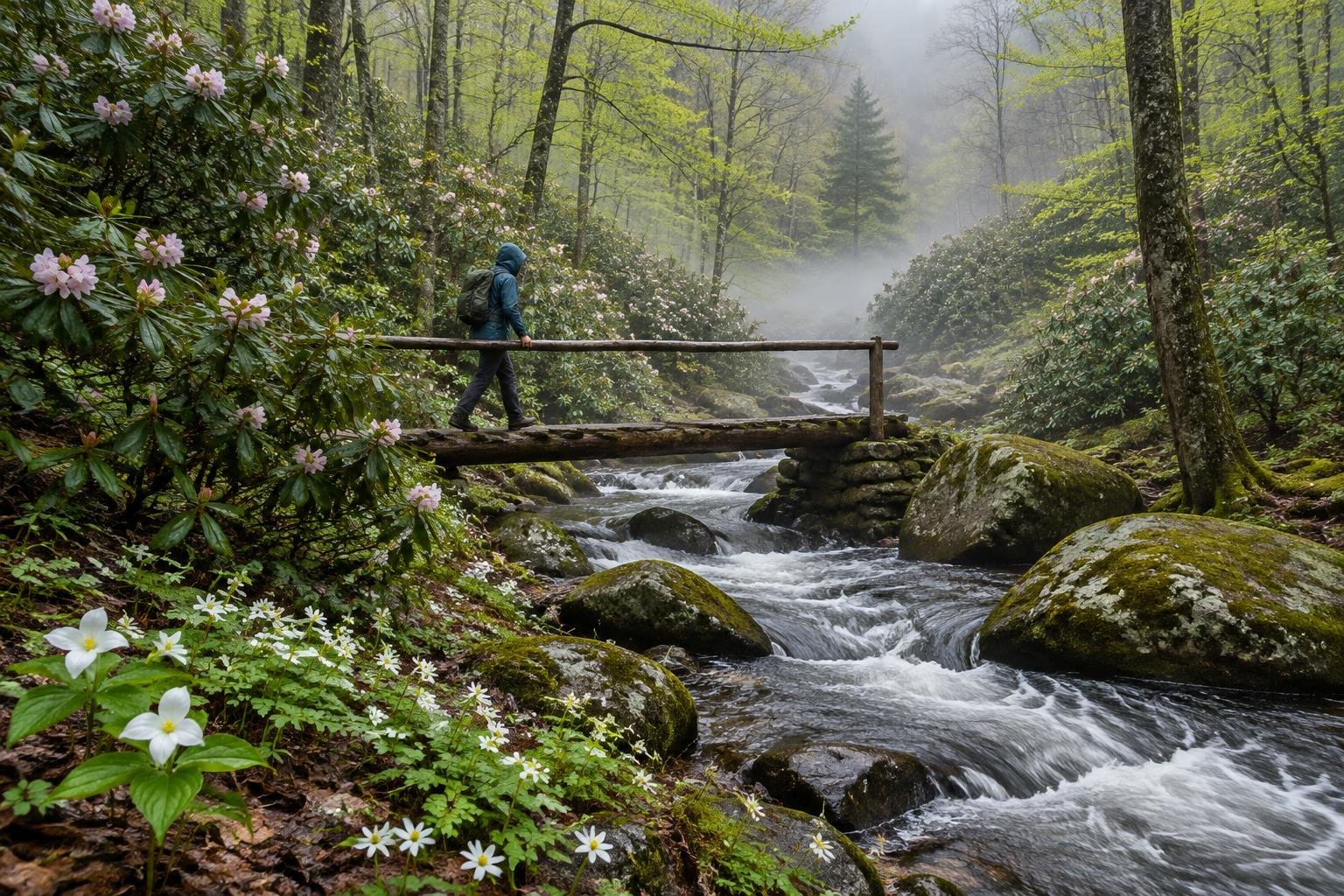
Spring is when the official season guidance points to wildflowers. April opens the recommended window, with mild conditions by this place's own standards and about 12.9 hours of daylight, rising to nearly 14 hours in May. Rainfall typically runs 109 to 132 mm a month, so showers are normal and rain cover belongs in the pack. March sits just outside the recommended window and is cooler, with shorter days, so plan conservatively and confirm conditions with the National Park Service.
Summer · June to August
Summer brings the warmest months of the year here and the longest daylight, about 14.4 hours in June and still 13.4 hours in August. That extra light gives a comfortable cushion on a strenuous climb. Rainfall remains substantial, typically 121 to 143 mm a month, with July the wettest of the three, so expect wet afternoons to be a real possibility. Start early, carry plenty of water and sun protection, and keep rain layers accessible rather than buried.
Early fall · September to October
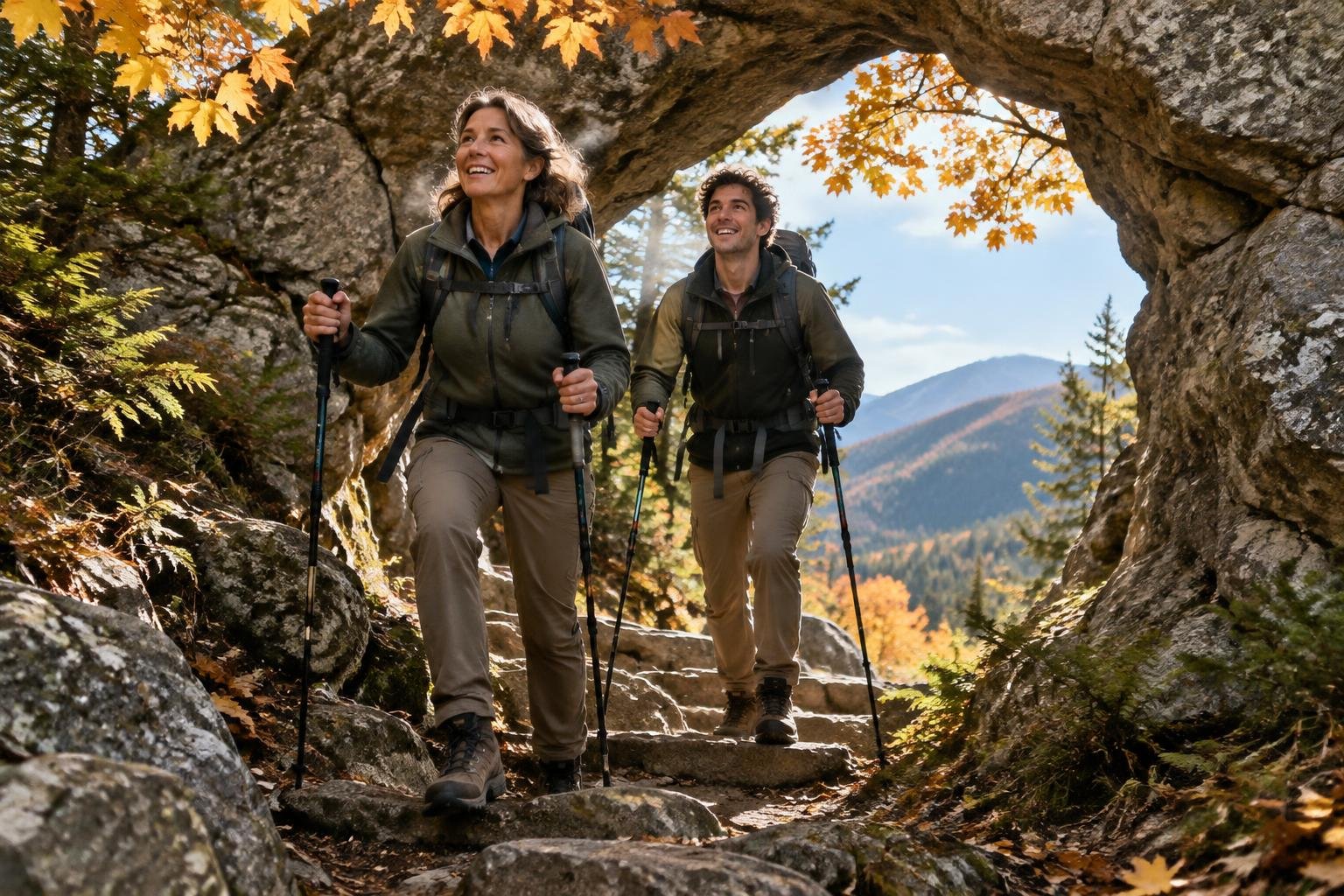
September and October are the driest months in the data, at roughly 92 and 95 mm, and the official season guidance highlights fall color. September is still among the warmest months of the year, while October eases to mild. Daylight shortens from about 12.2 hours to 11.1 hours, so an early start matters more as the month goes on. This is typically the most settled stretch of the recommended window for a long day hike.
Late fall and winter · November to February
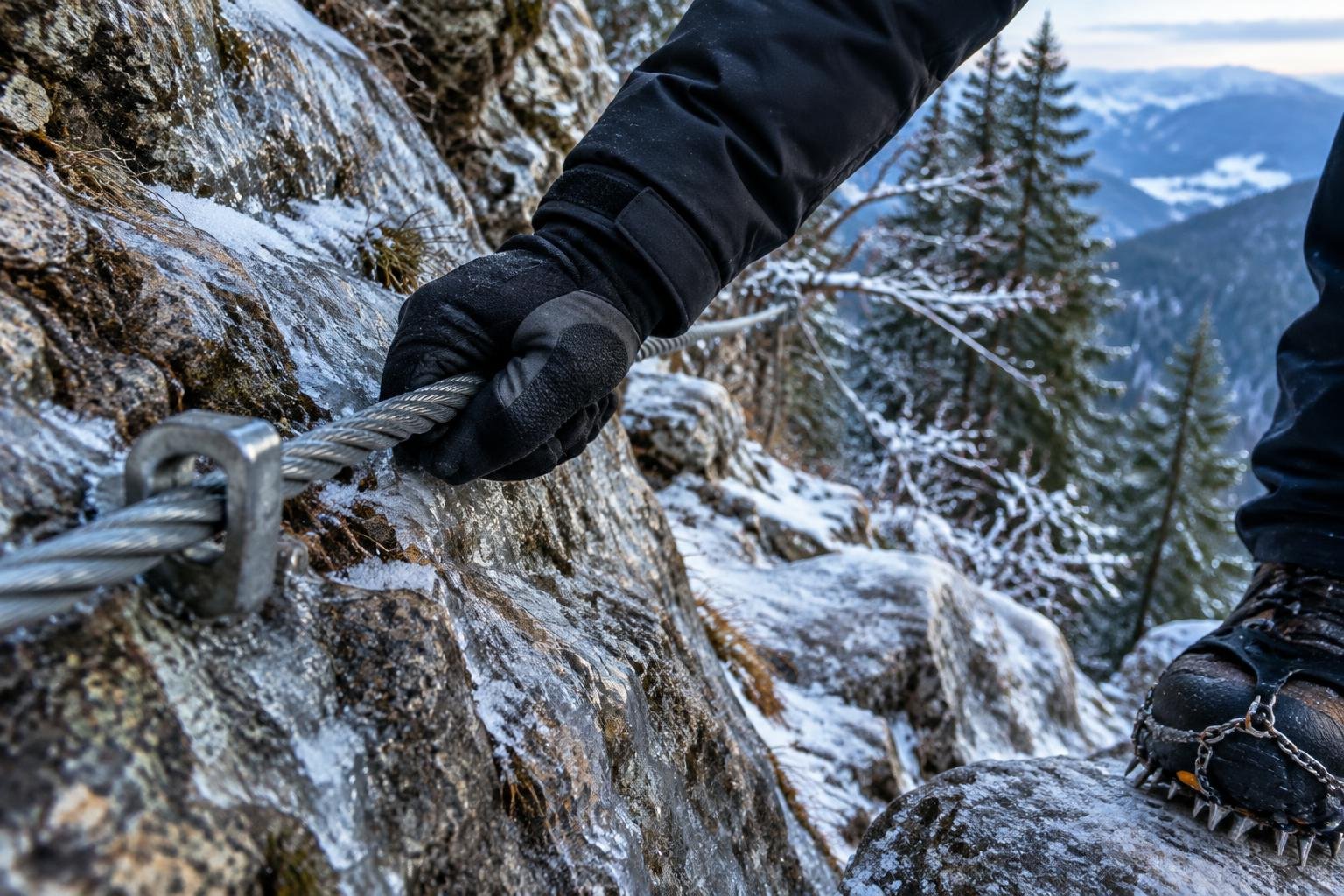
November through February falls outside the recommended April to October window. These are the coldest or cool months of this place's year, with daylight dropping to about 9.6 to 10.7 hours, which is tight for a strenuous route. February and December are among the wettest months, at roughly 146 and 145 mm. Conditions can change, so confirm current trail and lodge status with the National Park Service before planning anything in this period.
Official season guidance
U.S. National Park Service: April to October; spring wildflowers and fall color
No permit is needed to day hike Alum Cave, but a parking tag is required for any vehicle parked in the park for more than 15 minutes. Staying at LeConte Lodge requires a reservation; backcountry camping requires a permit and use of designated shelters/sites.
Check current dates on nps.gov/grsmWhat to pack for the season
Pack for a wide range of conditions even inside the recommended season. Bring layers you can add or remove, reliable rain cover since every month is typically wet, and sun protection for the warmest months. In autumn and spring, carry a headlamp because shorter days can catch a slow climb off guard. Match insulation to your own plan if you stay overnight.
For layering, rain cover and weather planning, see hiking in rain, heat and cold.
Timing mistakes to avoid
The most common timing mistake is choosing a single favorite month and ignoring the official season guidance of April to October. Another is underestimating how little daylight a strenuous route has in October and in the colder months, then starting late. Many people also assume rain only matters in winter, when the data shows substantial rainfall in nearly every month. Finally, forgetting that a lodge stay needs a reservation and backcountry camping needs a permit can wreck an otherwise well-timed trip.
Common questions
What is the best month to hike Alum Cave to Mount LeConte?
The official season guidance runs from April to October. Within that, September and October are typically the driest months in the modelled data, while spring is noted for wildflowers and fall for color. Your best month depends on whether you prioritize dry conditions, long daylight, or seasonal scenery.
Is this hike wet all year?
Rainfall is substantial in every month of the modelled regional data, typically between about 92 and 146 mm. September and October are the driest, while February, December and July are the wettest. Carrying rain cover is sensible in any season, and conditions should be confirmed with the National Park Service.
How much daylight will I have?
Calculated daylight ranges from about 9.6 hours in December to 14.4 hours in June. In the recommended April to October window it falls from roughly 12.9 hours in April to 11.1 hours in October. On a strenuous route, an early start and a headlamp become more important as autumn progresses.
Should I hike outside April to October?
The official season guidance is April to October, and the colder months bring shorter days and some of the wettest conditions in the data. If you are considering another time, check current trail and lodge conditions with the National Park Service first, since conditions can change and the route is strenuous.
Sources
- U.S. National Park Service — nps.gov/grsm: official season and permit guidance.
- NASA POWER (Prediction Of Worldwide Energy Resources): monthly temperature and rainfall averages, 2010–2023, from MERRA-2 reanalysis. Daylight hours are calculated from latitude.
Conditions, closures and permit rules change without notice — confirm current information with the managing authority before you go. See our editorial policy and affiliate disclosure.