
Affiliate disclosure: this page contains affiliate links. Purchases made through them may earn us a commission at no extra cost to you. See our affiliate disclosure.
In plain English
The Smokies have three kinds of places to sleep. There are campgrounds you can drive to, backcountry campsites and shelters you have to hike into, and a lodge on the mountain that only hikers can reach. Alum Cave to LeConte is a hike where all three matter, because the trail is the only way up.
Backcountry camping here is tightly organized. You get a permit tied to specific sites, and you cannot just stop wherever the trail is flat. If your plan includes a shelter, you sleep in it, not outside it. It is like booking seats on a train: the seat and the night are fixed before you leave.
Bears are the reason for a lot of the rules. Every food item and scented thing hangs on a cable that the park has already set up, so you do not have to find a good tree. That makes the pack simpler than in parks that make you carry a hard plastic canister.
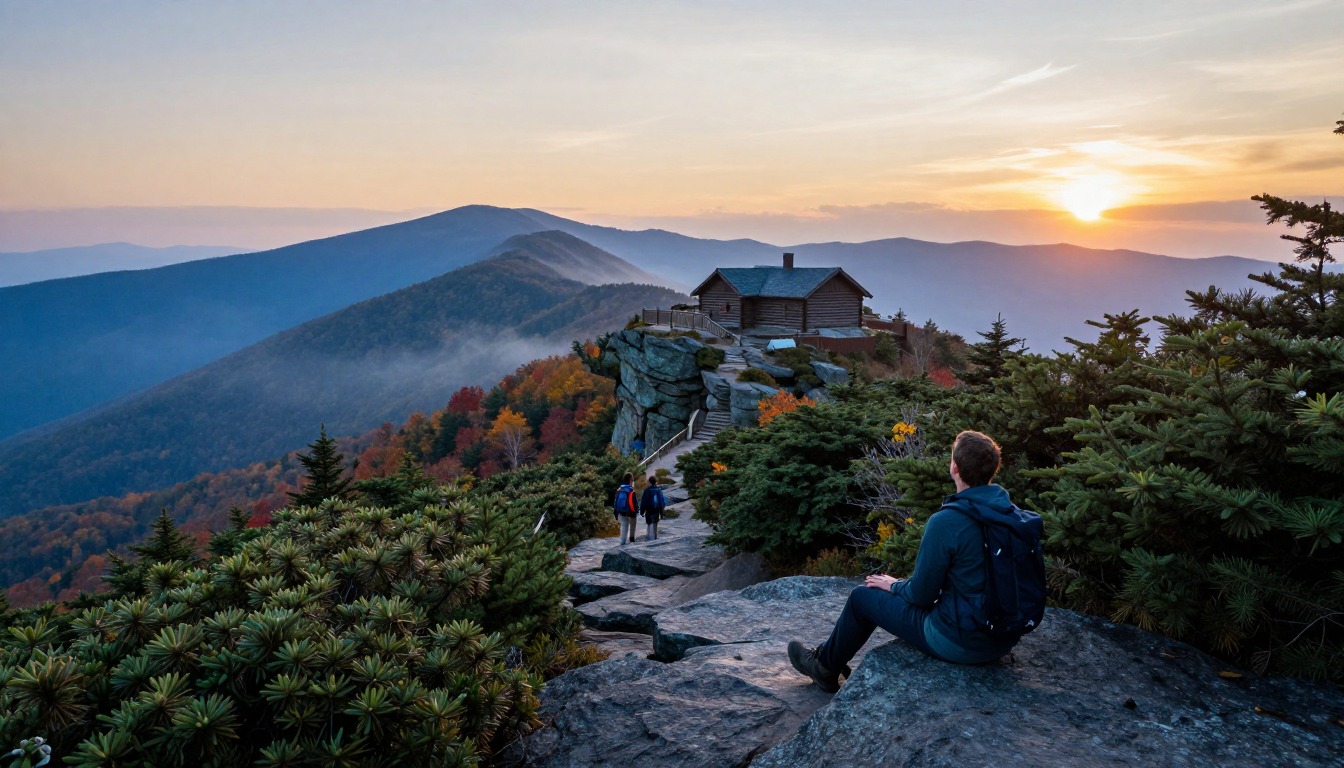
The Alum Cave Trail is the most popular route to the summit of Mount LeConte in the Great Smoky Mountains, climbing past Arch Rock and the Alum Cave Bluffs on its way up. Because LeConte's only summit lodging is a hike-in-only lodge with no road access, deciding where you'll sleep — on the mountain, in a backcountry site, or down in a gateway town — is really the first decision of the trip.
Why hike here
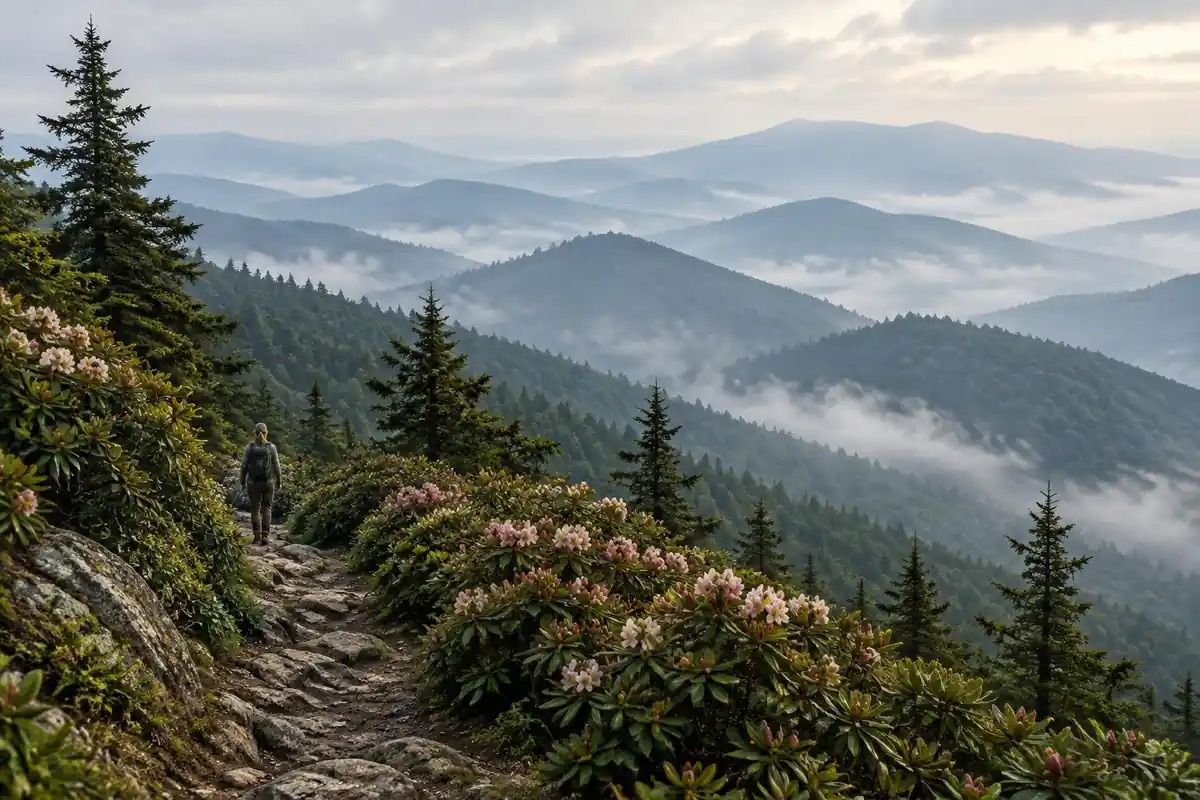
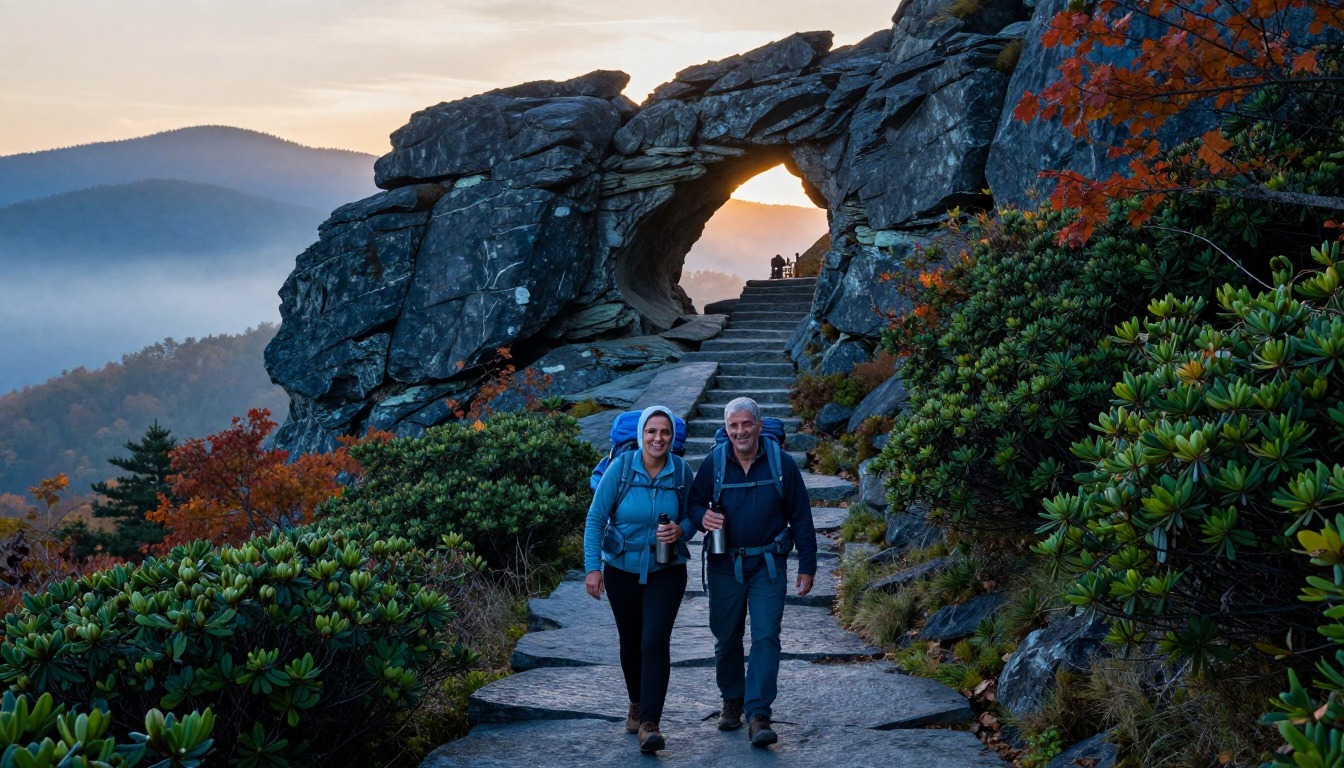
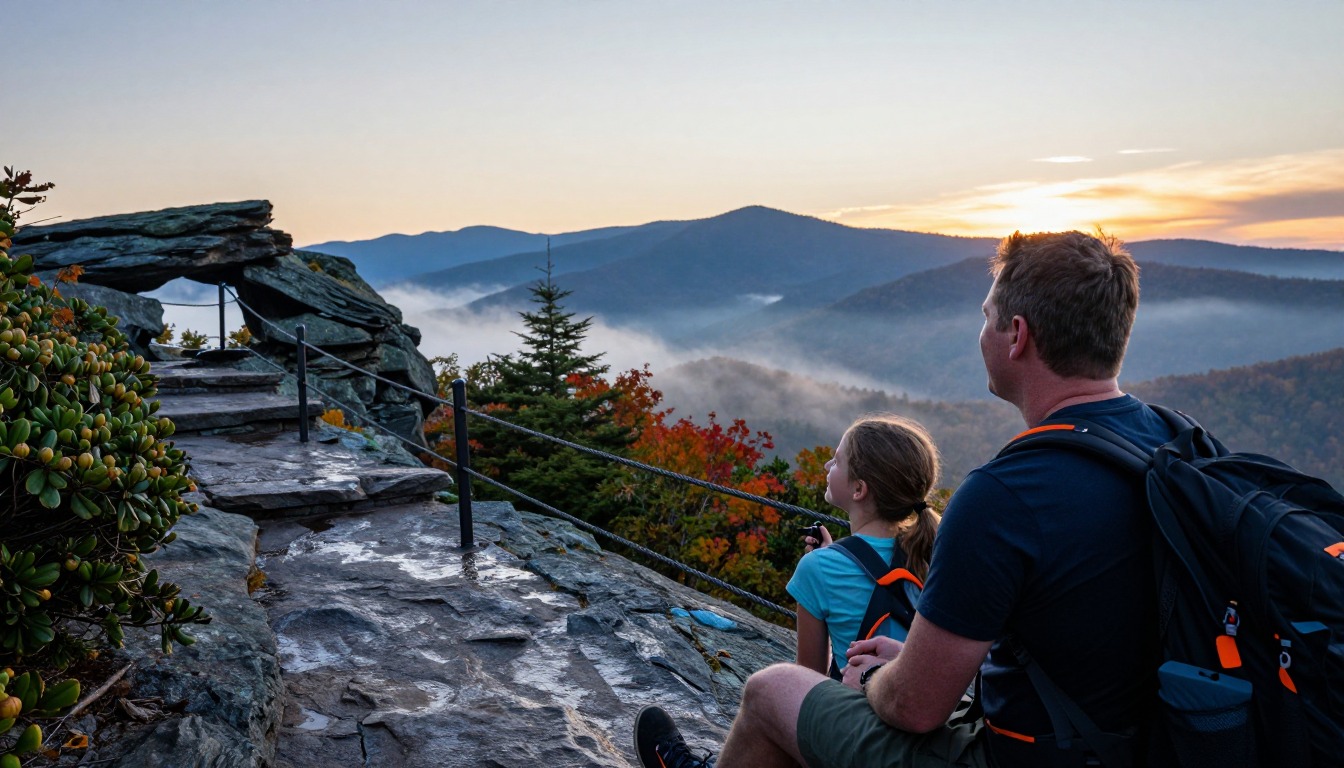
This is a trail with distinct landmarks rather than one long uniform climb: you pass through the narrow stone passage of Arch Rock early on, then keep climbing to the overhanging sandstone bluffs at Alum Cave, a natural amphitheater cut into the mountainside that has drawn hikers for generations. Beyond the bluffs, the trail keeps working upward through spruce-fir forest toward LeConte's summit, one of the highest points in the park. Come in spring and the lower slopes fill with wildflowers; come in fall and the ridgelines above Alum Cave turn color while lower elevations are still green. It's a hike that rewards patience — the terrain changes character every mile, and the payoff at the top is genuine high-elevation Smokies wilderness, reached the same way hikers have reached it for a very long time: on foot.
Getting there
Most hikers fly into Knoxville, Tennessee, then drive roughly an hour into the mountains to Gatlinburg, the main gateway town on the Tennessee side of the park. From Gatlinburg, it's a short drive on the main road through the park to the Alum Cave trailhead, which has its own parking area right along the road — arrive early, since it fills fast on weekends and during peak wildflower and fall-color periods. Townsend, on the park's quieter western side, is a second gateway option if you're staying outside Gatlinburg.
Where to stay
The realistic options, closest-to-the-trail first. Book through the official links — we don't list prices or availability because they change all the time.
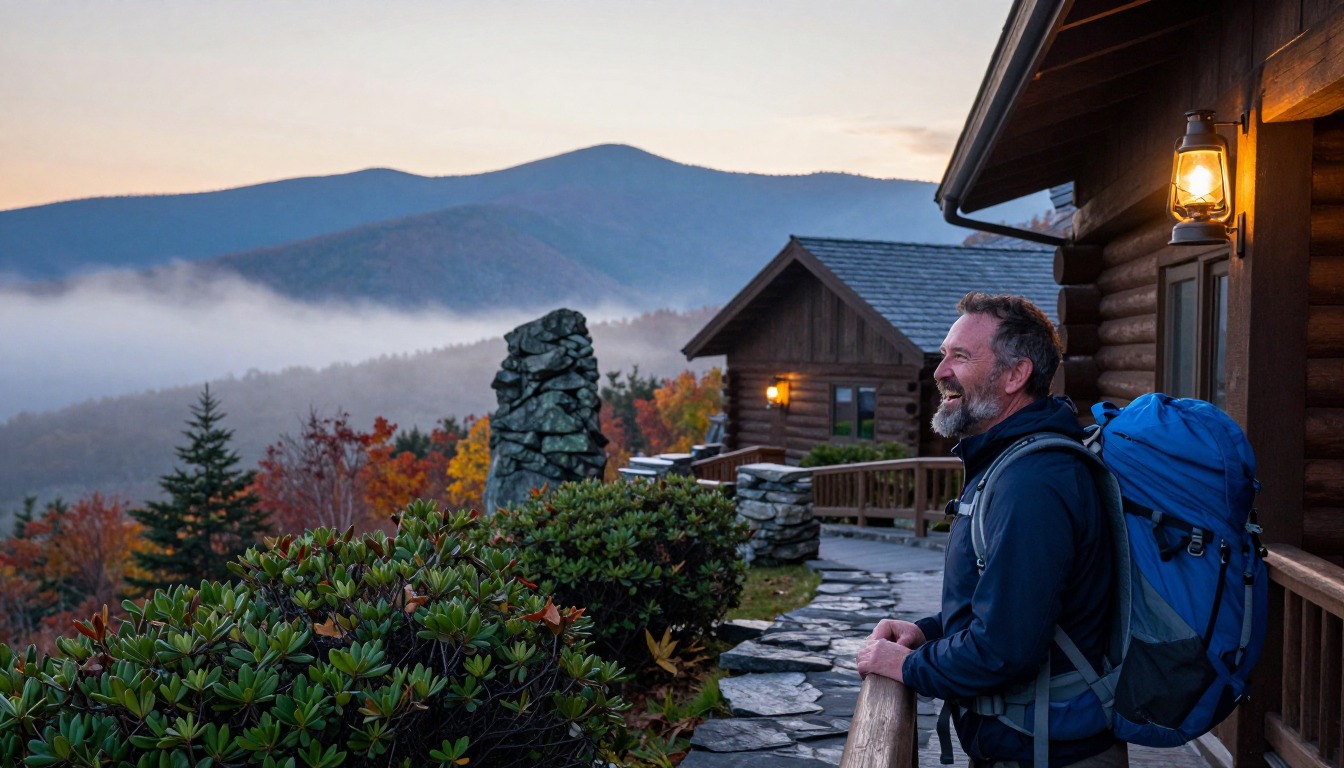
For example: A rustic, hike-in-only lodge near the summit of Mount LeConte — no road, no electricity
Hikers who want the rare experience of sleeping atop the mountain.
Reached only on foot; reservations open on a set date and go fast.
LeConte Lodge (official site)For example: Developed campgrounds such as Elkmont and Smokemont across the park
Car campers basing near the trailheads.
Popular in spring and fall; reserve ahead.
Recreation.govFor example: Hotels, cabins and rentals in the gateway towns
Anyone wanting a room, restaurants and supplies near the park.
The widest choice of rooms and cabins.
Nearby-town lodging (official park info)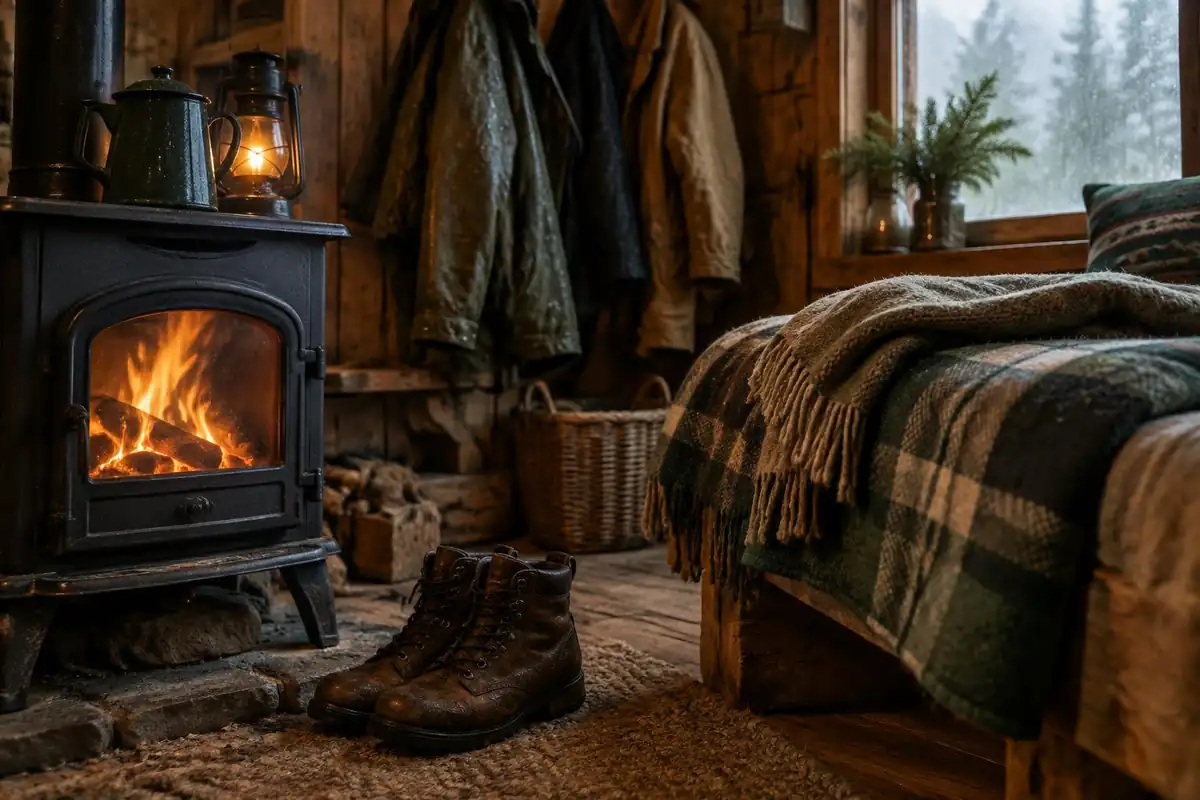
Permits & rules
No permit is needed to day hike Alum Cave, but a parking tag is required for any vehicle parked in the park for more than 15 minutes. Staying at LeConte Lodge requires a reservation; backcountry camping requires a permit and use of designated shelters/sites.
Gear you'll want for this trip
Matched to the terrain and conditions here. Real products — check current price on Amazon.


Permits, shelters and what the park does not allow
The park says it requires a permit and advance reservations for all backcountry camping, and that new permits are issued through Recreation.gov. Having a permit does not exempt you from the parking tag rule.1 Camping is permitted only at designated backcountry campsites and shelters. You may not stay at a campsite for more than three consecutive nights, and you may not stay consecutive nights at campsite 113 or at any shelter.1 The maximum party size is eight, with special permits for a few sites that fit up to twelve.1
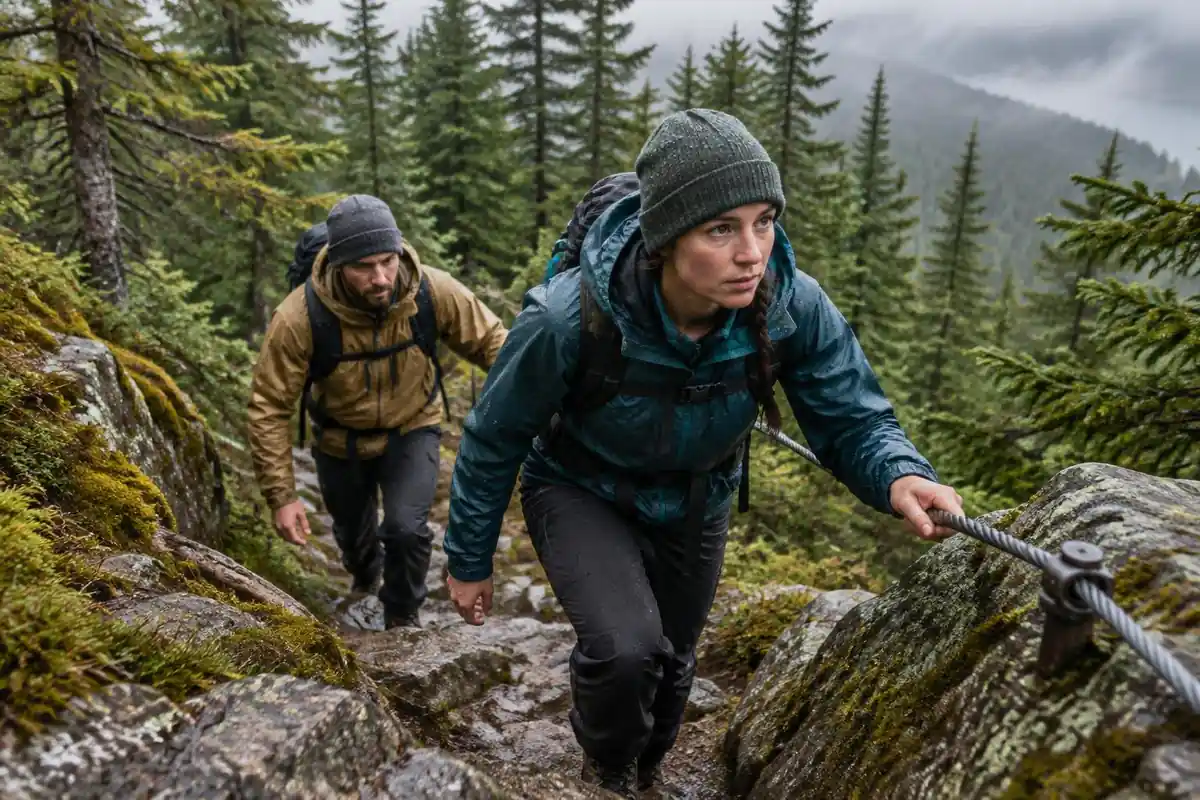
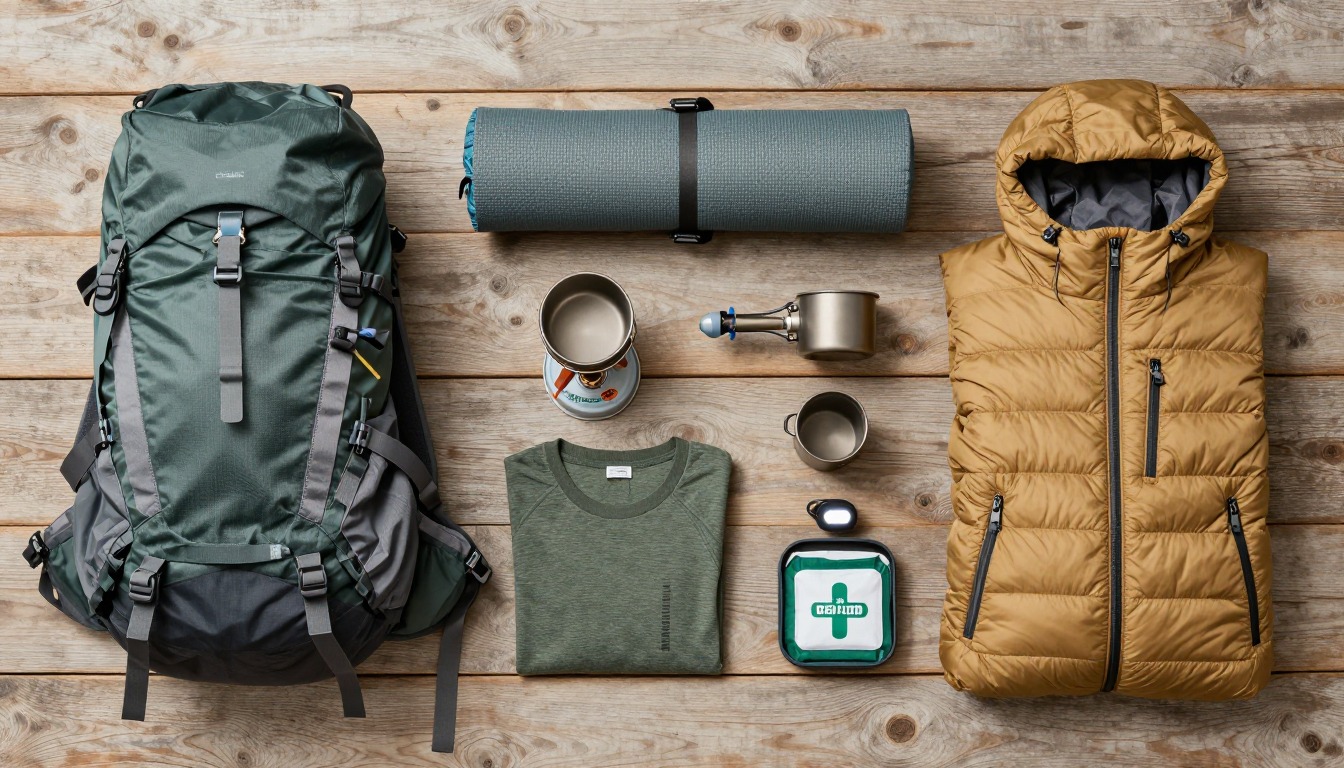
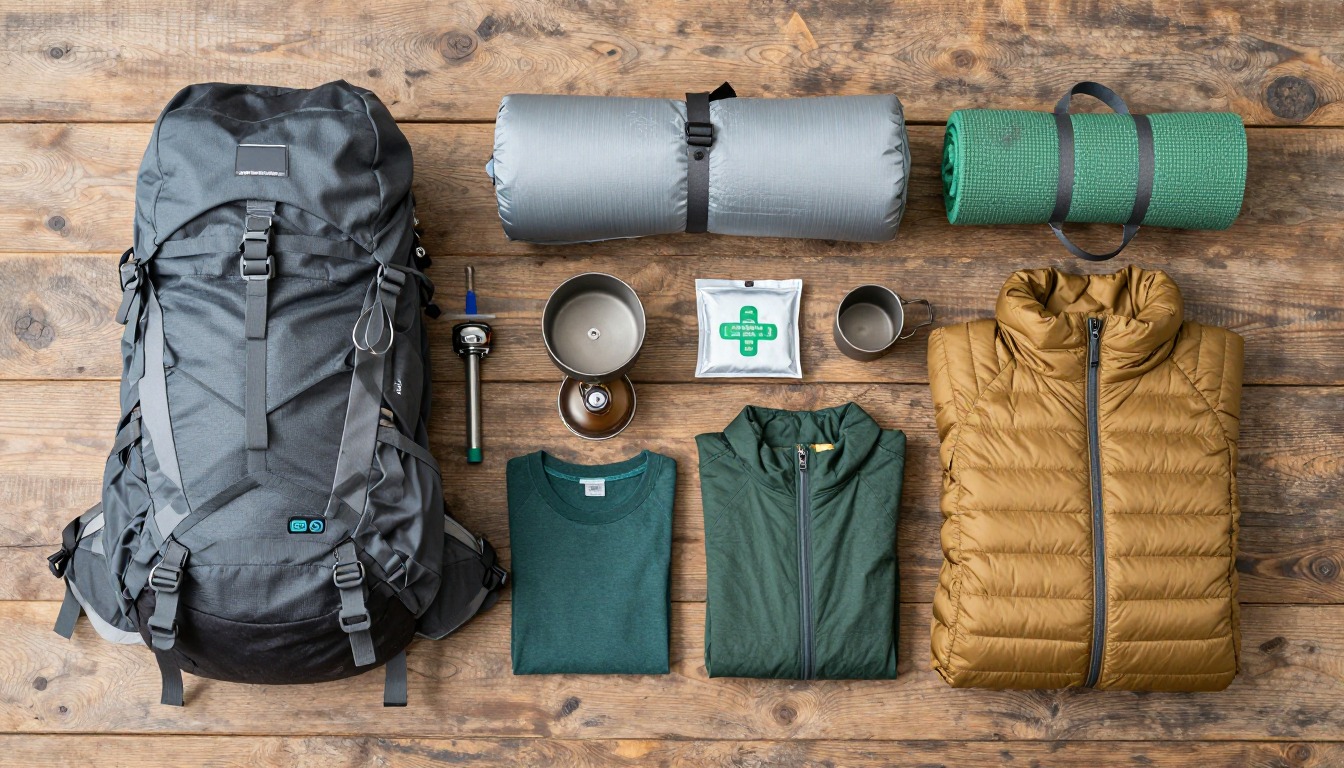
Shelter rules change how you pack. Backpackers with itineraries that include shelters must stay inside the shelter, hammocks may not be used inside or attached to shelters, and only holders of the Appalachian Trail thru-hiker permit may tent outside a full shelter.1 Tents and hammocks belong at designated campsites. If your plan uses a shelter night, you still need a sleeping bag and pad, but a tent is only useful on the night you are at a campsite.
LeConte Lodge has its own reservation system. The park pages used for this depth section do not describe it, so confirm booking dates and what the lodge provides with the lodge itself or the park before you count on a bed.
Cables instead of canisters
The park requires all odorous items, including food, trash, lip balm and toothpaste, to be hung on the bear cable system at each campsite or shelter.1 That is different from Rocky Mountain, where a hard-sided commercial canister is required for every wilderness overnight and has to be kept 200 feet from the campsite.2 NPS says food storage rules vary by park and to check before you go, which is exactly this situation.4 In practice, the Smokies pack does not need canister volume, but it does need a way to bag and hang your food and scented items.
The rest of the waste and washing rules are specific too. The park says to dispose of human waste at least 100 feet from any campsite, shelter, water source or trail in a hole at least 6 inches deep, while NPS Leave No Trace guidance gives 200 feet and 6 to 8 inches.1,5 The two figures differ, so follow the park's rule here. The park also bans soap, even biodegradable soap, in water sources.1 Fires are only allowed in existing rings at designated sites, and only dead and down wood or certified heat-treated firewood may be used.1
Frontcountry campgrounds and mountain navigation
The park lists 10 developed campgrounds, and says frontcountry sites are near your car with restrooms with cold running water, flush toilets, a fire grate and a picnic table at each site.6 Group campgrounds are for groups of eight or more, and horse camps are separate.6 For a hiker who wants to climb Alum Cave in a day, a campground is the simplest base.
On the mountain, the park warns that GPS units and vehicle navigation can be inaccurate in its terrain, that commercial base maps can show nonexistent roads and misdirected trails, and that dense canopy and deep valleys degrade satellite quality.3 The park backcountry page offers a downloadable trail map that shows trails, backcountry shelters and campsites.1
Common questions
How do I get a spot at LeConte Lodge?
LeConte Lodge is a hike-in-only property with no road access. It runs its own reservation system, so confirm booking dates and what the lodge provides with the lodge itself or the park before you count on a bed. Demand is high, so if you want to sleep at the top rather than hike up and back in a day, plan to book as early as the lodge allows.
What if I can't get a LeConte Lodge reservation?
Most hikers doing Alum Cave as a day hike simply climb to the summit and back down the same day, which doesn't require any lodging on the mountain at all. If you want an overnight without the lodge, backcountry camping is an option with a permit, or you can base yourself in Gatlinburg or Townsend and treat the summit as a long day trip.
Can I camp in the park instead of staying in a town?
Yes — developed campgrounds such as Elkmont and Smokemont can be reserved through Recreation.gov and put you inside the park rather than in a gateway town. Backcountry camping along trails and at shelters is also available but requires its own permit and a reservation for a specific site, so plan that separately from a night in a developed campground.
Complete gearsets for this trip
Full curated kits built for exactly this kind of hike — what to bring, why, and links to similar gear.
Lodging details are compiled from official parks, refuge associations and reservation systems and can change without notice. We publish no prices, availability or ratings — always confirm current information on the official site before booking or setting out. Product links and the accommodation map are affiliate links: we may earn a commission at no extra cost to you; product prices and availability are shown on Amazon, and accommodation prices on the booking site. See our affiliate disclosure.