
Best Time to Hike Mount Kosciuszko — Main Range
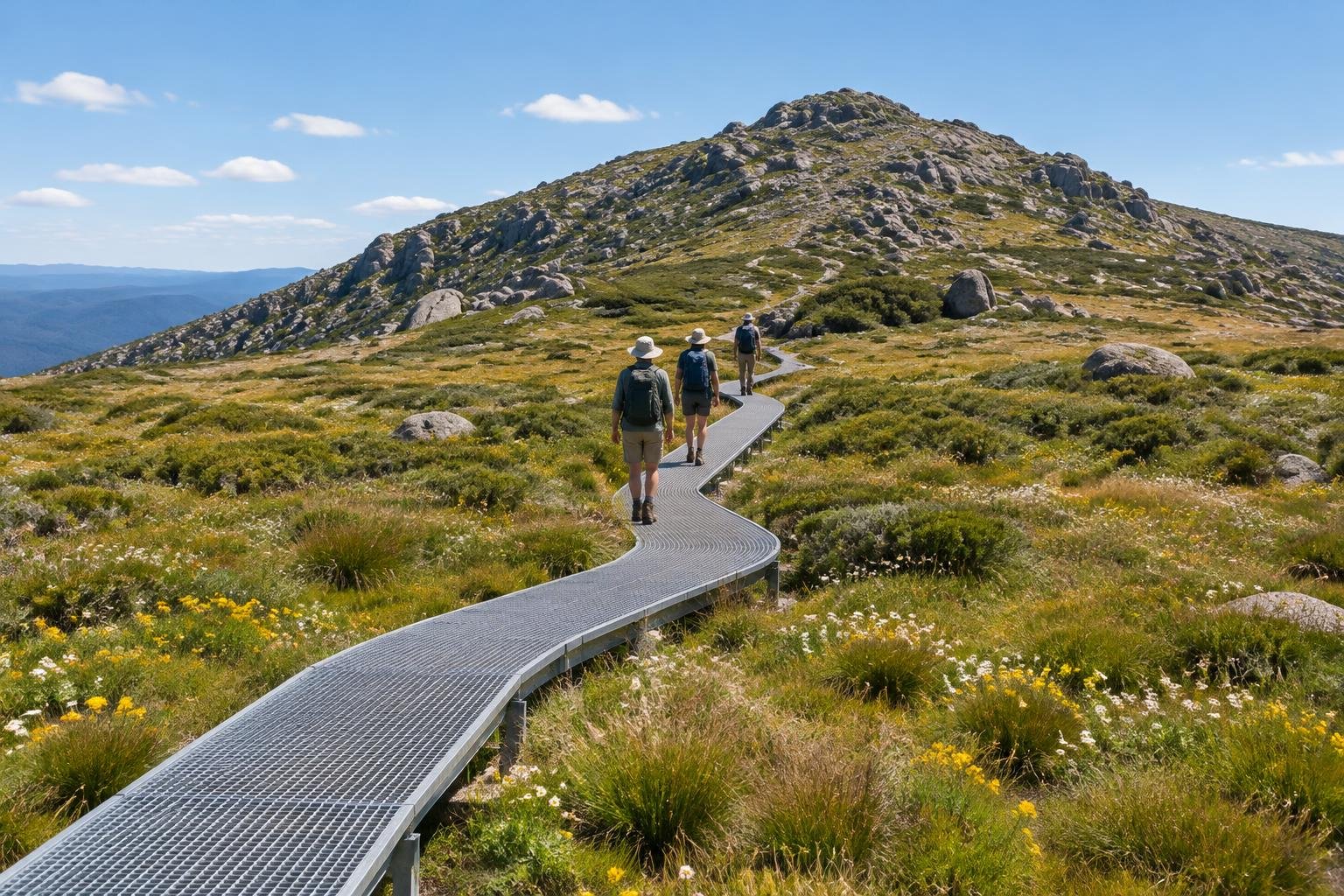
The best time to hike Mount Kosciuszko is summer, from December to March, according to the official season guidance. These are the warmest months of the year here, with the longest daylight. Winter turns the Main Range into a snow trip, so it suits a different kind of preparation.
Month-by-month climate for Mount Kosciuszko — Main Range
| Month | Relative warmth | Rain | Daylight |
|---|---|---|---|
| Jan | Warmest | 95 mm | 14.2 h |
| Feb | Warmest | 90 mm | 13.3 h |
| Mar | Warm | 102 mm | 12.3 h |
| Apr | Mild | 65 mm | 11.1 h |
| May | Cool | 76 mm | 10.1 h |
| Jun | Coldest | 87 mm | 9.5 h |
| Jul | Coldest | 76 mm | 9.7 h |
| Aug | Coldest | 86 mm | 10.6 h |
| Sep | Cool | 72 mm | 11.8 h |
| Oct | Mild | 113 mm | 13 h |
| Nov | Warm | 116 mm | 14 h |
| Dec | Warm | 97 mm | 14.5 h |
Modelled regional averages for 2010–2023 (rainfall) and calculated daylight hours; they describe the wider area, not a reading taken on the trail. “Relative warmth” compares each month with the warmest and coldest months of this place’s own year. It is not a temperature, and the high parts of a route are colder than the region around them.
The modelled averages show a fairly even spread of rain through the year, with no truly dry season. November (116 mm) and October (113 mm) are the wettest months, while April (65 mm) is the driest. Daylight swings from about 14.5 hours in December to roughly 9.5 hours in June, which matters for pacing a long day. January and February are the relatively warmest months of this place's year, and June to August are the coldest. These are regional averages, not trail measurements, and the high ridge usually feels harsher than any average suggests.
Mount Kosciuszko — Main Range season by season
Summer · December to March
This is the window the managing authority points to. Daylight is at its longest, with roughly 14 hours in January and still over 12 hours in March, which leaves comfortable margins for a day hike. January and February are the warmest months of the year here, and March stays warm. Rain is typically 90 to 102 mm a month, so showers are still part of the picture. The terrain is exposed alpine country, and cold, wind and cloud can arrive quickly even in summer, so carry layers and check conditions with the park authority before setting out.
Autumn · April to May
April is mild and is the driest month of the year in the averages, at about 65 mm, while May cools down with roughly 76 mm. Daylight shortens noticeably, from around 11 hours in April to about 10 in May, so an early start matters more as the season goes on. The official guidance names summer rather than autumn as the best season, so treat these months as a shoulder period. Expect the exposed ridge to feel colder than the monthly labels imply, and check current conditions with the managing authority.
Winter · June to August
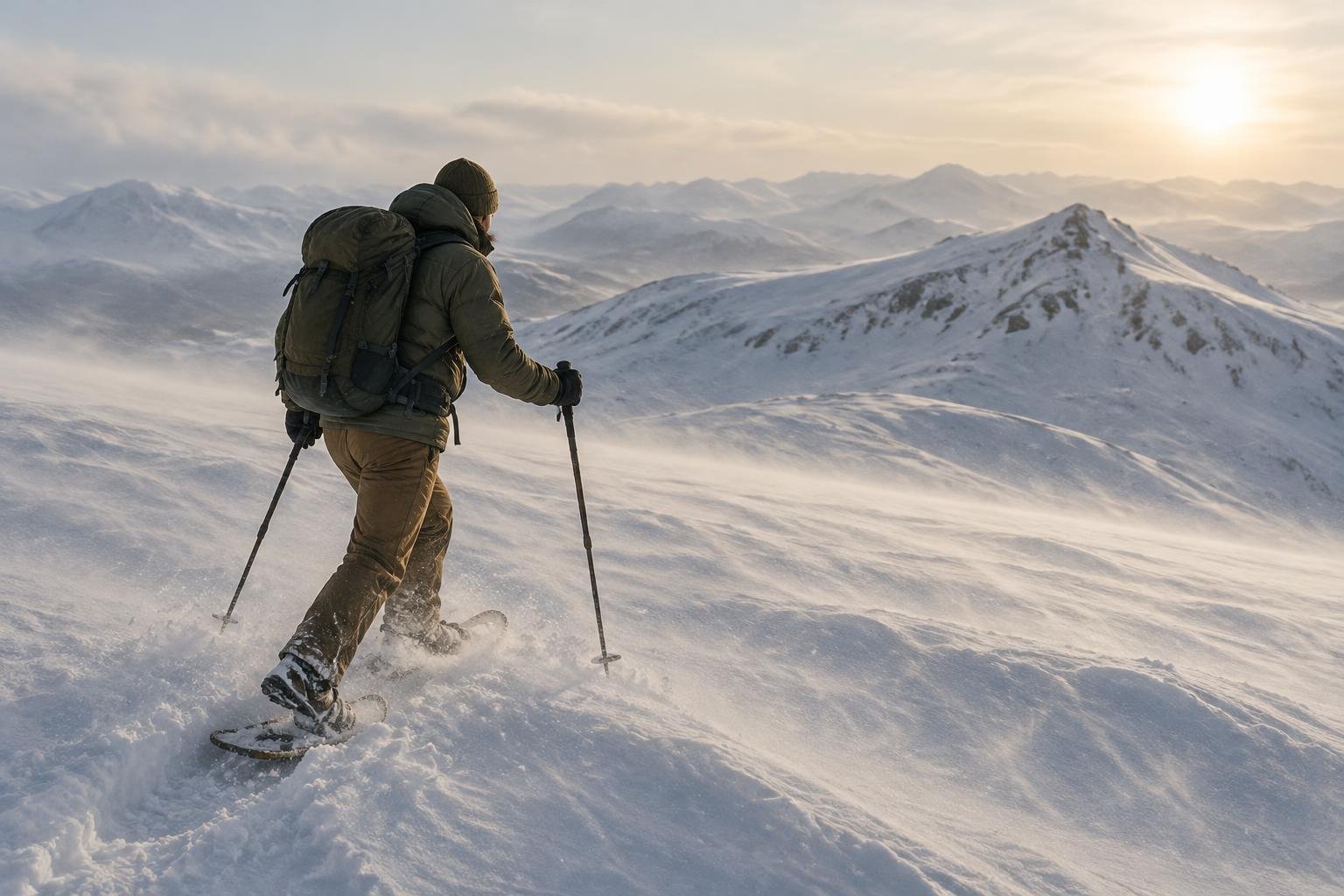
June, July and August are the coldest months of this place's year, with daylight of only about 9.5 to 10.6 hours. Monthly rain of roughly 76 to 87 mm falls in a season the official guidance describes as a snow trip. That means this is no longer a simple summer walk, and it calls for different planning and equipment than the summer route. Shorter days leave little margin for delays. Confirm conditions and any guidance directly with the managing authority before considering a winter visit.
Spring · September to November
Spring warms gradually from cool in September to warm by November, and daylight grows from about 11.8 hours to 14 hours. October and November are the wettest months in the averages, at around 113 and 116 mm, so showers are likely. The official season guidance centers on summer, so this is a transition period rather than the recommended window. The alpine environment can still turn cold, windy and cloudy quickly, so pack for variable weather and check conditions with the park authority beforehand.
Official season guidance
NSW National Parks & Wildlife Service: Summer (December–March); winter is a snow trip
No permit is needed for the day hike (a park entry fee applies to drive in). The route to the summit is gentle by mountain standards, but it is exposed alpine country where cold, wind and cloud can arrive fast even in summer — carry layers.
Check current dates on nationalparks.nsw.gov.au (Kosciuszko National Park)What to pack for the season
Pack around the season rather than the forecast alone. In every month, bring layers you can add or remove, a waterproof shell for cold, wind and rain, and sun protection for exposed ground. In the shorter days of autumn and winter, add a headlamp and plan a turnaround time. Winter needs snow-specific preparation beyond a summer kit.
For layering, rain cover and weather planning, see hiking in rain, heat and cold.
Timing mistakes to avoid
The most common mistake is choosing a month from a single warm figure and assuming the summit will feel the same. The official season guidance points to December to March, while winter is described as a snow trip, so treating a cold-season day like a summer stroll is a real planning error. Another is ignoring the daylight swing, since days are far shorter in winter. Finally, remember there is no dry season here, so some rain is possible at any time. Always confirm current conditions with the managing authority.
Common questions
What is the best month to hike Mount Kosciuszko?
The official season guidance points to summer, December to March. January and February are the relatively warmest months of the year here, with the longest daylight. Even then, cold, wind and cloud can arrive fast, so carry layers and check conditions with the managing authority.
Is winter a good time to hike Mount Kosciuszko?
The official guidance describes winter as a snow trip, meaning it is a different kind of outing from the summer day hike. June to August are the coldest months here, with only about 9.5 to 10.6 hours of daylight. Plan accordingly and confirm conditions with the authority.
When is the driest time to hike Mount Kosciuszko?
In the modelled averages, April is the driest month at about 65 mm, while October and November are the wettest at around 113 and 116 mm. Rain falls through the whole year, though, so no month is reliably dry. These are regional averages, not trail measurements.
How much daylight can I expect on the hike?
Daylight runs from about 14.5 hours in December to roughly 9.5 hours in June. In summer you have long margins for a day hike, while in the cooler months an early start and a firm turnaround time matter more. Carry a headlamp outside summer.
Sources
- NSW National Parks & Wildlife Service — nationalparks.nsw.gov.au (Kosciuszko National Park): official season and permit guidance.
- NASA POWER (Prediction Of Worldwide Energy Resources): monthly temperature and rainfall averages, 2010–2023, from MERRA-2 reanalysis. Daylight hours are calculated from latitude.
Conditions, closures and permit rules change without notice — confirm current information with the managing authority before you go. See our editorial policy and affiliate disclosure.