
Best Time to Hike Blue Mountains — Grand Canyon Track
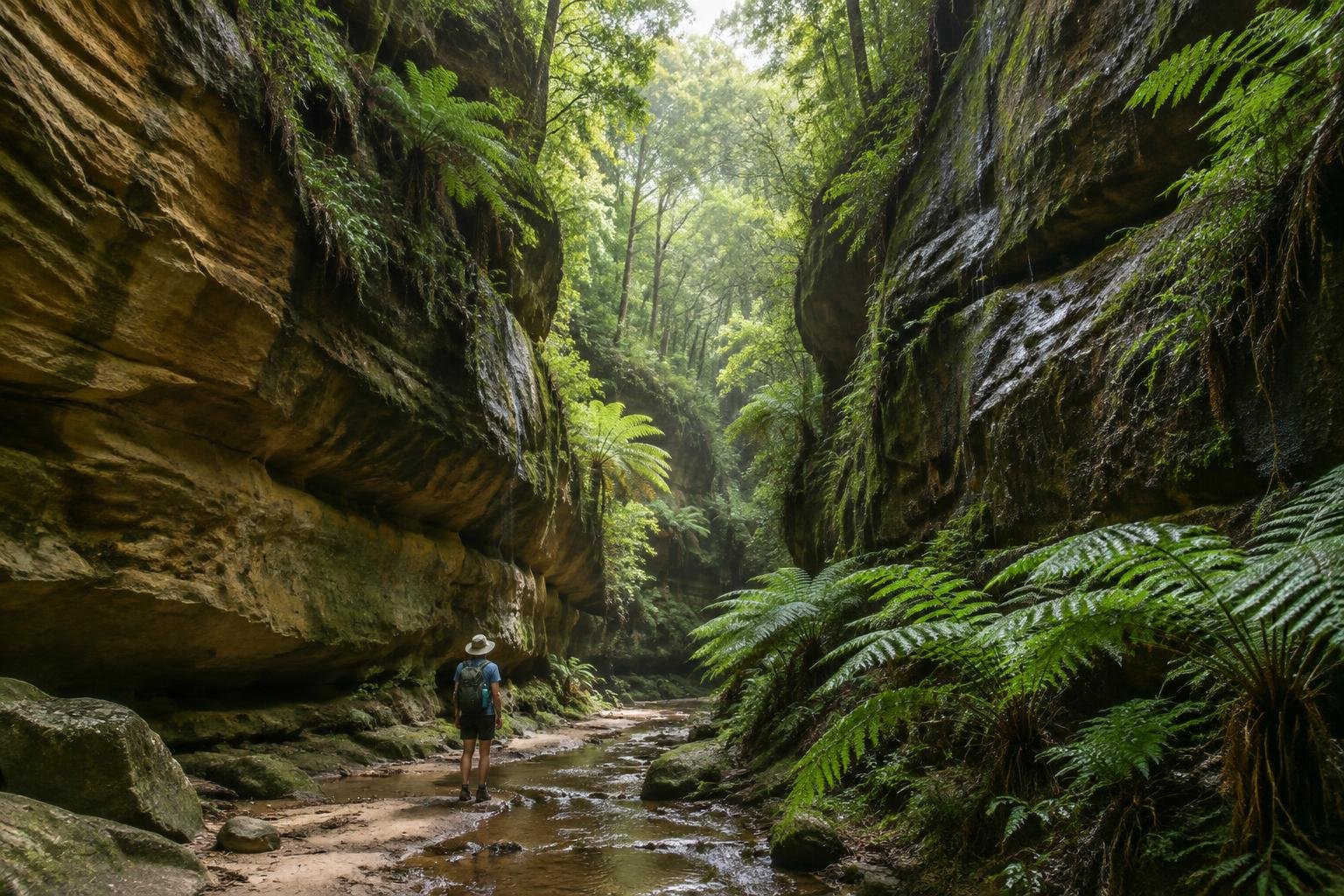
The best time to hike Blue Mountains Grand Canyon Track is spring or autumn, though the official season guidance says the loop can be walked year-round. Those shoulder seasons bring mild conditions and moderate rainfall, which suits a damp fern canyon with steps and a waterfall passage.
Month-by-month climate for Blue Mountains — Grand Canyon Track
| Month | Relative warmth | Rain | Daylight |
|---|---|---|---|
| Jan | Warmest | 93 mm | 14 h |
| Feb | Warmest | 107 mm | 13.2 h |
| Mar | Warm | 132 mm | 12.3 h |
| Apr | Mild | 53 mm | 11.2 h |
| May | Coldest | 31 mm | 10.3 h |
| Jun | Coldest | 48 mm | 9.8 h |
| Jul | Coldest | 40 mm | 10 h |
| Aug | Coldest | 41 mm | 10.7 h |
| Sep | Cool | 39 mm | 11.8 h |
| Oct | Mild | 60 mm | 12.9 h |
| Nov | Warm | 94 mm | 13.8 h |
| Dec | Warmest | 83 mm | 14.2 h |
Modelled regional averages for 2010–2023 (rainfall) and calculated daylight hours; they describe the wider area, not a reading taken on the trail. “Relative warmth” compares each month with the warmest and coldest months of this place’s own year. It is not a temperature, and the high parts of a route are colder than the region around them.
Modelled regional averages show a clear wet season early in the year: March is the wettest month at about 132 mm, with February at 107 mm and November at 94 mm. The driest months are May (31 mm), September (39 mm) and July (40 mm). Daylight swings from about 9.8 hours in June to 14.2 hours in December. Relative to this place's own year, December through February is warmest, while May through August is coldest. April and October sit in the mild middle, which lines up with the spring and autumn preference.
Blue Mountains — Grand Canyon Track season by season
Summer · December to February
This is the warmest part of this place's own year, with the longest days, up to about 14.2 hours of daylight in December. Rainfall typically builds from about 83 mm in December to 107 mm in February, so the damp canyon floor and the waterfall passage can be slippery. Long days give you generous time for the climb back out, and the shaded fern canyon is a cooler setting than exposed ground. Allow extra time and keep shoes with good grip close at hand.
Autumn · March to May
Autumn starts wet, with March the rainiest month at about 132 mm, then eases sharply to roughly 53 mm in April and 31 mm in May. April is mild, while May is among the coldest months of the year here. The official season guidance names autumn as one of the loveliest times, and the later weeks combine drier averages with comfortable walking conditions. Daylight shortens from about 12.3 hours to 10.3 hours, so plan your start time around the descent and the climb back up.
Winter · June to August
Winter is the coldest stretch of this place's own year, with the shortest days: about 9.8 hours of daylight in June, lengthening to 10.7 hours by August. Rainfall is typically low, between roughly 40 and 48 mm a month, which can mean fewer wet surfaces overall. The canyon is shaded and damp regardless of season, so stone steps and the waterfall passage can still be slippery. The short days make an early start sensible so the loop finishes comfortably in daylight.
Spring · September to November
Spring is the other season the official guidance singles out as loveliest. September is cool and one of the driest months at about 39 mm, October is mild with about 60 mm, and November warms up with about 94 mm of rain on average. Daylight grows quickly from about 11.8 hours to 13.8 hours, which gives a relaxed pace on the steps and the climb out. September and October tend to offer the best balance of moderate temperatures and lower rainfall for this loop.
Official season guidance
NSW National Parks & Wildlife Service: Year-round; spring and autumn are loveliest
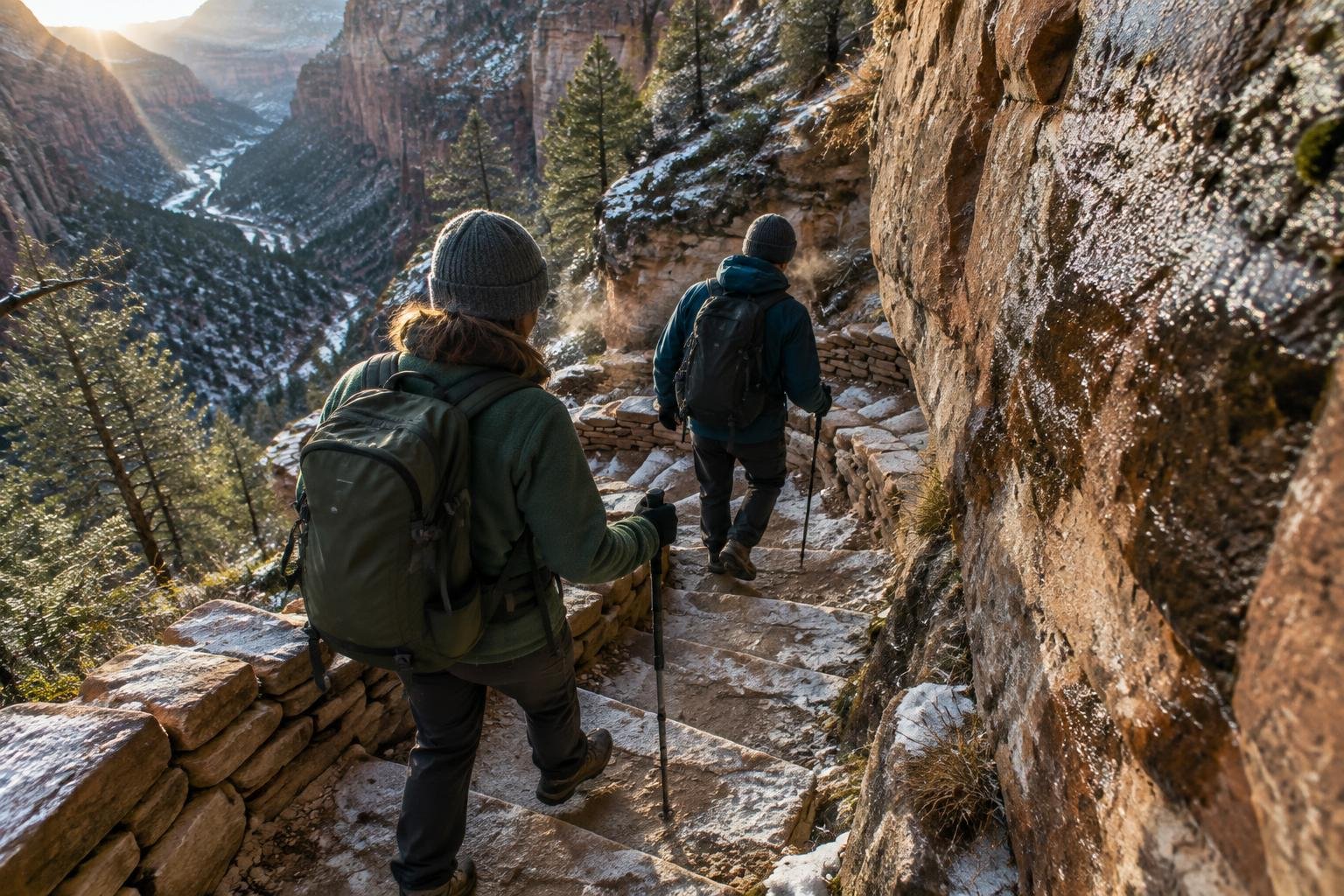
No permit is needed for the loop. The track drops into a cool, damp fern canyon with steps and a short passage behind a waterfall — it can be slippery, so wear proper shoes and allow time for the climb back out.
Check current dates on nationalparks.nsw.gov.au (Grand Canyon Track)What to pack for the season
Pack for a cool, damp canyon whatever the month: shoes with reliable grip, a light layer for the shaded floor, and a rain shell in the wetter months from November to March. Add sun protection for summer days and a headlamp in winter, when daylight falls below about 10.7 hours. Bring water for the climb back out.
For layering, rain cover and weather planning, see hiking in rain, heat and cold.
Timing mistakes to avoid
The most common mistake is treating the year-round season as meaning every month feels the same. Rainfall climbs to about 132 mm in March, and the canyon's steps and waterfall passage are already described as slippery, so wet months add real caution. Another is underestimating the climb back out, especially when winter daylight is under about 10 hours. Starting late in a short-day month leaves little margin. Finally, check with NSW National Parks & Wildlife Service before you go, because conditions and access can change.
Common questions
Can I hike the Grand Canyon Track year-round?
Yes. The official season guidance describes the route as a year-round walk, with spring and autumn being the loveliest times. Conditions still vary by month, so check current track information with NSW National Parks & Wildlife Service before you set out, especially after wet weather.
Which months are driest for this hike?
Modelled regional averages put May at about 31 mm, September at about 39 mm and July at about 40 mm as the driest months. These are typical figures rather than trail measurements, so conditions in the canyon can still be damp and slippery on any given day.
Is summer a good time to hike the loop?
Summer is the warmest part of this place's own year and offers the longest days, up to about 14.2 hours of daylight in December. Rainfall averages roughly 83 to 107 mm a month, so expect damp surfaces. The shaded canyon can feel cooler than open ground, but shoes with good grip remain important.
How much daylight should I plan around in winter?
Winter daylight is the shortest of the year, about 9.8 hours in June and around 10 hours in July. Because the descent and the climb back out take time, an early start helps you finish in daylight. Carrying a headlamp is a sensible backup in these months.
Sources
- NSW National Parks & Wildlife Service — nationalparks.nsw.gov.au (Grand Canyon Track): official season and permit guidance.
- NASA POWER (Prediction Of Worldwide Energy Resources): monthly temperature and rainfall averages, 2010–2023, from MERRA-2 reanalysis. Daylight hours are calculated from latitude.
Conditions, closures and permit rules change without notice — confirm current information with the managing authority before you go. See our editorial policy and affiliate disclosure.