
Best Time to Hike Kamikochi — Japanese Alps
The best time to hike Kamikochi is between mid-April and mid-November, the period when the valley is open according to the Ministry of the Environment's season guidance. Within that window, late spring through early autumn offers the warmest conditions and the longest days, so plan around those months while confirming exact dates with the managing authority.
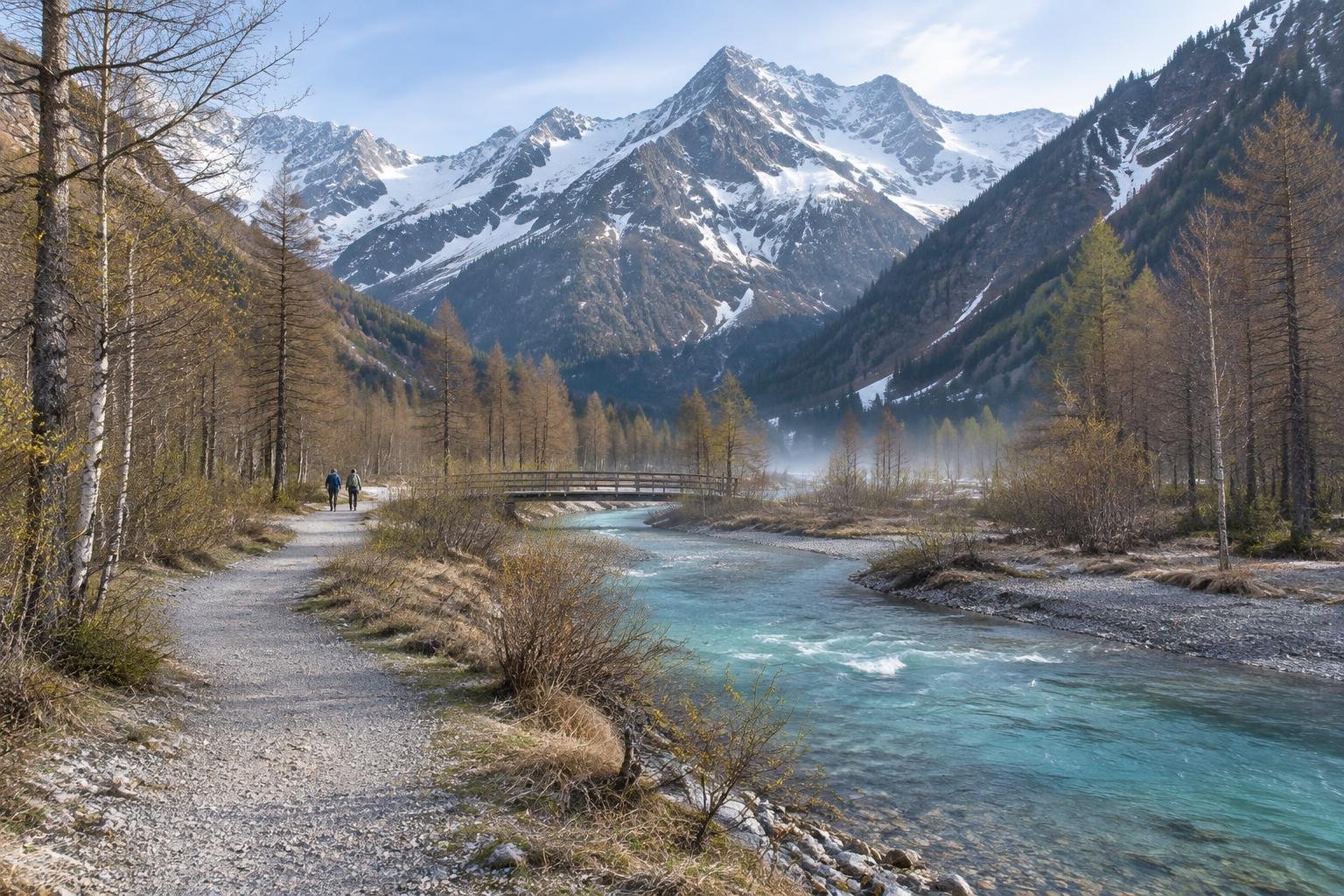
Month-by-month climate for Kamikochi — Japanese Alps
| Month | Relative warmth | Rain | Daylight |
|---|---|---|---|
| Jan | Coldest | 148 mm | 9.8 h |
| Feb | Coldest | 109 mm | 10.7 h |
| Mar | Cool | 113 mm | 11.7 h |
| Apr | Mild | 127 mm | 12.9 h |
| May | Warm | 116 mm | 13.9 h |
| Jun | Warmest | 154 mm | 14.5 h |
| Jul | Warmest | 222 mm | 14.2 h |
| Aug | Warmest | 185 mm | 13.4 h |
| Sep | Warmest | 198 mm | 12.2 h |
| Oct | Warm | 151 mm | 11.1 h |
| Nov | Mild | 130 mm | 10 h |
| Dec | Coldest | 187 mm | 9.5 h |
Modelled regional averages for 2010–2023 (rainfall) and calculated daylight hours; they describe the wider area, not a reading taken on the trail. “Relative warmth” compares each month with the warmest and coldest months of this place’s own year. It is not a temperature, and the high parts of a route are colder than the region around them.
Rainfall peaks in July at about 222 mm, with September (198 mm) and August (185 mm) close behind, while February is the driest at roughly 109 mm and March and May stay near 113 to 116 mm. Daylight swings from about 9.5 hours in December to 14.5 hours in June. The warmest months of the year here are June through September, and December through February are the coldest. These are modelled regional averages, not measurements taken on the trail.
Kamikochi — Japanese Alps season by season
Spring opening · Mid-April to May
The valley opens in mid-April, when the official season guidance begins, and conditions are typically mild before turning warm by May. Daylight grows from about 12.9 hours in April to 13.9 hours in May, giving long, usable days for valley walks. Rainfall is moderate at roughly 116 to 127 mm a month. It is a good window for lower, easier walking, but check with the managing authority on exact opening dates and conditions.
Early summer · June to July
June and July are among the warmest months of the year and bring the longest daylight, peaking near 14.5 hours in June. They are also wetter, with about 154 mm in June and the year's highest rainfall of roughly 222 mm in July. Expect showers to be a regular part of any plan, so build in flexibility and favor shorter valley walks over committing to long days on the high peaks.
Late summer and early autumn · August to September
August and September remain among the warmest months, with daylight easing from about 13.4 hours to 12.2 hours. Rainfall stays heavy, around 185 mm in August and 198 mm in September, so wet-weather planning still matters. Shorter days than midsummer mean starting earlier to keep a margin of light. This stretch suits hikers who accept some rain in exchange for warm conditions across the valley.
Late autumn and closure · October to mid-November
October is relatively warm and November turns mild, but daylight shortens to about 11.1 hours and then 10.0 hours. Rainfall eases to roughly 130 to 151 mm a month. The valley is open only until mid-November, so the end of the season is a real deadline rather than a soft one. Confirm the final access dates with the managing authority, and from late November through to mid-April, the area is outside the official season.
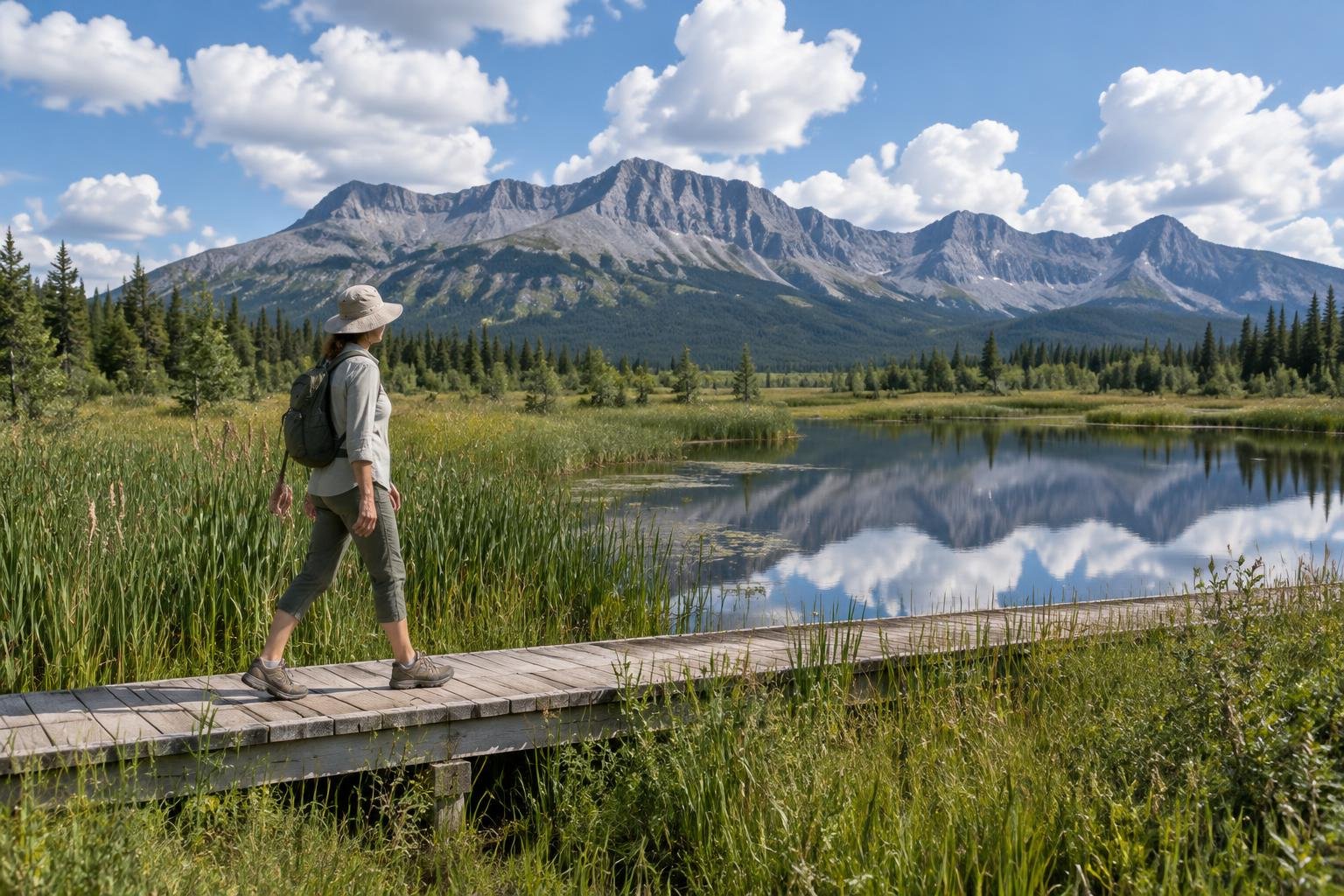
Official season guidance
Ministry of the Environment (Japan): Mid-April to mid-November, when the valley is open
No permit is needed for the valley walks, and the whole area is car-free (bus/taxi access only), open only in the snow-free months. Venturing onto the high peaks is real alpine hiking — go prepared, and use the mountain huts.
Check current dates on kamikochi.or.jp (Kamikochi official website, Japanese)What to pack for the season
Pack layers you can add or shed, since the warmest and coolest parts of the open season differ. Rain cover matters most from June to September, when monthly rainfall runs highest. Bring sun protection for long summer days and a headlamp for the shorter days of late autumn. If heading toward the high peaks, plan for real alpine conditions and use the mountain huts.
For layering, rain cover and weather planning, see hiking in rain, heat and cold.
Timing mistakes to avoid
A common mistake is relying on a single month rather than checking the official season guidance, which runs only from mid-April to mid-November. Another is ignoring that July is the wettest month and planning a tight itinerary with no slack. Hikers also underestimate how quickly daylight shrinks by October and November. Treating the valley walks and the high Northern Alps as the same undertaking is risky, because the high peaks are genuine alpine hiking. Always confirm dates and conditions with the managing authority.
Common questions
When does Kamikochi open and close each year?
The official season guidance gives mid-April to mid-November as the period when the valley is open. Exact opening and closing dates can shift, so confirm them with the Ministry of the Environment or the managing authority before you travel. Outside that window the area is not open for visitors.
Which month is wettest for hiking Kamikochi?
July is typically the wettest month, with modelled rainfall of about 222 mm, followed by September at roughly 198 mm and August at around 185 mm. These are regional averages rather than trail measurements, so treat them as a guide and pack reliable rain cover for summer visits.
How much daylight can I expect while hiking there?
Daylight peaks at about 14.5 hours in June and falls to roughly 12.2 hours in September, about 11.1 hours in October and about 10.0 hours in November. Shorter late-season days mean starting earlier and carrying a headlamp, especially if you plan longer outings.
Is summer or autumn better for hiking Kamikochi?
Summer is the warmest with the longest days, but it is also the wettest, especially July. Autumn brings somewhat less rain by October, though days are noticeably shorter and the season ends in mid-November. Your choice depends on whether you value warmth and daylight or lighter rainfall; confirm conditions with the managing authority.
Sources
- Ministry of the Environment (Japan) — kamikochi.or.jp (Kamikochi official website, Japanese): official season and permit guidance.
- NASA POWER (Prediction Of Worldwide Energy Resources): monthly temperature and rainfall averages, 2010–2023, from MERRA-2 reanalysis. Daylight hours are calculated from latitude.
Conditions, closures and permit rules change without notice — confirm current information with the managing authority before you go. See our editorial policy and affiliate disclosure.