
Best Time to Hike The Enchantments
The best time to hike The Enchantments is late July to October, after the snow melts, according to the official season guidance. Modelled data backs this up: July and August are the driest months, with long daylight, though a permit is still required for any visit.
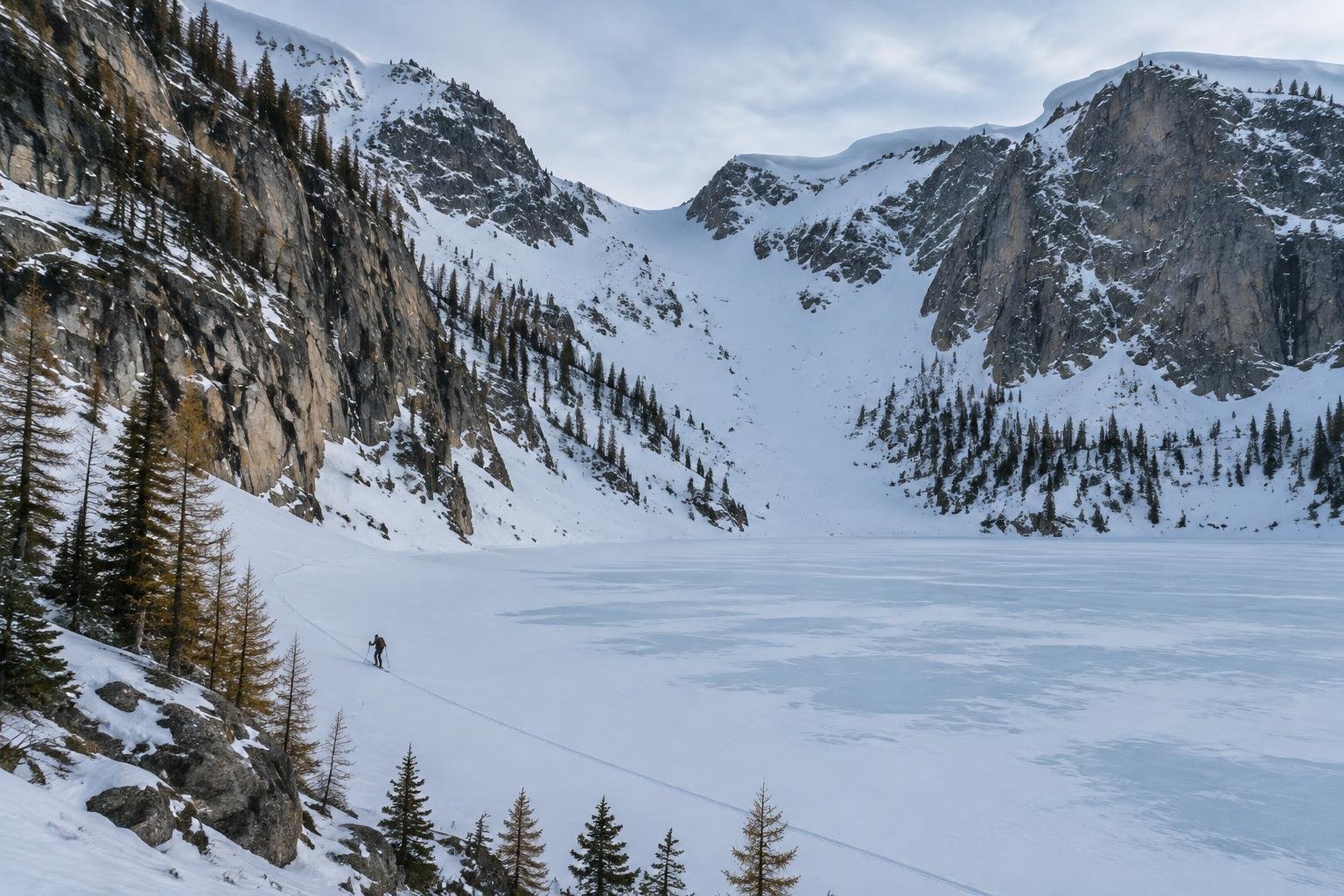
Month-by-month climate for The Enchantments
| Month | Relative warmth | Rain | Daylight |
|---|---|---|---|
| Jan | Coldest | 112 mm | 8.7 h |
| Feb | Coldest | 90 mm | 10 h |
| Mar | Cool | 83 mm | 11.6 h |
| Apr | Mild | 59 mm | 13.4 h |
| May | Warm | 51 mm | 14.9 h |
| Jun | Warmest | 36 mm | 15.7 h |
| Jul | Warmest | 14 mm | 15.4 h |
| Aug | Warmest | 15 mm | 14.1 h |
| Sep | Warmest | 35 mm | 12.3 h |
| Oct | Mild | 84 mm | 10.6 h |
| Nov | Cool | 111 mm | 9 h |
| Dec | Coldest | 122 mm | 8.3 h |
Modelled regional averages for 2010–2023 (rainfall) and calculated daylight hours; they describe the wider area, not a reading taken on the trail. “Relative warmth” compares each month with the warmest and coldest months of this place’s own year. It is not a temperature, and the high parts of a route are colder than the region around them.
The monthly numbers show a clear dry window. July and August typically average just 14 and 15 mm of rain, while December reaches about 122 mm and January 112 mm. Daylight swings from roughly 8.3 hours in December to 15.7 hours in June, which changes how much time a long through-hike allows. Relative to this place's own year, June through September are the warmest months, and December through February are the coldest. These are modelled regional averages, not trail measurements.
The Enchantments season by season
Winter and early spring · December to April
These months carry the heaviest modelled rainfall, with December at about 122 mm and January at about 112 mm, and the shortest daylight, down to roughly 8.3 hours in December. They are also the coldest part of this place's year. The official season guidance points to late July onward, after the snow melts, so this stretch is poorly matched to a strenuous through-hike. Check with the U.S. Forest Service before planning anything.
Late spring and early summer · May to mid-July
Rainfall typically eases from about 51 mm in May to 36 mm in June, and daylight stretches past 15 hours. The numbers look inviting, but the official season guidance specifically says to wait until late July, after the snow melts. Warmth in the valley does not tell you what conditions are like higher up. Confirm current conditions with the managing authority, and remember the overnight permit window opens on May 15.
Late July to September · Late July to September
This is the core window. July and August are the driest months in the data, averaging about 14 and 15 mm of rain, and these are among the warmest months of the year here. Daylight remains generous, around 15.4 hours in July and 12.3 hours in September, giving a long through-hike more breathing room. September rainfall rises to about 35 mm, so expect conditions to start shifting as the month goes on.
Autumn · October to November
October is still within the official season guidance, which runs through the month, but the data shows a turn. Rainfall typically jumps to about 84 mm in October and about 111 mm in November, and daylight drops to roughly 10.6 and 9.0 hours. Relative to this place's year, October is only mild and November cool. Overnight permits cover use through October 31, so plan around shorter days and check conditions before you commit.
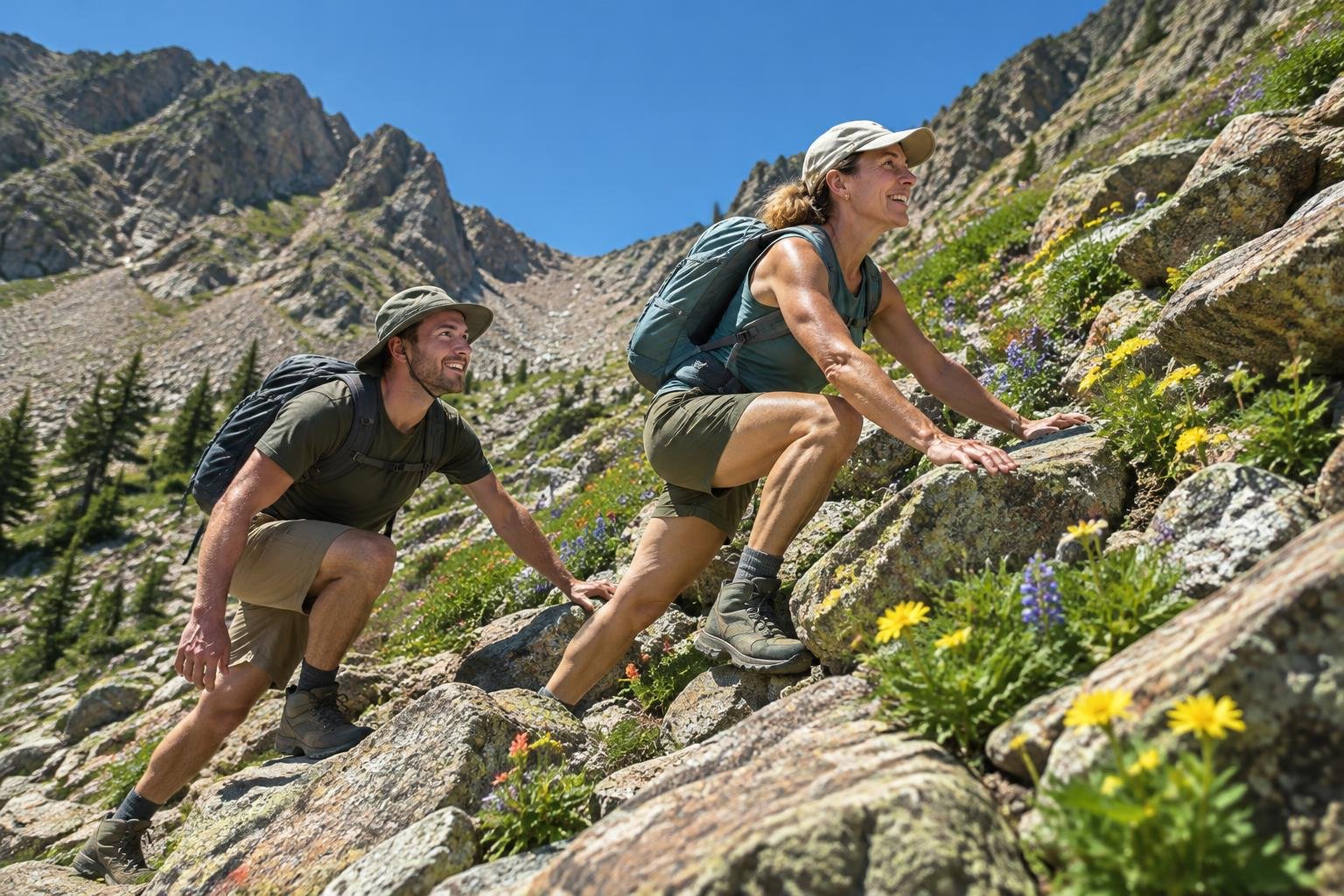
Official season guidance
U.S. Forest Service: Late July to October, after the snow melts
A permit is required for both day and overnight use: day users get a free, self-issued wilderness permit at a trailhead, and overnight use from May 15 to October 31 requires a permit obtained in advance through Recreation.gov (lottery, with leftover permits released later). The full through-hike is a very long, strenuous day. A car shuttle between the two trailheads is needed.
Check current dates on fs.usda.gov (Enchantments, Okanogan-Wenatchee National Forest)What to pack for the season
Packing should follow the season you choose. Late summer calls for sun protection and enough water, plus layers for a long day, since conditions can change over a strenuous route. Shoulder months add reliable rain cover and warmer layers. Shorter autumn daylight makes a headlamp a sensible backup on a very long day.
For layering, rain cover and weather planning, see hiking in rain, heat and cold.
Timing mistakes to avoid
The most common timing mistake is treating a warm, dry-looking month as a green light without reading the official season guidance. Late July to October after the snow melts is the stated window, so earlier dates can look fine in the data and still be wrong on the ground. Another is ignoring daylight: a very long, strenuous through-hike needs an early start, especially in September and October. Finally, don't skip the permit timing, since overnight use from May 15 to October 31 needs advance booking through Recreation.gov.
Common questions
When is the driest time to hike The Enchantments?
Modelled monthly data shows July and August as the driest months, averaging roughly 14 and 15 mm of rain. That lines up with the official late July to October window. These are regional averages rather than trail readings, so check current conditions with the U.S. Forest Service.
Is it worth going in October?
October is still inside the official season guidance, but the data shows rainfall rising to about 84 mm and daylight falling to roughly 10.6 hours. That makes a long through-hike tighter and wetter than in late summer. If you go, start early and confirm conditions with the managing authority first.
Can I hike it in June when days are longest?
June has the longest daylight in the data, about 15.7 hours, and low rainfall of around 36 mm. However, the official season guidance says to wait until late July, after the snow melts. Long days alone don't mean the route is ready, so check with the U.S. Forest Service.
Does the season affect permits?
Yes. Day use needs a free, self-issued wilderness permit at a trailhead. Overnight use from May 15 to October 31 requires a permit obtained in advance through Recreation.gov, via a lottery with leftover permits released later. Plan your dates around that permit window as well as the weather.
Sources
- U.S. Forest Service — fs.usda.gov (Enchantments, Okanogan-Wenatchee National Forest): official season and permit guidance.
- NASA POWER (Prediction Of Worldwide Energy Resources): monthly temperature and rainfall averages, 2010–2023, from MERRA-2 reanalysis. Daylight hours are calculated from latitude.
Conditions, closures and permit rules change without notice — confirm current information with the managing authority before you go. See our editorial policy and affiliate disclosure.