
Zhangjiajie vs Huangshan: Which Should You Hike?
Choose Zhangjiajie if you want a flexible, zone-by-zone trip with a choice between gentle valley paths and harder stairway climbs, and can spare two or three days. Choose Huangshan if you want a focused stair-climbing ascent with a summit overnight for sunrise, and you are ready for a strenuous day.
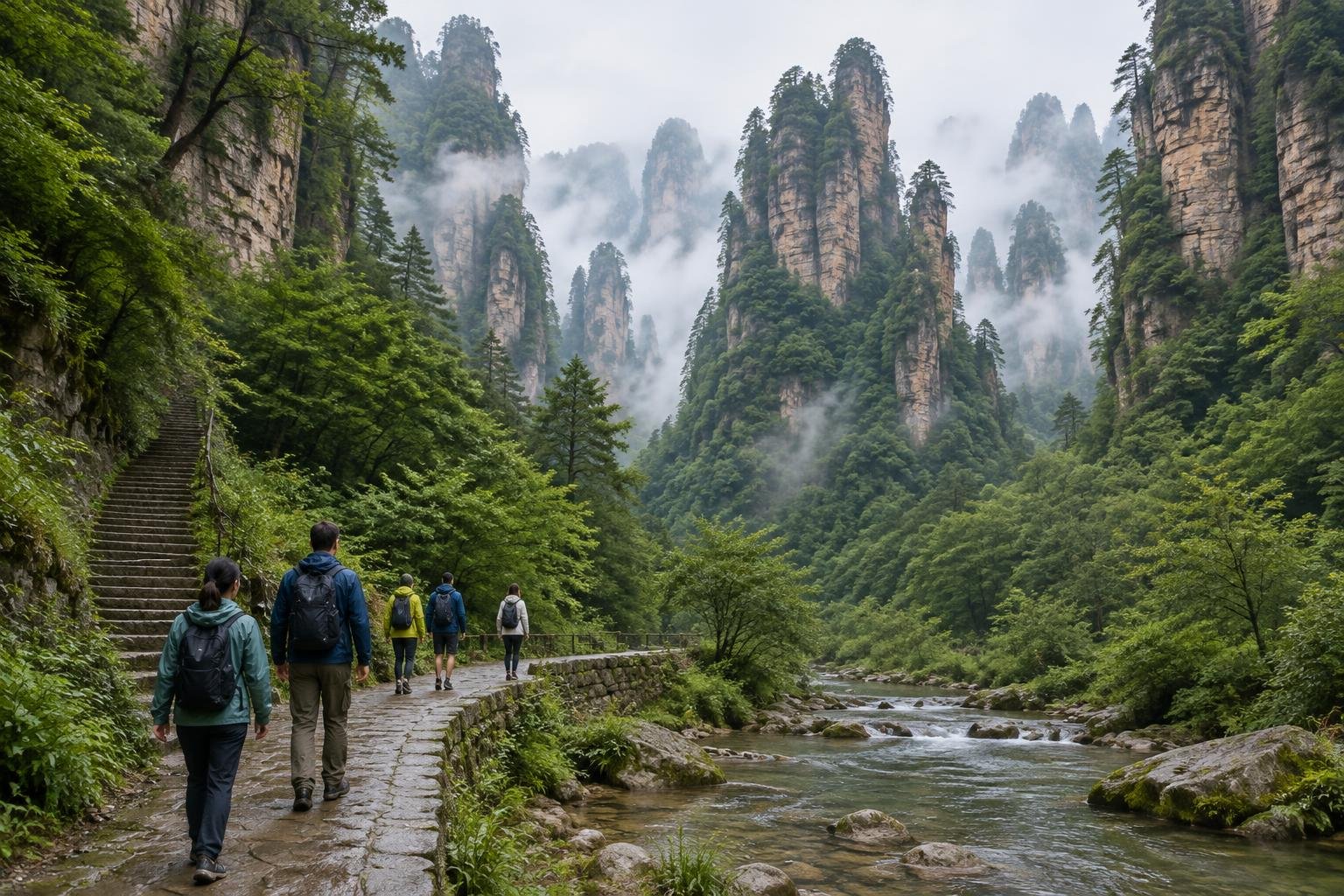
Zhangjiajie and Huangshan at a glance
Zhangjiajie, in Hunan, is a network of streamside paths, stairways and clifftop walkways among sandstone pillars. Huangshan, in Anhui, is a granite staircase route up Yellow Mountain, with ridge paths between its summit areas. Both are China scenic areas run by a regional scenic authority, and both appeal to hikers who want dramatic scenery with built paths, so travelers often weigh them against each other.
| Zhangjiajie | Huangshan | |
|---|---|---|
| Place | Hunan · China | Anhui · China |
| Distance | Check the official source | Check the official source |
| Elevation gain | Check the official source | Check the official source |
| Difficulty | Varies widely by route: easy (Golden Whip Stream, ~7.5 km, flat forest walk) to strenuous (Tianzi Mountain / Yuanjiajie stairways and cliff-edge boardwalks) | Strenuous |
| Route type | point-to-point | point-to-point |
| Official season | Spring and fall for milder weather and fewer crowds | Spring to fall; winter for snow scenes |
| Managed by | Regional scenic authority | Regional scenic authority |
Effort and difficulty
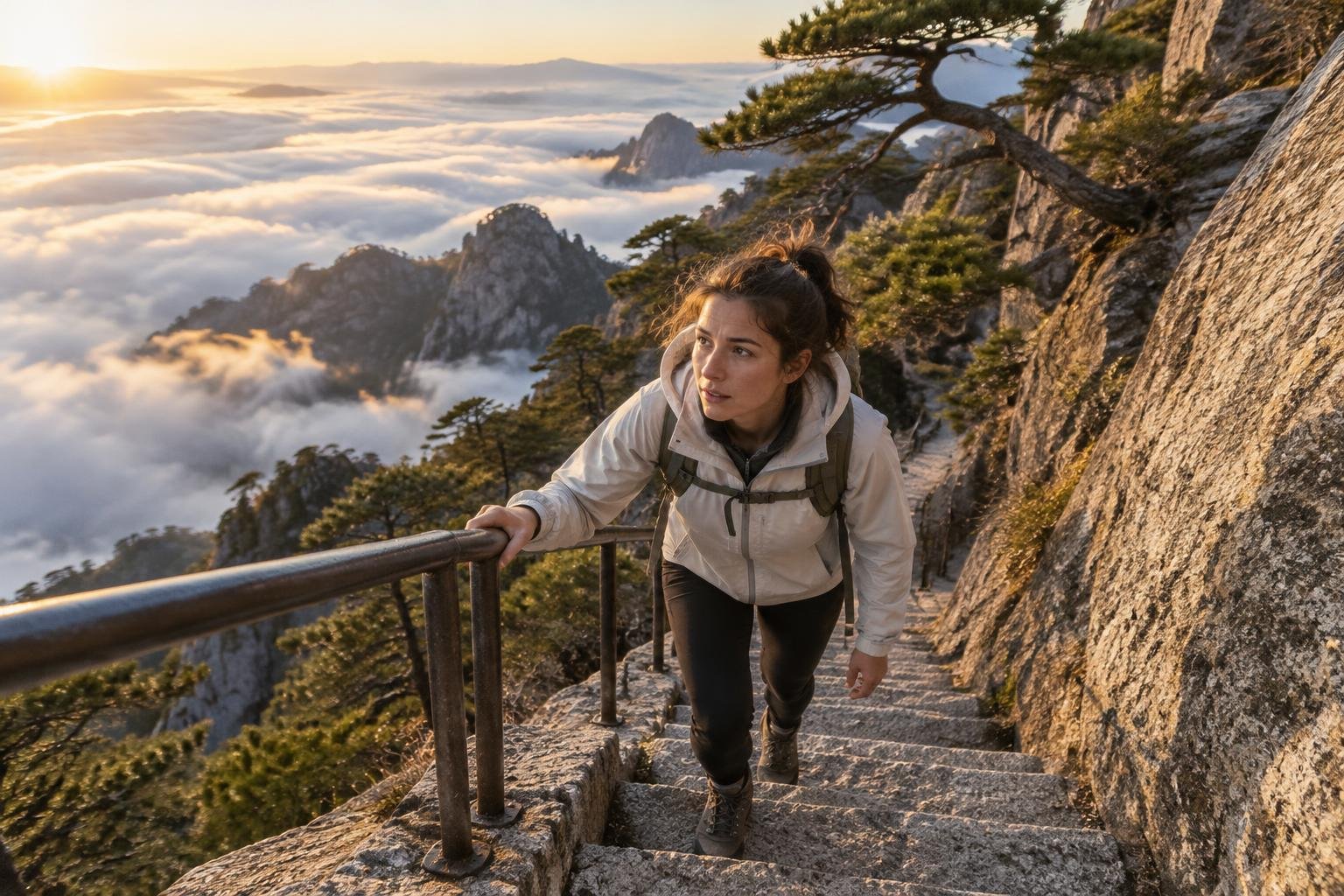
Neither distance nor elevation gain is published on this page, so check each official source for figures. The difficulty wording differs sharply. Zhangjiajie varies widely by route, from a flat forest walk of about 7.5 km along Golden Whip Stream to strenuous stairways such as Tianzi Mountain and Yuanjiajie. Huangshan is rated strenuous, built from thousands of steps rather than technical terrain. Zhangjiajie lets you dial the effort up or down, while Huangshan is the bigger commitment for your legs because the climbing is the whole route.
Season, permits and booking
Zhangjiajie's official guidance points to spring and fall for milder weather and fewer crowds. Huangshan's runs from spring to fall, with winter noted for snow scenes. Both require a scenic-area ticket, and Huangshan's cable cars carry separate fares. Zhangjiajie notes that entry reservation rules can apply, and its pillars are often wrapped in mist. Huangshan's peaks are cold and often cloudy. Rules and ticketing change, so confirm current arrangements with each managing authority before you book.
Which one is right for you?
Choose Zhangjiajie if…
Pick Zhangjiajie if you want to set your own pace. Casual walkers can stay on the flat valley-floor paths, while stronger hikers can climb the stairways between levels. It suits travelers with two or three days who are happy to plan by zone and let shuttle buses, cable cars and the Bailong glass elevator handle part of the day. It also rewards people who enjoy atmospheric, misty scenery.
How to hike Zhangjiajie — the Avatar PillarsChoose Huangshan if…
Pick Huangshan if you want one clear objective: climb the stone staircases, spend the night near the summit and catch sunrise. It suits hikers who are comfortable with a strenuous day of steps and handrails but want no navigation or scrambling. It also works for people short on time, since a two-day shape with one night on the mountain is the classic plan.
How to hike Huangshan — Yellow MountainWhat the two have in common
Both are point-to-point scenic-area trips on built paths rather than wilderness trails. Each relies on stone stairways, railed viewing areas and cable cars that can replace a climb in either direction. Both require tickets, both can be cloudy or misty, and both are best planned around cable-car or shuttle operating hours instead of your own pace. Foot traffic can bunch at popular spots in each.
How your choice changes what you pack
Zhangjiajie's multi-day, zone-based plan favors a lighter daypack, comfortable walking shoes and layers for changing mist and weather. Huangshan's summit overnight means packing a small overnight bag with warm layers for cold, cloudy peaks, plus sturdy footwear for thousands of steps. Knee-friendly gear helps on both, but Huangshan's descent makes it matter more.
Common questions
Which is harder, Zhangjiajie or Huangshan?
Huangshan is listed as strenuous throughout, built around long stair climbs. Zhangjiajie varies widely by route, from a flat forest walk to strenuous stairways, so its difficulty depends on which paths you choose.
Which is better for first-time hikers?
Zhangjiajie offers more flexibility, since gentler valley-floor paths sit alongside tougher stairways. Huangshan's staircases are strenuous but not technical, so a fit beginner who accepts the effort can manage them.
Do I need to stay overnight at either one?
Zhangjiajie is usually planned over two or three days by zone. At Huangshan, most people stay overnight near the summit to see sunrise, though a single long day is possible using cable cars. Check current rules for each.
Can I skip the climbing at either one?
Both have cable cars that can replace a climb in either direction. Zhangjiajie also has shuttle buses and the Bailong glass elevator. Check current ticketing, fares and operating hours with each managing authority.
Sources
- Regional scenic authority — UNESCO World Heritage Centre (Wulingyuan Scenic Area): official information for Zhangjiajie.
- Regional scenic authority — UNESCO World Heritage Centre (Mount Huangshan): official information for Huangshan.
Conditions, permits and access rules change without notice — confirm current information with each managing authority before you go. See our editorial policy.