
Torres del Paine W Trek vs Fitz Roy: Which Should You Hike?
Choose the Torres del Paine W Trek if you want a multi-day, point-to-point trip with refugio nights, glaciers and three big spurs, and you can plan reservations well ahead. Choose Fitz Roy if you want one demanding day hike straight from El Chaltén, with no transport to arrange and a flexible start time.
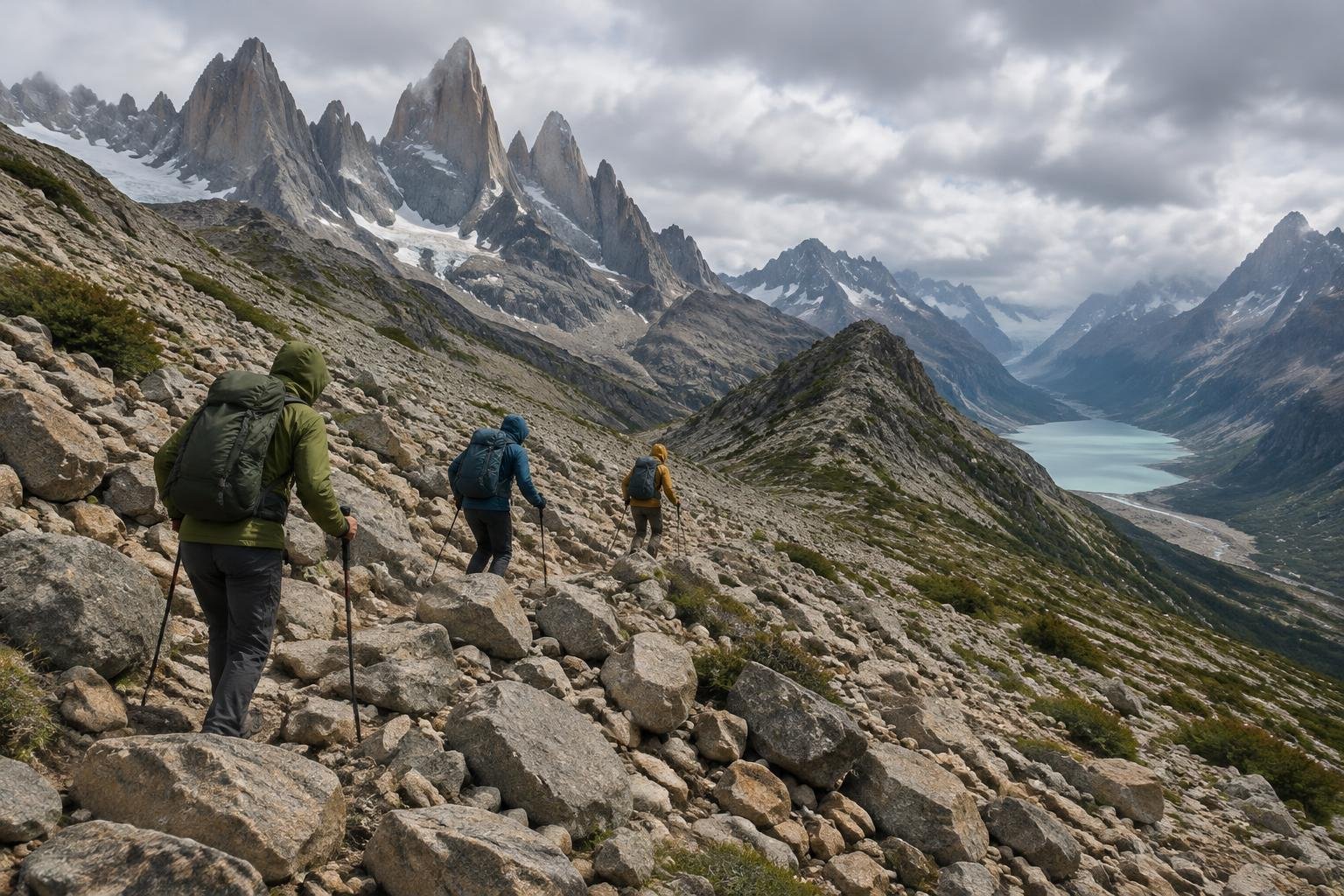
Torres del Paine W Trek and Fitz Roy at a glance
The Torres del Paine W Trek is a W-shaped, point-to-point route in Chilean Patagonia that most people walk in four or five days, sleeping at booked refugios or camps. Fitz Roy is an out-and-back route in Argentina that runs from the edge of El Chaltén to Laguna de los Tres. Both are Patagonian granite classics with the same November to March season, so hikers often weigh a multi-day trek against a single big day.
| Torres del Paine W Trek | Fitz Roy | |
|---|---|---|
| Place | Patagonia · Chile | Patagonia · Argentina |
| Distance | ~75–80 km / 47–50 mi, 4–5 day W-shaped route | ~22-24 km round trip out-and-back from El Chaltén (one GPS-tracked source gives 23.6 km); some operators cite a shorter ~20-21 km |
| Elevation gain | Cumulative elevation gain roughly 3,000–3,500 m (9,800–11,500 ft) over the full route for the whole multi-day trek, depending on which side trips (Torres base viewpoint, French Valley, Grey Glacier) are included | Reported round-trip gain varies by source, roughly 700-975 m; the final ~400 m climb up a rocky moraine to the lagoon is the steepest, most exposed section |
| Difficulty | Moderate to strenuous (the side-trip days to the Torres base and French Valley viewpoint are the hardest) | Strenuous day hike — long, with a steep, technical-feeling final push, though non-technical overall |
| Route type | point-to-point | out-and-back |
| Official season | November to March (Patagonian summer) | November to March (Patagonian summer) |
| Managed by | CONAF & park concessionaires | Administración de Parques Nacionales |
Effort and difficulty
The W Trek is the larger commitment. It covers roughly 75-80 km (47-50 mi) over four or five days, with cumulative gain of roughly 3,000-3,500 m (9,800-11,500 ft) depending on which side trips you include. Its difficulty is listed as moderate to strenuous, and the hardest days are the Torres base and French Valley spurs. Fitz Roy is about 22-24 km (round trip) with reported gain of roughly 700-975 m. Its difficulty is strenuous: the long rolling middle is pleasant, but the final climb of about 400 m up loose rock and scree is steep, exposed and relentless. The W spreads its effort across days; Fitz Roy concentrates it in one.
Season, permits and booking
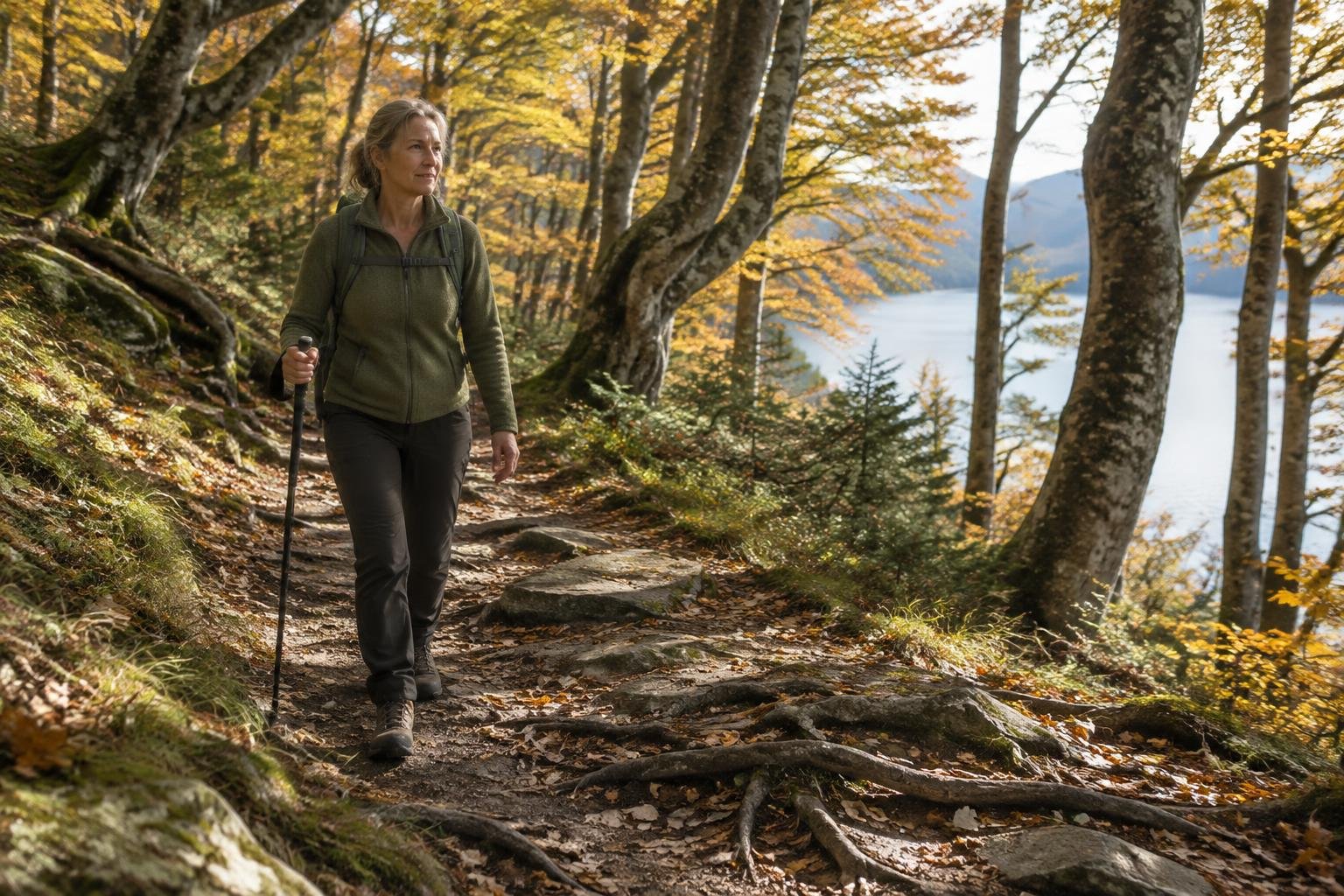
Both routes list November to March, the Patagonian summer, as the official best season. Rules differ. On the W, every night in the park must be reserved in advance and rangers check bookings, with no walk-up beds or pitches. Winter conditions can make microcrampons and poles mandatory. At Fitz Roy, the trails start from El Chaltén, a north-zone access fee applies, and the De Agostini, Capri and Poincenot camps are reservable. Confirm current rules and fees with CONAF, the park concessionaires and Parques Nacionales before you commit.
Which one is right for you?
Choose Torres del Paine W Trek if…
Pick the W Trek if you have four or five days, enjoy hut-to-hut or serviced-camp rhythm, and like leaving heavy gear at night's accommodation to climb each spur with a light daypack. It suits hikers who can book every night early and pad the boat and bus connections at both ends. Walking west to east finishes with the towers; east to west puts the steepest climb early while legs are fresh.
How to hike Torres del Paine — W TrekChoose Fitz Roy if…
Pick Fitz Roy if you have one day, prefer to decide your start time from that morning's forecast, and are comfortable with a long, strenuous out-and-back where the final climb is the crux. It suits hikers who want no transport logistics. If you want first light on the granite, you can walk in the day before and sleep at the designated backcountry site below the spires.
How to hike Fitz Roy — Laguna de los TresWhat the two have in common
Both routes are Patagonian mountain walks built around a granite payoff: the towers on the W, and Fitz Roy's wall above Laguna de los Tres. Both share the same November to March season, both involve wind and fast-changing weather, and both have a hardest section that comes as a spur or final push rather than evenly along the route. Each also uses reservable camps or refugios.
How your choice changes what you pack
The W Trek, with nightly refugios or serviced camps, lets you carry a smaller pack and use a daypack for spurs, though wind, rain and cold layers are still essential, plus extra traction in winter. Fitz Roy as a day hike needs a lighter kit but the same layers, water and food for a long day. Choosing the camping option adds sleeping gear and a stove.
Common questions
Which is harder, the W Trek or Fitz Roy?
The W Trek is the bigger overall effort, with roughly 75-80 km and 3,000-3,500 m of gain over four or five days. Fitz Roy is a strenuous single day of 22-24 km, with its hardest effort packed into the final climb of about 400 m up loose rock.
Which is better for a first Patagonia trip?
It depends on your time and planning appetite. Fitz Roy needs no transport and no multi-night booking, so it is simpler logistically. The W Trek offers a longer, supported trip but requires every night to be reserved in advance.
Do I need reservations for either trek?
On the W Trek, every night in the park must be reserved in advance, with no walk-up beds. At Fitz Roy, the day hike starts from El Chaltén, but the managed camps are reservable and a north-zone access fee applies. Check each authority for current rules.
When is the best time for each hike?
Both list November to March, the Patagonian summer, as the best season. Winter conditions on the W can make microcrampons and poles mandatory, so check CONAF and the park site. At Fitz Roy, weather can change in minutes, so start early and pack layers.
Sources
- CONAF & park concessionaires — parquetorresdelpaine.cl (park information): official information for Torres del Paine W Trek.
- Administración de Parques Nacionales — argentina.gob.ar (Parques Nacionales, Los Glaciares National Park): official information for Fitz Roy.
Conditions, permits and access rules change without notice — confirm current information with each managing authority before you go. See our editorial policy.