
Mount Whitney vs Half Dome: Which Should You Hike?
Choose Mount Whitney if you want the higher, longer, more remote challenge and can handle altitude and a quota permit; choose Half Dome if you want a shorter but still very strenuous day built around waterfalls, stone stairs and the cables. Both are big days, and permit rules decide a lot.
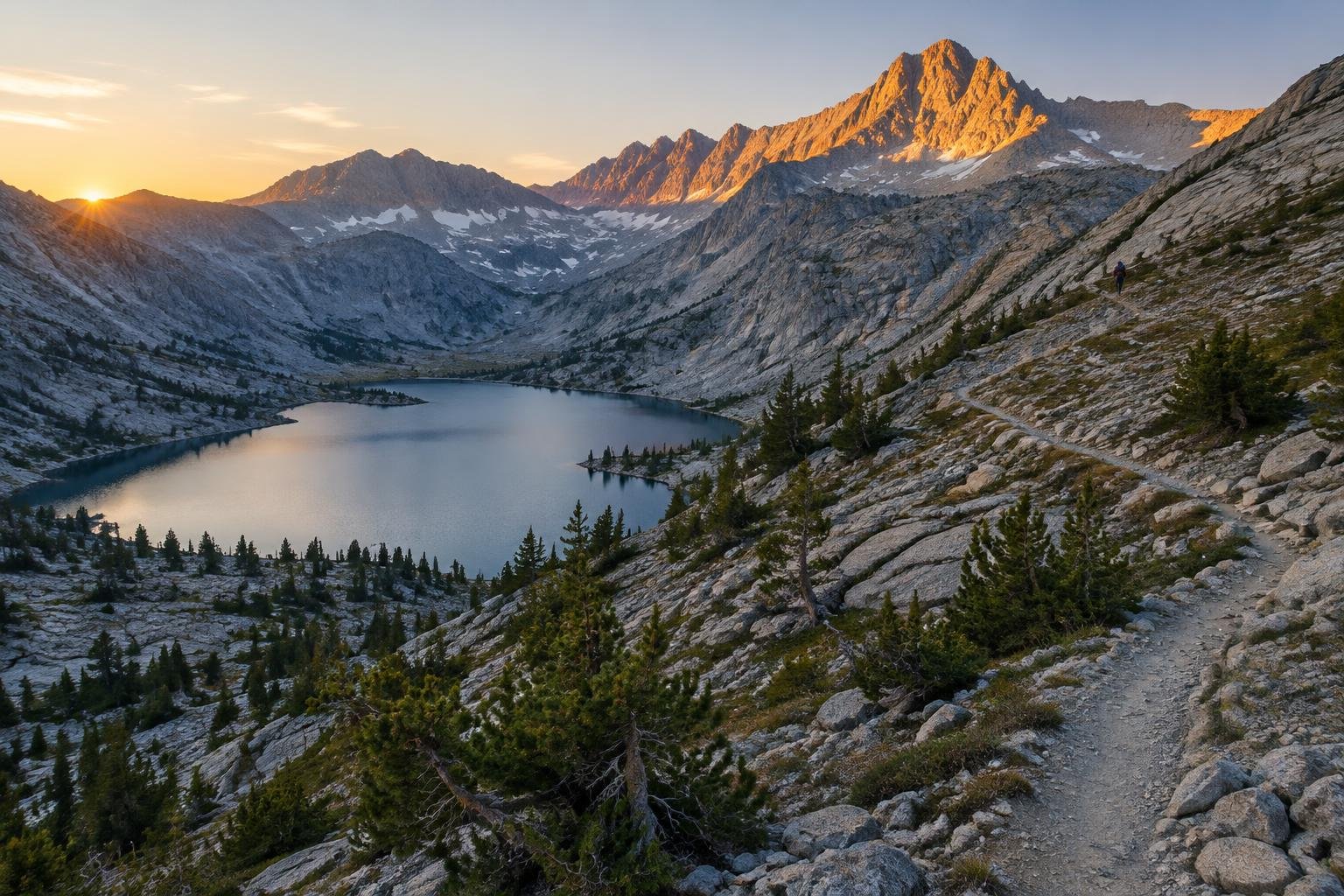
Mount Whitney and Half Dome at a glance
Mount Whitney is a 22-mile (35.4 km) out-and-back from Whitney Portal to the summit at 14,505 ft, climbing through forest, a granite basin and a famous switchback wall. Half Dome is a 14–16 mile (22.5–25.7 km) out-and-back from Yosemite Valley, climbing beside waterfalls to a sub-dome and the cables. Both are very strenuous Sierra Nevada hikes in California, and both are popular goals, so hikers often weigh them against each other.
| Mount Whitney | Half Dome | |
|---|---|---|
| Place | Sierra Nevada · California, USA | Sierra Nevada · California, USA |
| Distance | 22 miles (35.4 km) round-trip from Whitney Portal | 14–16 miles (22.5–25.7 km) round-trip |
| Elevation gain | Over 6,000 ft (1,830 m); commonly cited as ~6,100 ft (1,860 m) from Whitney Portal (8,360 ft) to the summit (14,505 ft) | ~4,800 ft (1,460 m) |
| Difficulty | Very strenuous / high-altitude | Very strenuous |
| Route type | out-and-back | out-and-back |
| Official season | July to September for a snow-free trail | Roughly late May to mid-October, whenever the cables are up (check NPS for this year’s dates) |
| Managed by | U.S. Forest Service & National Park Service | U.S. National Park Service |
Effort and difficulty
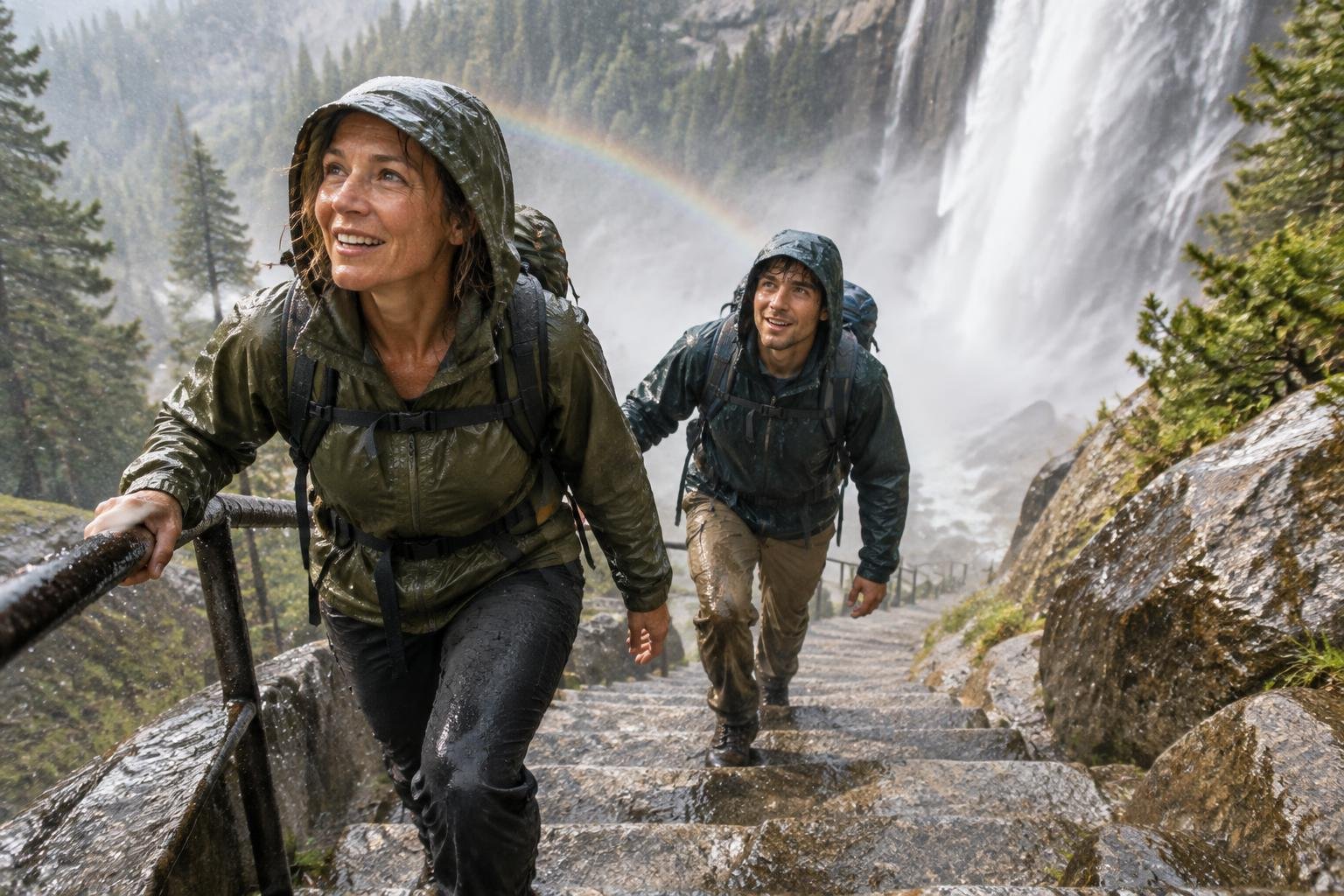
Mount Whitney is the bigger commitment on paper: 22 miles (35.4 km) round-trip with over 6,000 ft (1,830 m) of climbing, commonly cited as about 6,100 ft (1,860 m), and it is rated very strenuous and high-altitude. Half Dome covers 14–16 miles (22.5–25.7 km) with about 4,800 ft (1,460 m) of gain and is rated very strenuous. Whitney adds altitude to distance, and the facts stress that sleeping high beforehand helps. Half Dome's challenge is concentrated in the exposed sub-dome stairs and the hand-over-hand cables.
Season, permits and booking
Mount Whitney's official best season is July to September for a snow-free trail, and the cable-protected section can hold snow and ice later than the rest of the route. Half Dome runs roughly late May to mid-October, whenever the cables are up, and the National Park Service posts that year's dates. Whitney uses a quota permit system for day and overnight hikers, while Half Dome's cables require a lottery permit and overnight trips need wilderness permits. Confirm current rules and application windows with each managing authority.
Which one is right for you?
Choose Mount Whitney if…
Pick Mount Whitney if you want to stand on a 14,505 ft summit and are ready for a very long, very high day. It suits hikers who can plan acclimatization time in the area first, start well before first light and honor a hard turnaround time. It also fits those who like a walk-up route without cables and are comfortable with rocky, shadeless terrain and an exposed ridge traverse near the top.
How to hike Mount Whitney TrailChoose Half Dome if…
Pick Half Dome if you want a shorter route with more variety: waterfalls, granite steps, forest and a dramatic finish on the cables. It suits hikers who are fit for steep staircases, comfortable with real exposure and willing to use their hands on the cables. It also works for those who prefer a lower starting point and want to plan the schedule around getting off the granite before afternoon storms are possible.
How to hike Half Dome & Yosemite ValleyWhat the two have in common
Both trails are out-and-back routes in California's Sierra Nevada, rated very strenuous, and both are built around climbing granite. Each is commonly done as a single long day starting in the dark, or split into two days with a night at a backcountry camp. Each also demands a hard turnaround time, early starts and attention to permits. Neither should be treated as a casual walk, and both reward careful scheduling.
How your choice changes what you pack
Your choice changes how you pack. Whitney's altitude and exposed upper trail mean extra warm layers, sun protection and enough water for long, shadeless stretches, and there is no lodge on the mountain. Half Dome's spray on wet granite and the cables point toward grippy footwear, gloves you can work in and a lighter summit-day pack. Overnight versions on either route mean carrying camping gear up steep ground.
Common questions
Which is harder, Mount Whitney or Half Dome?
Both are rated very strenuous. Whitney is longer at 22 miles (35.4 km), climbs over 6,000 ft (1,830 m) and adds high altitude. Half Dome is shorter at 14–16 miles (22.5–25.7 km) with about 4,800 ft (1,460 m) of gain, but it includes exposed stairs and the cables. The harder one depends on whether altitude or exposure troubles you more.
Which is better for a first big Sierra hike?
Neither is a beginner route; both are described as very strenuous. Half Dome is shorter and starts lower, while Whitney is longer and high-altitude. Hikers new to big days should build up fitness first, plan acclimatization for Whitney, and treat the Half Dome cables as a serious step requiring comfort with exposure.
Do both hikes need permits?
Yes. Mount Whitney uses a quota permit system for day and overnight hikers, and the Half Dome cables require a lottery permit whenever they are up. Overnight Half Dome trips also need wilderness permits. Check Recreation.gov, Inyo National Forest and the National Park Service for current windows and dates.
When is the best time for each hike?
Mount Whitney's official best season is July to September for a snow-free trail. Half Dome runs roughly late May to mid-October, whenever the cables are up. Check the National Park Service for this year's Half Dome dates and confirm current conditions for Whitney with the managing agencies.
Sources
- U.S. Forest Service & National Park Service — fs.usda.gov/inyo: official information for Mount Whitney.
- U.S. National Park Service — nps.gov/yose: official information for Half Dome.
Conditions, permits and access rules change without notice — confirm current information with each managing authority before you go. See our editorial policy.